
Miniature Four-Cell 21700 Car Emergency Power Supply

Print Profile(1)
Description
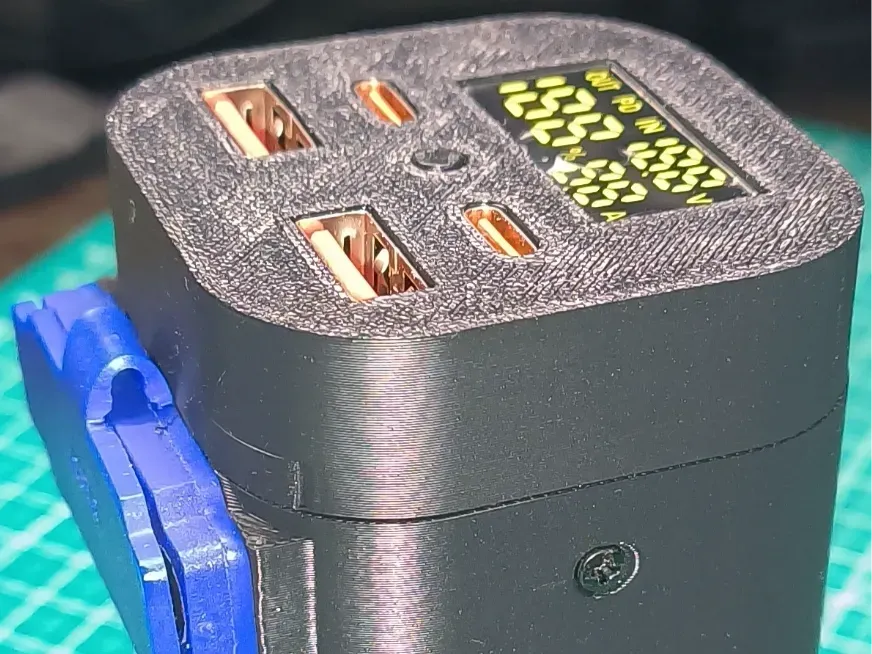
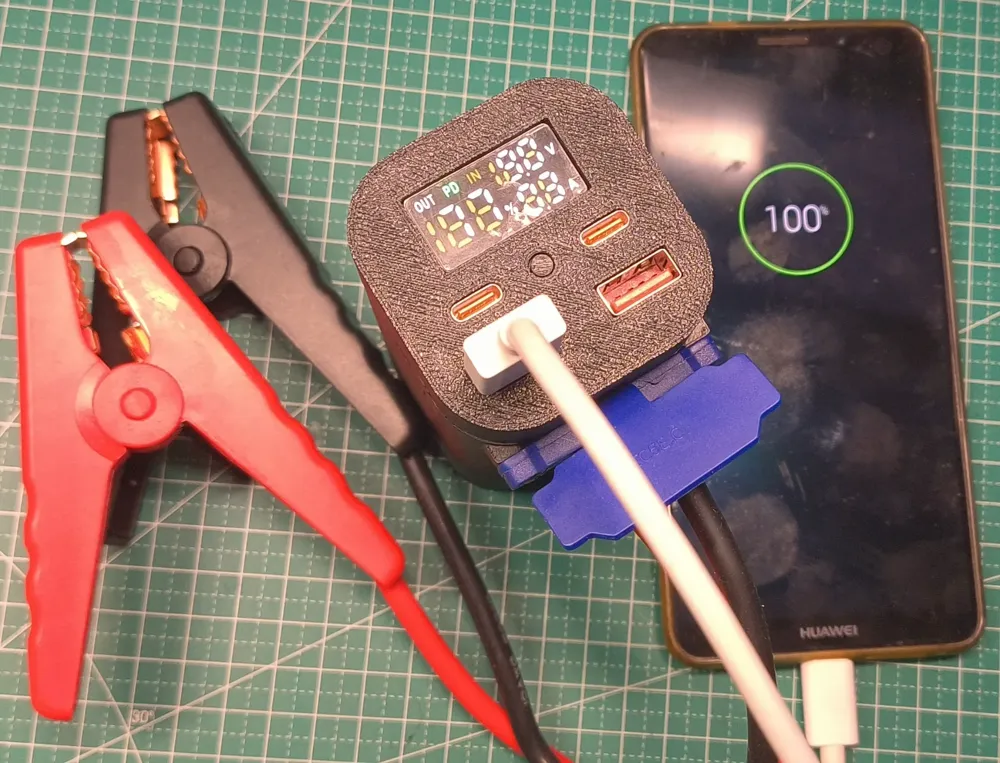
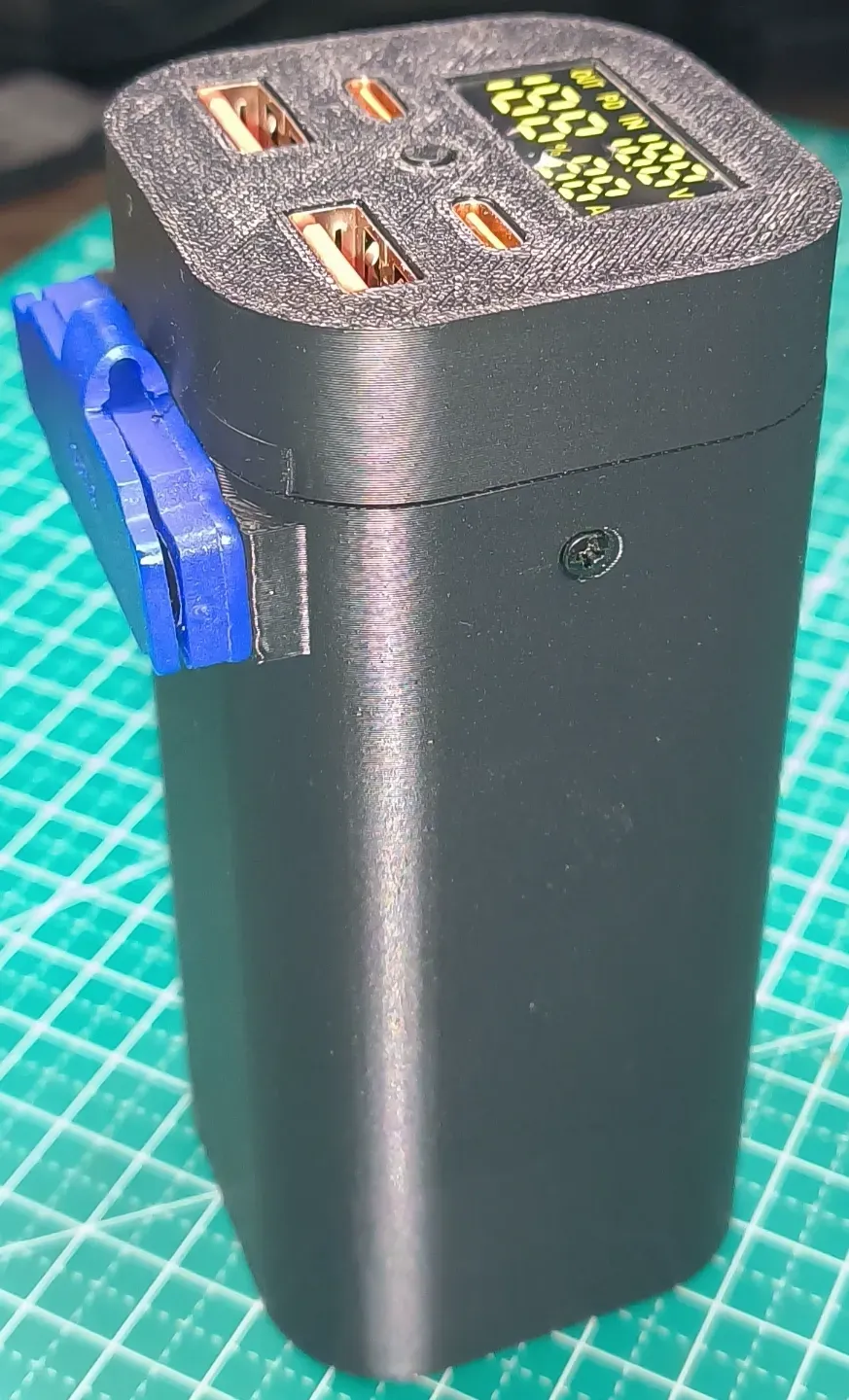
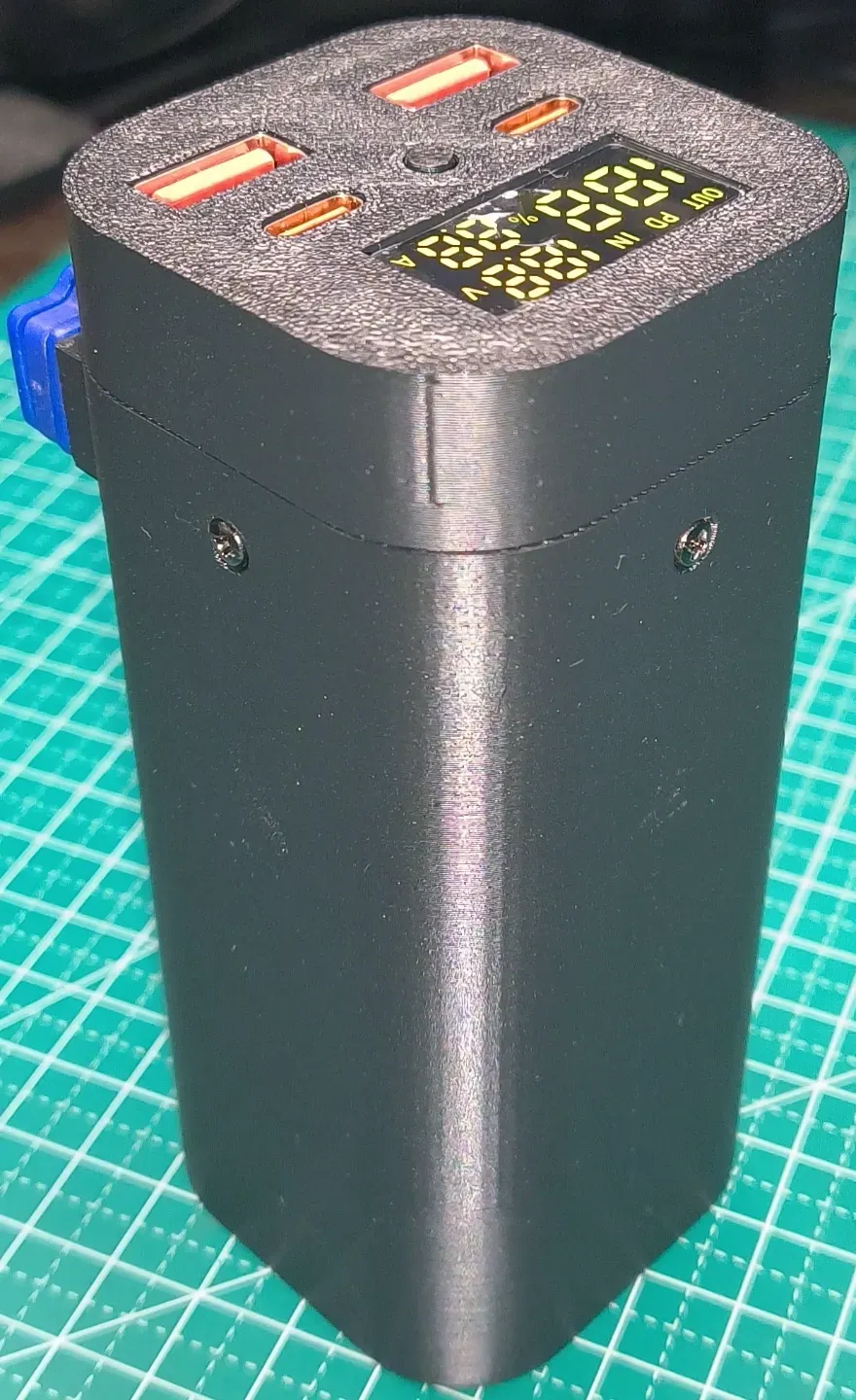
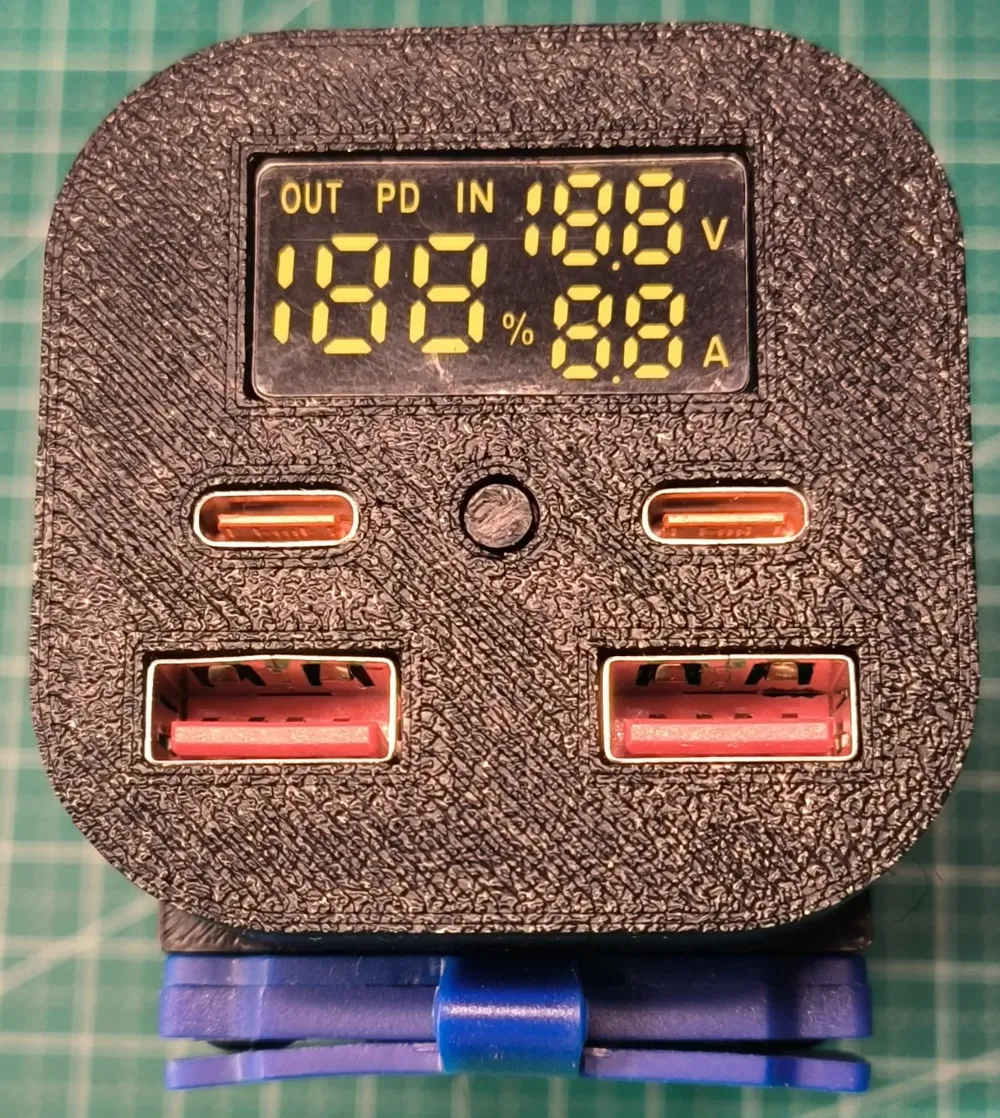
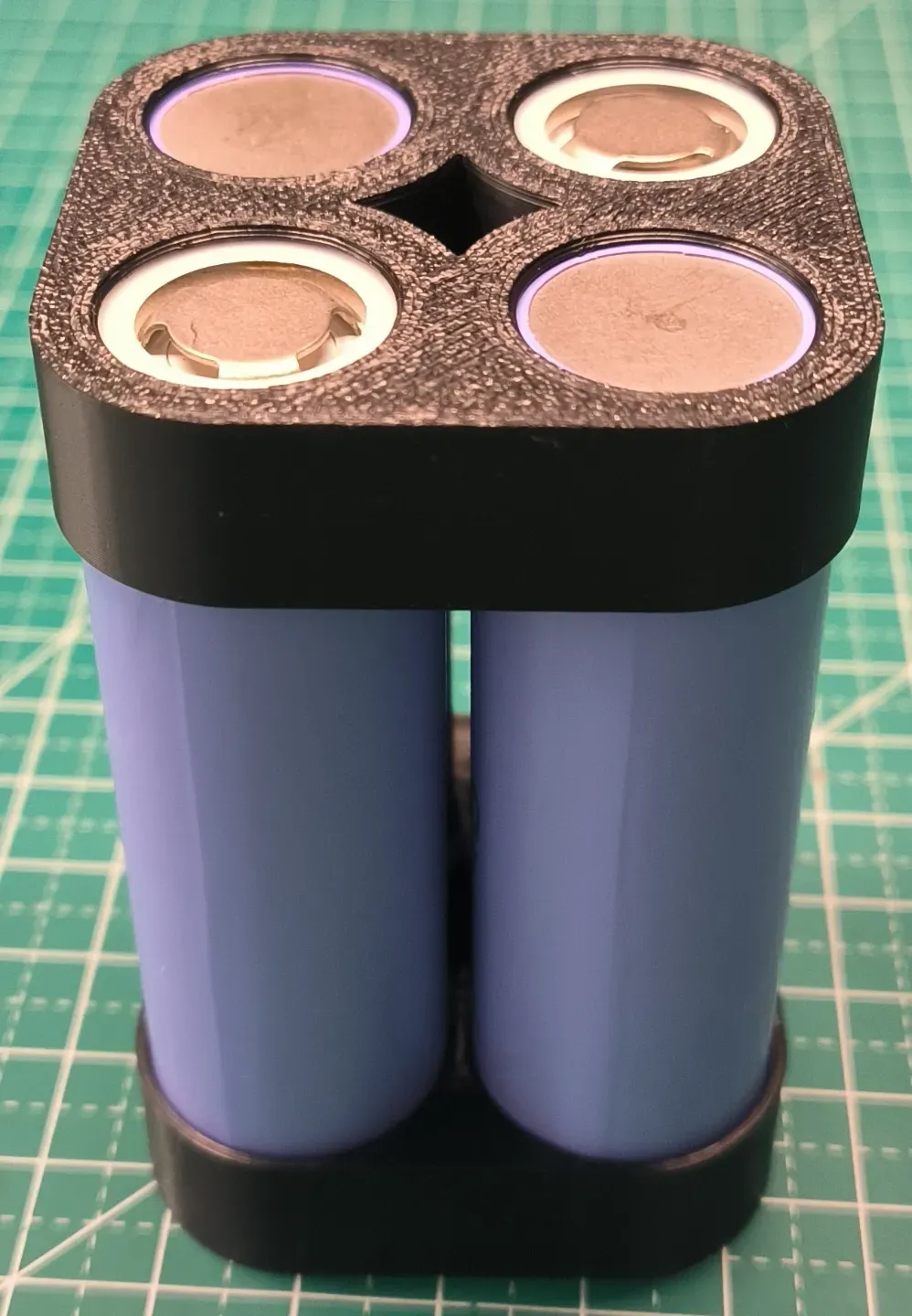
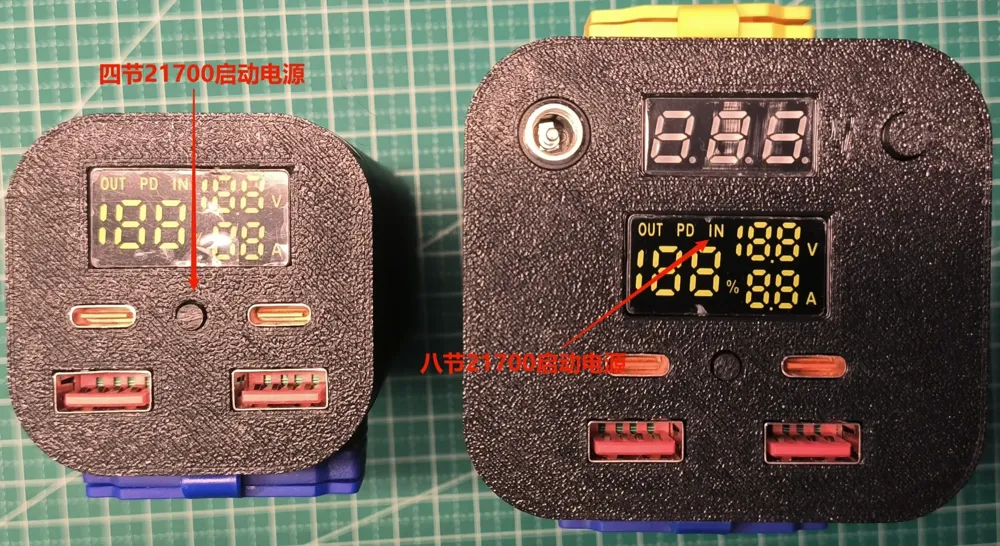
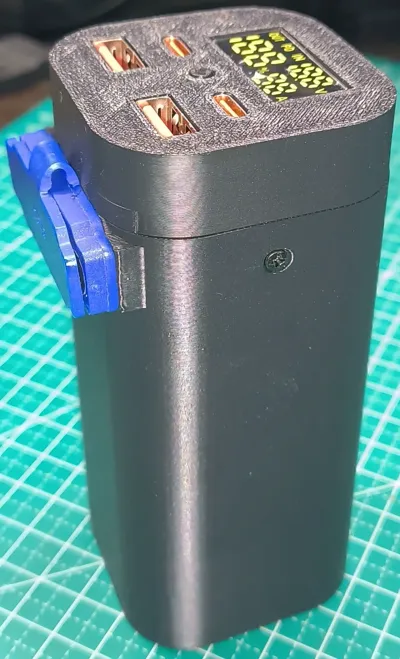
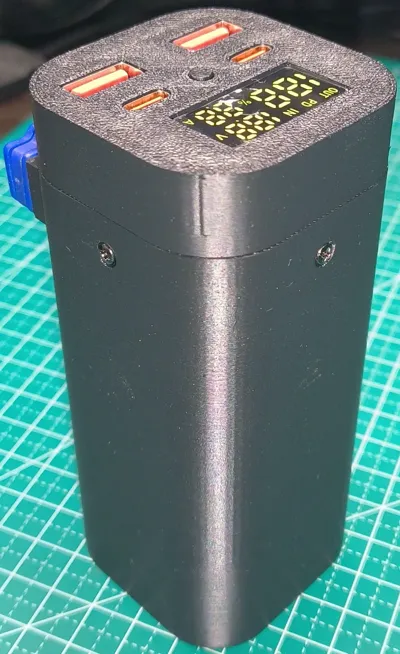
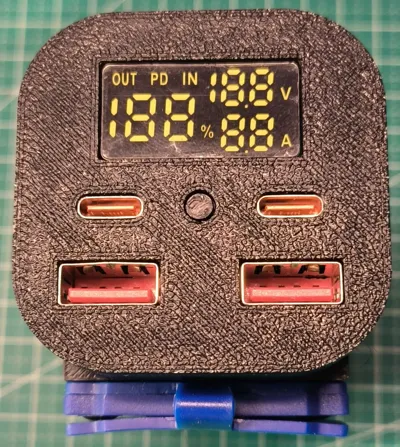
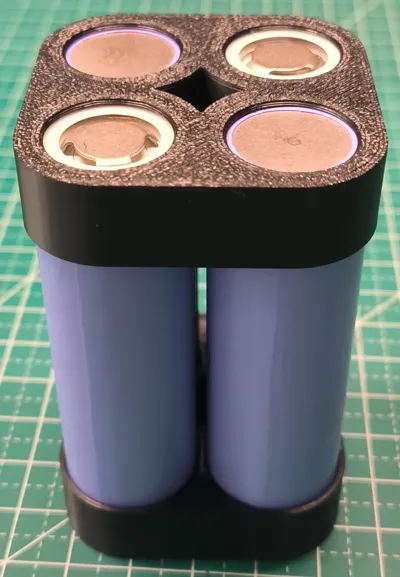
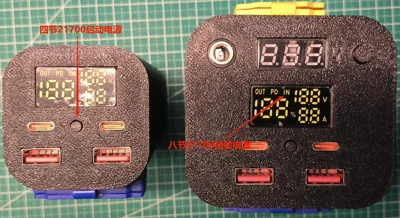
I envisioned a compact power source functioning as a power bank and portable charger, ideally capable of jump-starting a vehicle with substantial charging and discharging capabilities. After several iterations, the design is finalized. Its dimensions are 50.1*50.1*112.8 (MM). A family photo is presented below: (An eight-cell 21700 lithium battery emergency car jump starter is also available. For inquiries, please visit: Eight-cell 21700 Lithium Battery Emergency Car Jump Starter from @小天龙 - MakerWorld Thank you)

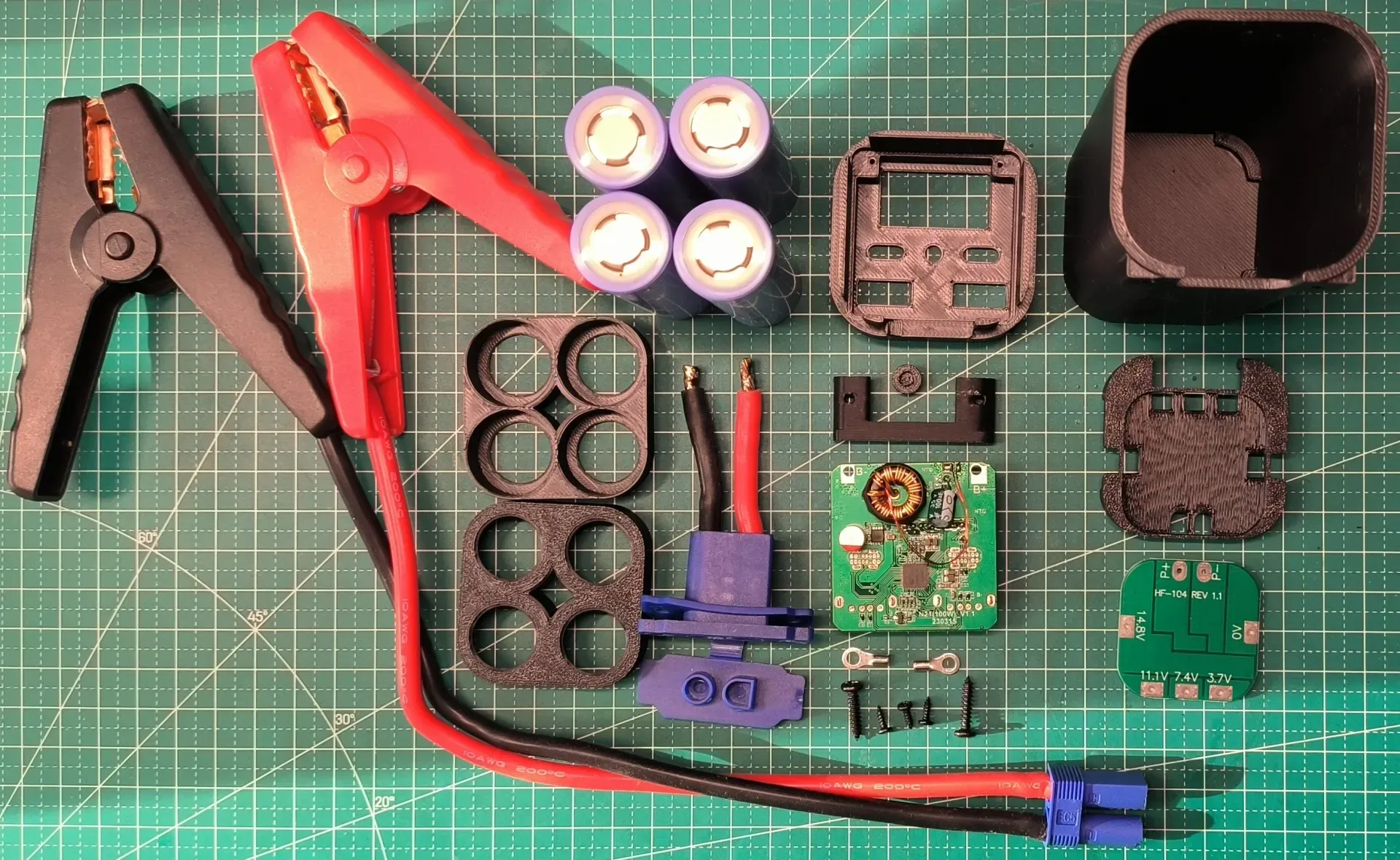
Required materials for this model:
1: Four high-discharge 21700 battery cells (Recommended: EVE 21700 JP40 and CALB 21700 4000mAh cells. I personally use CALB 21700 batteries; their performance is slightly inferior to EVE's, but they are more affordable.)
2: One 100W PD power bank module (65W charging, 100W discharging)
3: One four-series ternary lithium battery charge-discharge protection board
4: One set of EC5 female connectors with mounting bracket and protective cover and one set of EC5 male connectors (using 10AWG silicone wire)
5: Two copper wire lugs
6: Two M3*14 black iron pan head self-tapping screws
Five M2*6 black iron pan head self-tapping screws
Installation instructions: See the attached document
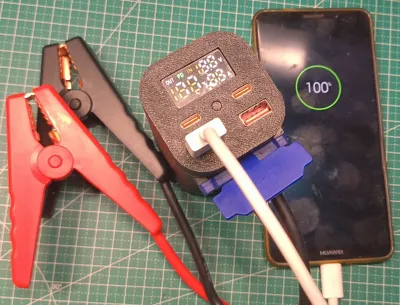
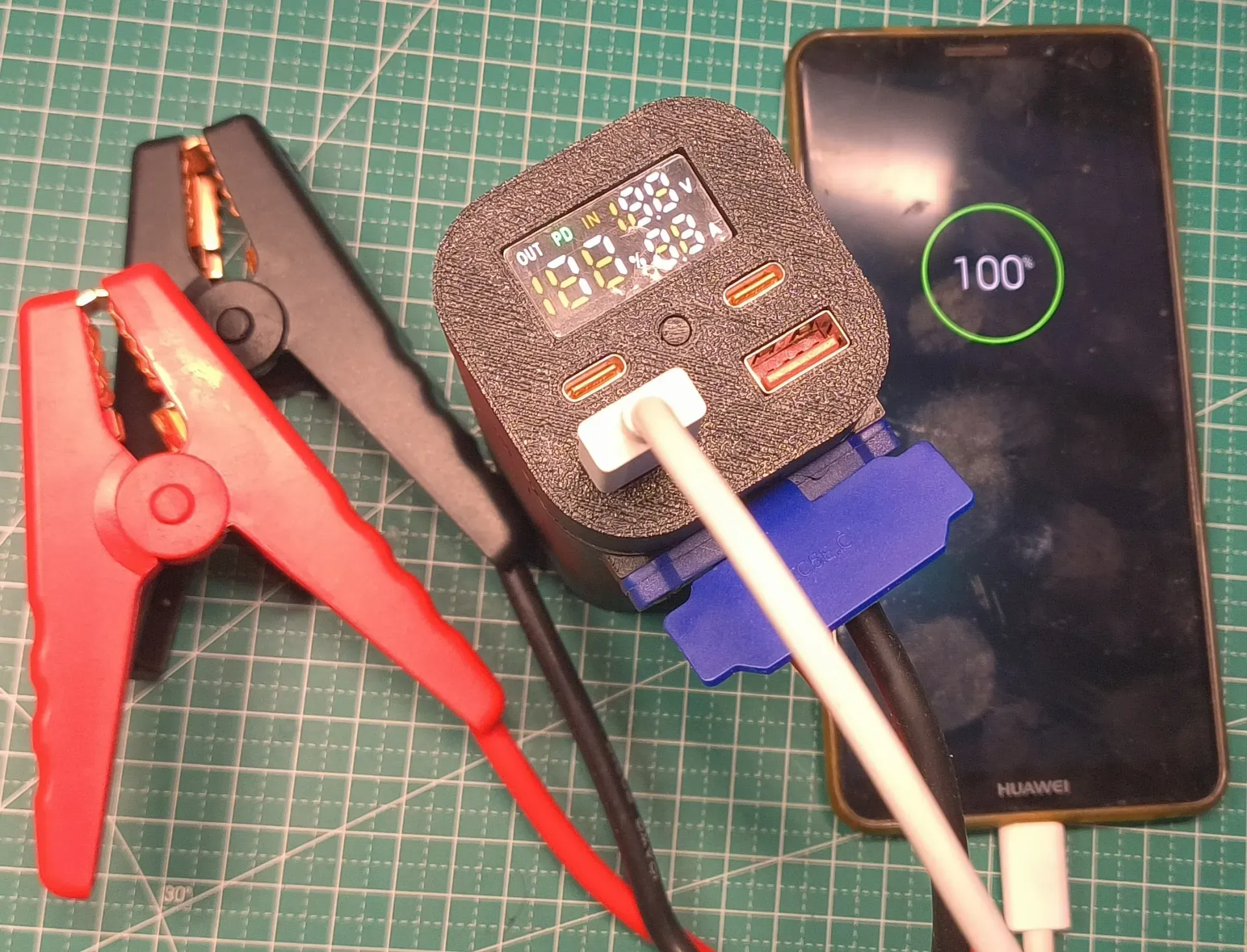
Finished product shown below:
Power source test results:
First test: The jump starter was fully charged. The outdoor temperature was approximately -10°C to -20°C. My vehicle had been parked for three days before testing. During the test, the outdoor temperature was approximately -16°C. The vehicle's original battery was disconnected, the power source was connected, and the vehicle was started with two ignition attempts.
Second test: The jump starter was fully charged. The outdoor temperature was approximately -15°C. The vehicle was parked for one day. The original battery was disconnected, the power source was connected, and the vehicle started with one ignition attempt.
Third test: The jump starter's battery level showed 54%, with a voltage of 15.35V. The outdoor temperature was -12°C. The vehicle was parked for one week. The original battery was disconnected, the power source was connected, and the vehicle was started with two ignition attempts.
Based on these three tests, this power source should be more than sufficient as an auxiliary jump starter (i.e., do not disconnect the vehicle's original battery when jump-starting; connect the jump starter directly). Of course, the above are personal test results and are for reference only.
Furthermore, if the buttons do not illuminate after starting the vehicle, simply plug in the charger to reactivate it. This is likely due to the high current draw during vehicle startup causing a momentary voltage drop, triggering the low-voltage protection of the lithium battery protection board. This is primarily because I disconnected the vehicle's original battery during testing, requiring the jump starter to supply all starting current.
To ensure the longevity of the jump starter, please observe the following precautions:
1: Each ignition attempt should not exceed 10 seconds.
2: Allow at least a 1-minute interval between ignition attempts.
3: Avoid disconnecting the vehicle's original battery when starting the vehicle.
4: Do not attempt to start the vehicle if the battery level is below 40% (i.e., the jump starter voltage is below 12V).
These are my thoughts on creating this compact power supply. Please feel free to correct any errors. Downloads and support are appreciated. Thank you!
Documentation (1)
License

You shall not share, sub-license, sell, rent, host, transfer, or distribute in any way the digital or 3D printed versions of this object, nor any other derivative work of this object in its digital or physical format (including - but not limited to - remixes of this object, and hosting on other digital platforms). The objects may not be used without permission in any way whatsoever in which you charge money, or collect fees.


Comment & Rating (4)