
Print Profile(1)
Description
Origin Studio Design
A Horizontally-Oriented Incense Burner for Bedding
Horizontal mattress incense burner
The English translation is machine-generated; please forgive any inaccuracies or ambiguities.
English from machine translation.If there is any inappropriate or unclear content, please understand
Note: Please be sure to read the "Author's Words" section below.
Note: Please make sure to see the "Author's Words" section at the end
Prototype Introduction:
Prototype Introduction:
(以下来自百度百科)
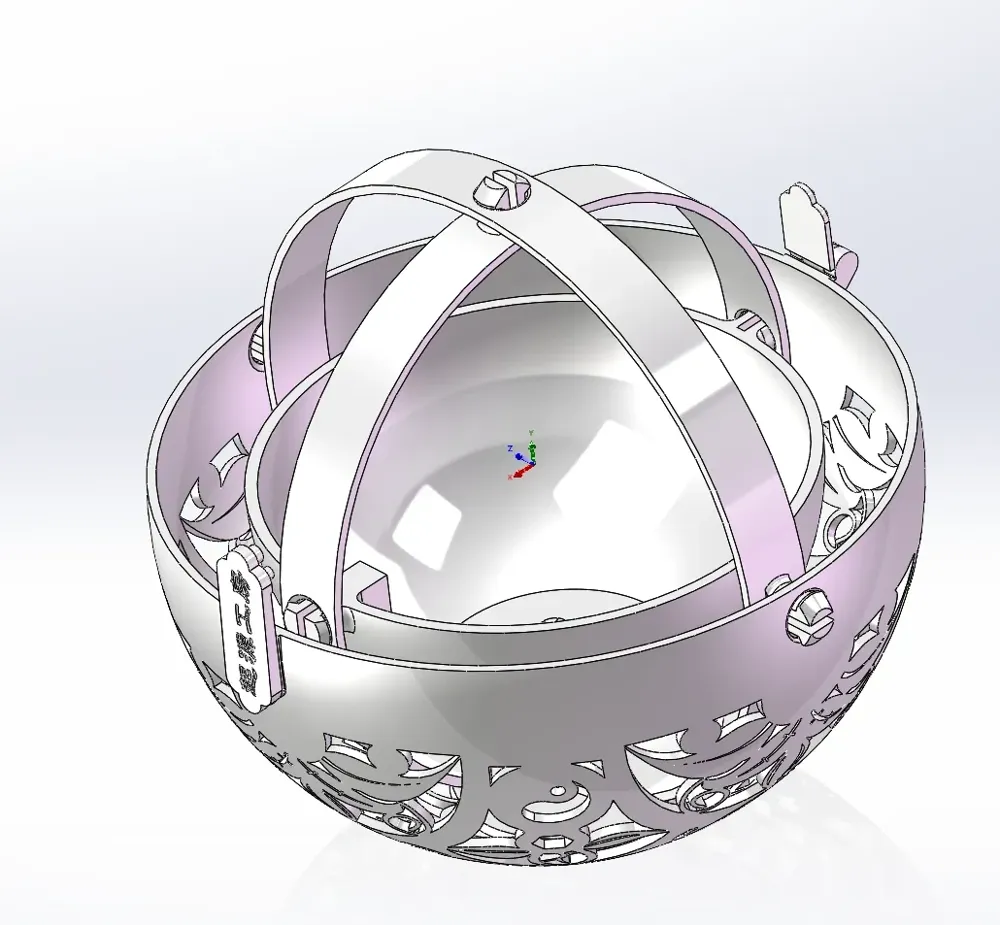
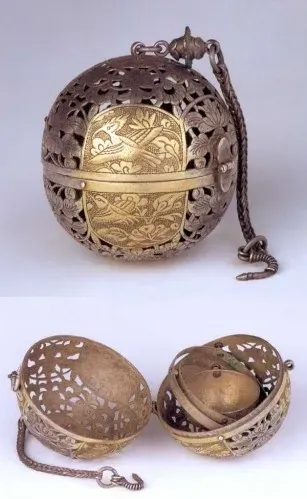
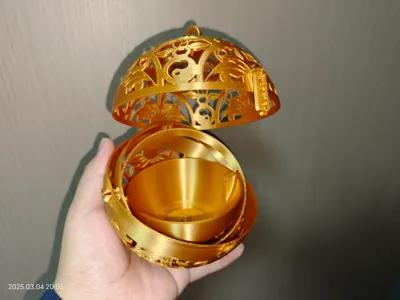
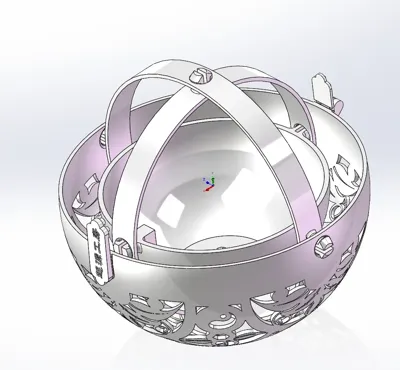
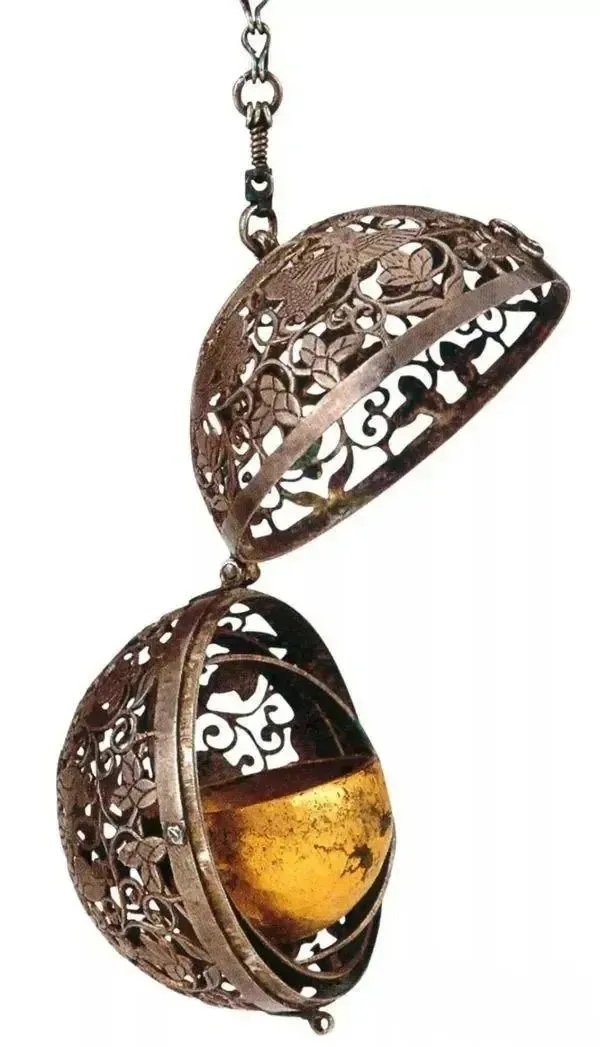
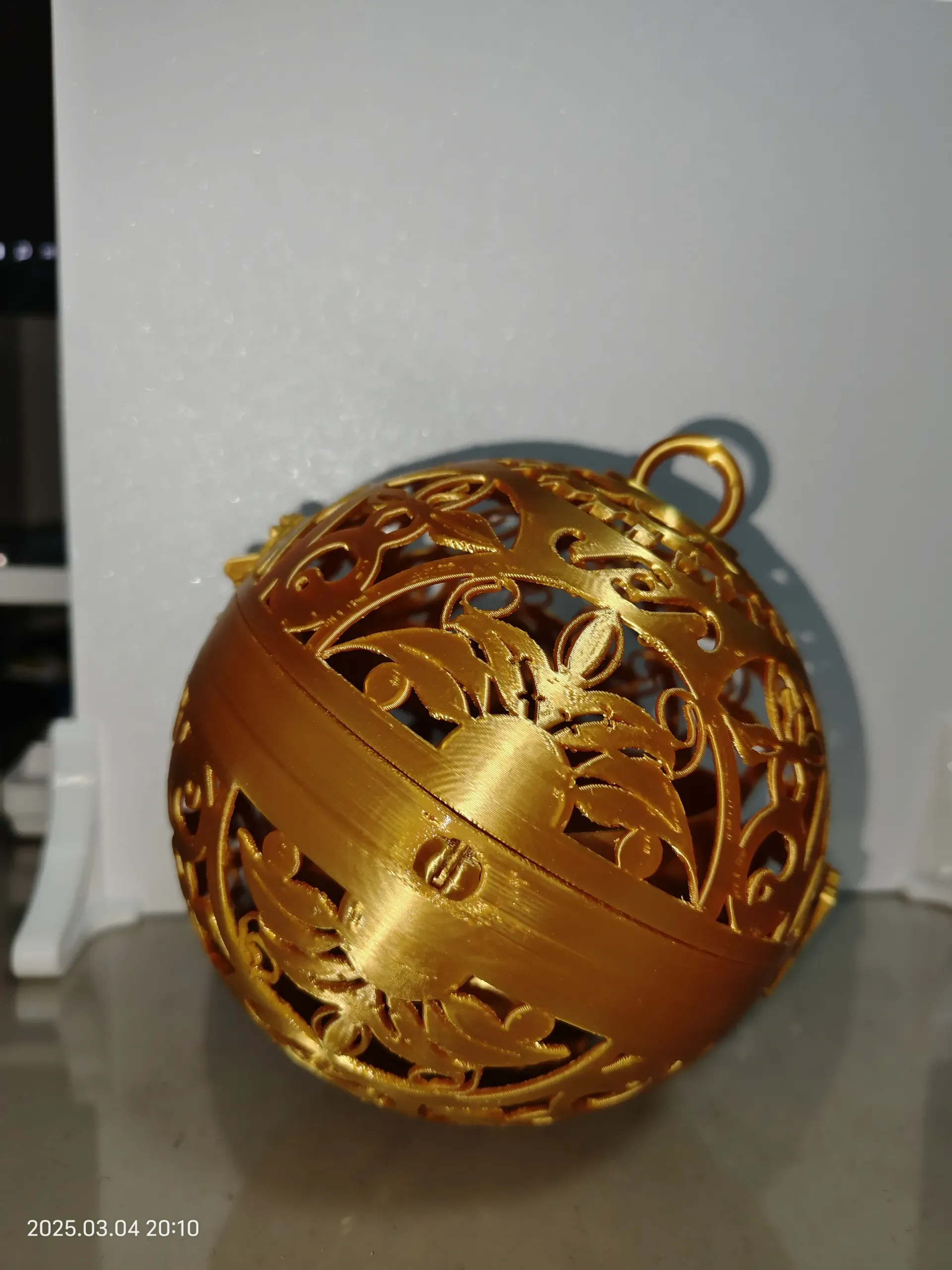
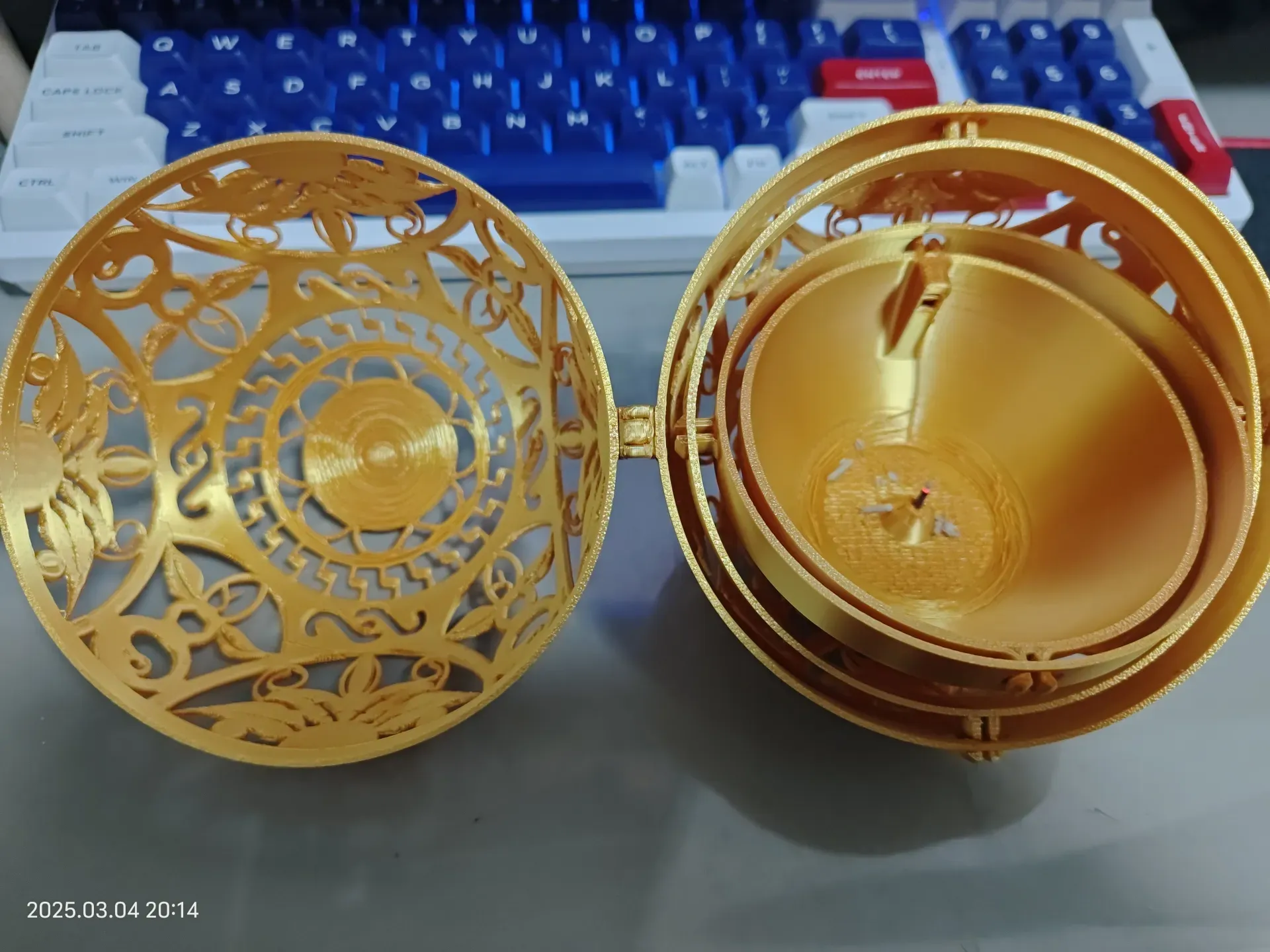
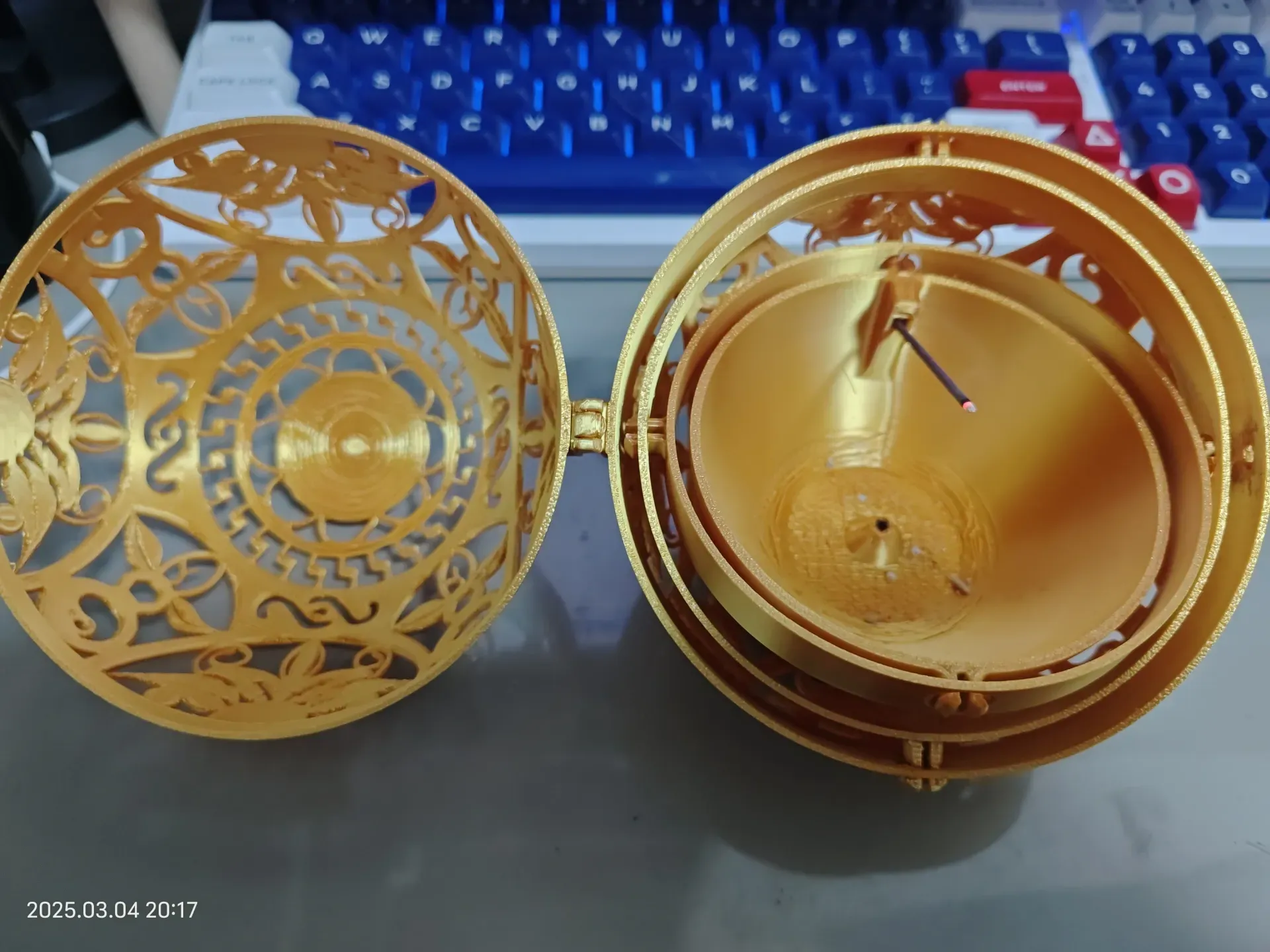
The bedding incense burner, a small spherical furnace, was employed in ancient China for scenting bedding with aromatic substances. It is also referred to as a “fragrance ball,” “mattress incense burner,” or “fumigation ball.” Its spherical exterior features two or three concentric rings between the shell and the central hemispherical furnace. The furnace body, with short shafts at either end, rests within two radial apertures in the inner ring, allowing for free rotation. Likewise, the inner ring rotates within the outer ring, which in turn, rotates within the spherical outer shell. The axes of support for the furnace, inner ring, outer ring, and inner shell are mutually perpendicular. Gravity ensures that regardless of the ball’s orientation, the furnace opening remains horizontal.
Silver incense balls were commonplace amongst Tang Dynasty aristocracy. No extant examples predating the Tang Dynasty have been discovered. According to the *Miscellaneous Records of the Western Capital*, “Ding Huan, a skilled craftsman of Chang’an, created the Constant Full Lamp…and also a bedding incense burner, also known as the bedding incense burner. Originating from a technique involving wind outside the house, the method had become lost until Huan revived it. The device is ingeniously designed to rotate freely on its axis, keeping the furnace opening horizontal, allowing it to be placed among bedding—hence the name.”
(The following is from Baidu Baike)
The Zhongxiang stove is a small spherical stove used in ancient China to fumigate bedding with spices. Also known as “fragrant incense ball,” “mattress incense burner,” “smoked ball.” There are two or three concentric rings between its spherical shell and the hemispherical furnace body located in the center. The furnace body has short shafts at both radial ends, supported in two radial holes in the inner ring, and can rotate freely. Similarly, the inner ring is supported on the outer ring, which is supported on the inner wall of the spherical shell. The supporting axes of the furnace body, inner ring, outer ring, and inner wall of the shell are perpendicular to each other in sequence. Due to gravity, the furnace body always maintains a horizontal position at the mouth, regardless of how the ball rolls.
Silver smoked balls were widely used in the lives of Tang Dynasty nobles. There is currently no physical discovery of smoked balls before the Tang Dynasty. In the volume of “Miscellaneous Records of the Western Capital,” it is recorded: “The skilled worker Ding Xiu in Chang’an was known as the Constant Full Lamp… and also as the Lying Bed Incense Burner, also known as the Middle Incense Burner. Originally, it had a strong wind outside the room, but after the common method, it disappeared, and then resumed at the beginning of relaxation. It was named after the machine was damaged and transported around, and the furnace body was always flat enough to accommodate bedding
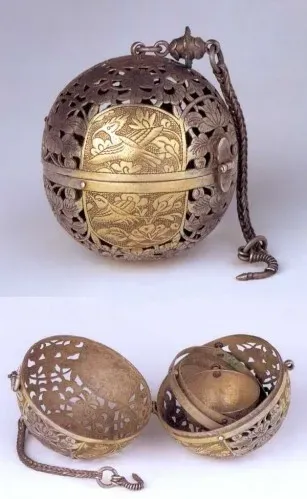
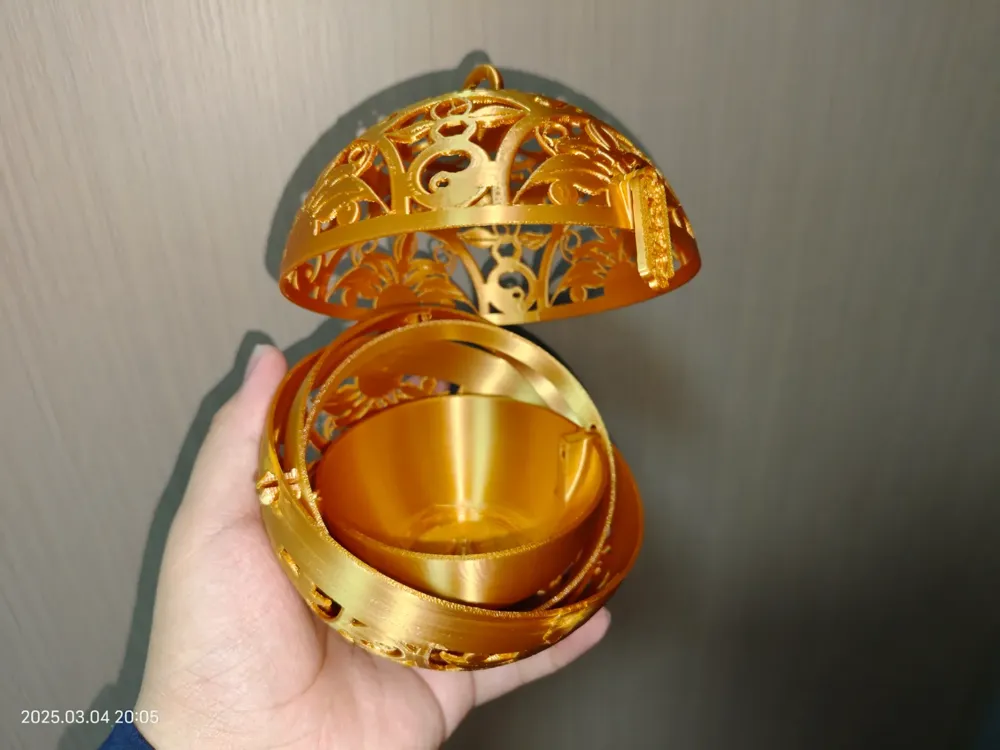
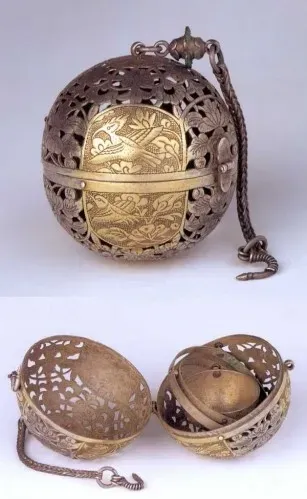
以下来自真实的物品图片:
The following are pictures of real items:
本作品介绍:
This work introduces:
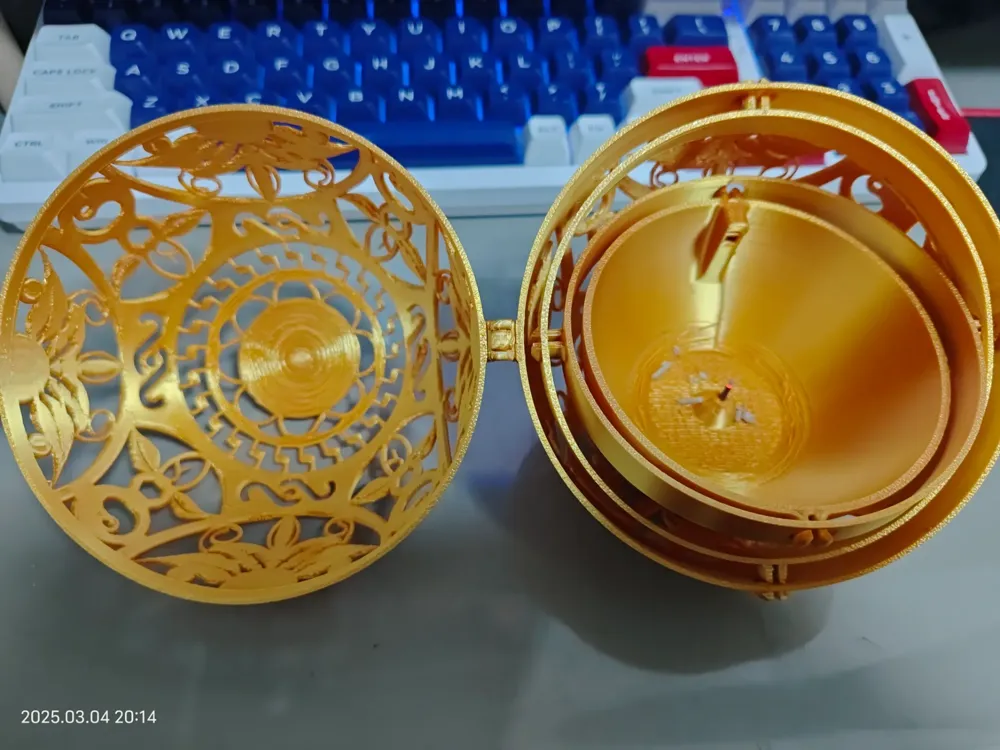

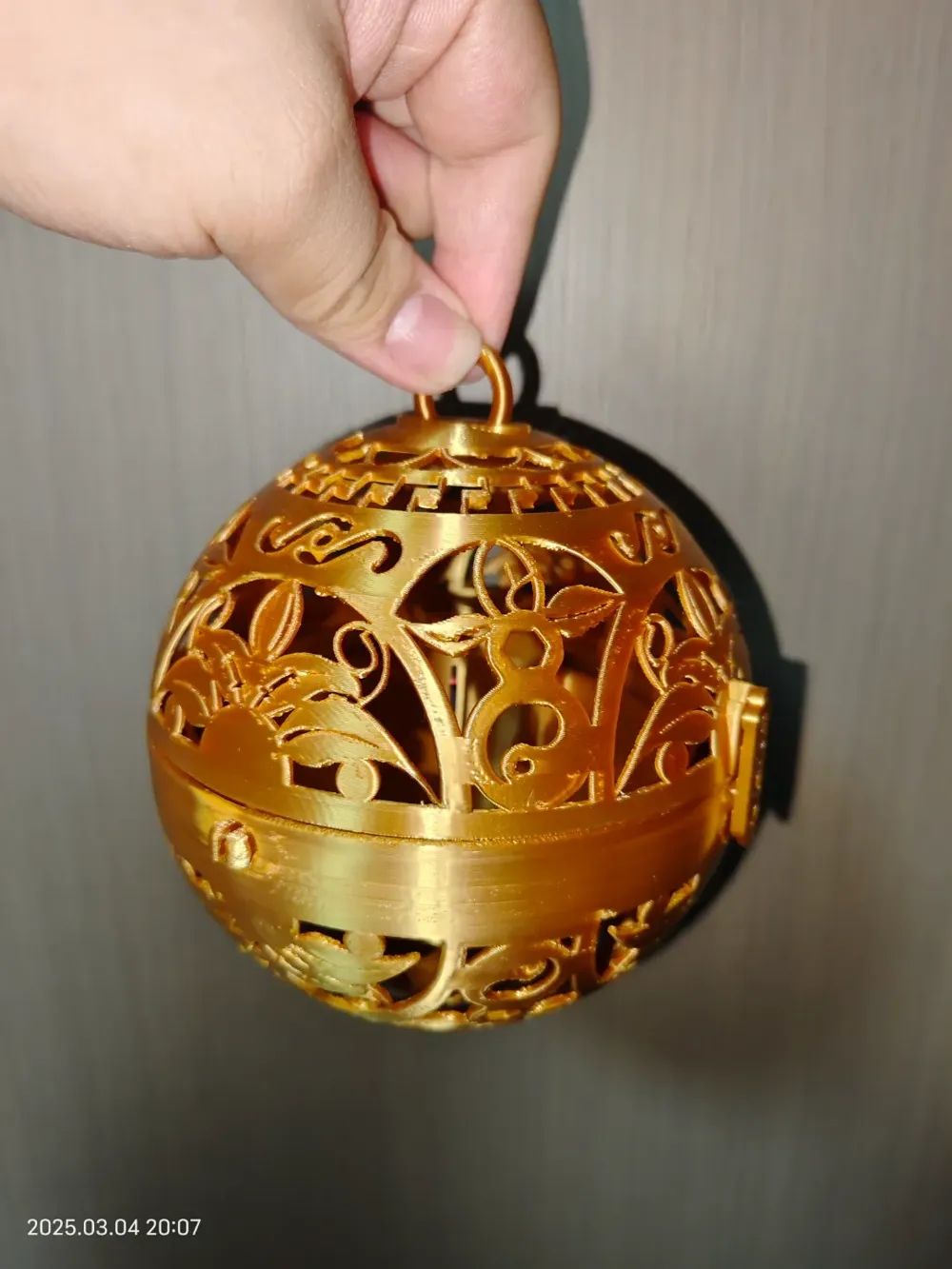
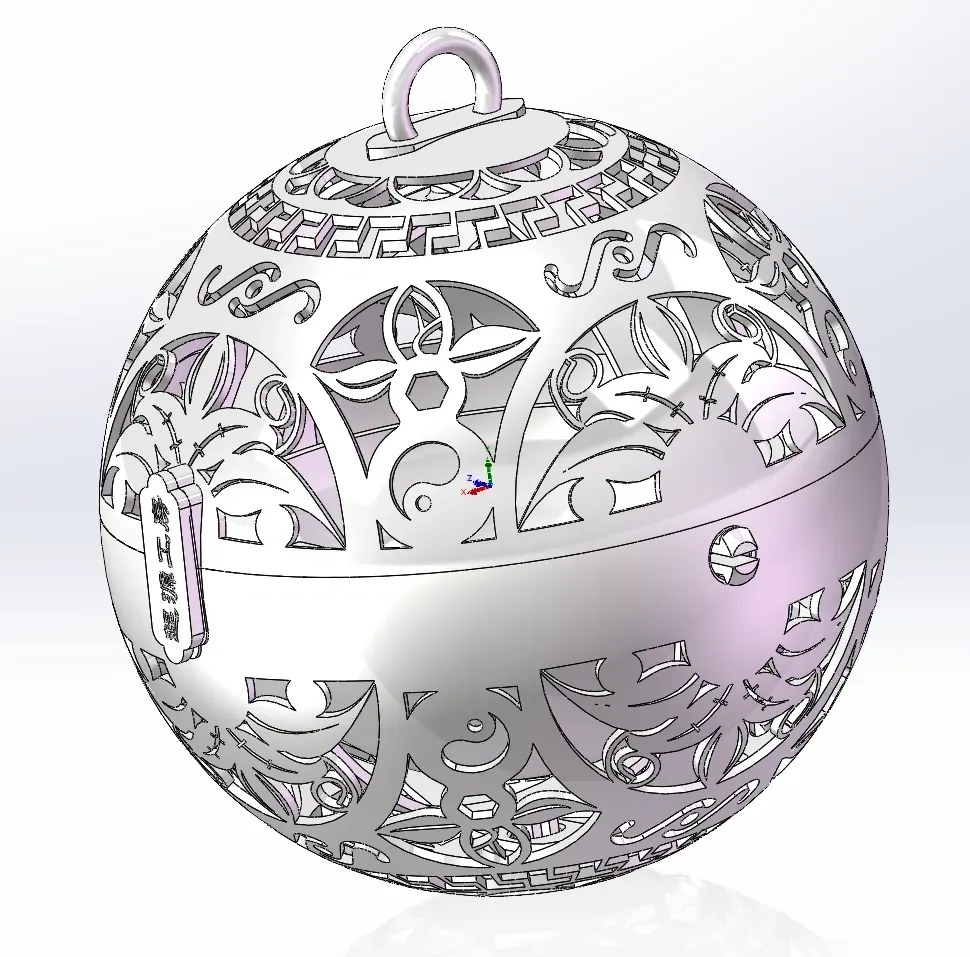
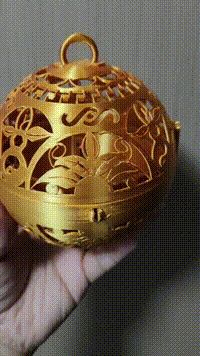
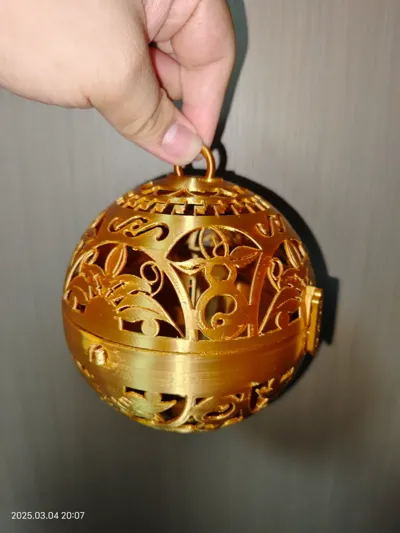
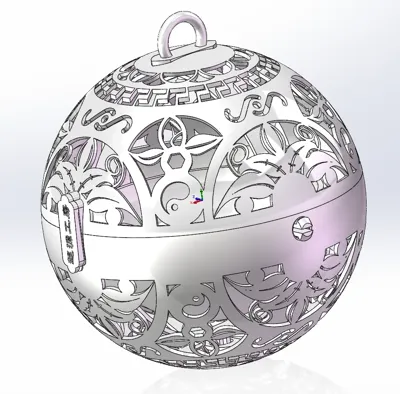
I have designed this piece, drawing inspiration from the form and function of ancient bedding incense burners. Adapting to the constraints of FDM printing, I have incorporated my own technical skills and aesthetic sensibilities in redesigning the shell’s pattern. Furthermore, the inclusion of snap-fit components ensures complete printability without the need for additional hardware.
I designed this work based on the shape and principle of the ancient incense burner, and according to the characteristics of the FDM printer, as well as my own technology and aesthetics, I redrawn the pattern of the outer shell. By designing buckles and other components, it can be fully printed without using other hardware.
安装方法:
Installation method:
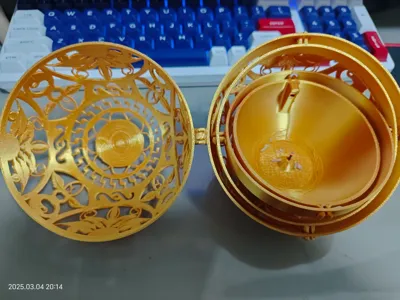
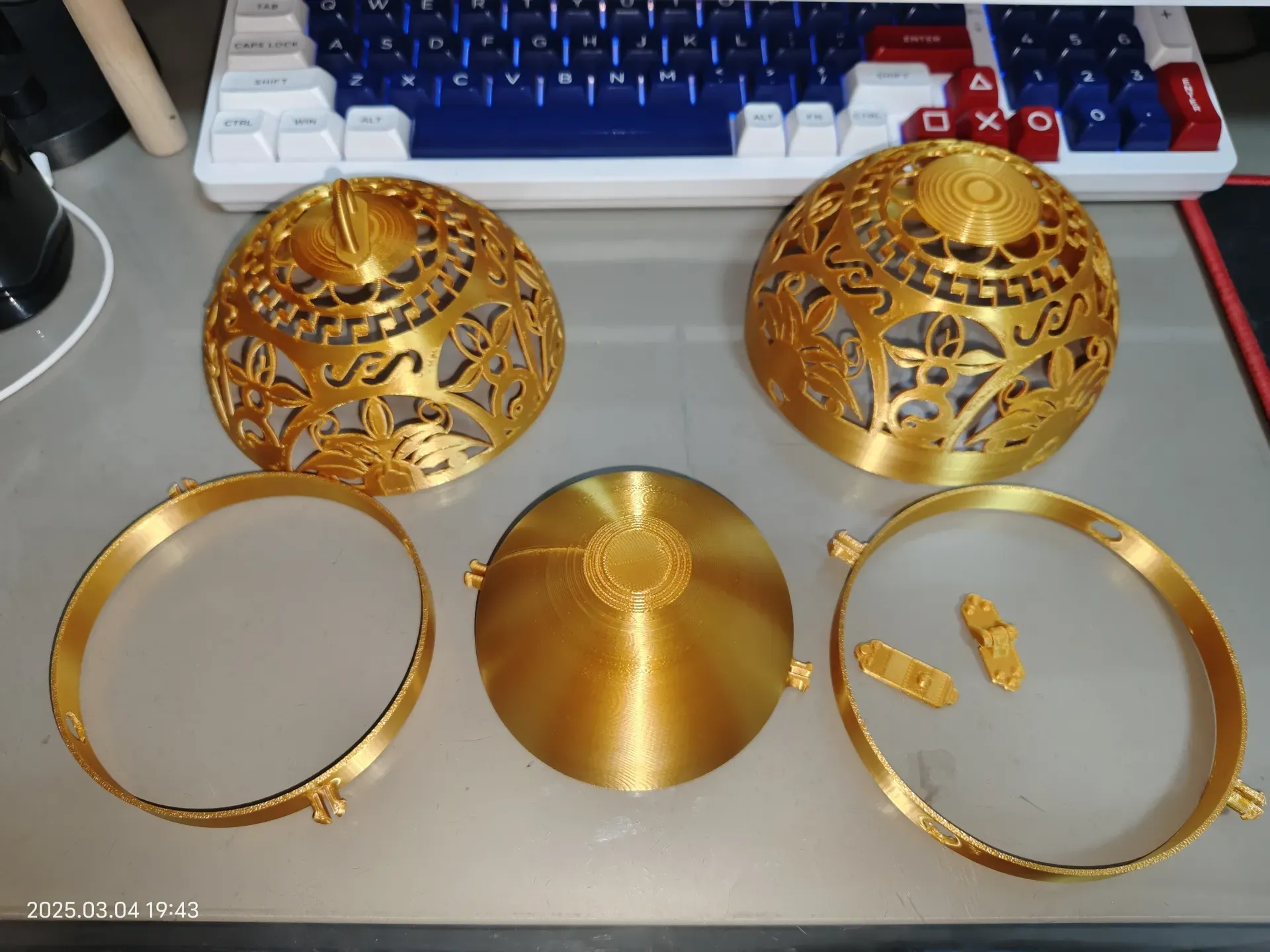
1、Inspect all components to ensure complete printing, paying particular attention to the two small connectors. Images of all printed parts are shown below.
1. Check if all components are fully printed, especially the two small connectors. The following are pictures of all printed parts
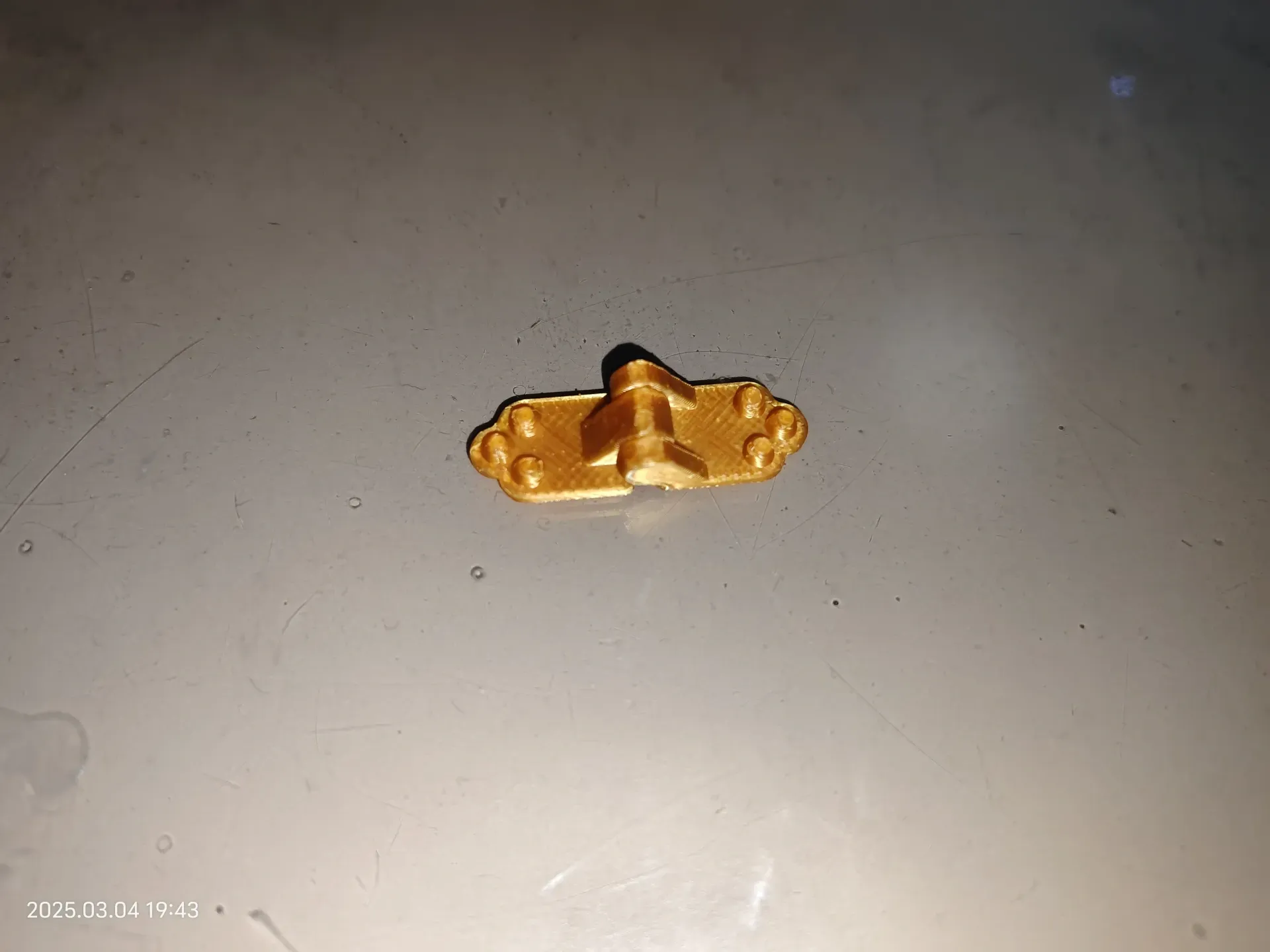
2、Verify the functionality of the small “hinge” components; confirm their proper articulation.
2. Check the “hinge” of small parts to ensure that they can be folded properly
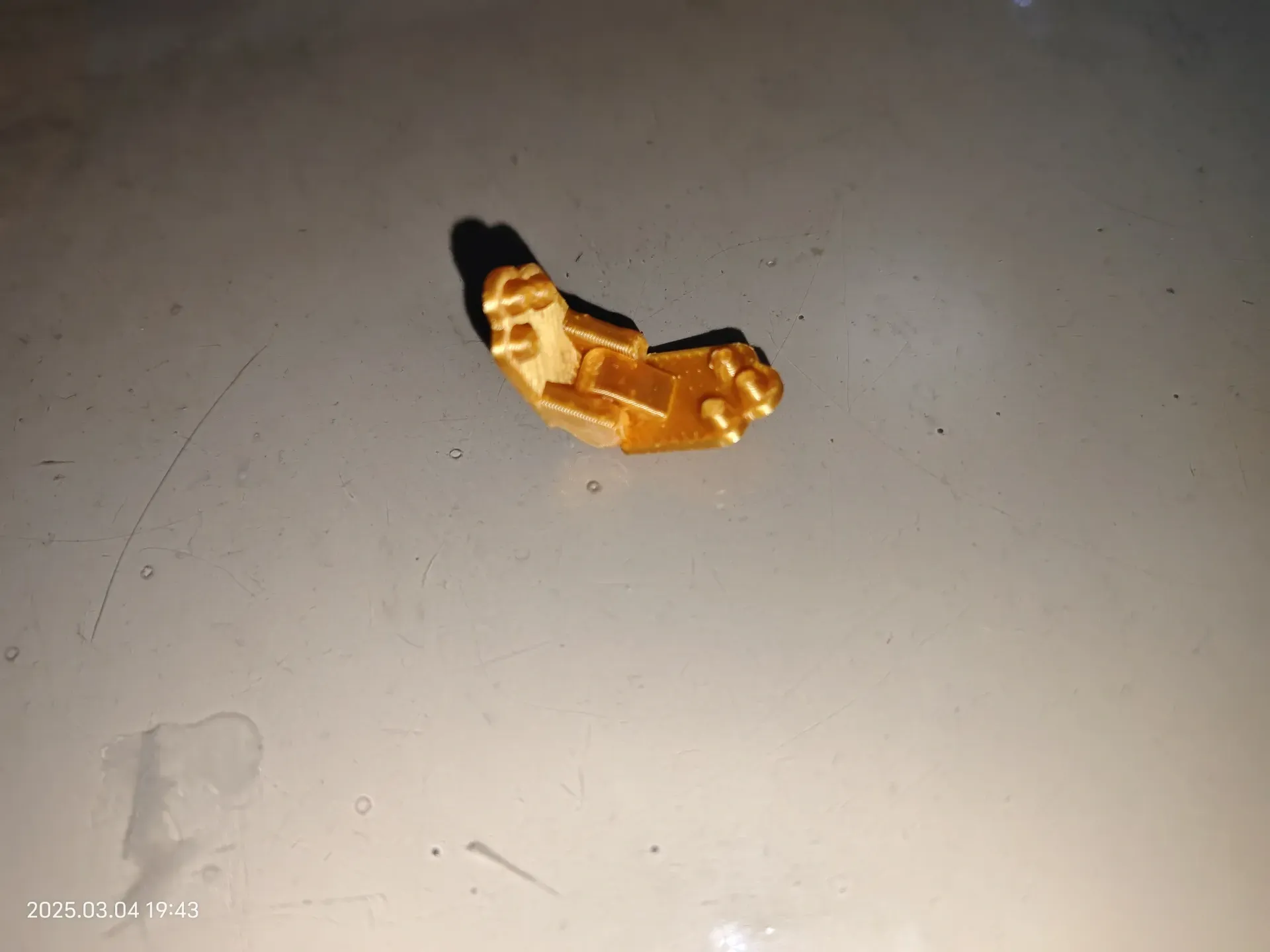
3、Assemble the four-layer structure using the snap-fit connectors.
Note: The printing material possesses elasticity and may require slight manipulation for assembly.
3. Connect the four layer structure sequentially using buckles
Note:that the printing material has elasticity and can be slightly deformed for installation
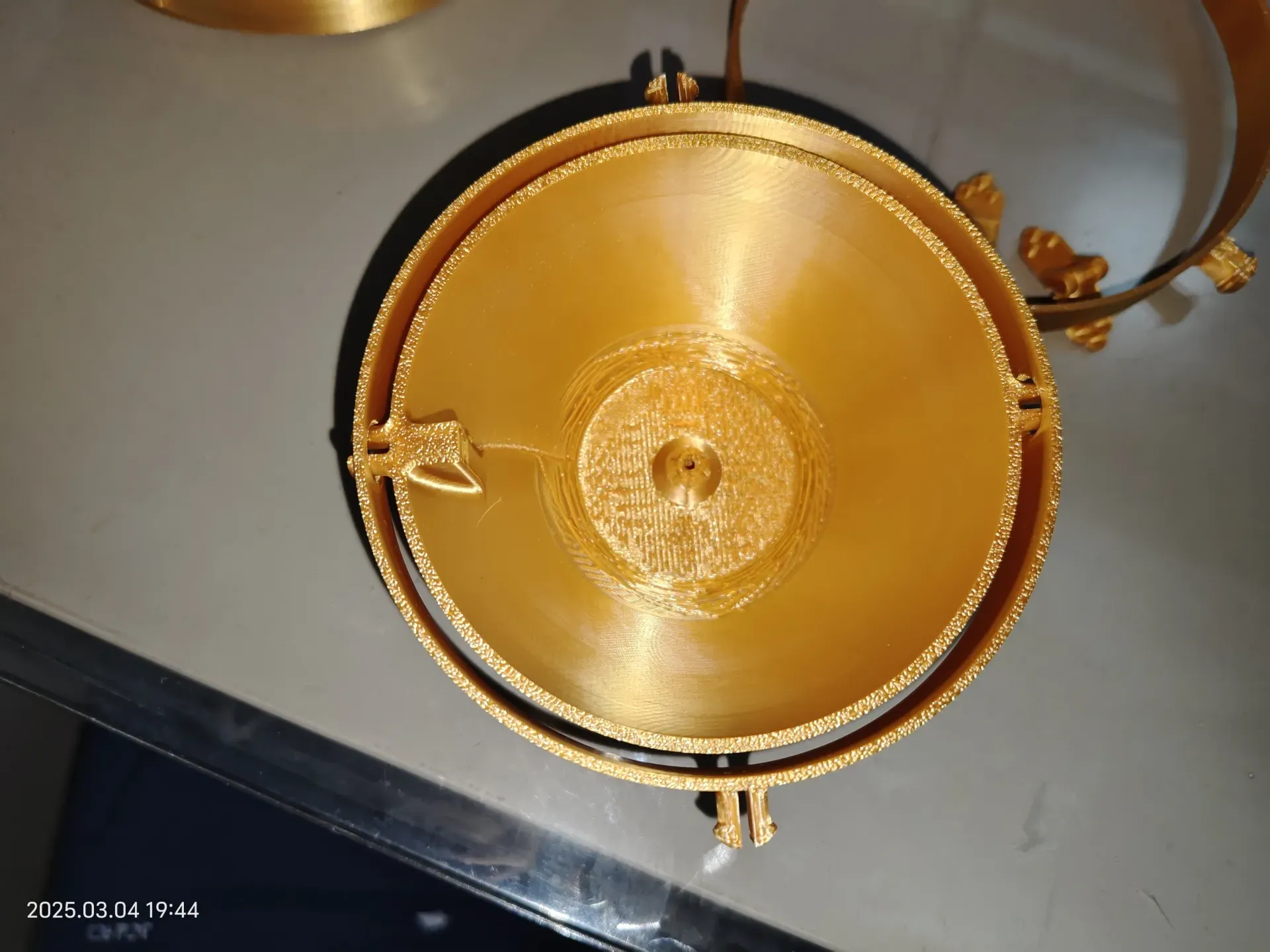
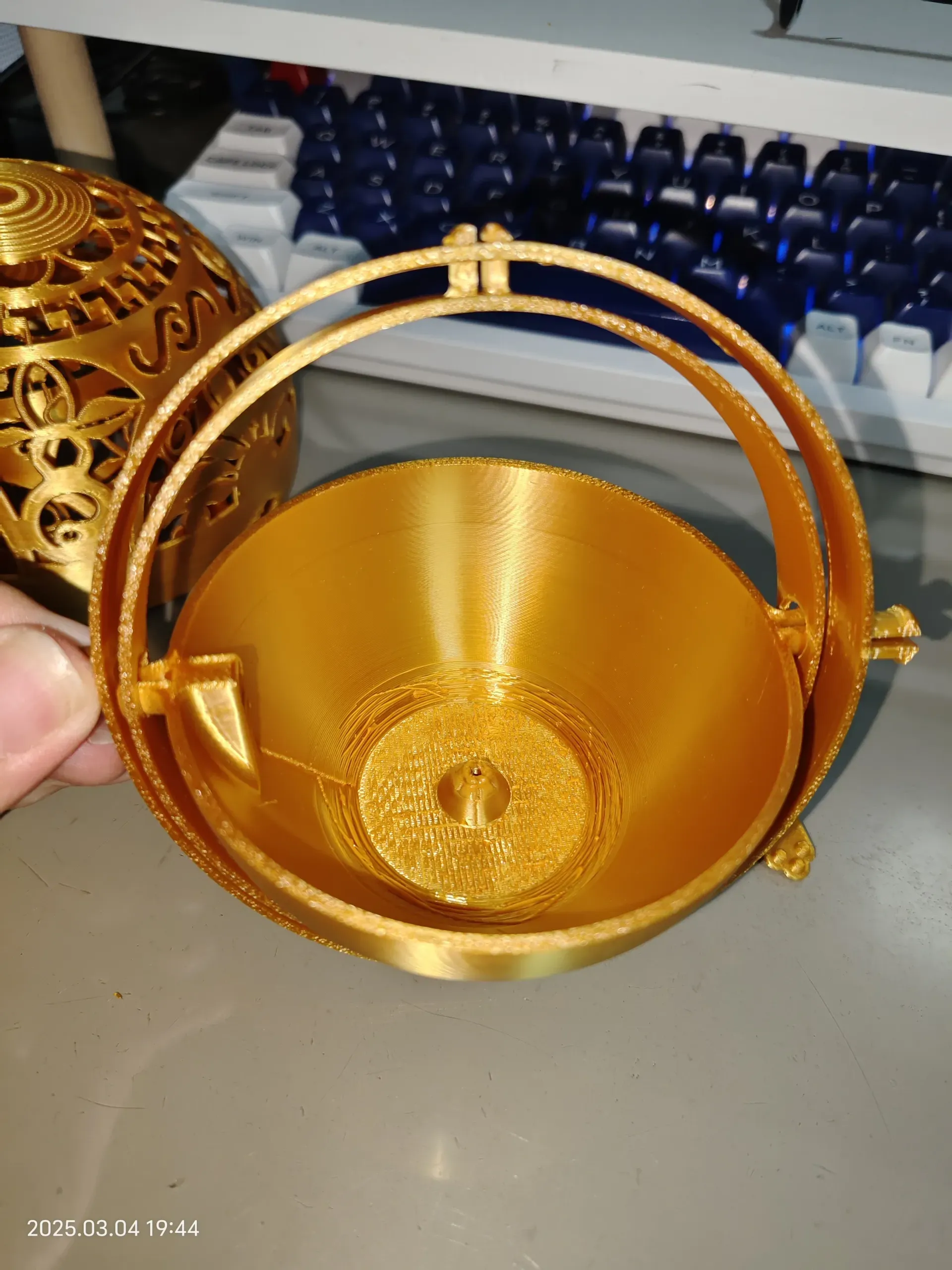
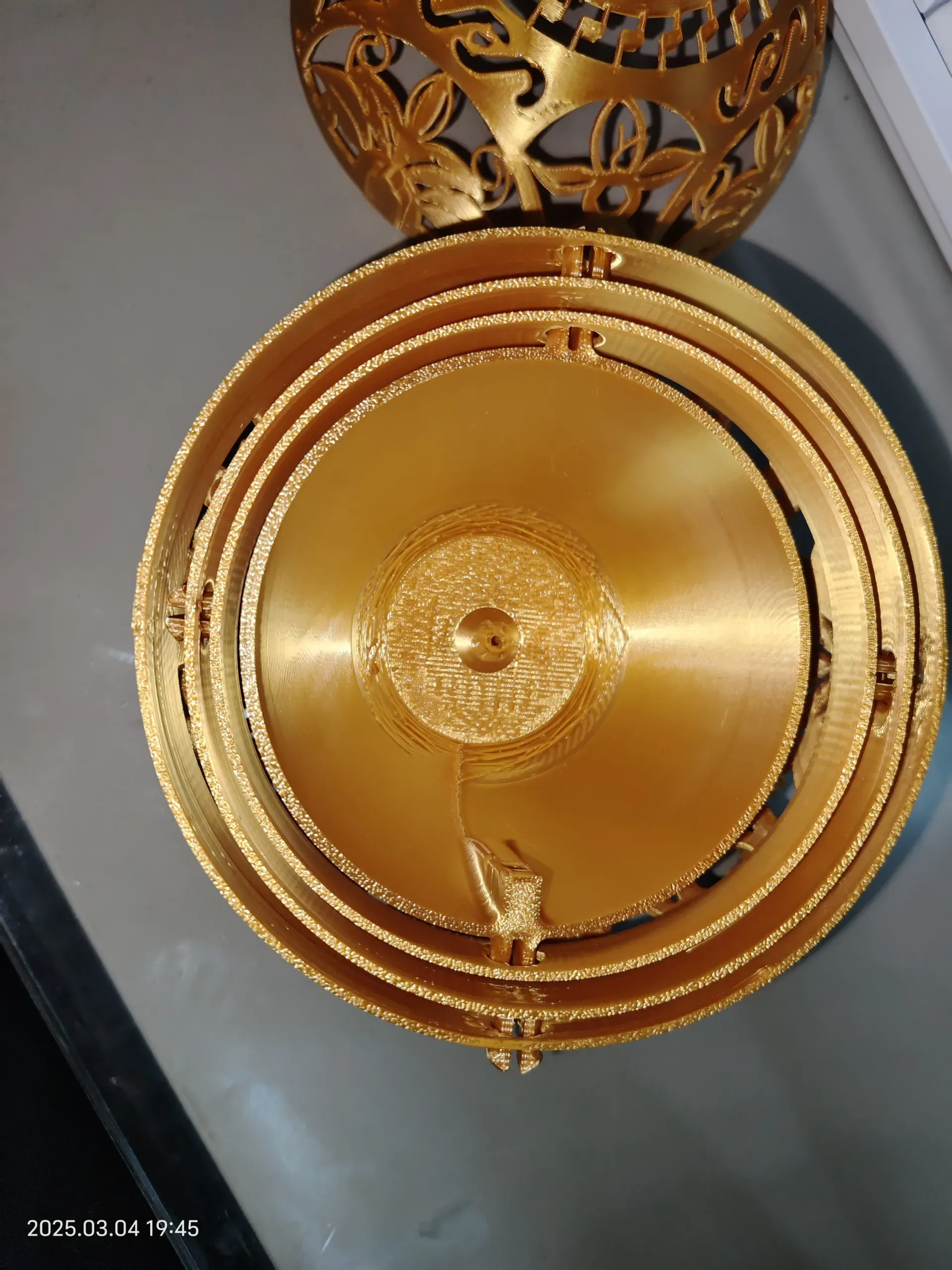
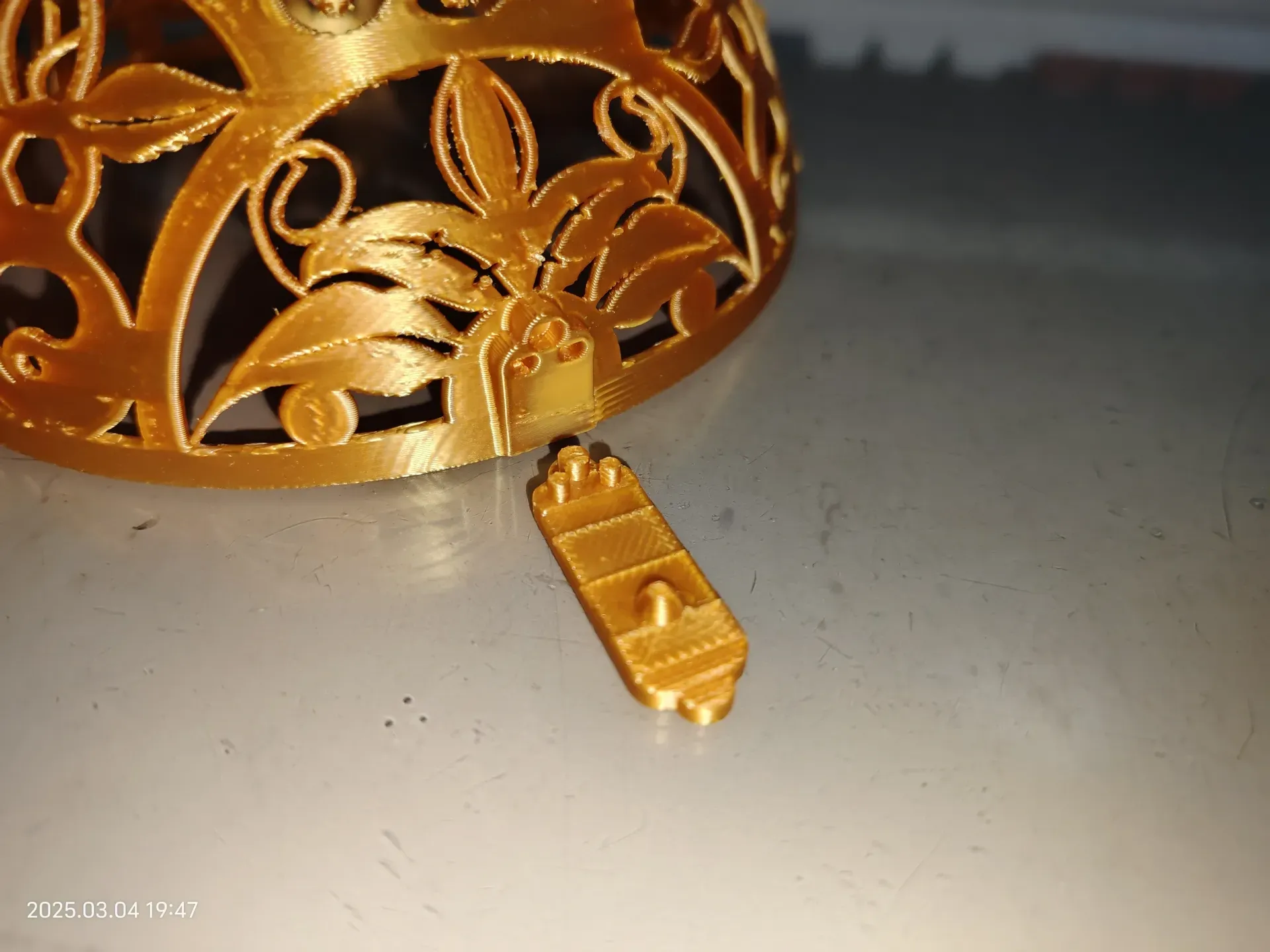
4、Adhere the two connectors to their designated locations on the top shell using adhesive.
Note: Install the connectors at locations with three apertures.
4. Use glue to stick both connectors to the corresponding positions on the upper shell
Note: Install buckles at positions with three holes
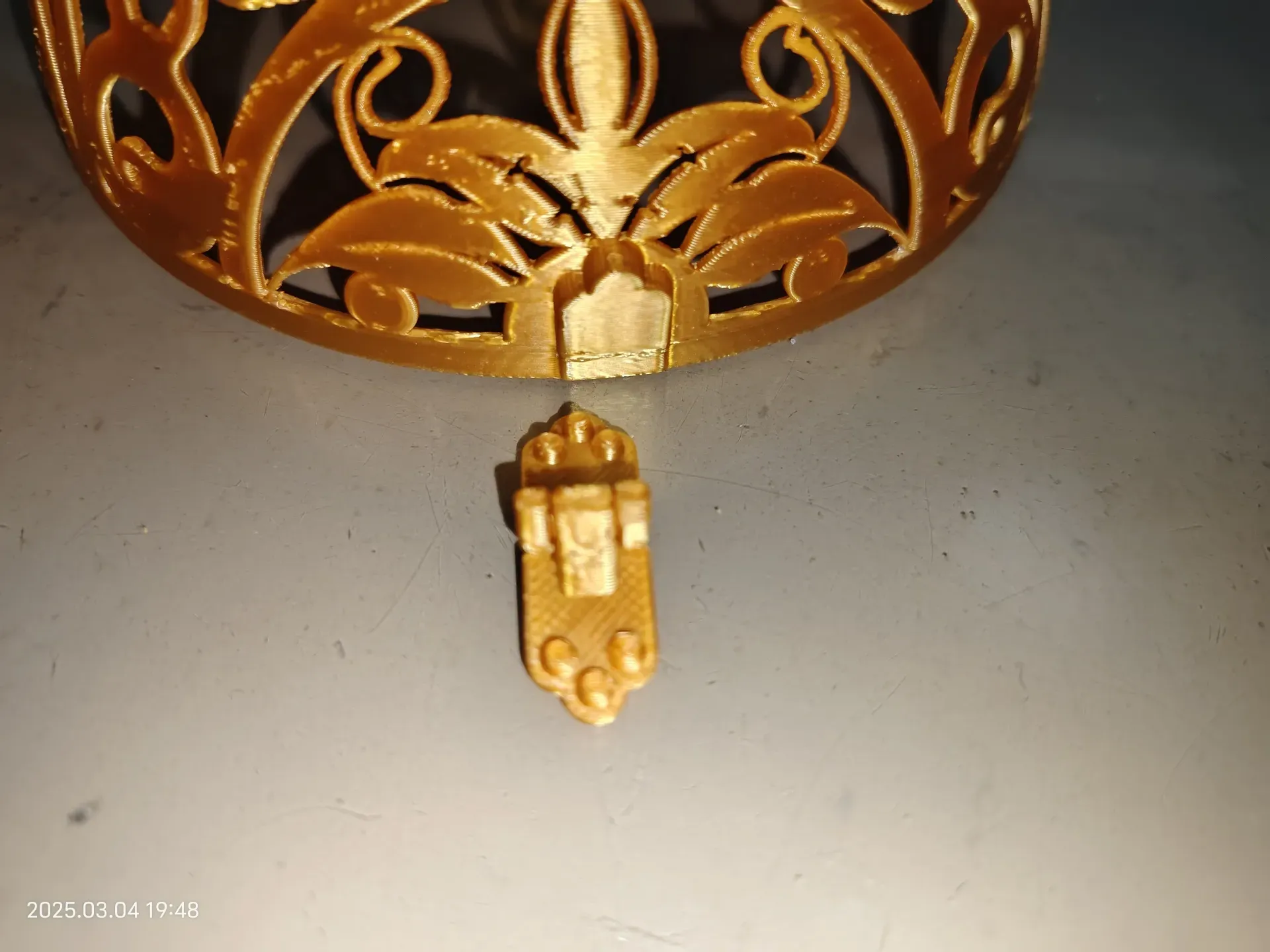
5、Attach the other end of the hinge to its corresponding position on the bottom shell.
Note: The bottom shell has a single aperture designated for buckle fixation; refrain from applying adhesive to the hinge in this location.
5. Paste the other end of the hinge on the corresponding position of the lower shell
Note: There is a hole in the lower shell where the buckle is fixed, do not stick the hinge
6、Allow the adhesive to cure completely before use.
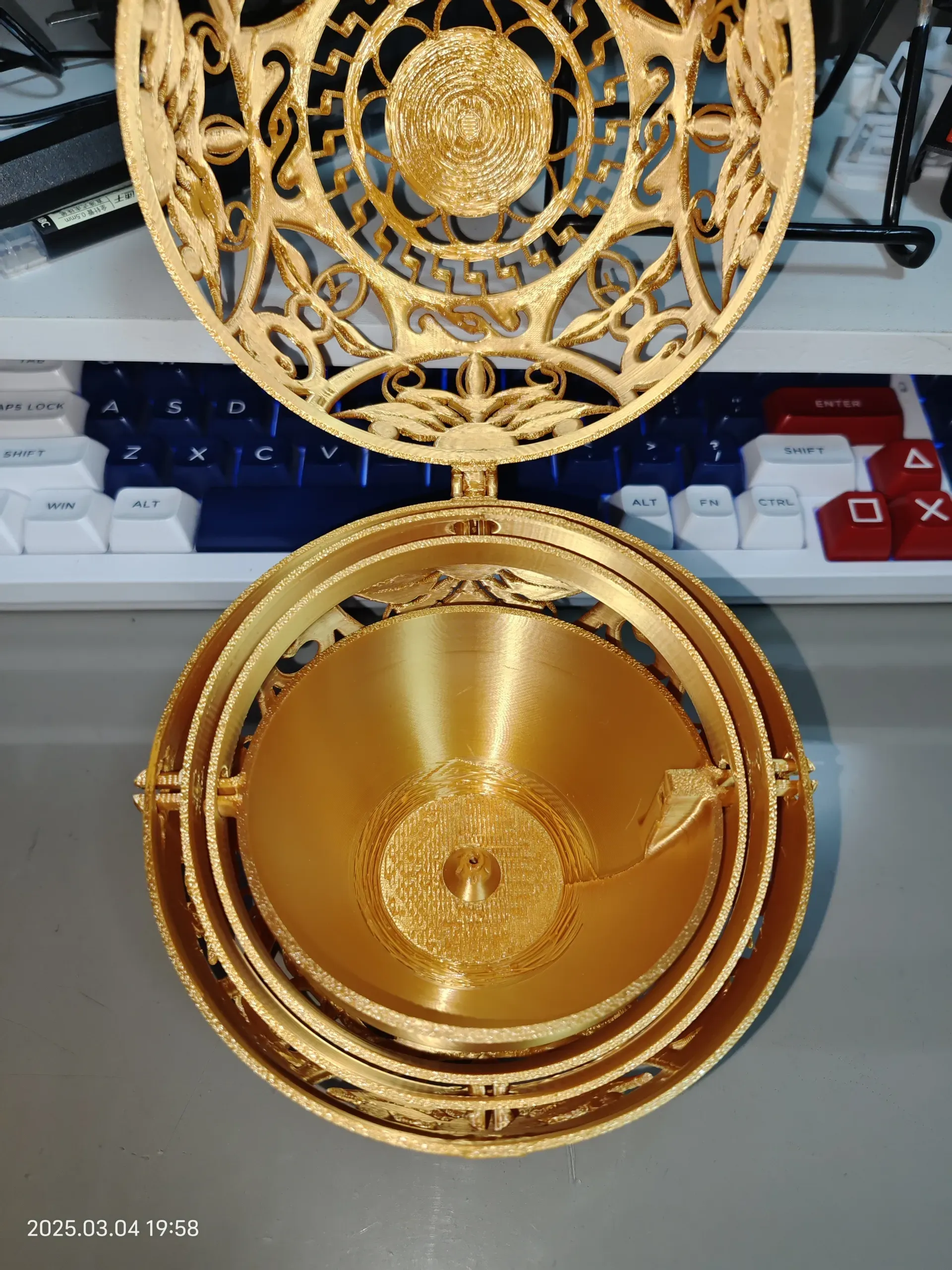
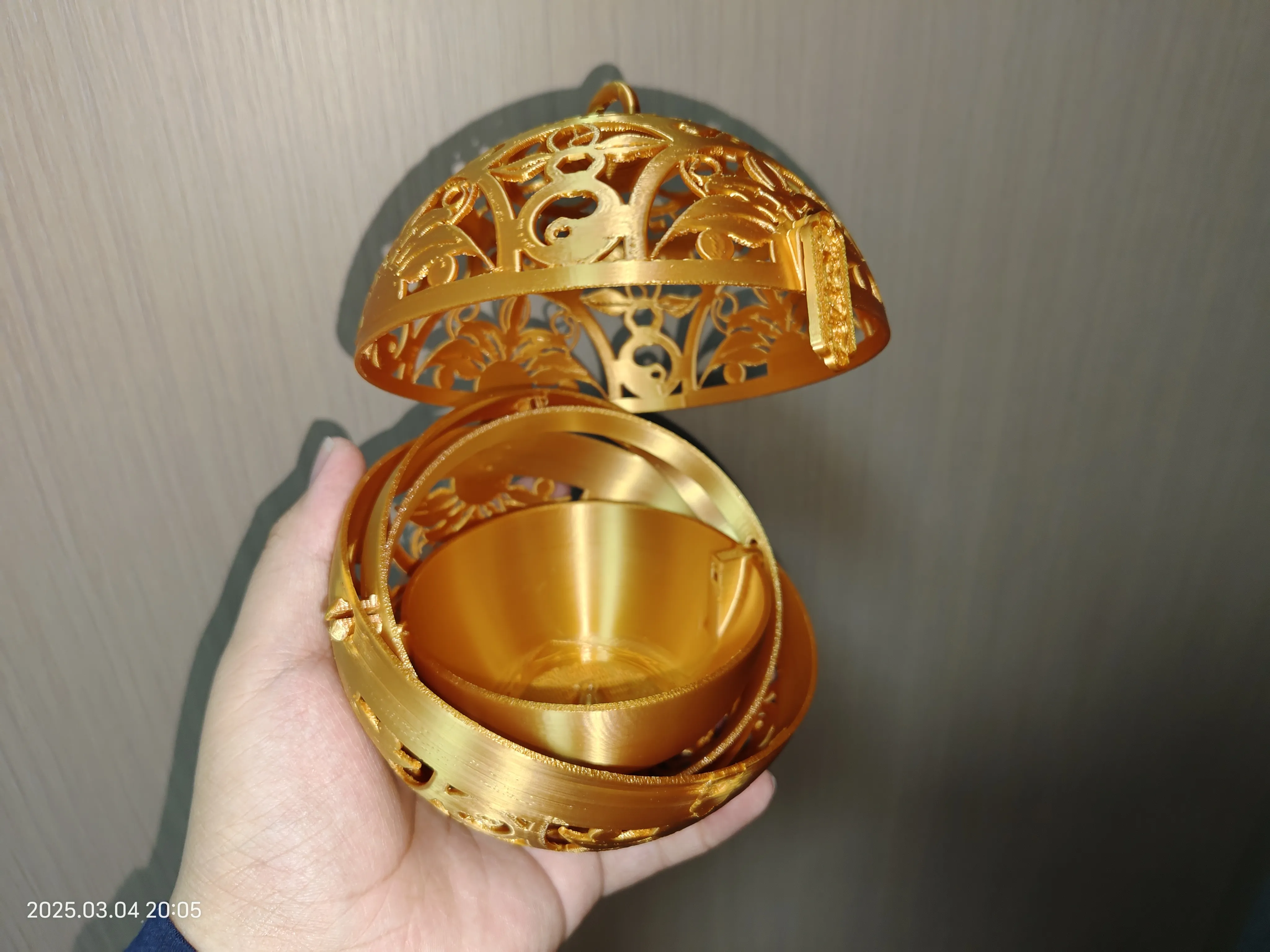
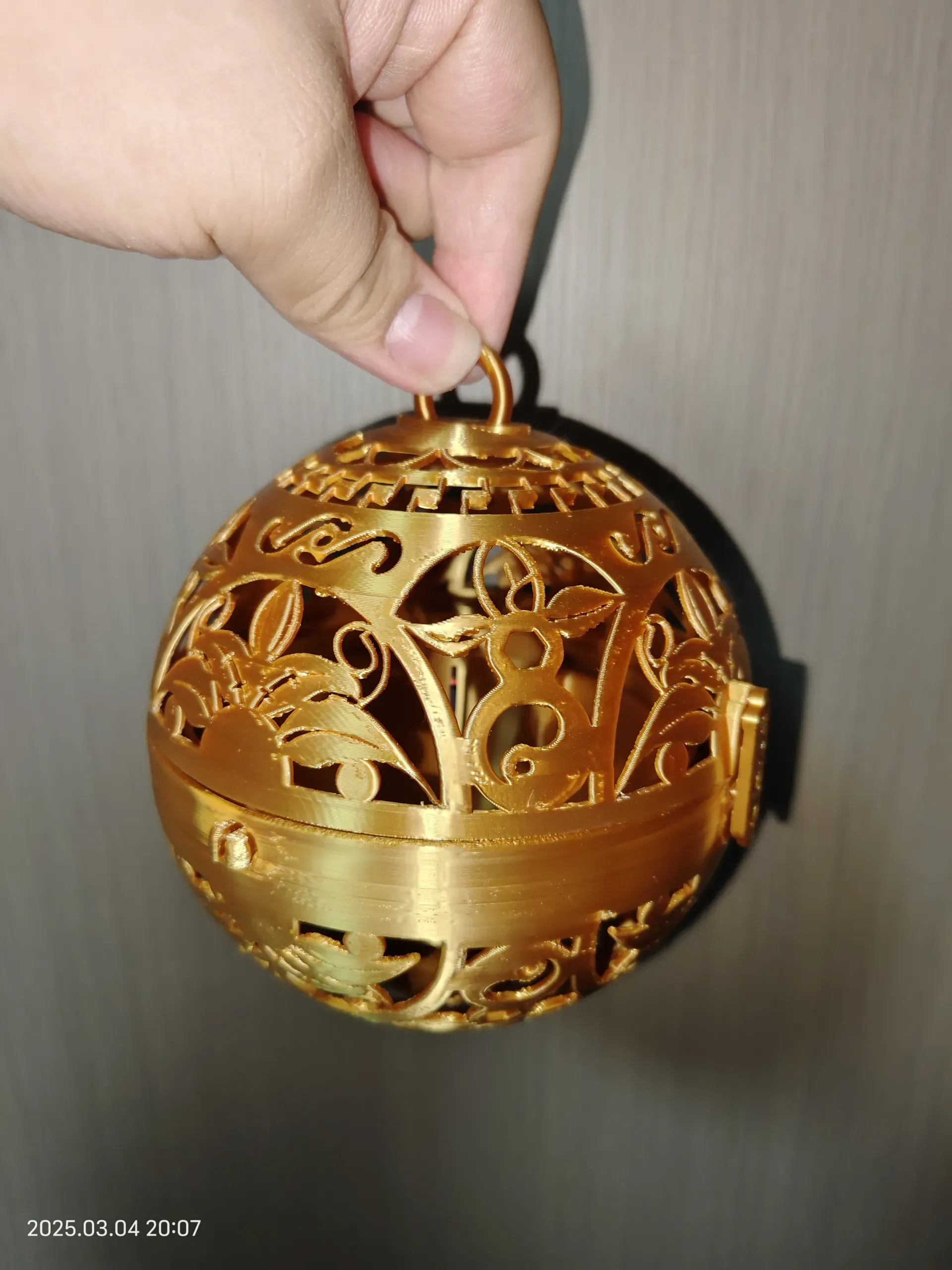
(The last two pictures show the completed project with an incense stick already lit.)
6. After waiting for the glue to solidify, the work is completed
(I have already lit a incense stick for the last two pictures and started using them,lol)
作者的话:
Author's words:
Frankly, I’ve contemplated creating this model for quite some time, but lacked the impetus until now, during this competition.
The fabrication proved more challenging than anticipated. My initial hurdle involved the design process itself. Employing SolidWorks, I found its capabilities for creating hollow spherical objects somewhat wanting, a shortcoming mirrored by my own limitations. Consequently, achieving the final result demanded considerable effort; even so, I remain unconvinced by the aesthetic merit of the resulting design.
My next challenge emerged during the printing phase. The incense burner’s thin, spherical shell necessitates substantial support structures, thus consuming considerable material and time. Lacking the time to optimize these supports, I leave this aspect for the discerning user to address.
To summarize the latter point: the support structure generated by the provided print profile is notably difficult to remove and materials-intensive. Those with the necessary time and resources may opt for direct printing and painstaking support removal. For those preferring to minimize support removal, further refinement of the support structure is advisable. Furthermore, should details be inadvertently severed during support removal, concern is unnecessary—the outcome might even prove aesthetically superior (I experienced this firsthand, to humorous effect).
A further challenge involved the incense insertion point. The design of the insertion ports is based on the 1.9mm incense sticks I had available, and both horizontal and vertical ports were provided. However, owing to inexperience and the inherent complexities of designing such a device, the ports exhibit flaws. Users may require the use of an awl or pin to enlarge and clear the insertion ports. I intend to rectify these shortcomings at a future time.
Here are two different pictures of connecting incense sticks:
Boost Me (for free)
This is my first foray into complex modelling; please excuse any imperfections.
This is my first time making a complex model. If there are any flaws, please forgive me
The entire text uses machine translation
Boost Me (for free)
Many thanks! Your boost is my breakfast!
License

You shall not share, sub-license, sell, rent, host, transfer, or distribute in any way the digital or 3D printed versions of this object, nor any other derivative work of this object in its digital or physical format (including - but not limited to - remixes of this object, and hosting on other digital platforms). The objects may not be used without permission in any way whatsoever in which you charge money, or collect fees.


Comment & Rating (0)