
Print Profile(2)


Description
After dedicating considerable time to hydroponics, I printed my first tower—the standard design commonly available. Upon successful completion, however, I discovered that while the print itself was flawless, the fit and stability left much to be desired. The taller the tower became, the more unstable it grew. Furthermore, the tubing system, while functional, presented challenges for expansion. Adding to the tower necessitated a completely new tube or cumbersome extension of the existing one. This prompted me to design my own tower, one that met my specific requirements. The result is a product with which I am entirely satisfied.
Preliminary considerations:
- This project is ongoing and will be augmented with further modifications (parts).
- Material consumption and associated costs were secondary concerns.
- Time commitment (part fabrication is time-consuming due to resource limitations) This project is labor-intensive!
- A fully modular system necessitates various supplementary components (screws, nuts, etc.)
Description:
This system is designed for scalability. Assembly involves simply joining the individual components. Theoretically, no screws are needed to connect the parts—simply push them together, and you're done. However, screwing the components together enhances stability and security. The precision of this depends on your printer's settings.
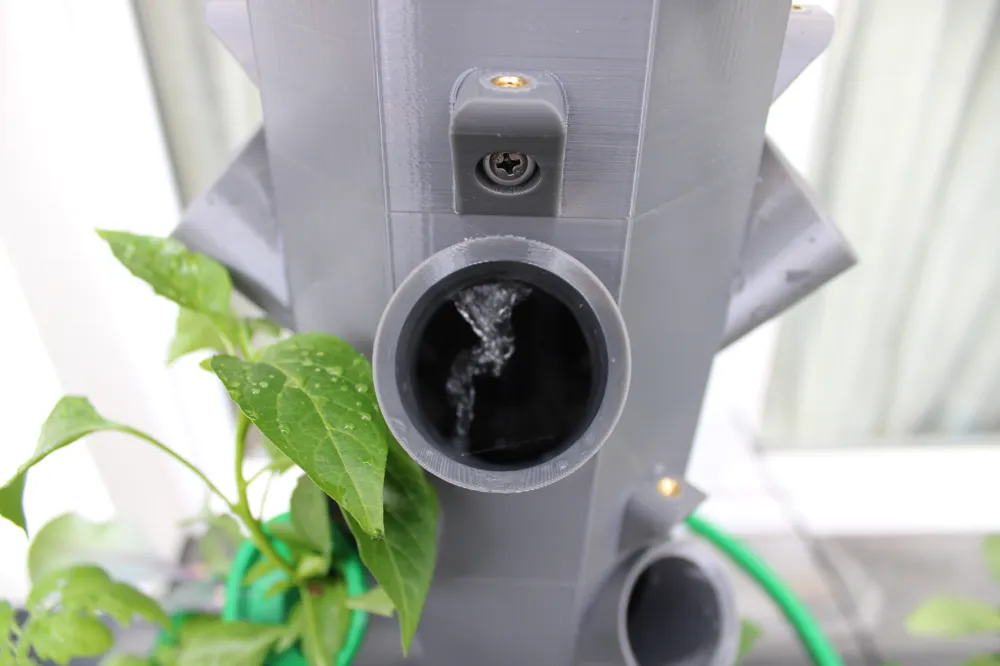
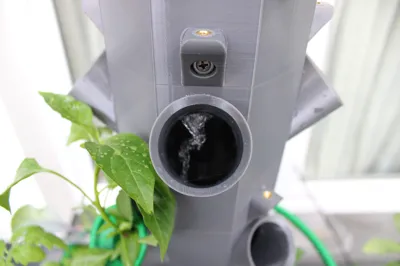
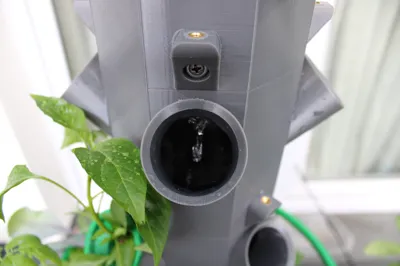
The tubing is only attached to the initial segment. Each subsequent section incorporates an integrated water conduit. A TPU sealing ring is inserted between each section. This makes the system completely modular, allowing for expansion, reduction, or reconfiguration as desired. I believe it might function without the seals, but I haven't tested this.
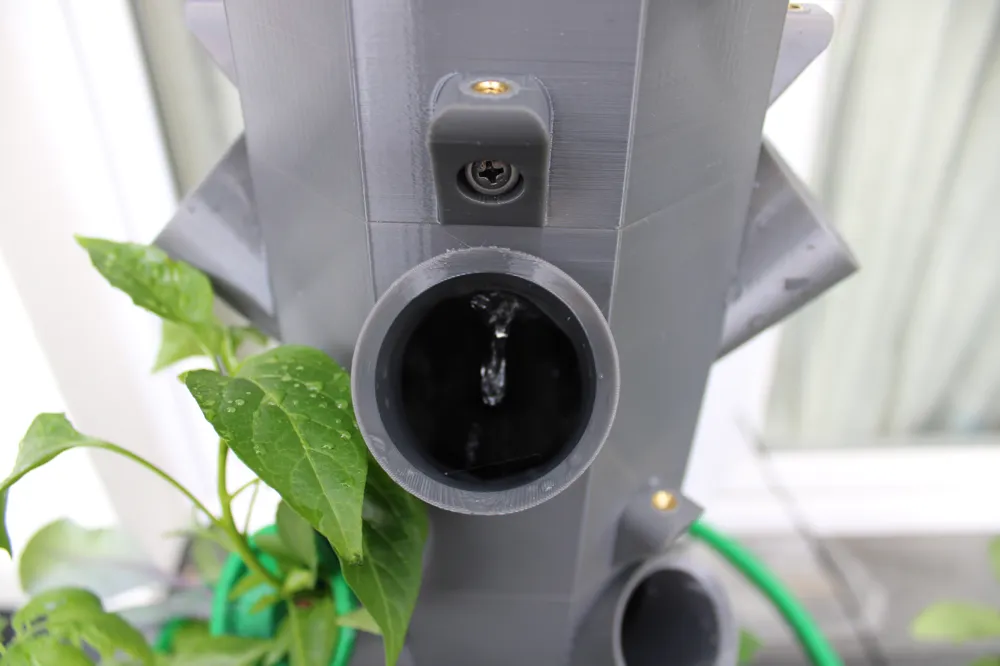
The first section (beginning) 13mm/19mm accommodates ½-inch or ¾-inch tubing, along with an additional filter. Being the first piece, it's designed for robustness. The assembly process is adaptable; I incorporated a screen into every third section to redistribute the water (though this does increase the noise level), but it works wonderfully. I also integrated four embedded nuts into each piece for later attachment of the frame. This is, however, optional.
The end piece features a direct water flow and can be operated without a cap. To prevent debris from entering the tower, however, I've included a cap, though it's not screwed on.
Frame:
The frame sections are paired; two pieces are screwed together and then inserted into the tower. These can then be further screwed together as needed. I used two screws each, although three holes are provided.
Pots:
The inserts vary for the 4-tower and 8-tower configurations.
Parts list:
Filter: https://www.amazon.de/dp/B0B28YZ1DJ?ref=ppx_yo2ov_dt_b_fed_asin_title&th=1
Screws for part connection (4.2x16mm): https://www.amazon.de/dp/B0CX5G71MM?ref=ppx_yo2ov_dt_b_fed_asin_title&th=1
Embedded nuts for frame: M5 (7mm wide x 8mm long)
Frame screws: M4 x 16mm + M4 nuts
Washers for frame: M4 x 9mm
Screws for attaching frame to tower: M5 x 20mm countersunk head
Pump: https://www.amazon.de/dp/B07MYTNXFF?ref=ppx_yo2ov_dt_b_fed_asin_title&th=1
The model is still under development and will be further expanded!
Currently, I have lids for a plant pot:
Round 35cm
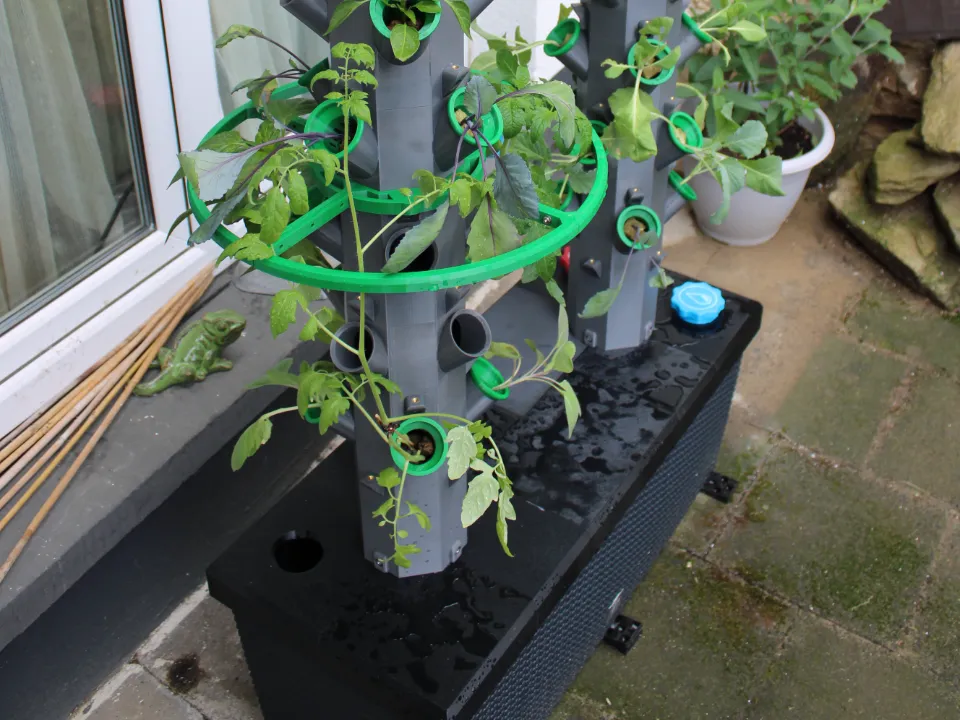
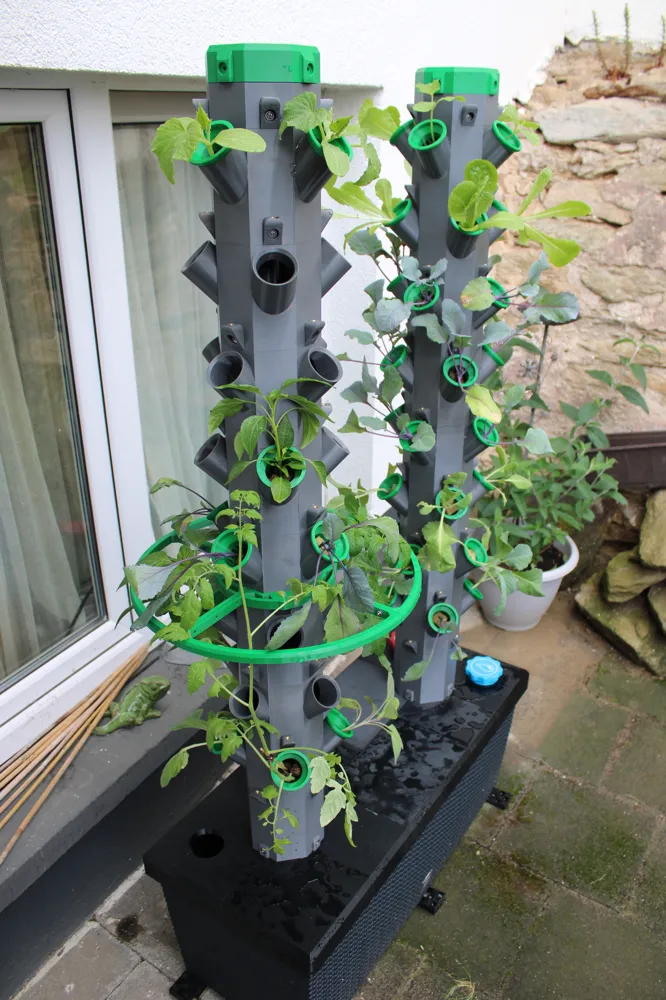
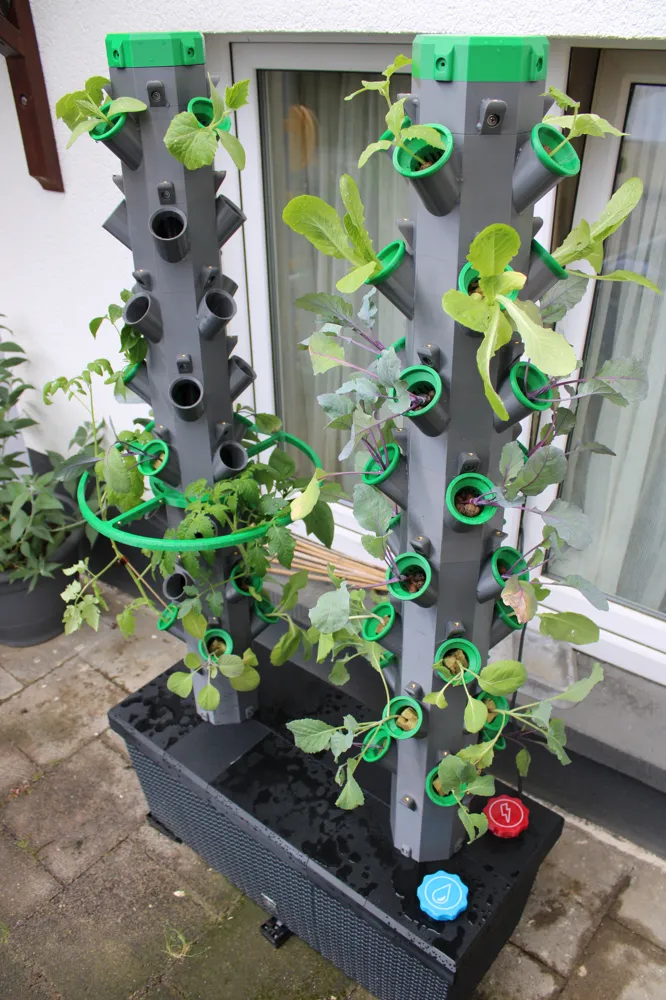
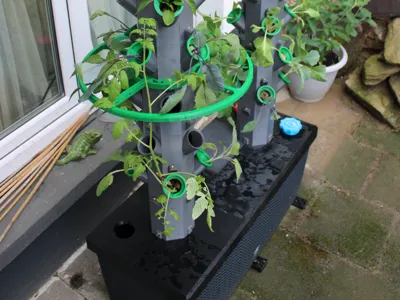
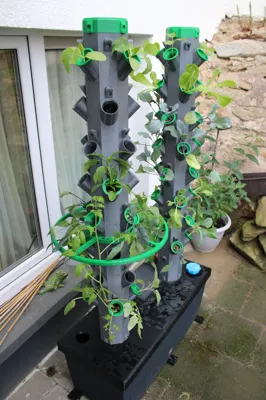
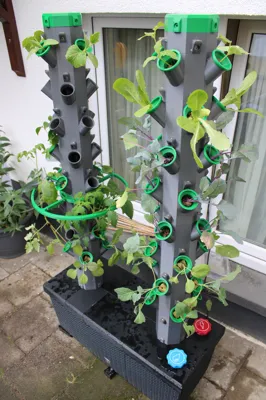
Square 80cm x 31cm (as shown in the image)
The part—blank starting attachment—is the connecting piece needed to model the plant pot lid.
License



Comment & Rating (5)