✨ Model Highlights: Where Chemistry Experiments Meet Space Dreams—The First 3D-Printable Hydrogen-Oxygen Fueled Rocket! ✨

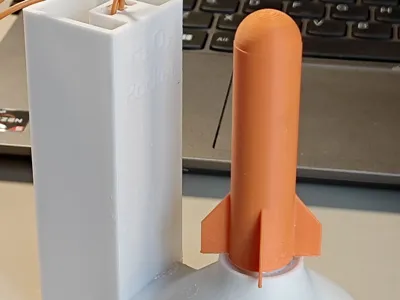
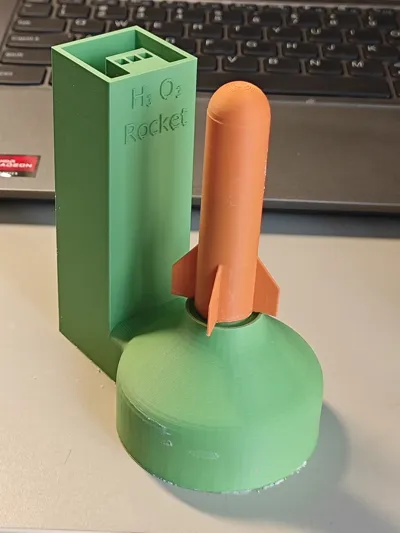
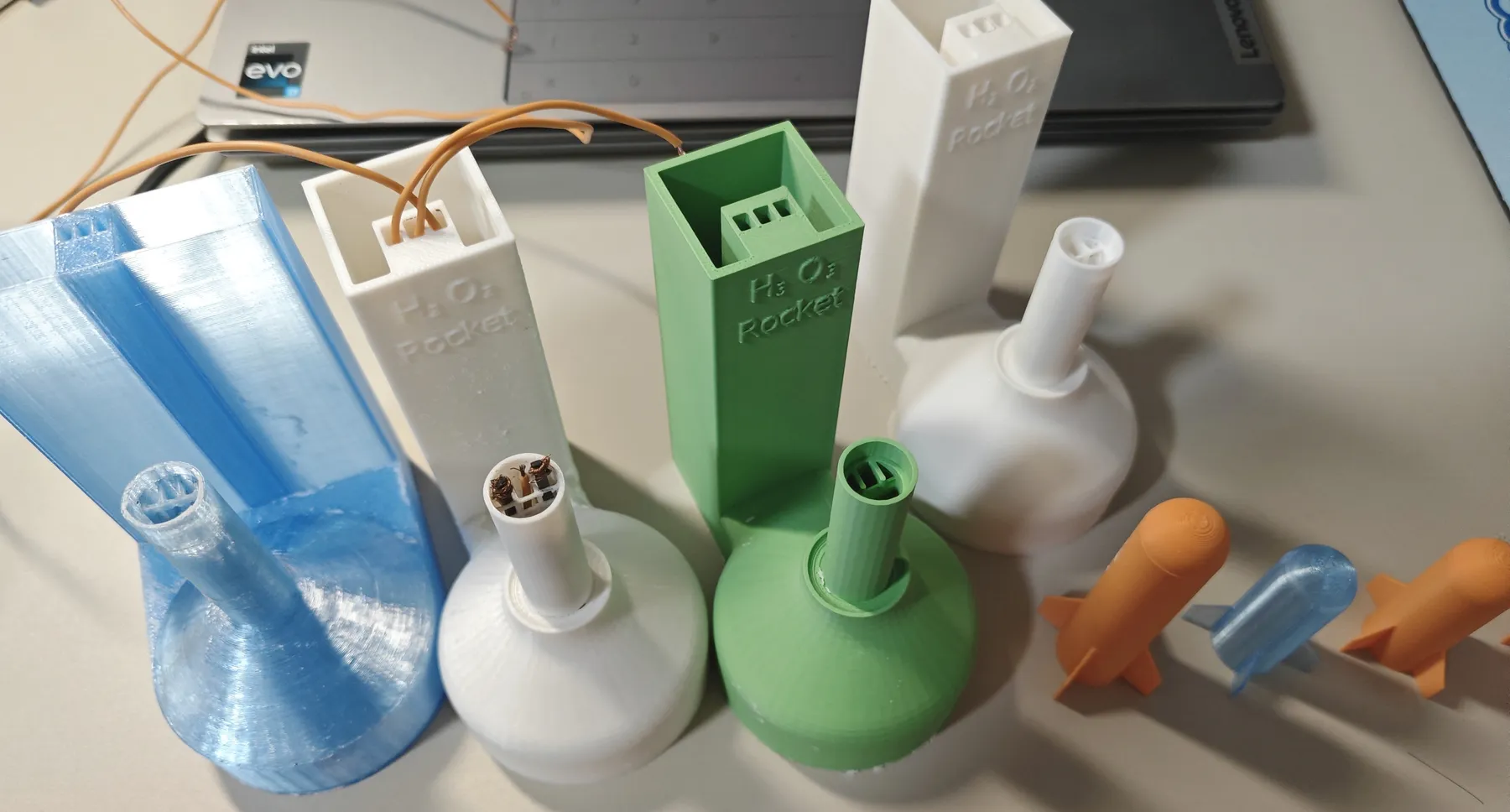
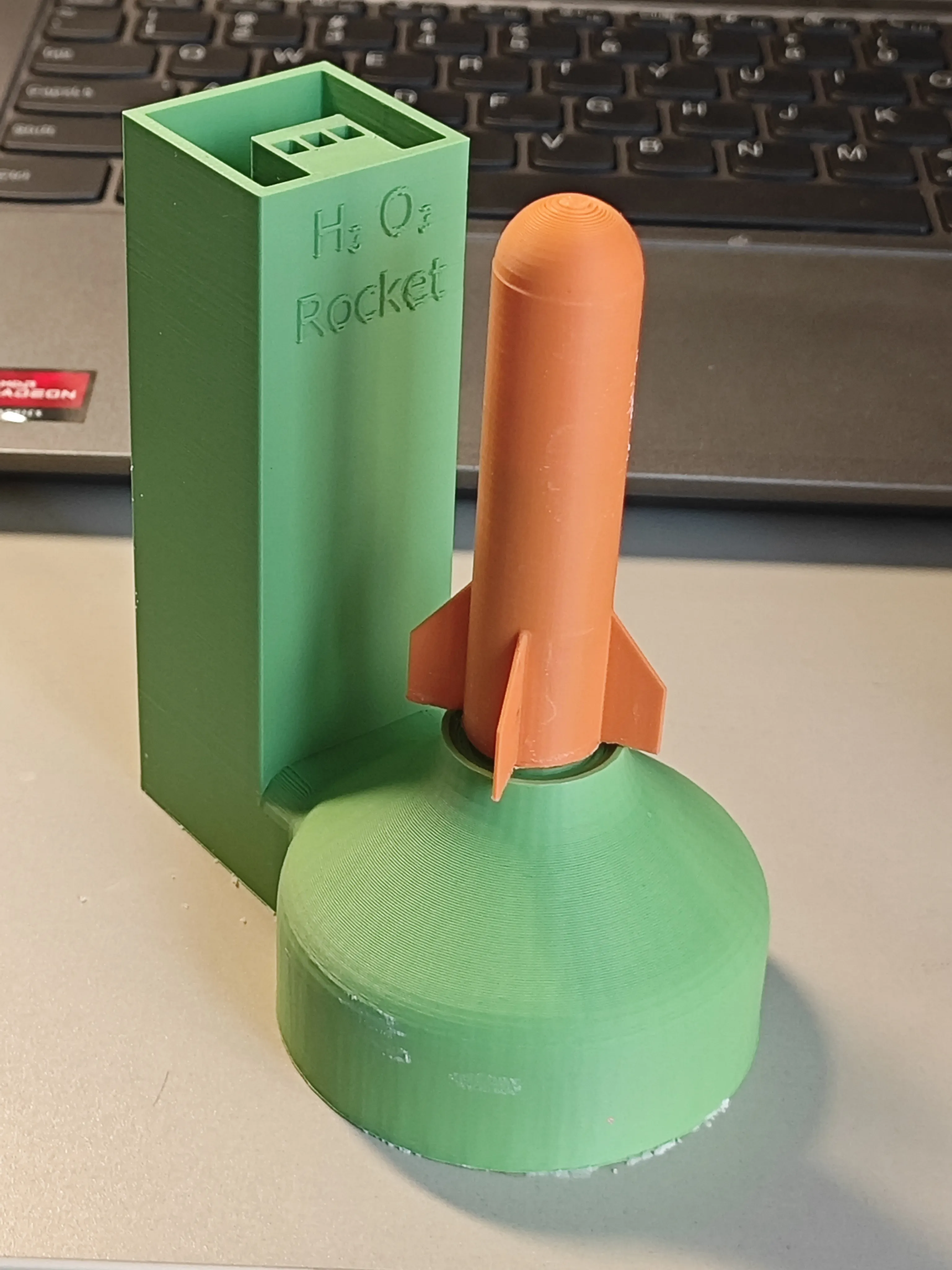
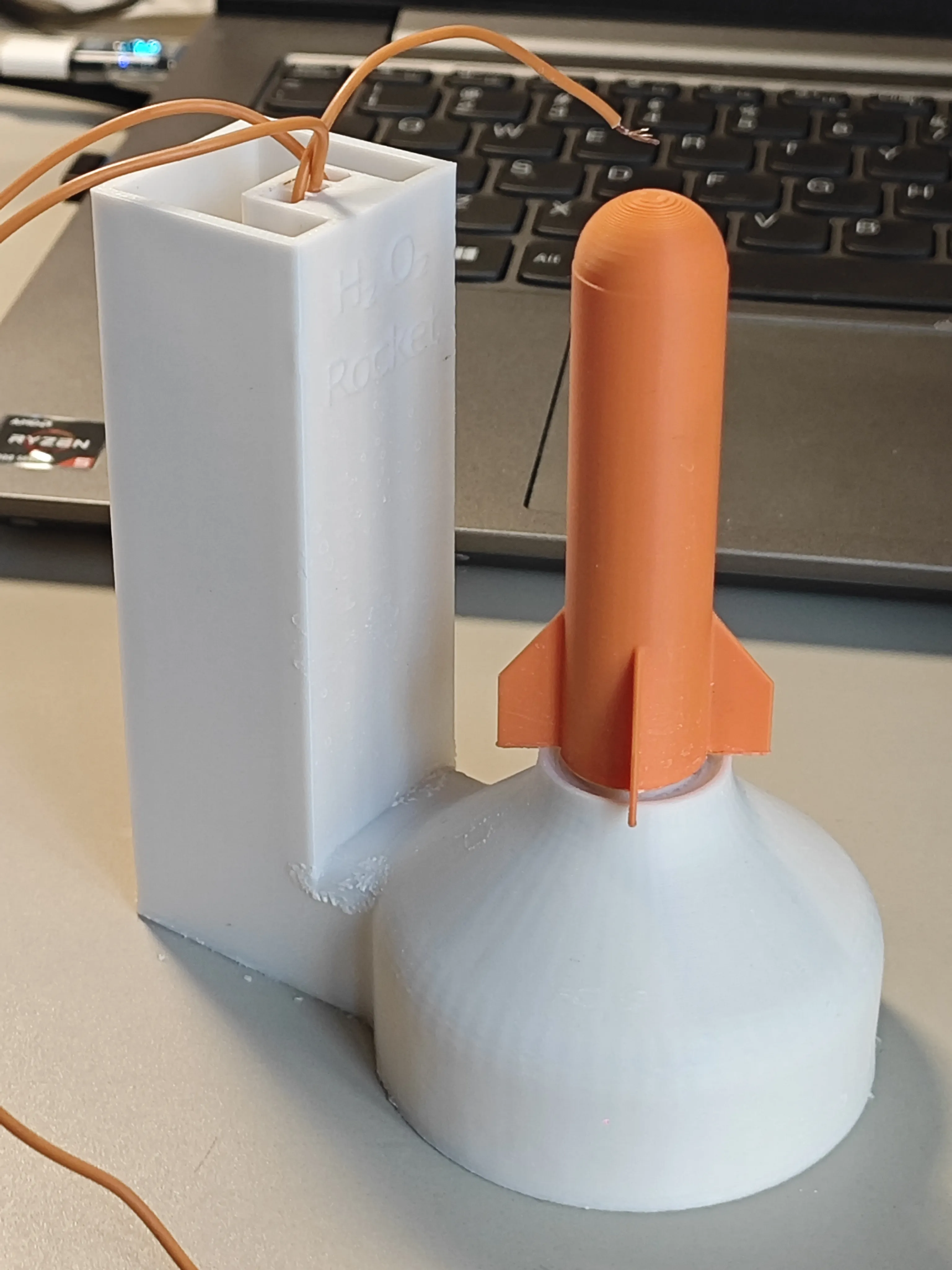
This is no ordinary toy; it's a rocket capable of igniting hydrogen and oxygen, and a fascinating water electrolysis science apparatus! Utilizing 3D printing technology to recreate the water electrolysis principle, it transforms chemical energy into kinetic energy. Coupled with a rocket launch structure, children will quickly grasp the scientific mystery of "hydrogen-oxygen combustion" through hands-on operation while experiencing the satisfaction of launching their own rocket—a blend of playful entertainment and textbook-level knowledge, a dual reward in one model!
🚀 Core Functionality and Scientific Principles 🚀
✅ Water Electrolysis Gas Generation System: An integrated miniature electrolytic cell, when connected to a 12V power supply (adapter required), decomposes water into hydrogen and oxygen. The gases converge through tubing into the rocket fuel tank, recreating the classic middle school chemistry experiment, "2H₂O=2H₂↑+O₂↑". (Adding sodium bicarbonate (NaHCO₃) is recommended to enhance the reaction; do not use sodium chloride (NaCl)). Standard exam pencil leads can be used as electrodes.
✅ Safe Ignition and Launch Mechanism: A lighter-style electrical igniter is included (ignition module requires self-installation). Pressing the switch generates an electric spark, igniting the gas mixture to propel the rocket "into the air," simulating a real rocket fuel combustion scenario. Launch height can reach 10-50cm (recommended for indoor use).
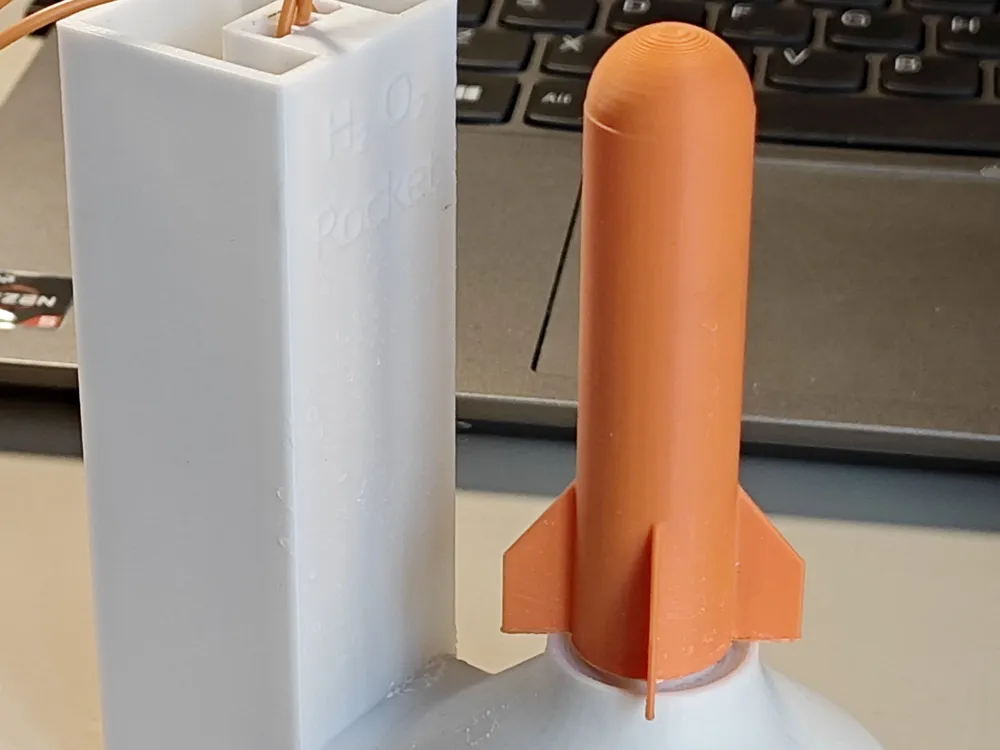
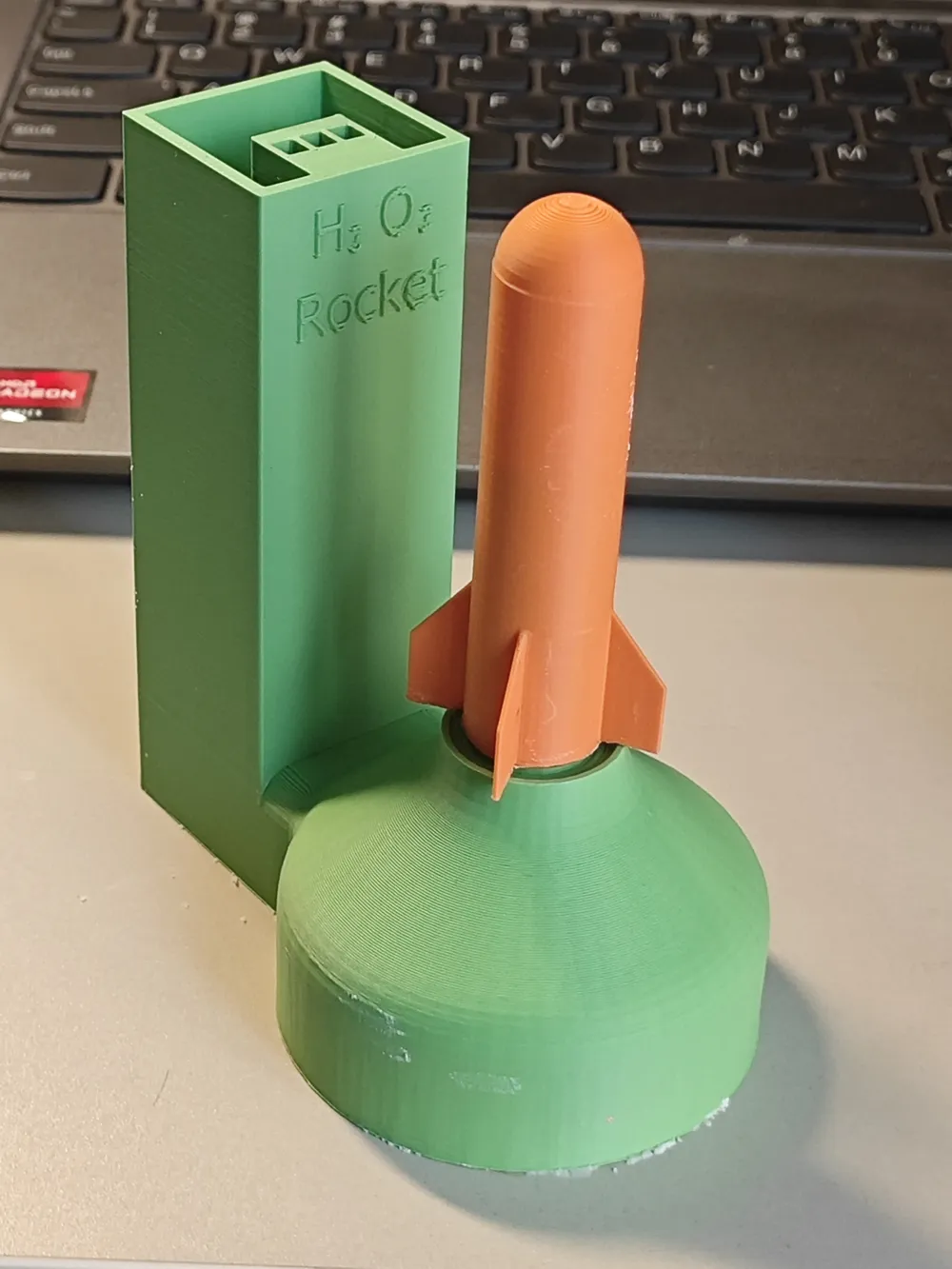
✅ Educational and Entertaining Design: The model's structure clearly displays the water electrolysis process, gas collection device, and rocket propulsion principle, helping children understand the scientific concept of "energy generation from chemical reactions". Suitable for 8+ years old for parent-child interaction or as a science class teaching aid.
🎨 Printing and Usage Details 🎨
Material Requirements: No supports needed; easily printed by beginners.
Safety Precautions: Adult supervision required during launch. Keep away from fire and flammable materials. Control the amount of gas collected per experiment within a safe range (3 minutes of electrolysis is suggested at 12V).
🌟 Why Choose This Model? 🌟
Scientific Enlightenment Tool: Makes abstract chemical principles "visual," more engaging than textbooks and more immersive than videos;
Excellent Parent-Child Interaction: Print, assemble, and experiment with your child, fostering scientific thinking through play;
Creative Toy at a New Level: Go beyond traditional building blocks; let a "launchable science model" be the highlight of your child's social circle!
"When children witness the gas produced by water electrolysis igniting the rocket, the light in their eyes shines brighter than the spark—this is the best moment for scientific enlightenment."
Assembly Details:
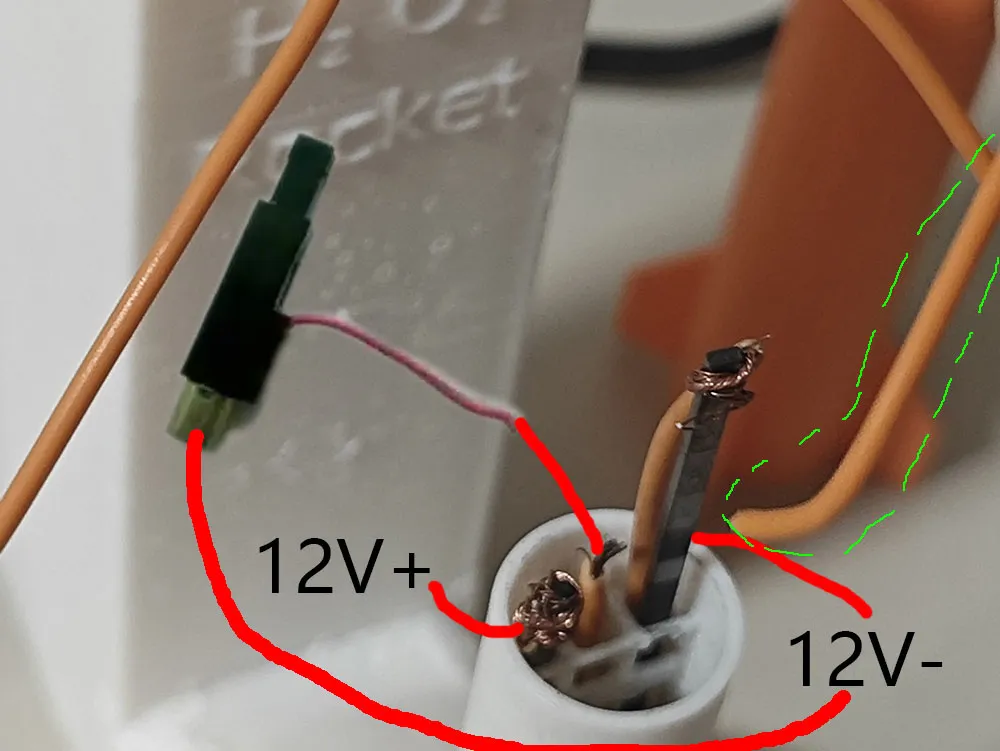
1. Insert the wires from the launch port. Before insertion, slightly bend the wire ends for easier insertion into the guide slot and exit from the other end, referring to the shape in the green box below.
2. Connect the three wires to the power source positive terminal, ignition wire, and power source negative terminal (also the ignition negative terminal). Securely bind the electrolysis electrodes to the wires. Maintain an appropriate distance between the ignition wire and the negative terminal; connect the igniter's metal end to the negative terminal. Ensure you see a spark before adding water.
3. Use thick pencil leads for electrodes; do not use active metal electrodes. Use a sodium bicarbonate solution as the electrolyte; other solutions are not recommended as they may produce unsafe gases.
4. A 12V power supply (approximately 5W) is sufficient for electrolysis. Increasing the voltage will accelerate the electrolysis process but monitor the electrolyte temperature and prioritize safety.
To ensure one-piece molding, watertightness, and airtightness, the model has undergone numerous meticulous revisions. This original design is the product of considerable effort; your support is greatly appreciated.
Boost Me (for free)
Boost Me (for free)
如果我的设计有帮助到您,希望能为我投一个免费的助力!谢谢!
If my design has been helpful to you, I hope you can give me a free boost! Thank you!
This user content is licensed under a Standard Digital File License.
You shall not share, sub-license, sell, rent, host, transfer, or distribute in any way the digital or 3D printed versions of this object, nor any other derivative work of this object in its digital or physical format (including - but not limited to - remixes of this object, and hosting on other digital platforms). The objects may not be used without permission in any way whatsoever in which you charge money, or collect fees.





Comment & Rating (7)