
Auspicious Lattice
Print Profile(1)

Description
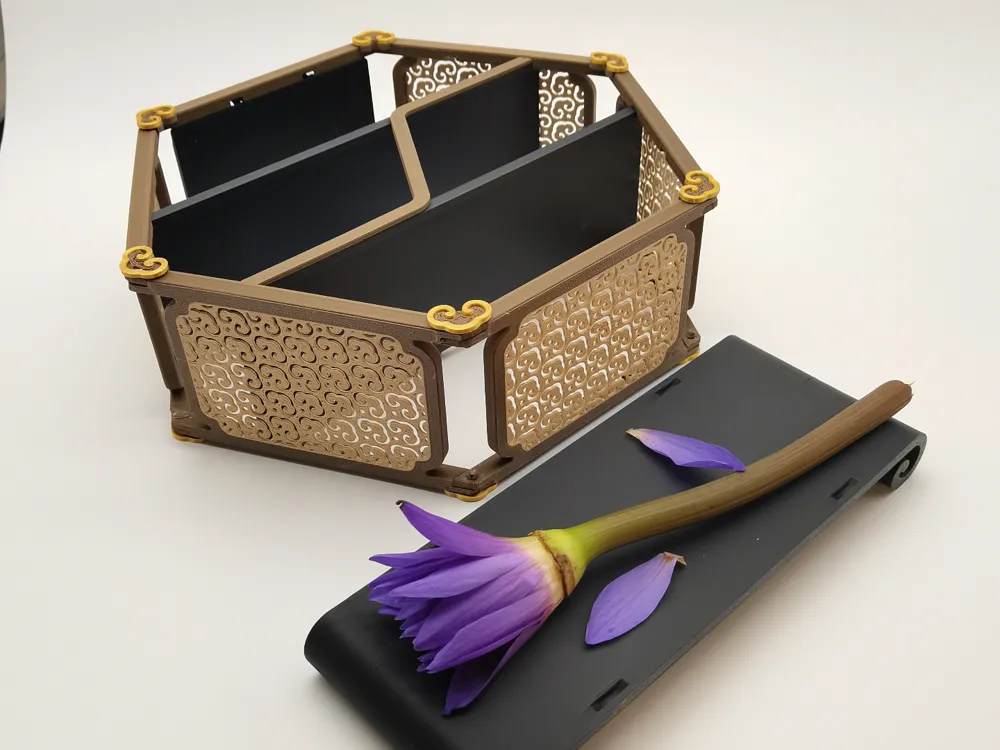
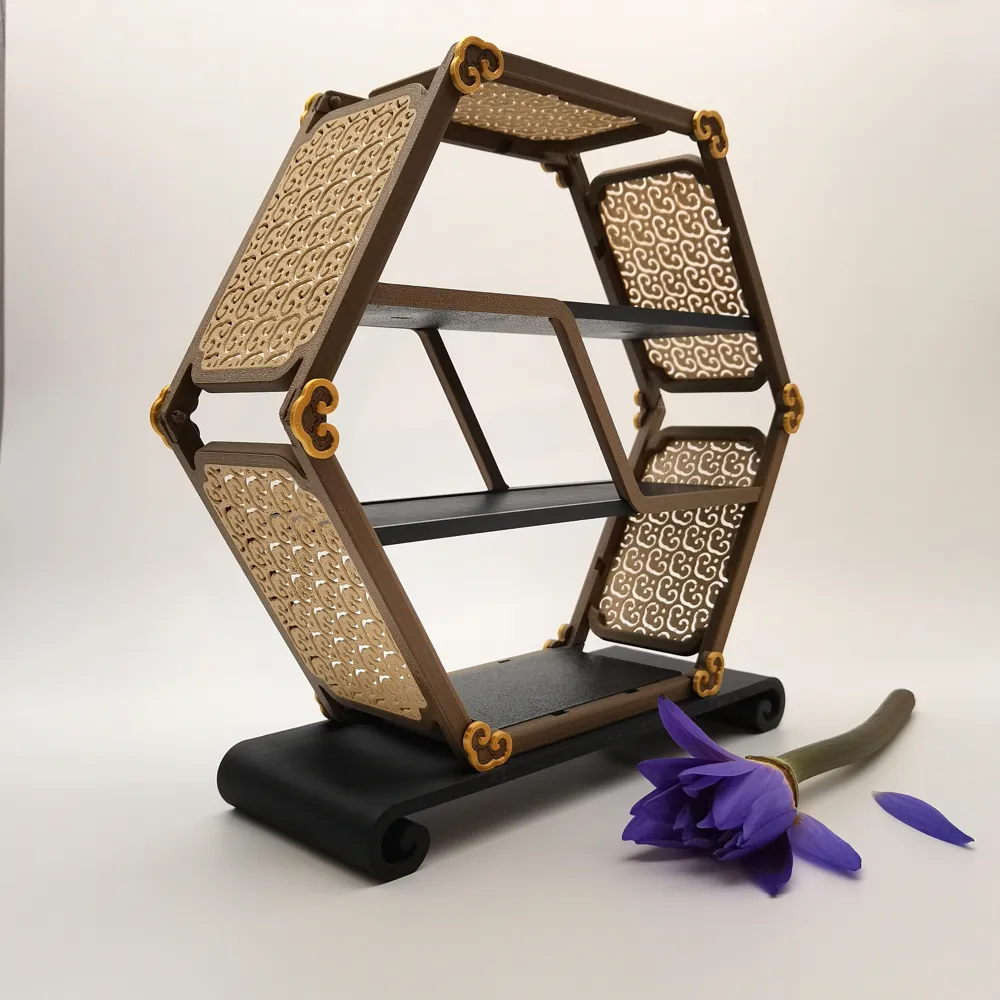
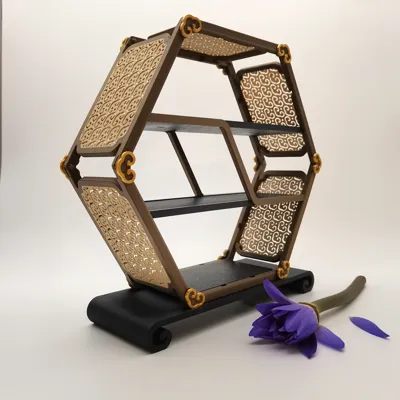
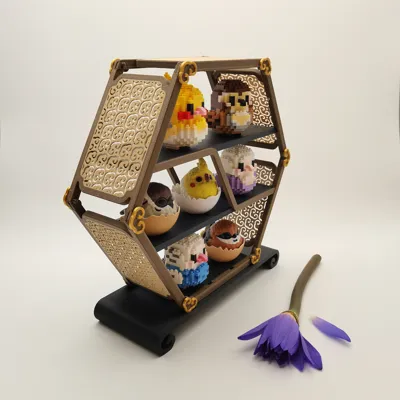
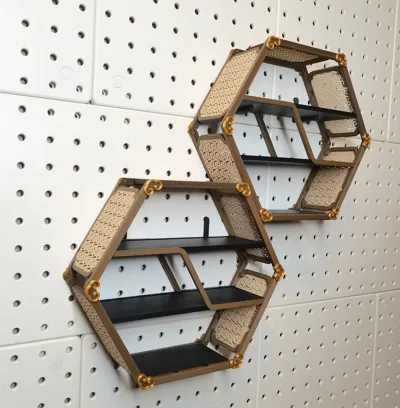
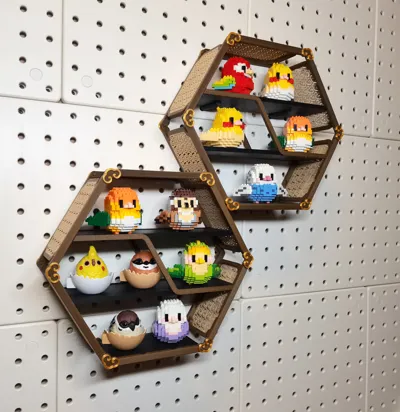
This 3D-printed display stand, inspired by the multi-tiered display cabinets of the Ming and Qing dynasties, incorporates traditional Chinese motifs such as the Ruyi scepter, the Two Instruments (Yin and Yang), and the Six Harmonies. The design seamlessly blends classic Chinese aesthetics with the contemporary appeal of figurines, leveraging 3D printing technology to achieve exceptional detail and precision. This fusion of ancient artistry and modern technology creates a striking visual impact.
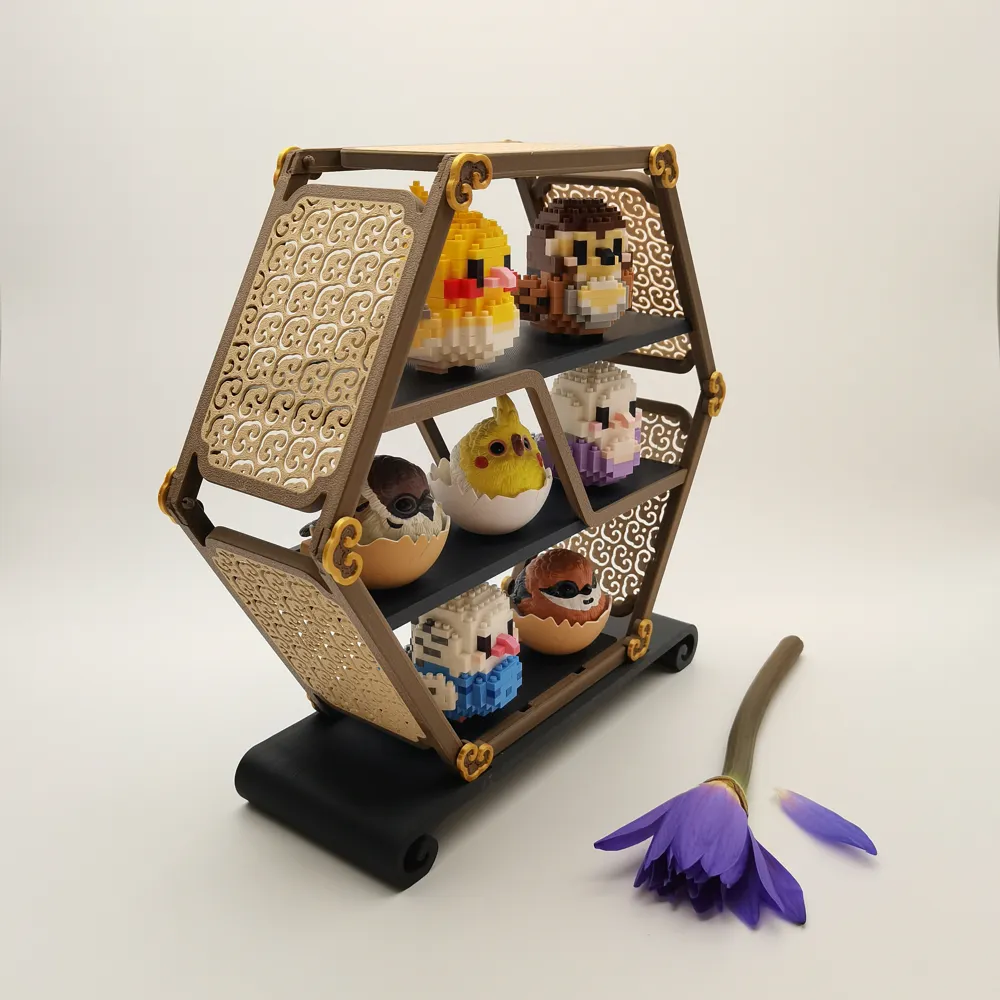
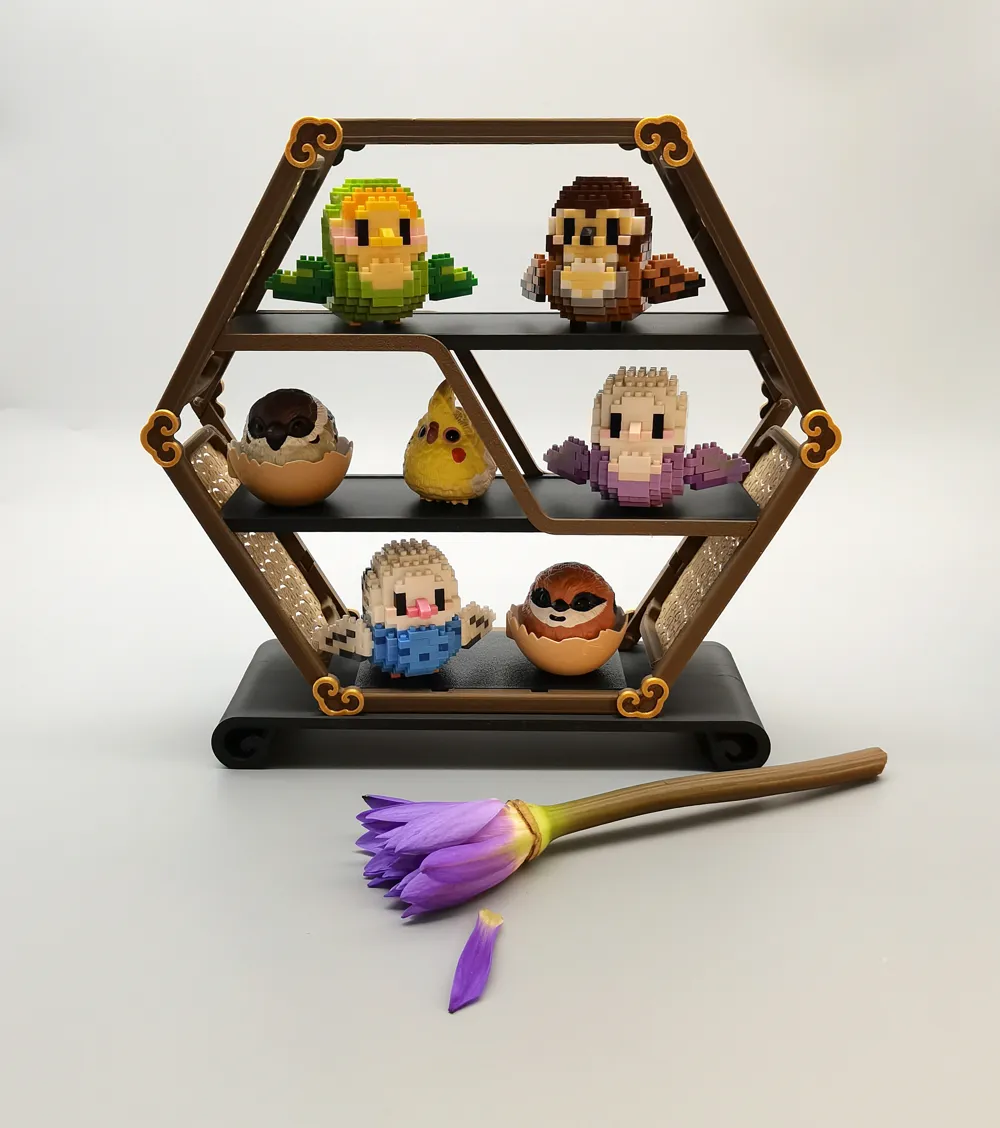
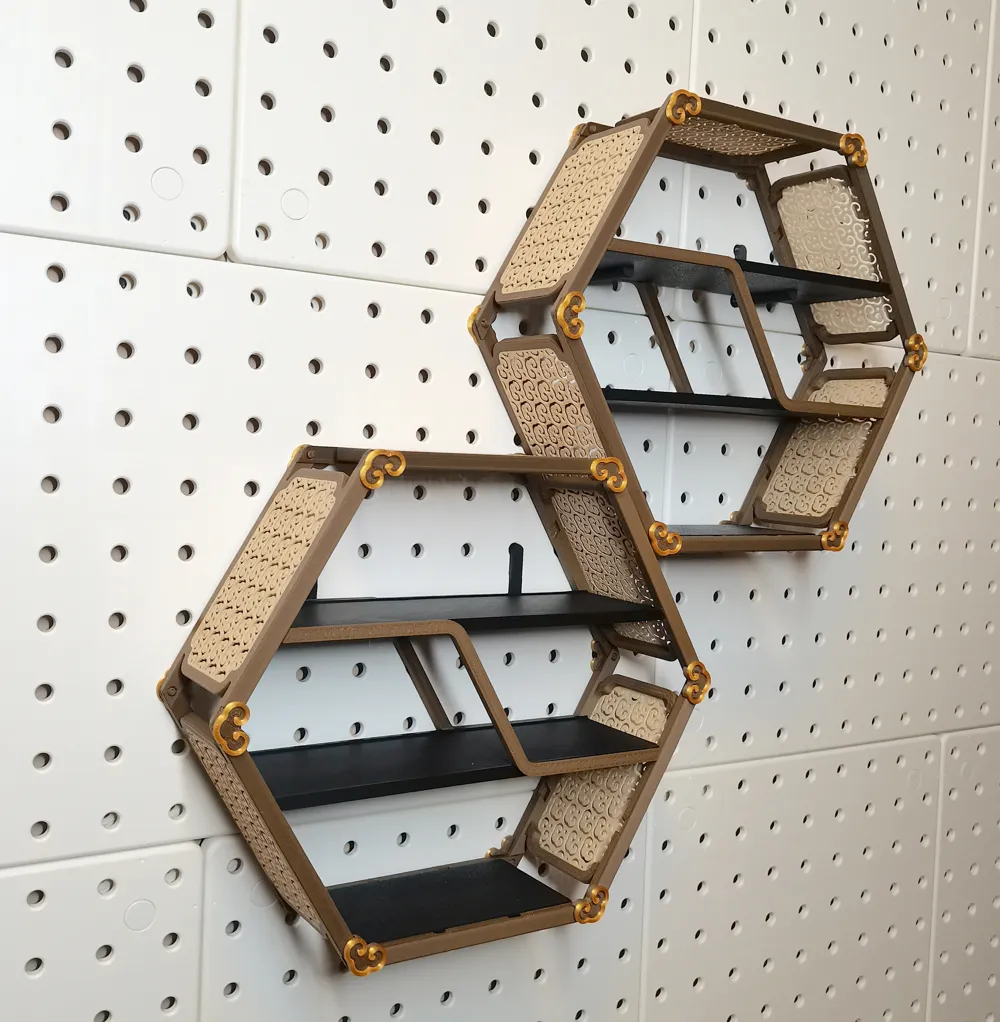
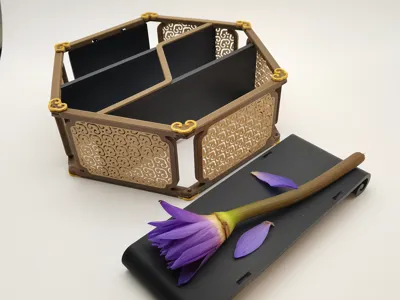
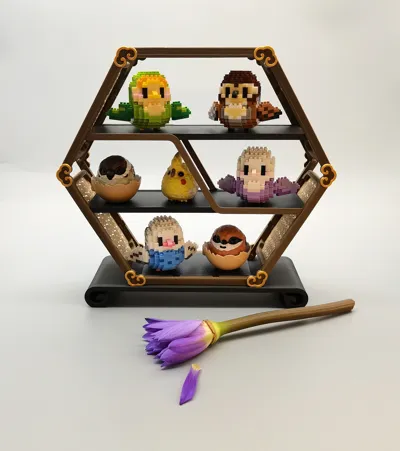

Structurally, the piece is a regular hexagon composed of six interconnected square screen panels. These panels interlock, secured at the corners with Ruyi-shaped clasps. Each panel features engraved Ruyi patterns. Internal dividers create three distinct display levels, with a central fish line dividing the interior into two symmetrical compartments, symbolizing the interplay of Yin and Yang, the cyclical nature of seasons, and the concept of the Six Harmonies. Inspired by traditional Chinese joinery, the assembly requires no screws or tools.
The color palette employs a sophisticated and elegant combination of PAL wood Dark Walnut (13107) and PAL Matte Charcoal Black (11101) for the main structure. The screen panel's textured areas utilize PAL wood White Oak (13505), offering a warm contrast that enhances depth and visual appeal. The Ruyi clasp inlays are rendered in PAL Silk Gold, resembling flowing clouds against the dark background, echoing ancient techniques of gold inlay work and showcasing the timeless charm of Eastern aesthetics.
Assembly Instructions:
- The upper and middle dividers have directional orientation. The concave side faces upward. The upper divider's side mounting holes are on the left, while the middle divider's are on the right. Alternatively, the seals on the bottom of the dividers can assist in correct orientation;
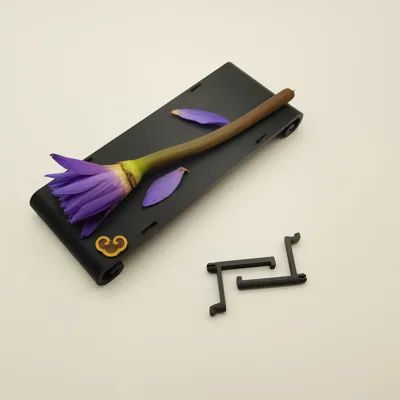
- The screen panels utilize a simplified mortise and tenon structure with interlocking limits, each featuring a φ4mm mounting hole. Due to the flat printing method, the holes and angled edges may be prone to deformation and may require adjustment. The Ruyi clasps address connection and angled gap issues. Several spring clasp designs were tested during development, but none were optimal. The final design incorporates angled pins, which it is recommended to be glued after assembly to increase strength;
- The mounting holes on the sides of the upper and middle dividers may also exhibit imperfections. Glue is recommended when assembling these with the fish line locating pins to prevent loosening;
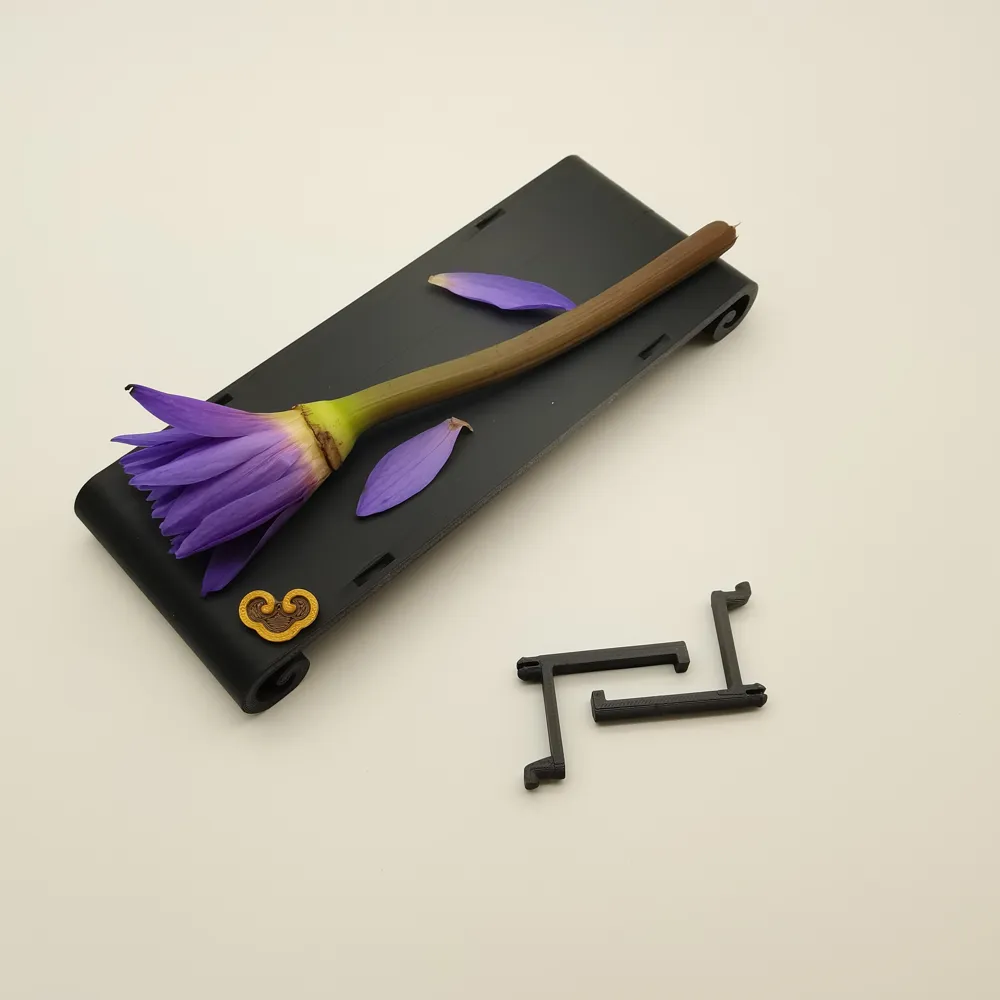
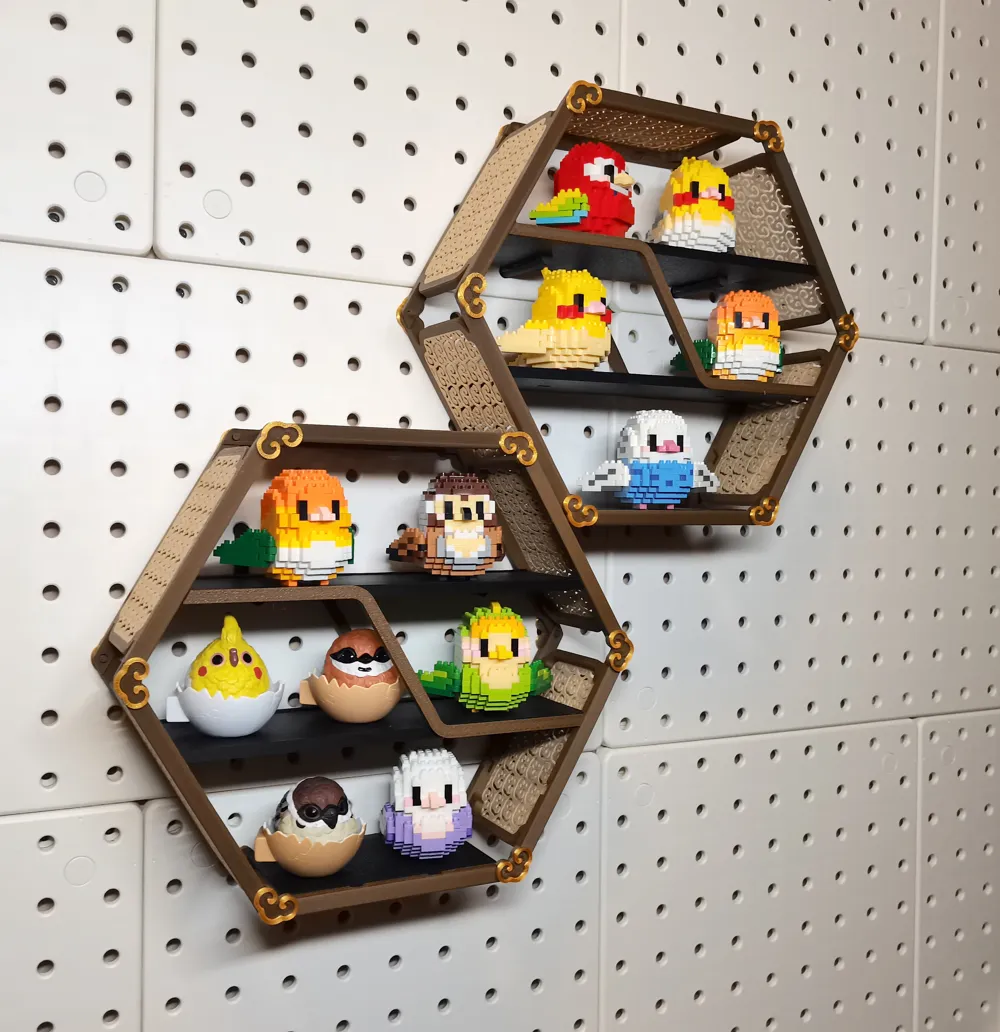
The Ruyi stand offers two display options: a seated configuration with the base stand, or a hanging display using the provided mounting bracket designed for standard pegboards (Deli specifications: 7mm hole diameter, 30mm hole spacing). Single or multiple units can be hung in various arrangements.
Assembly Video:
License

You shall not share, sub-license, sell, rent, host, transfer, or distribute in any way the digital or 3D printed versions of this object, nor any other derivative work of this object in its digital or physical format (including - but not limited to - remixes of this object, and hosting on other digital platforms). The objects may not be used without permission in any way whatsoever in which you charge money, or collect fees.


Comment & Rating (0)