
Bucket Elevator Model Replica
Print Profile(1)

Bill of Materials







Description
🏗️ 3D Model of a Rock-Cell Bucket Elevator

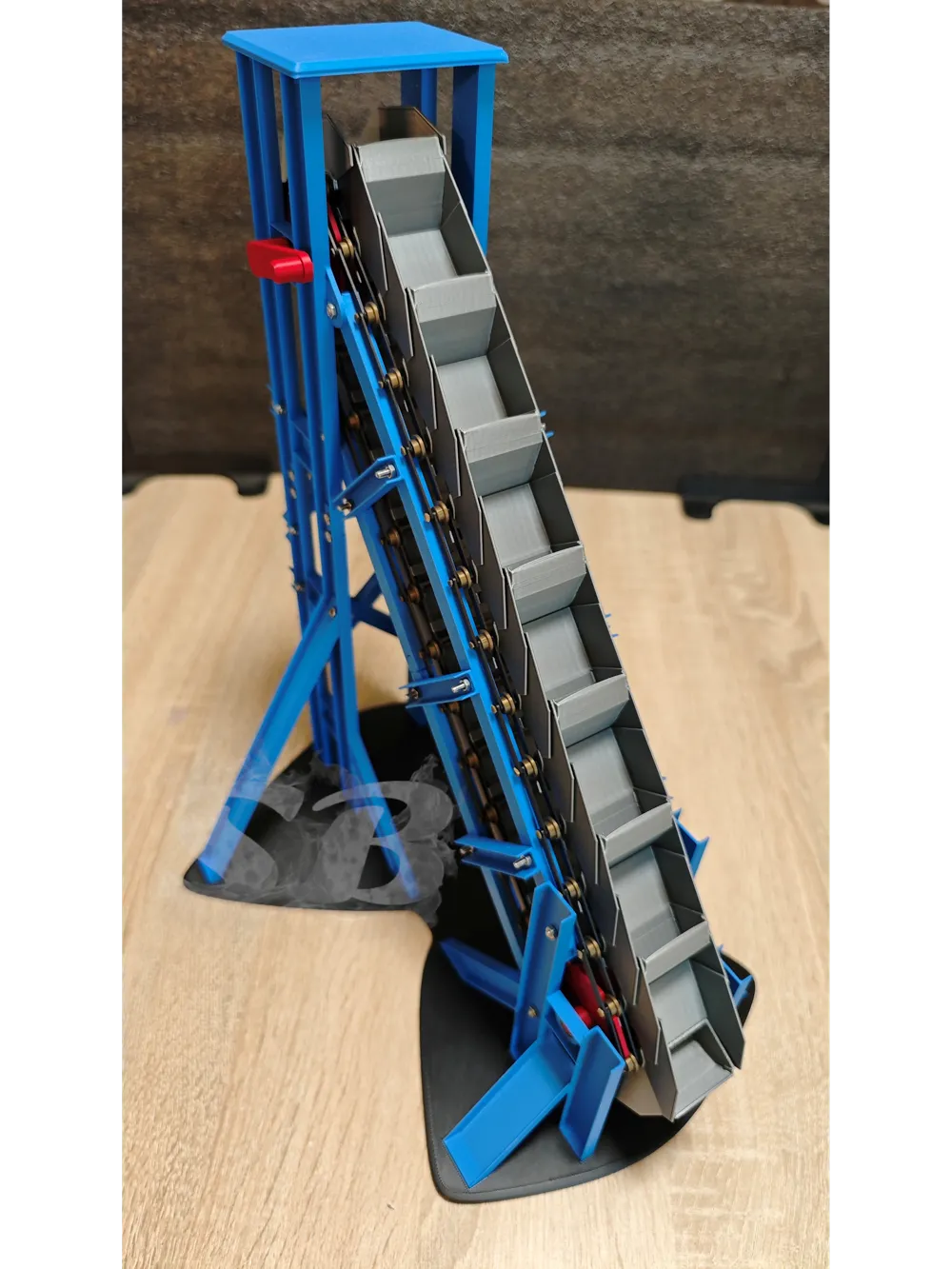
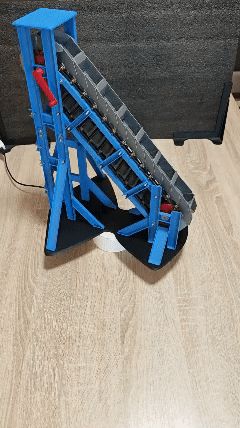
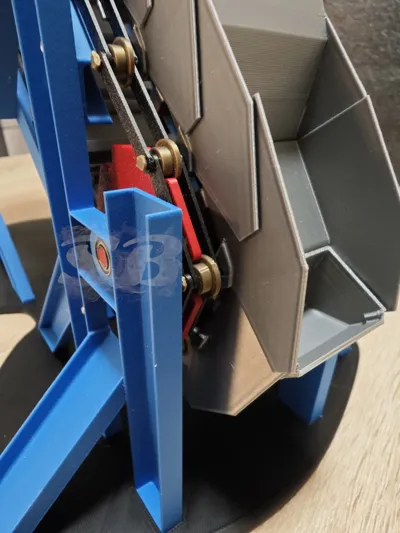
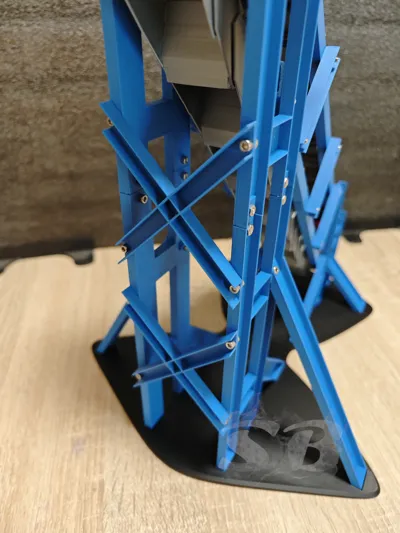
The 3D-printed rock-cell bucket elevator shown here illustrates the structure and functionality of a classic bucket elevator, as it is used in industry, particularly for the vertical or steep conveying of bulk materials
Bucket elevators belong to the so-called continuous conveyors – i.e., conveying systems in which the conveyed material is transported in a continuous flow.
In practice, they are used wherever coarse, heavy, or abrasive materials such as stones, clinker, slag, or coarse-grained sand need to be moved over greater heights.
The rock-cell bucket elevator is the most robust design: It is designed for high mechanical loads and uses a solid chain construction as the traction mechanism instead of a belt
On an industrial scale, a rock-cell bucket elevator consists of:
- a head section with drive drum,
- a foot section with tensioning device,
- one or two conveyor chains,
- robust buckets made of cast steel or thick-walled sheet metal,
- and possibly a closed casing that reduces dust and wear
The continuous circulation creates a continuous material flow, allowing large conveying capacities to be transported in a confined space and with relatively low energy consumption
The rock-cell bucket elevator is particularly suitable for coarse, sharp-edged, or hot materials that would damage a normal belt bucket elevator. Therefore, it is widely used in quarries, cement plants, blast furnaces, and power plants
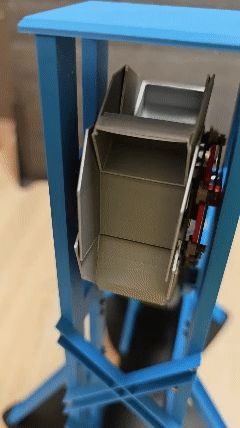
The model clearly demonstrates:
- the structure and kinematics of a bucket elevator,
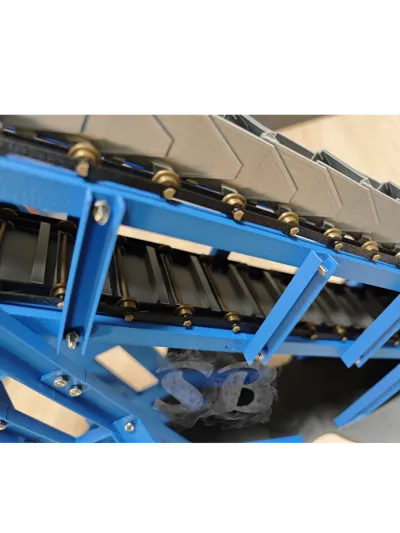
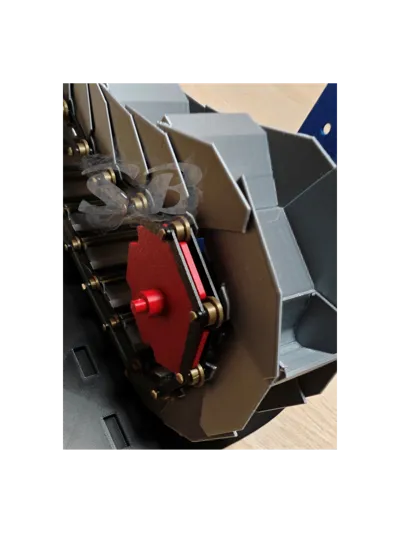
- the function of the chain drive as a traction element,
- the principle of the continuous conveying cycle,

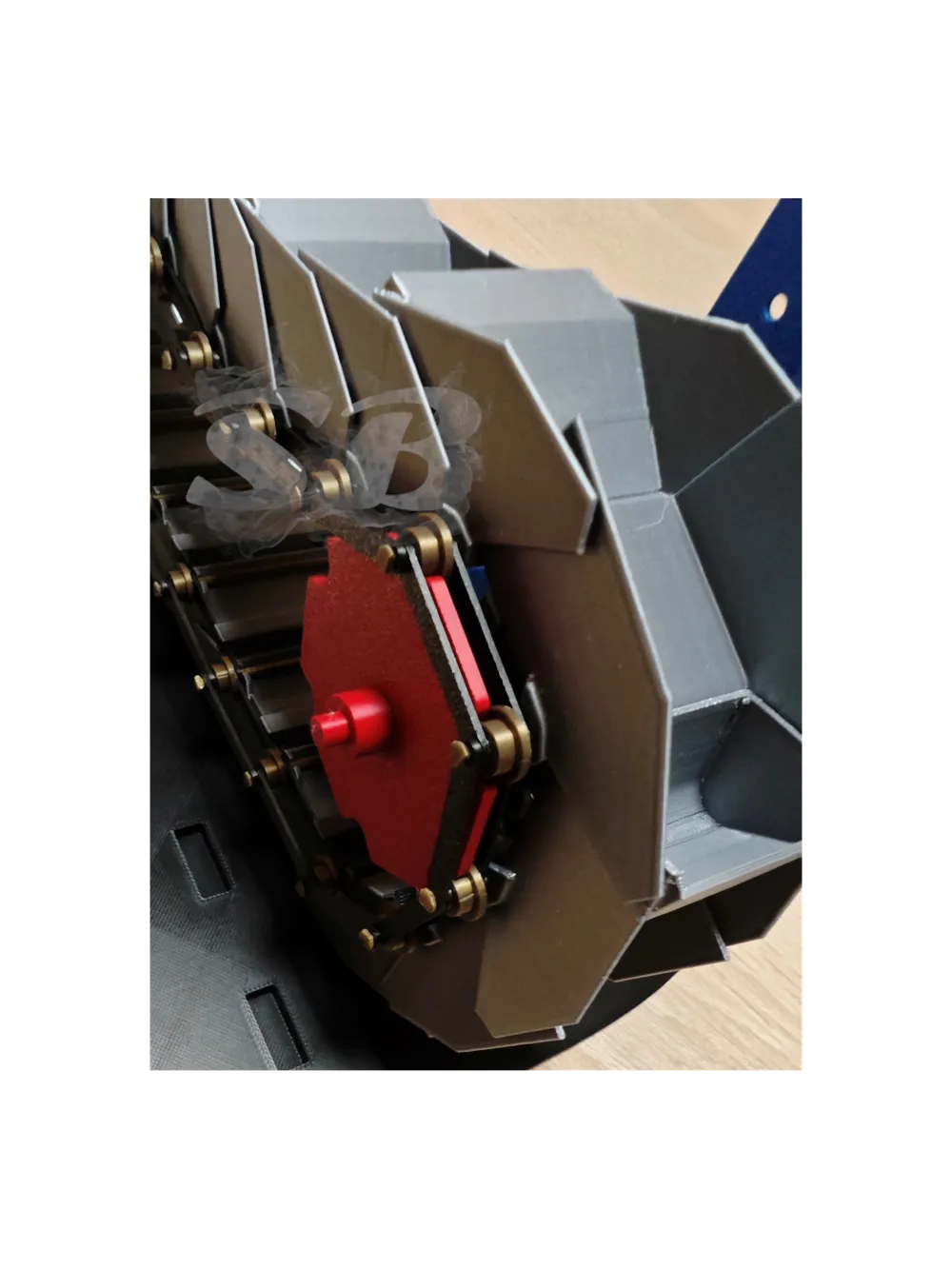
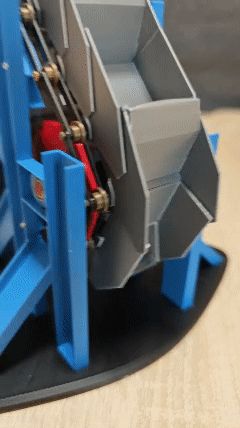
- the arrangement of the buckets and their movement over the deflection drums
⚙️ Structure and Special Features of the Model
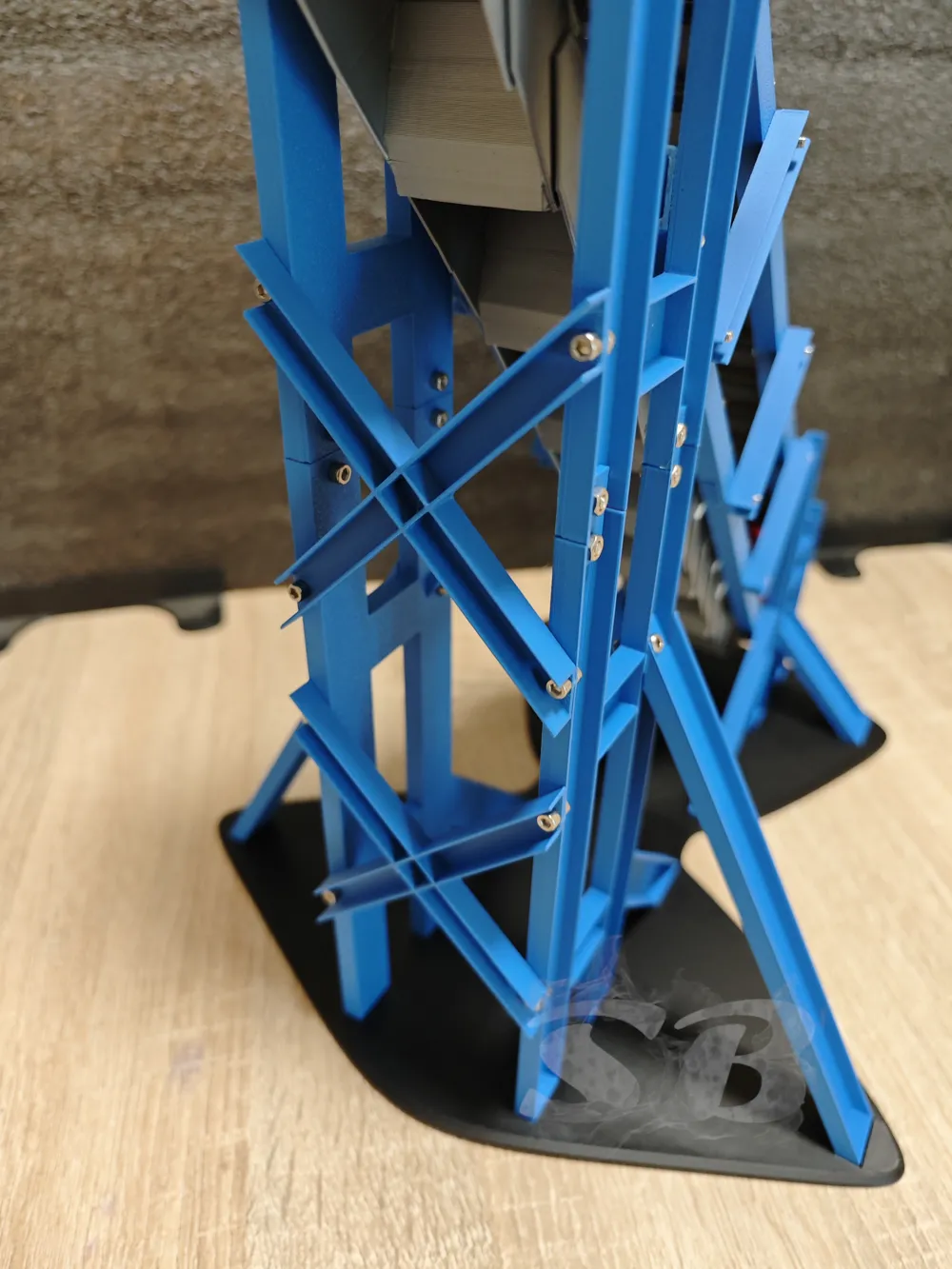
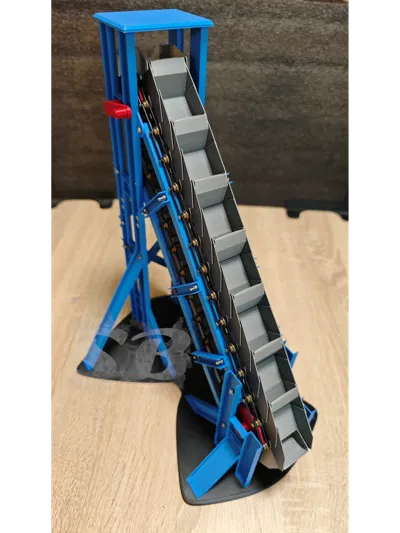
The model was entirely manufactured using 3D printing and represents the complete conveying cycle of a bucket elevator to scale.
It features:
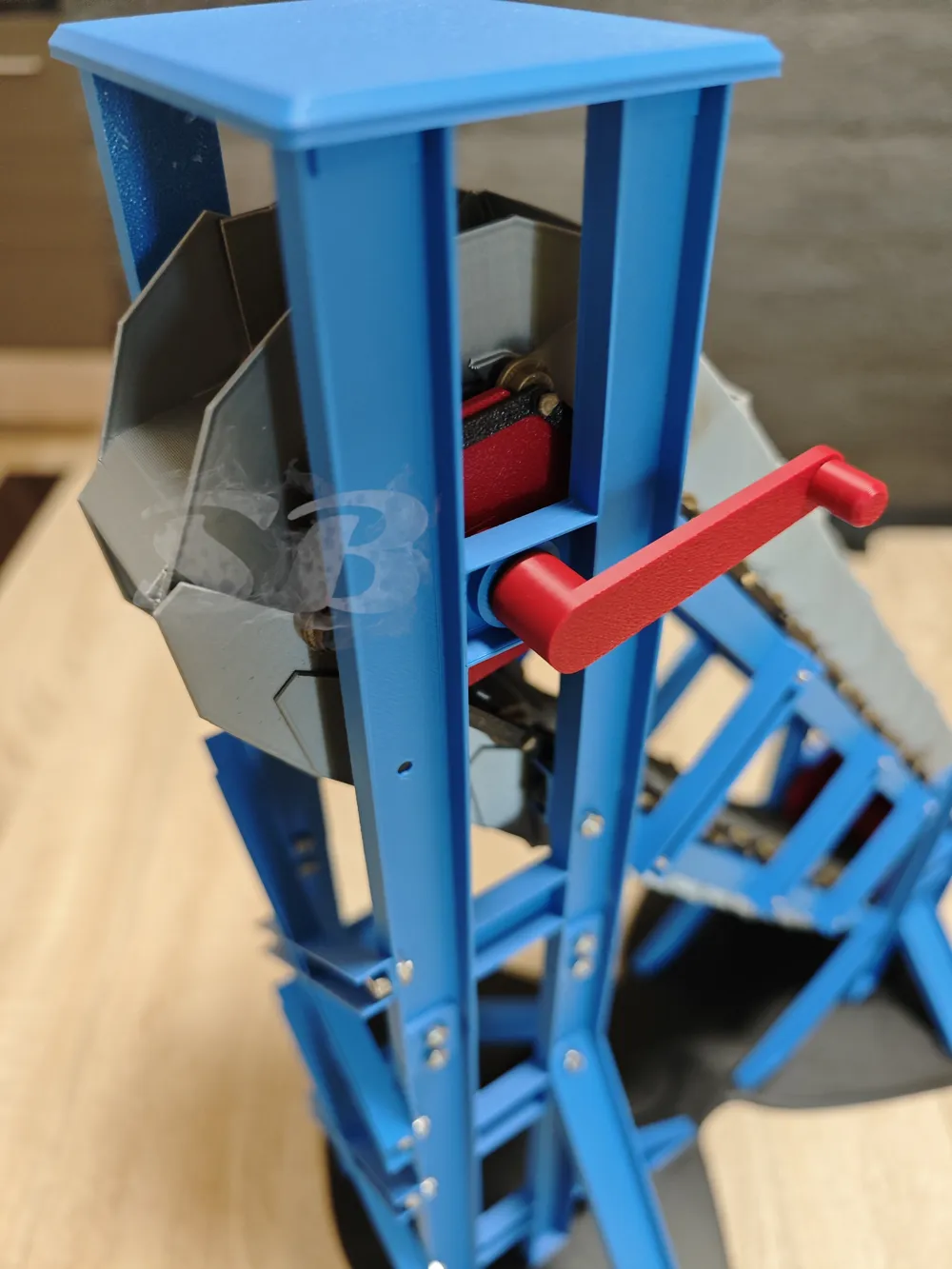
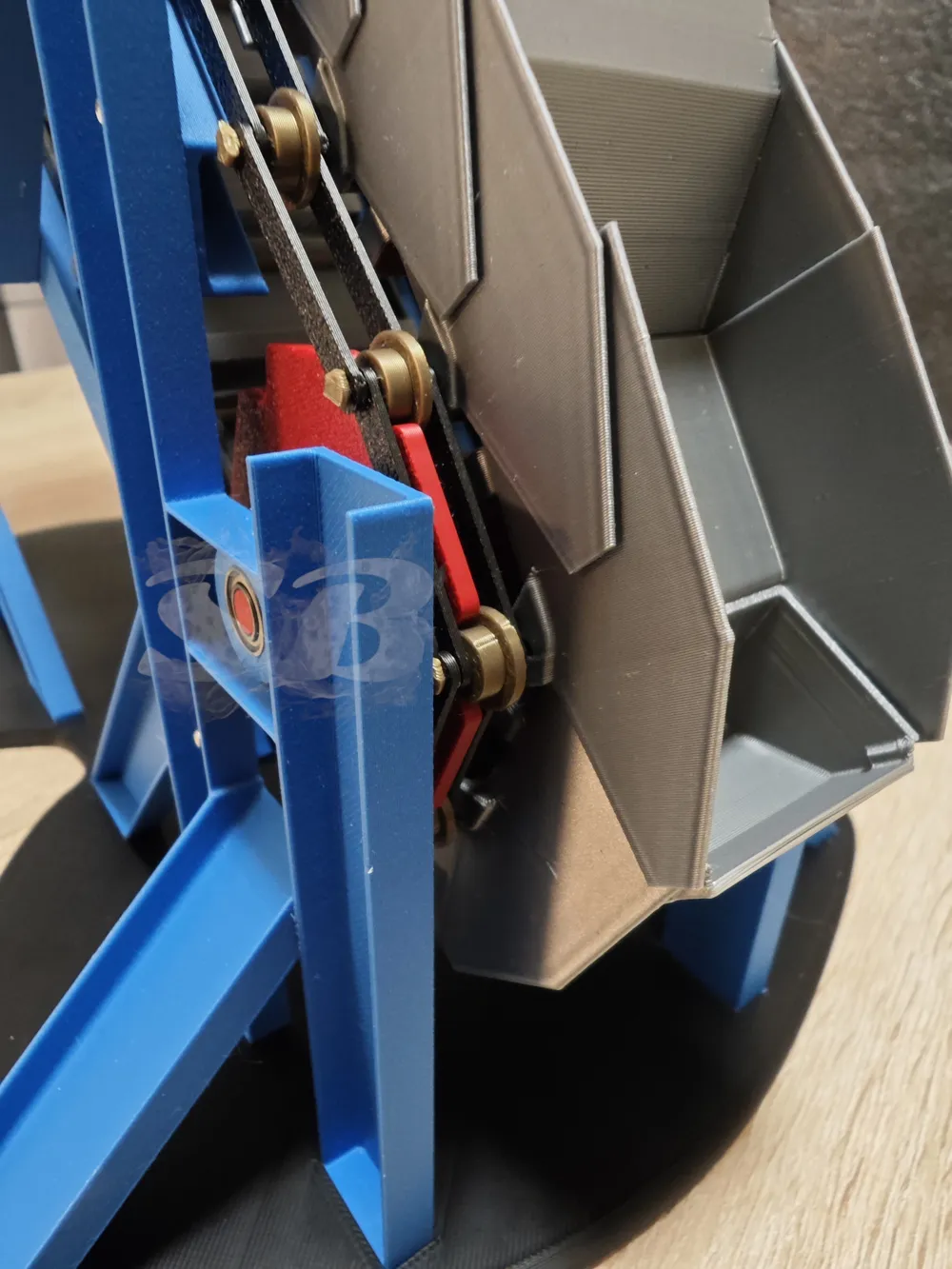
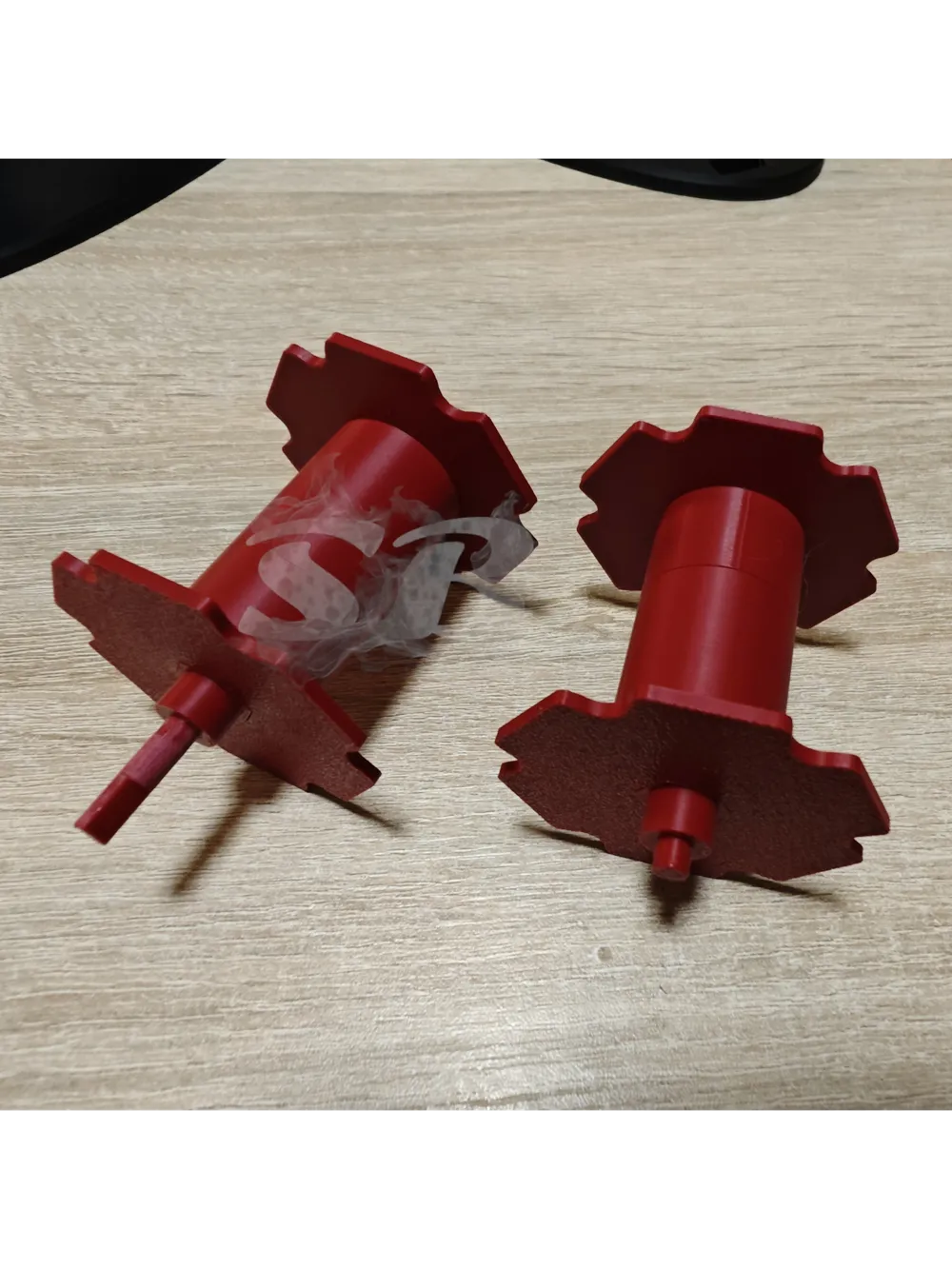
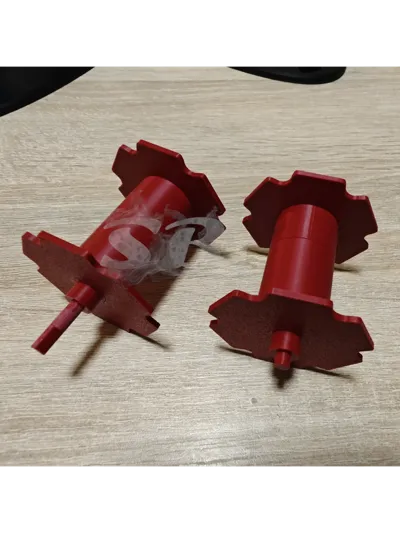
- Two drums (head and foot section)(Turas),

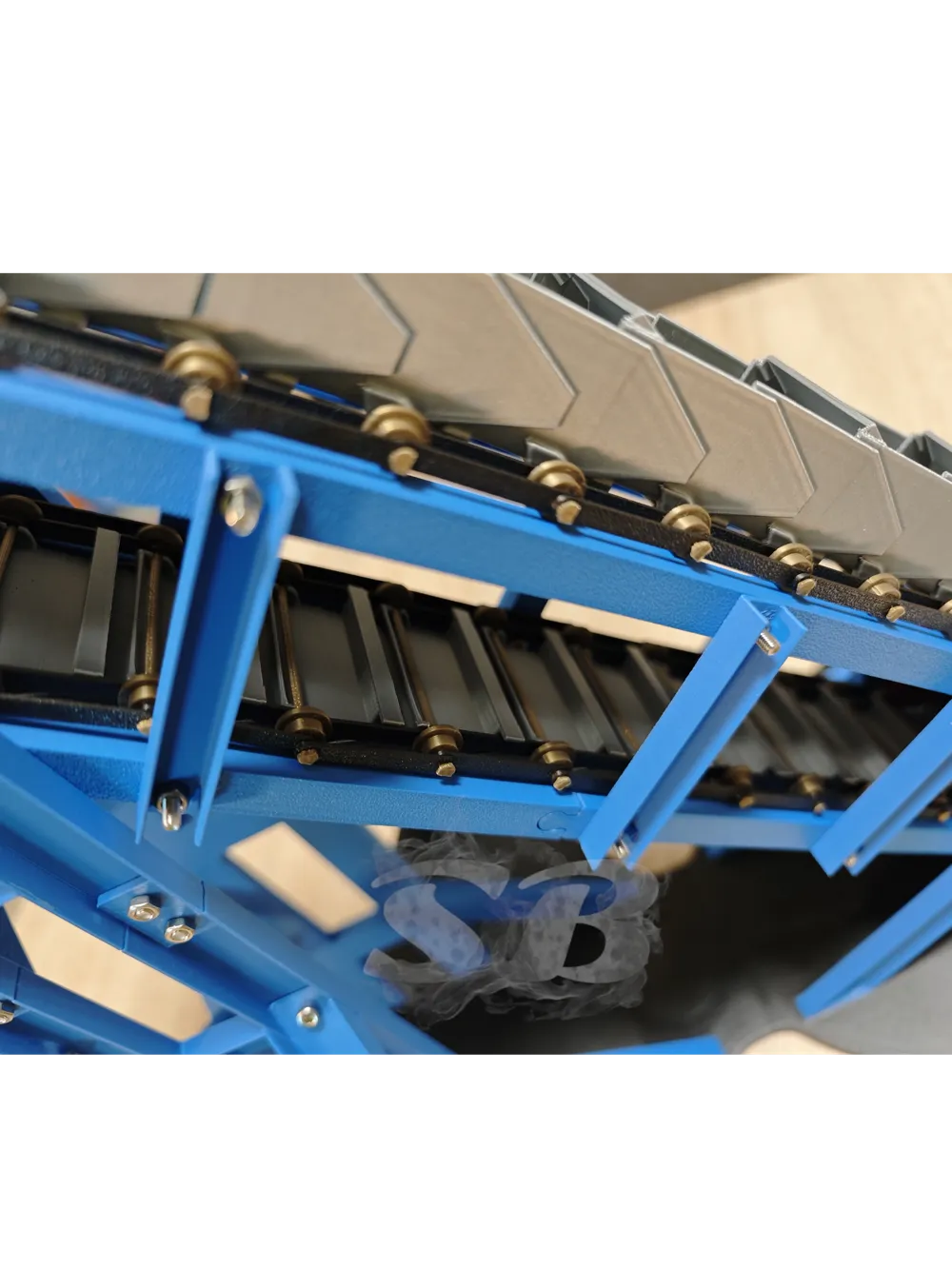
- a circulating chain as the traction element,

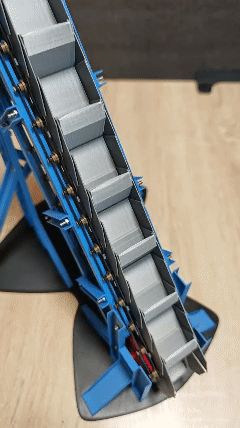
- 32 buckets, mounted at regular intervals on the chain,
- a conveying angle of 45°, simulating the inclined ascent of the material,
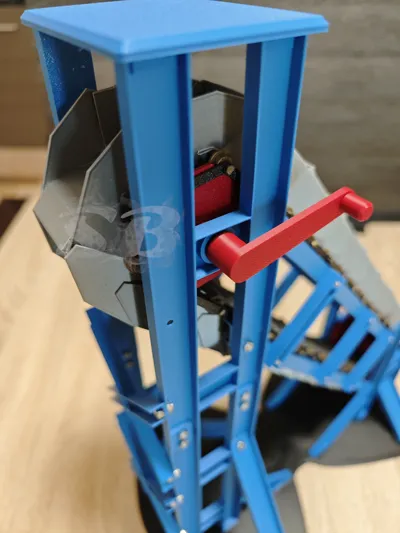
- a manual drive via a side-mounted crank (side can be freely chosen before assembly)
By turning the crank, the conveying process can be realistically and clearly understood:
The buckets pick up the (imagined) conveyed material in the lower circulation area, transport it upwards along the inclined conveying path, and discharge it at the upper turning point – just like in a real bucket elevator
Even though the model does not have an infeed or discharge chute, the movement and kinematics of the conveying principle are fully represented. The visible chain guide on the sides and the uniform movement of the bucket rows make the functionality very clear and tangible
Assembly Instructions:
Total required:
- M3 x 6mm 36 pieces
- M3 x 10mm 2 pieces
- M3 nuts 38 pieces
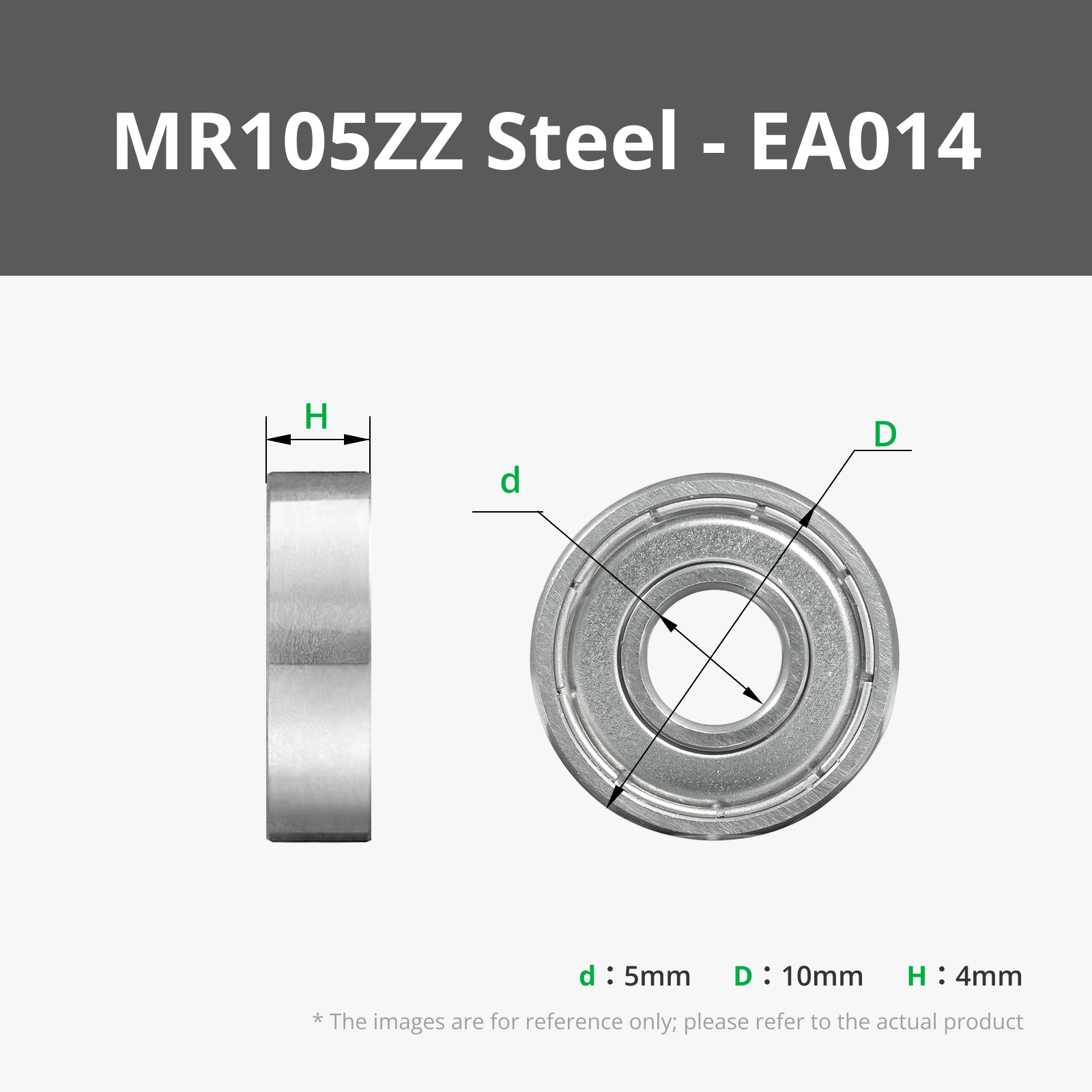
- MR105ZZ 4 pieces
Turas bottom:
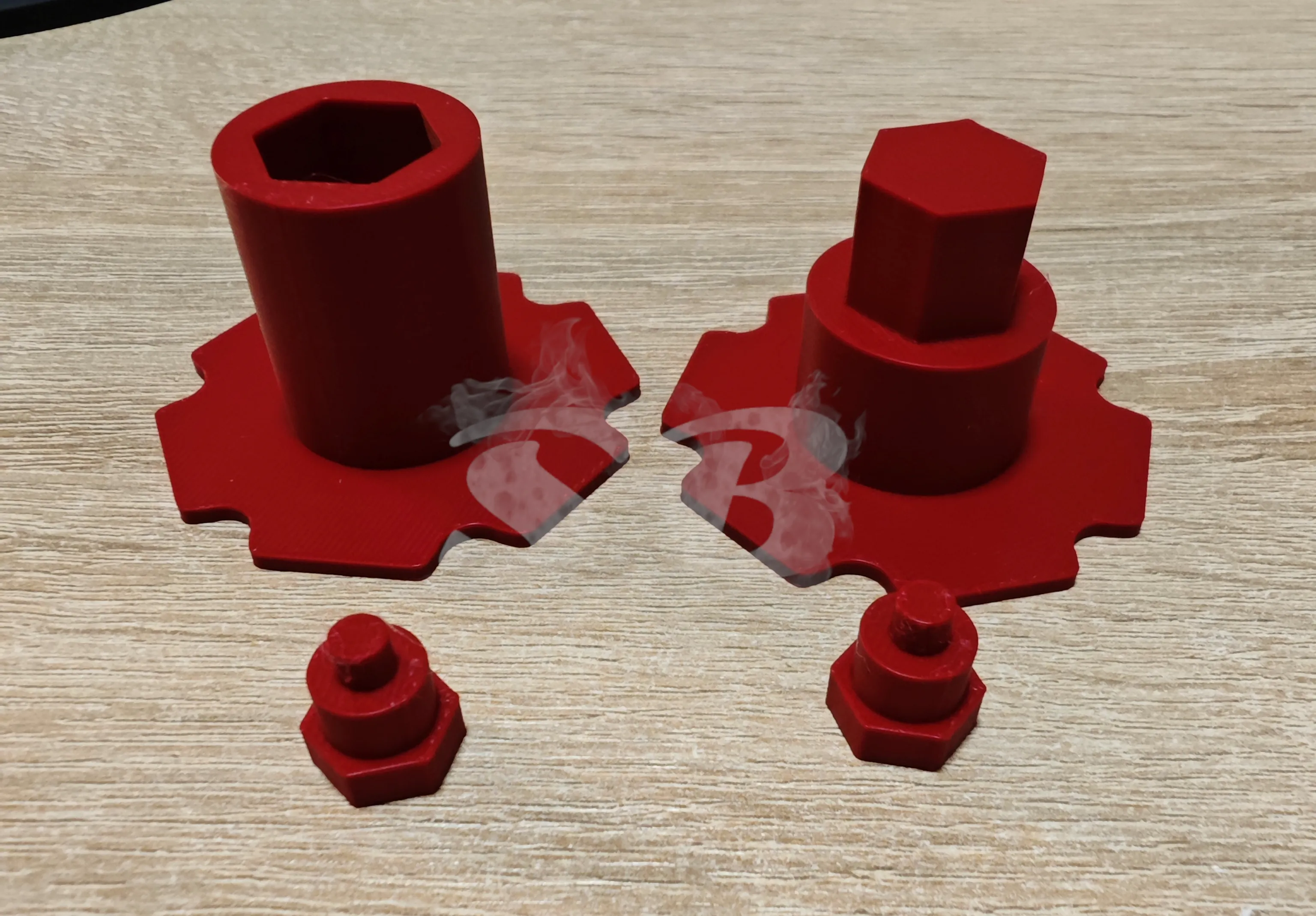
Turas top:
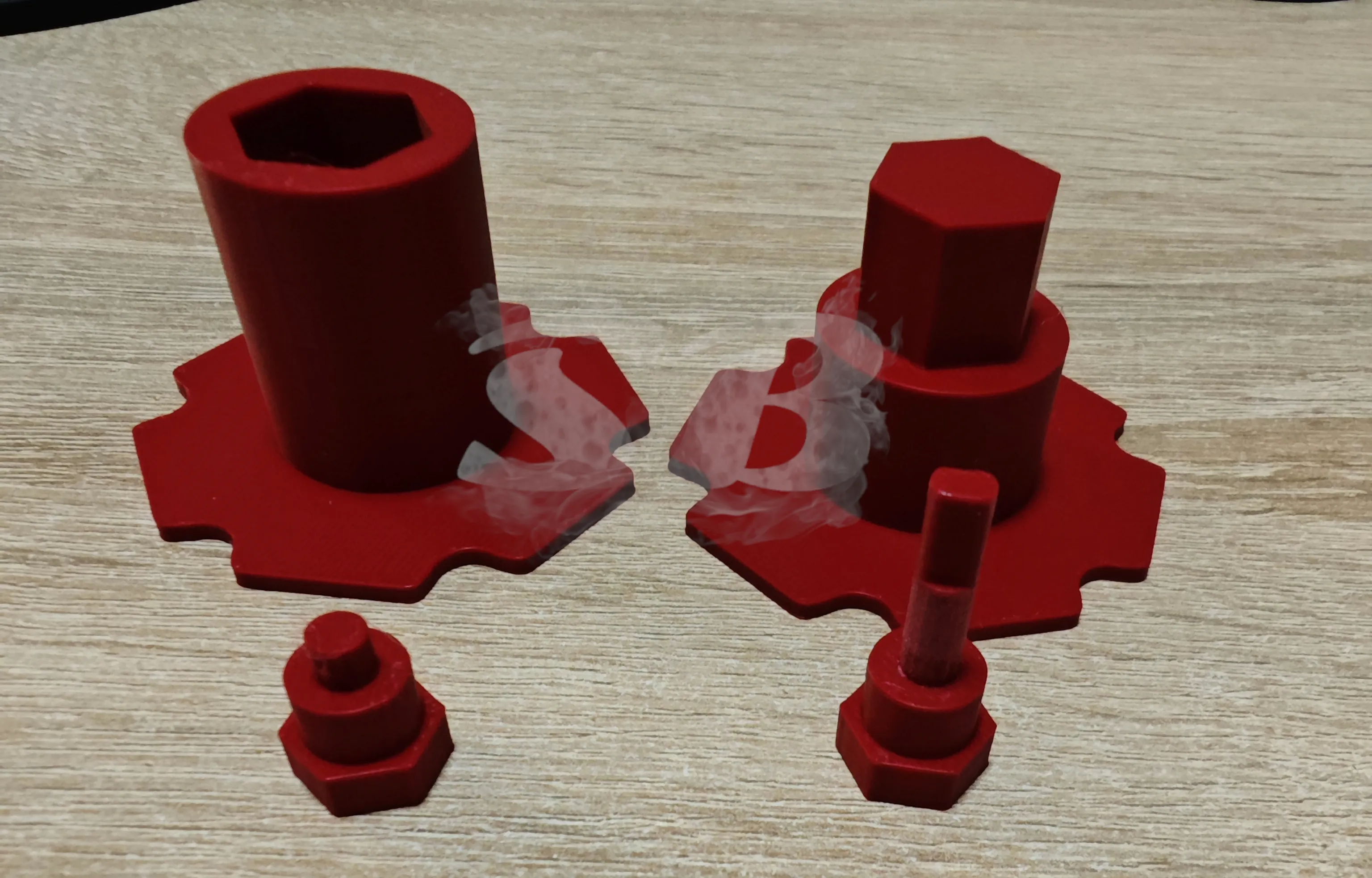
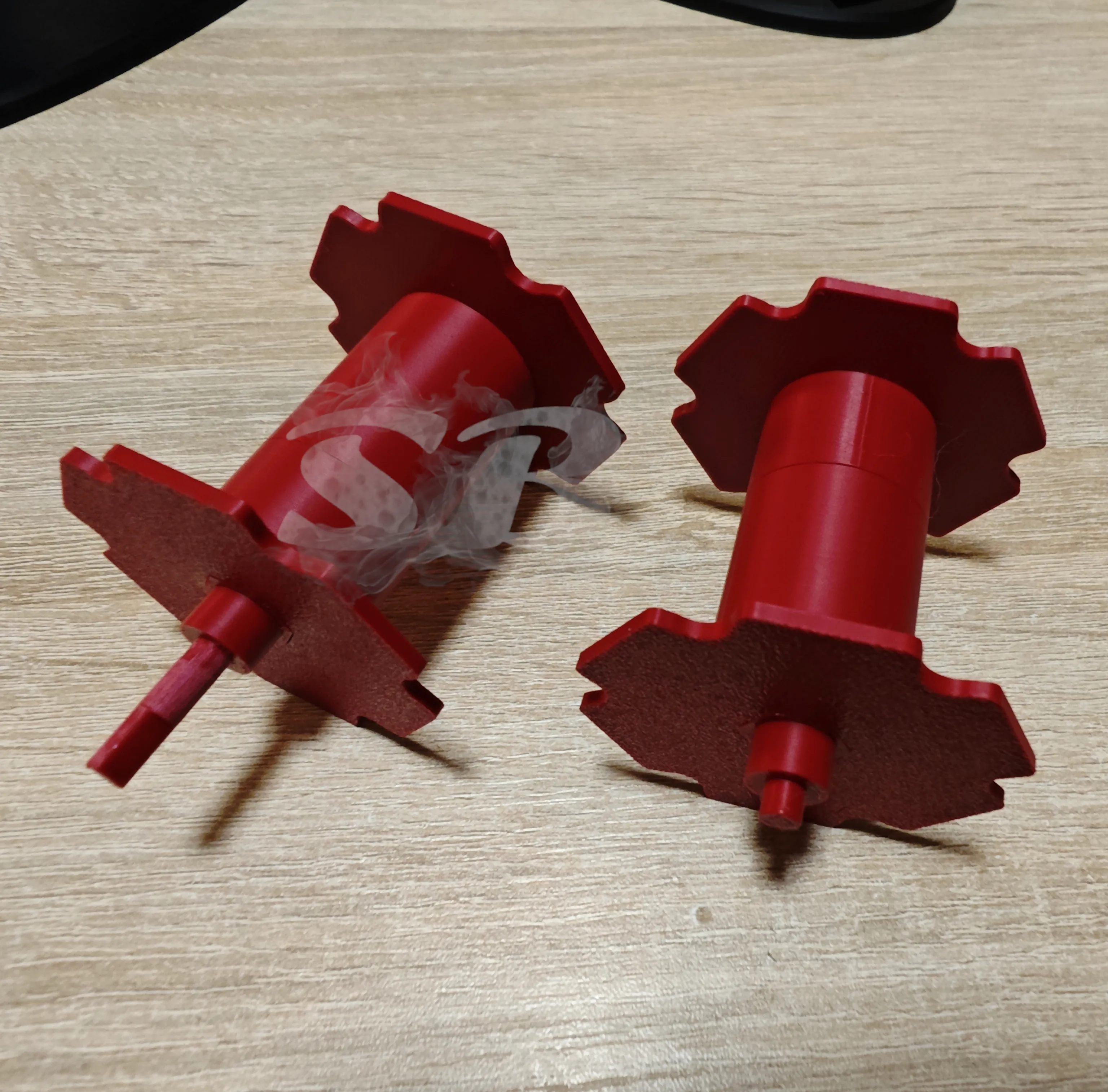
Assembled:
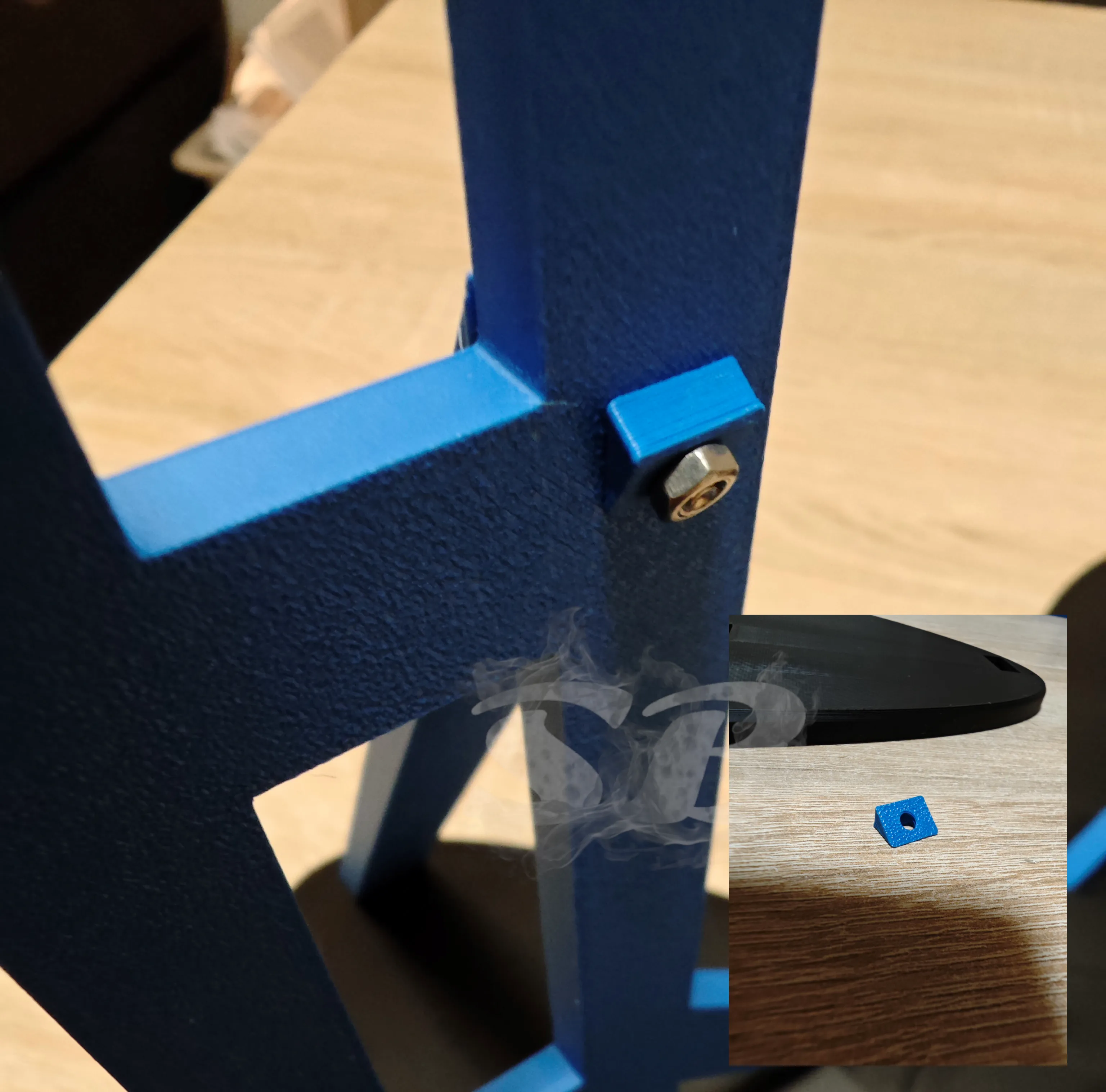
M3 x 8mm Position (all other screws are 6mm long):
Section:
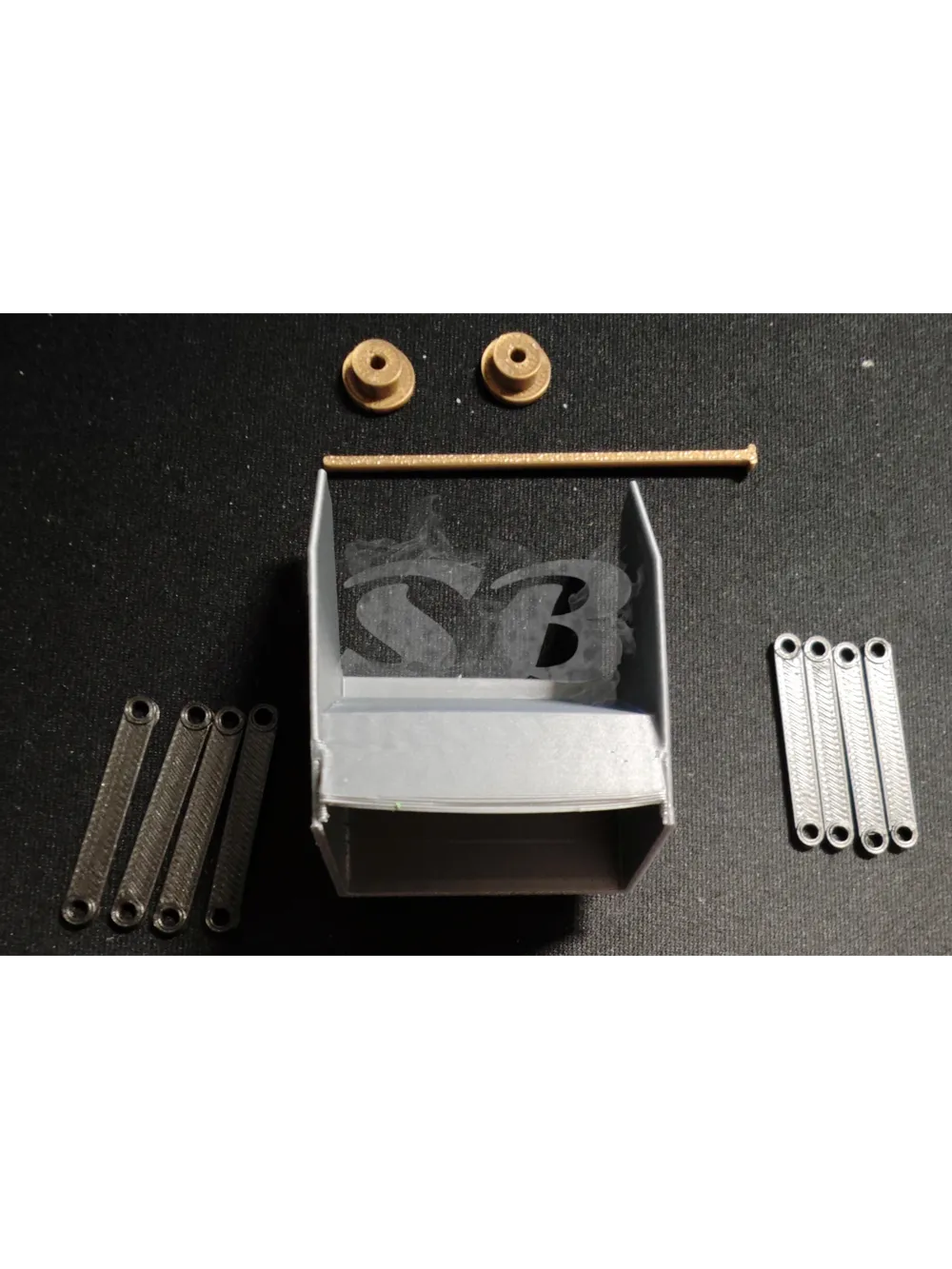
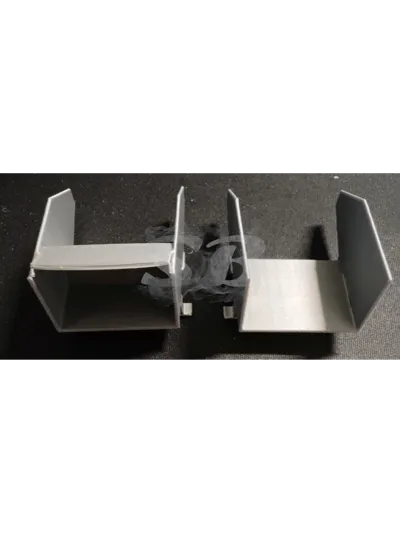
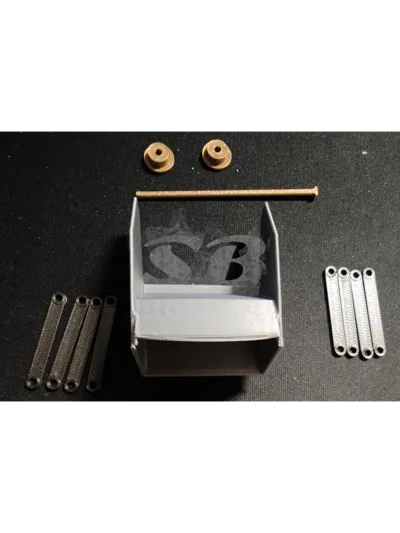
Parts for one bucket:
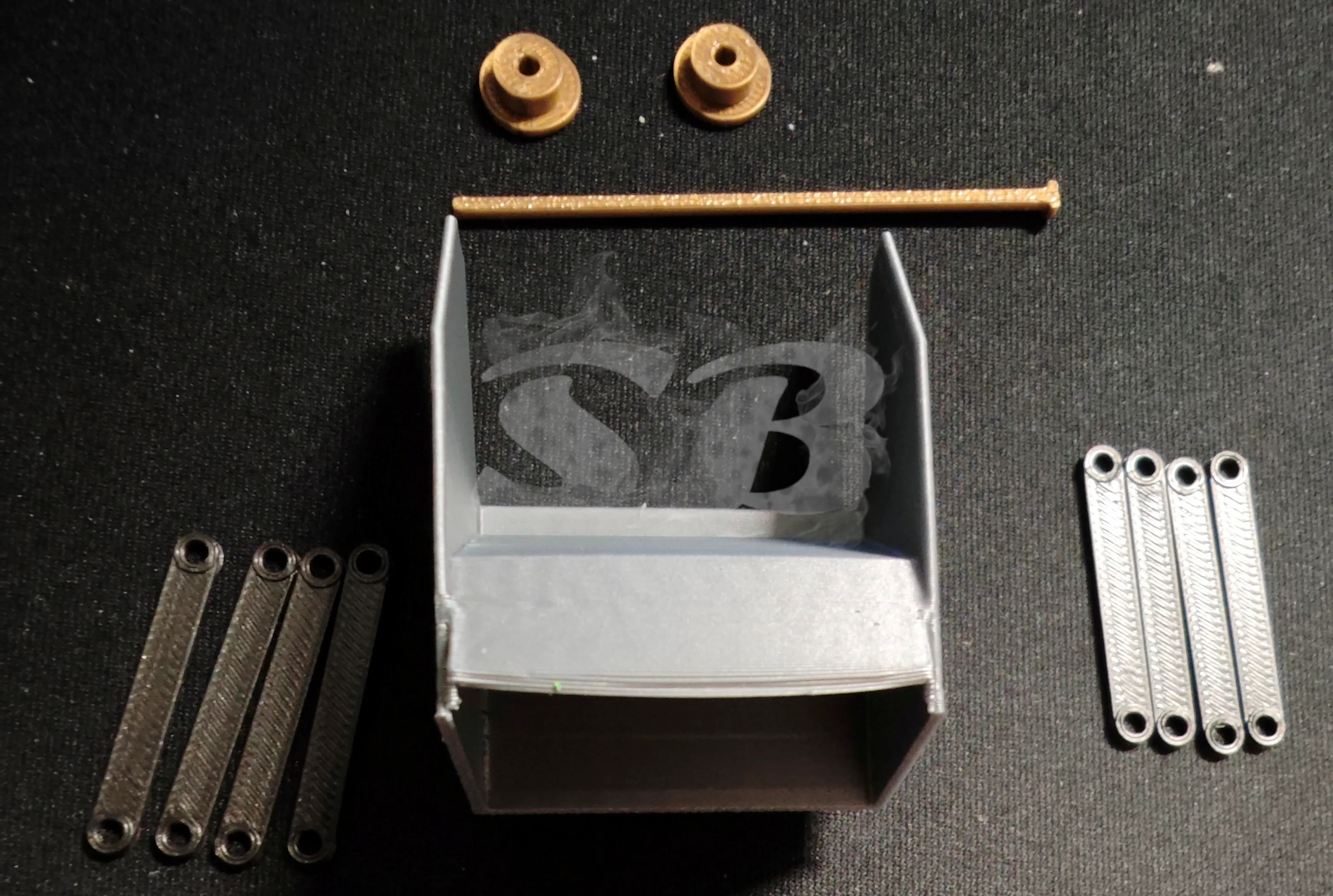
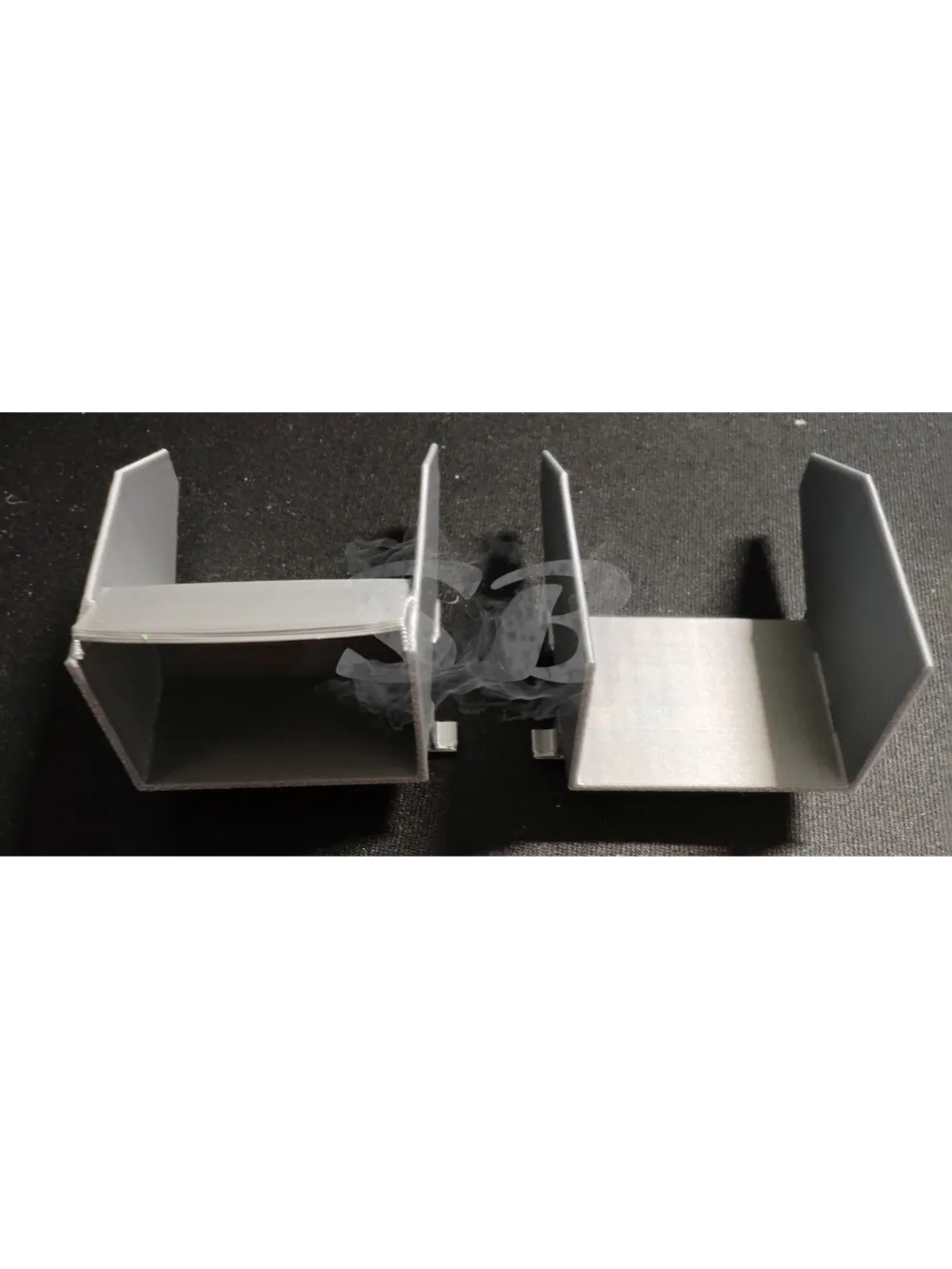
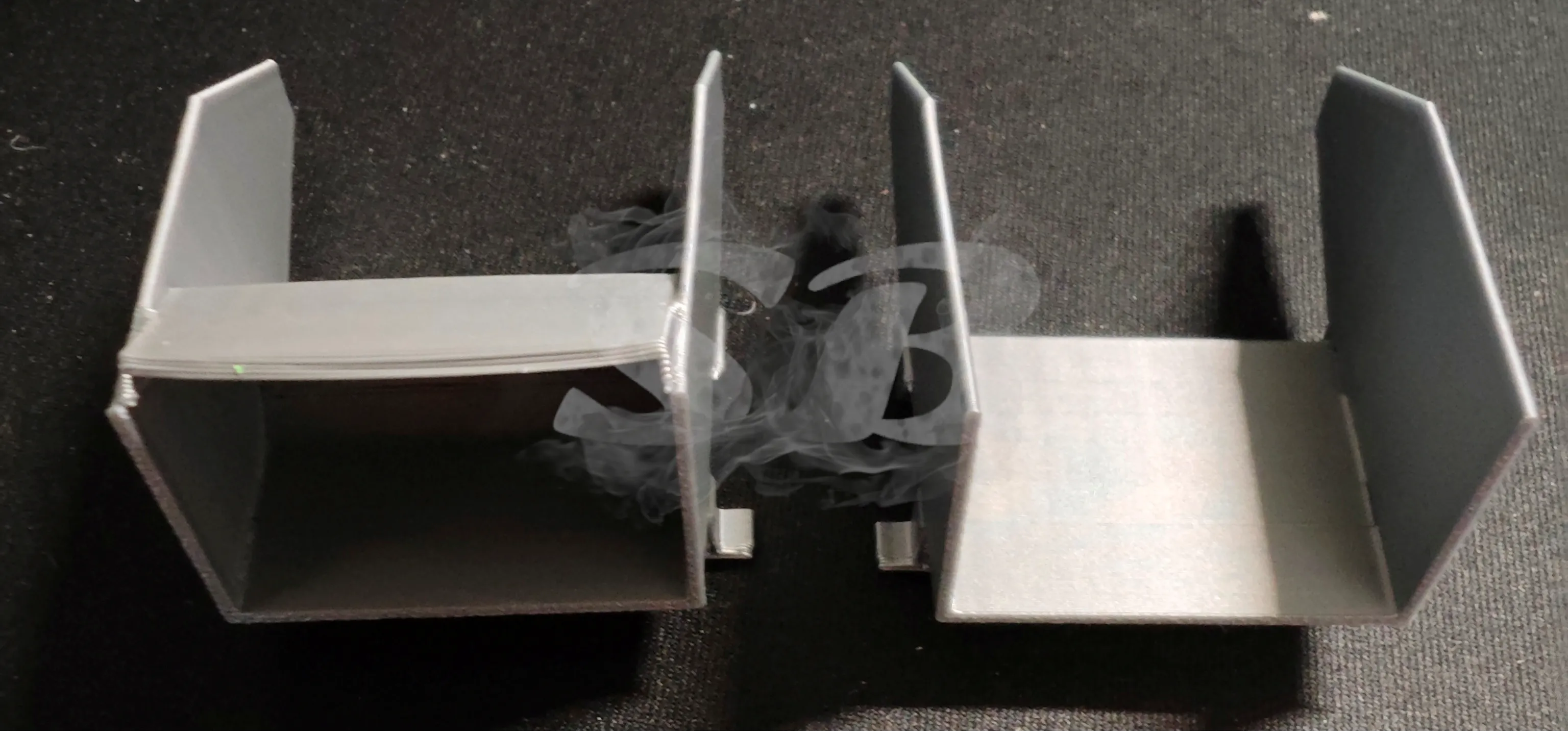
Bucket types:
Notes on the rail:
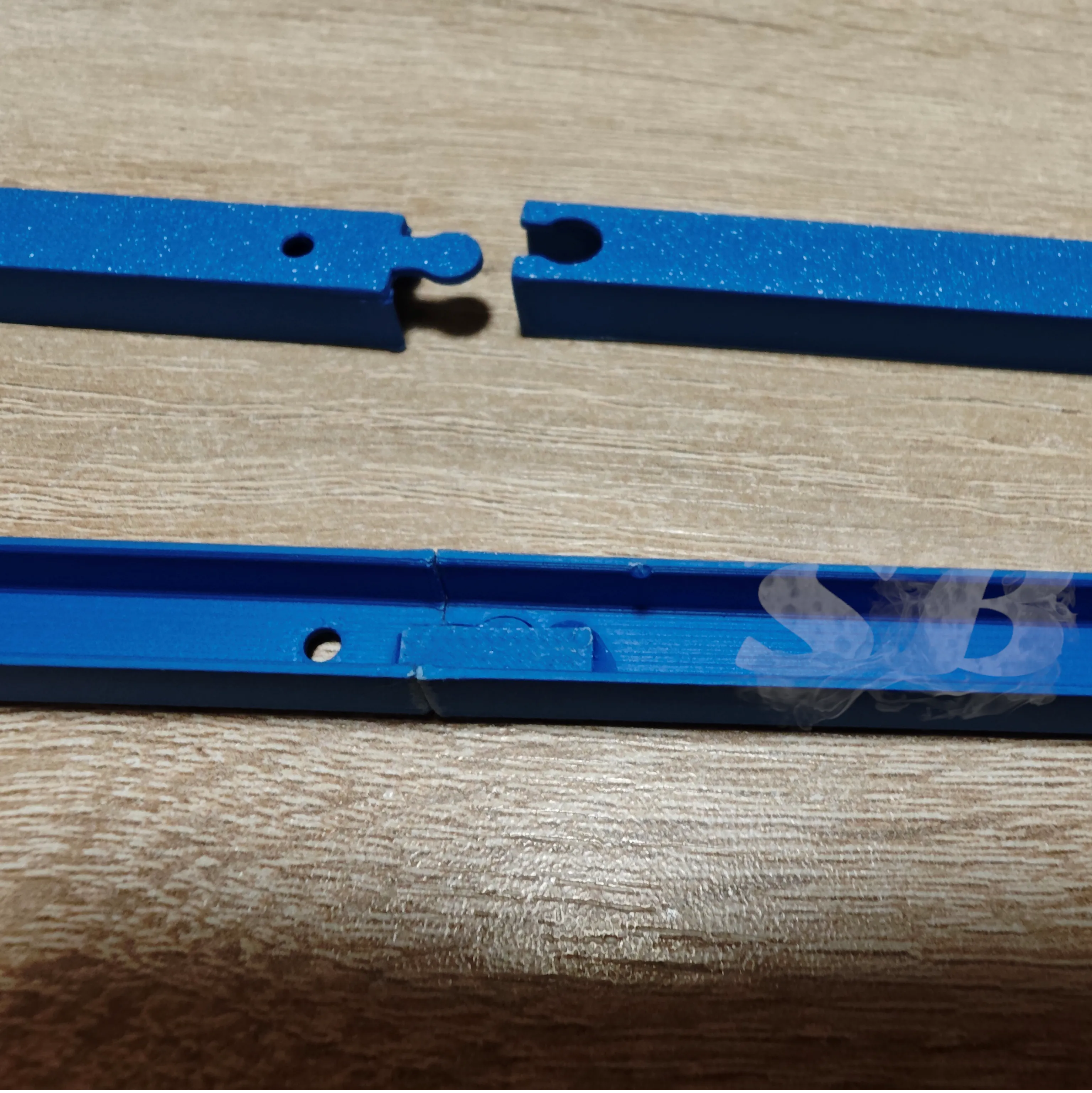
Glue in reinforcement! Warning: DO NOT glue the outer part on the side where the buckets run!
Mounted rail:
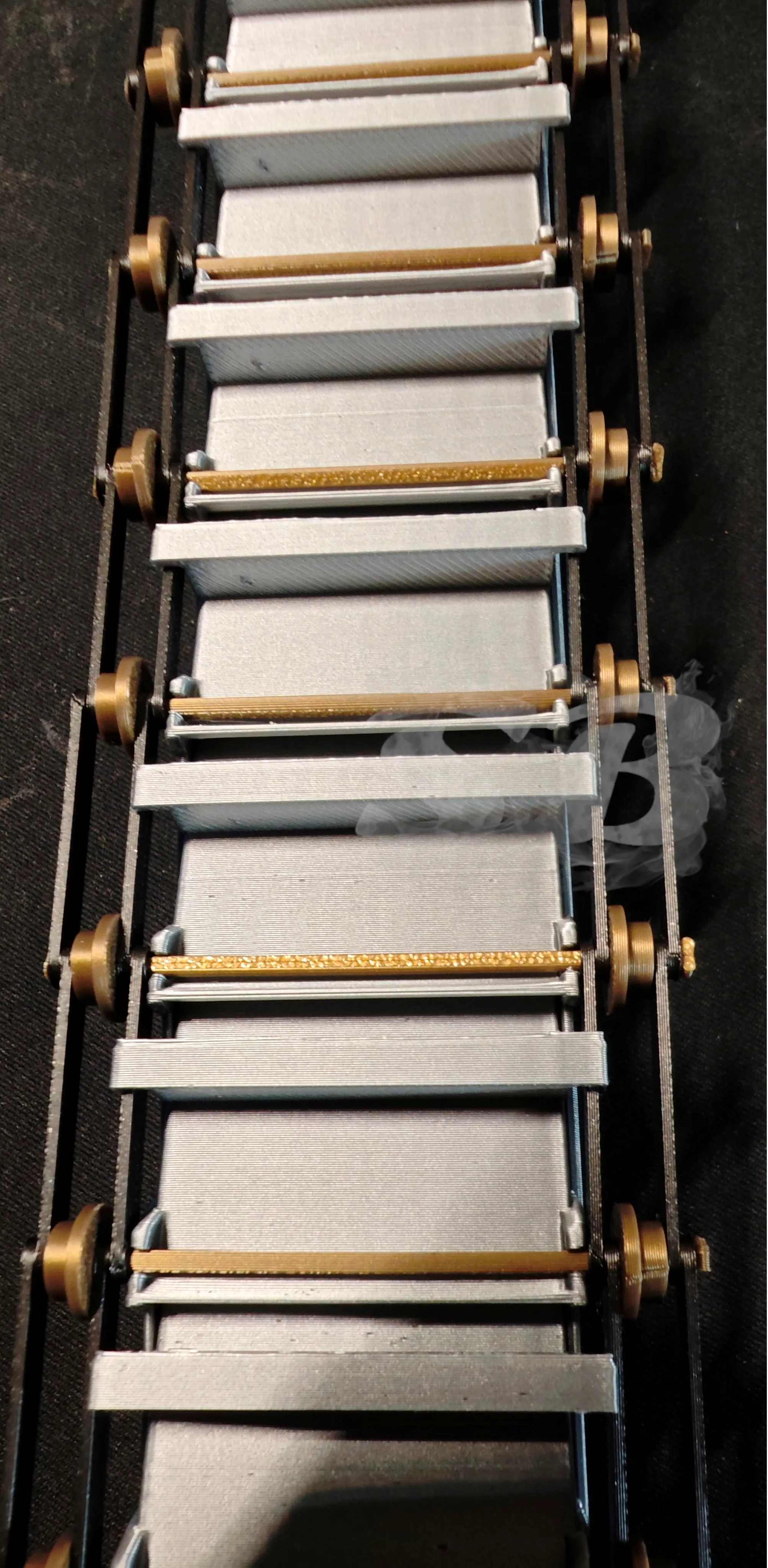
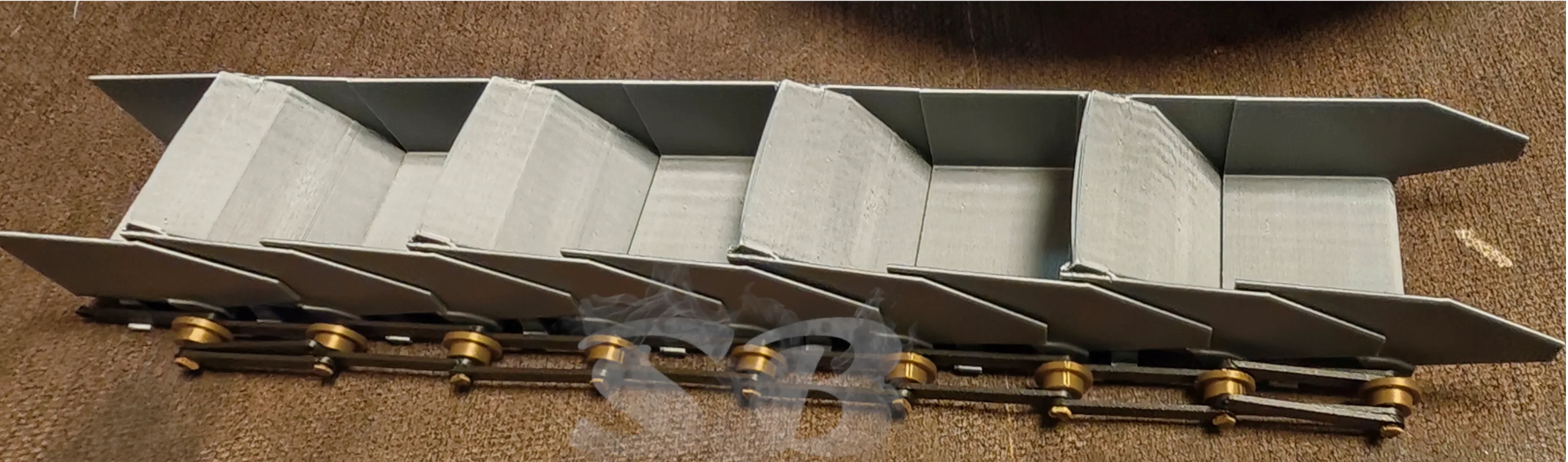
The chain should be assembled symmetrically... The axle overhang must be cut to 1mm and then the remaining overhang shaped into a kind of flat rivet with a warm screwdriver. This ensures that everything stays in place, but remains fully movable, and no other parts like screws etc are needed
Bucket assembly:
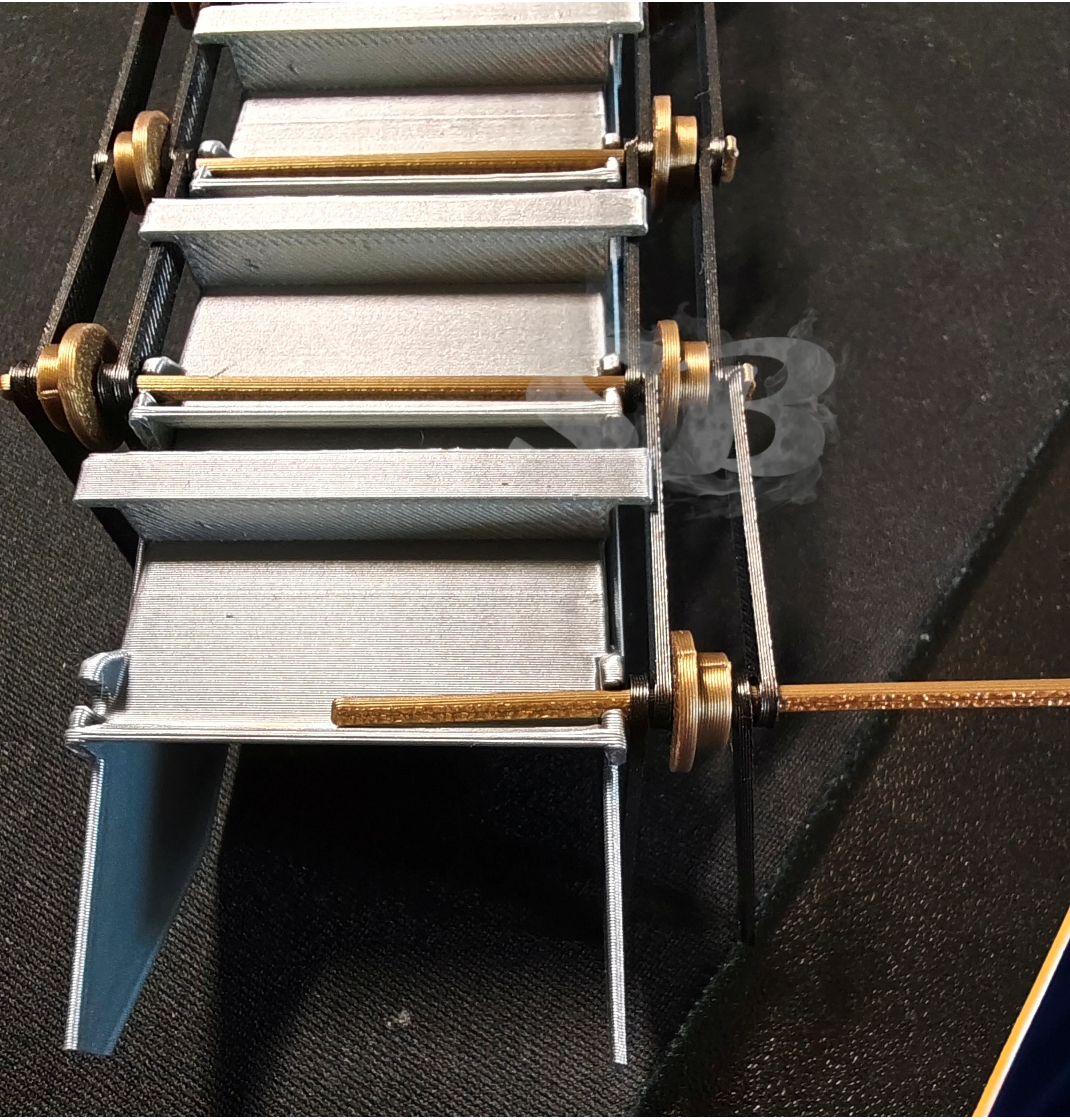
Have fun building✌
The model was designed with tight tolerances. Please ensure your printer is properly calibrated and your print bed is clean. I do not assume liability for injuries incurred with the warm screwdriver.
Boost Me (for free)
If you like my work, I would be very happy about a boost✌
License

You shall not share, sub-license, sell, rent, host, transfer, or distribute in any way the digital or 3D printed versions of this object, nor any other derivative work of this object in its digital or physical format (including - but not limited to - remixes of this object, and hosting on other digital platforms). The objects may not be used without permission in any way whatsoever in which you charge money, or collect fees.


Comment & Rating (6)