
F2 (read: "Flexi Filament") Clip
Print Profile(1)

Description
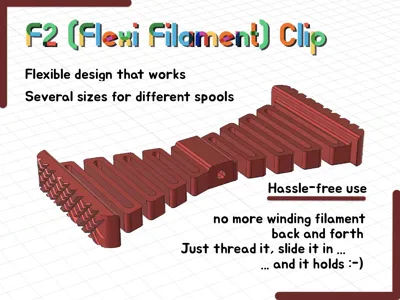
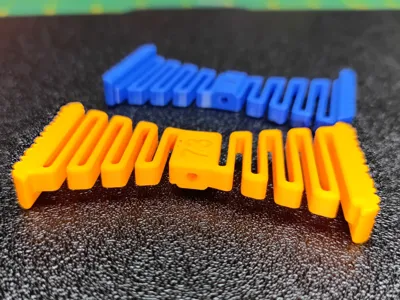
F2Clip (read: "Flexi Filament Clip")
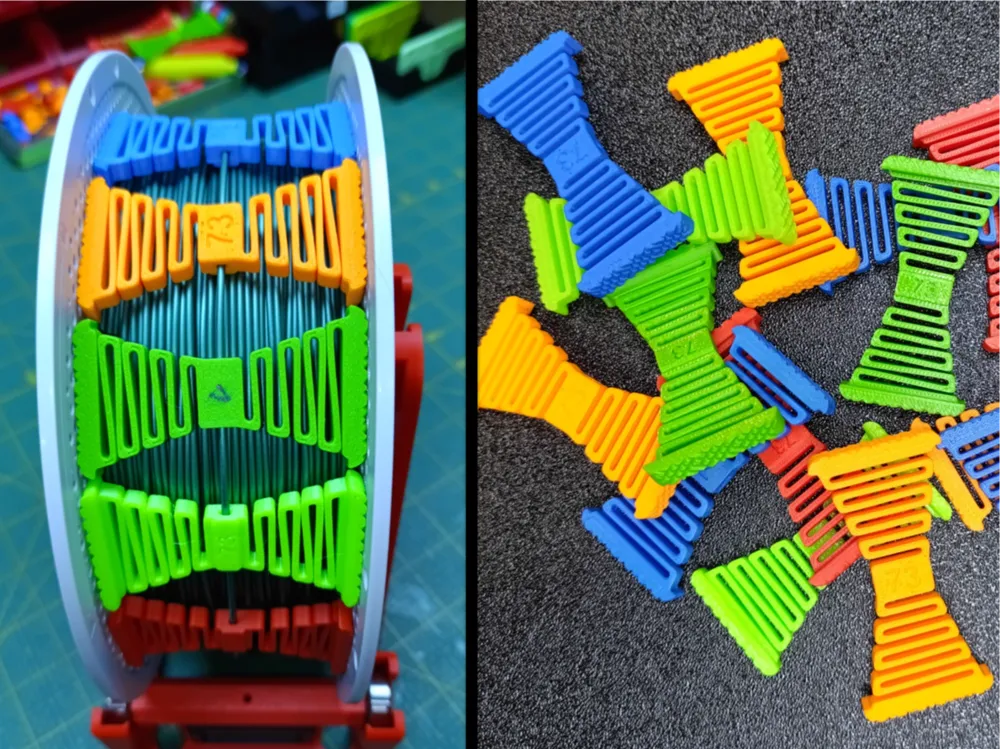
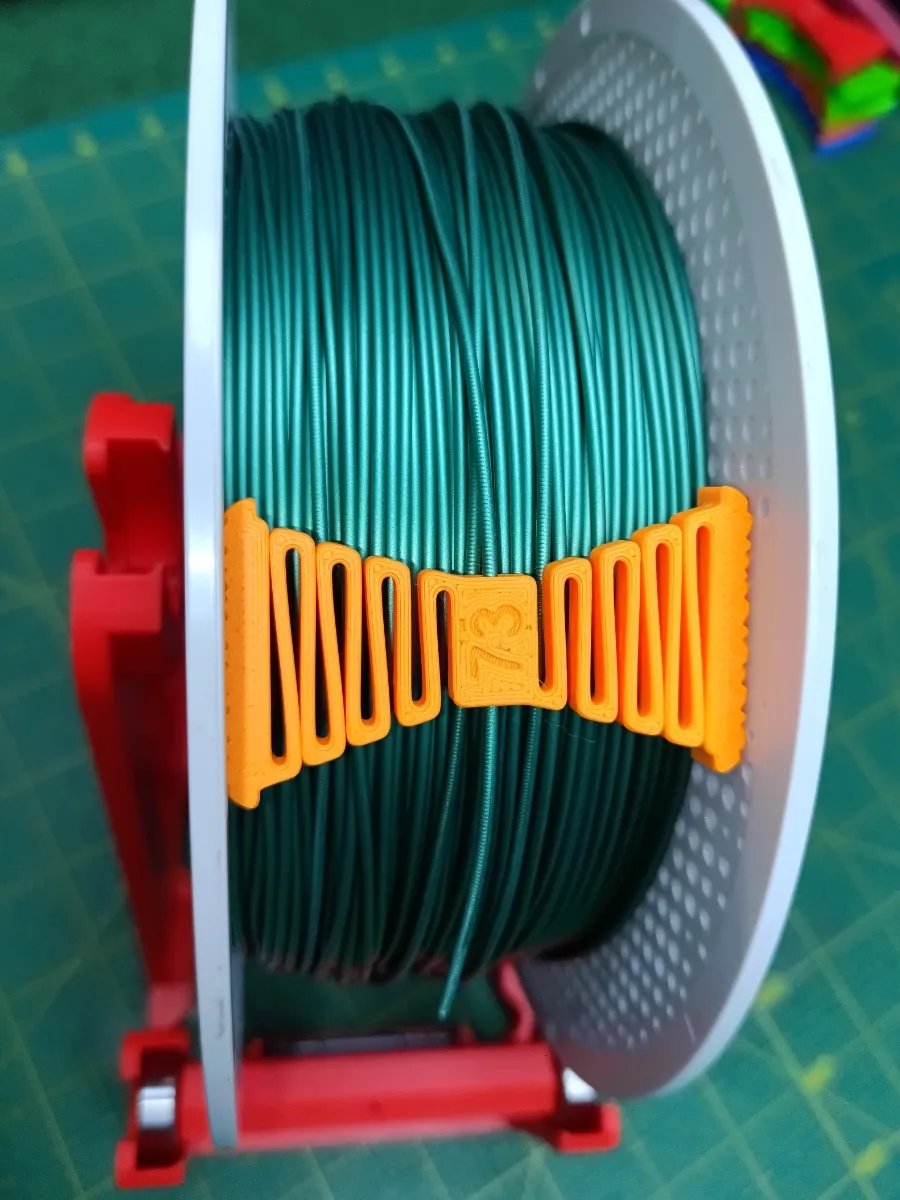
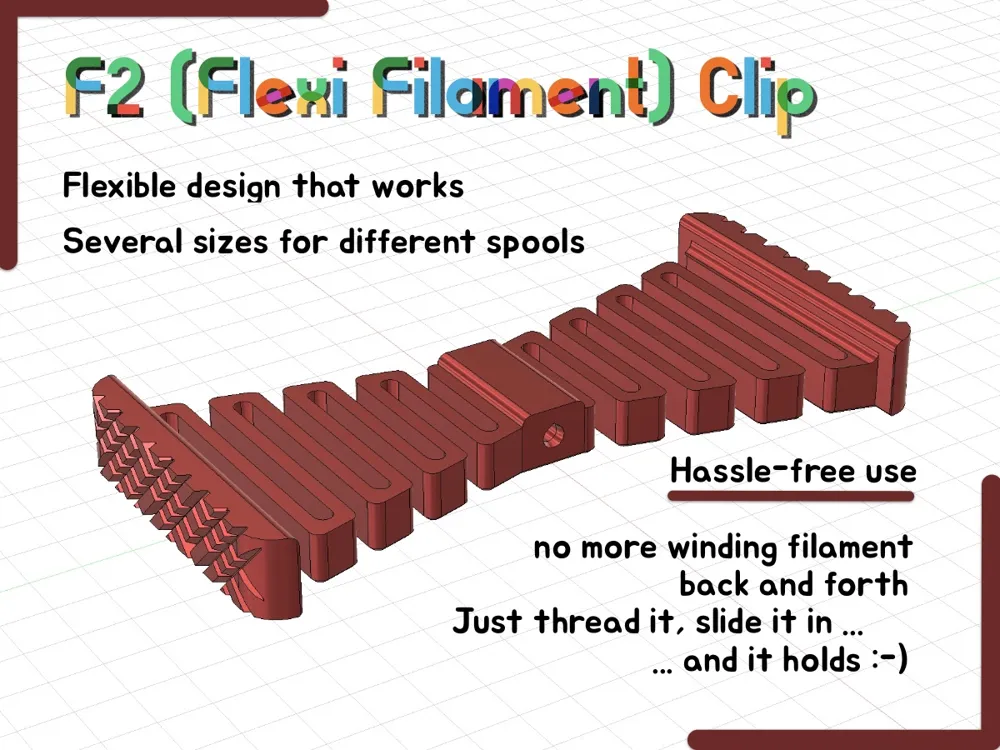
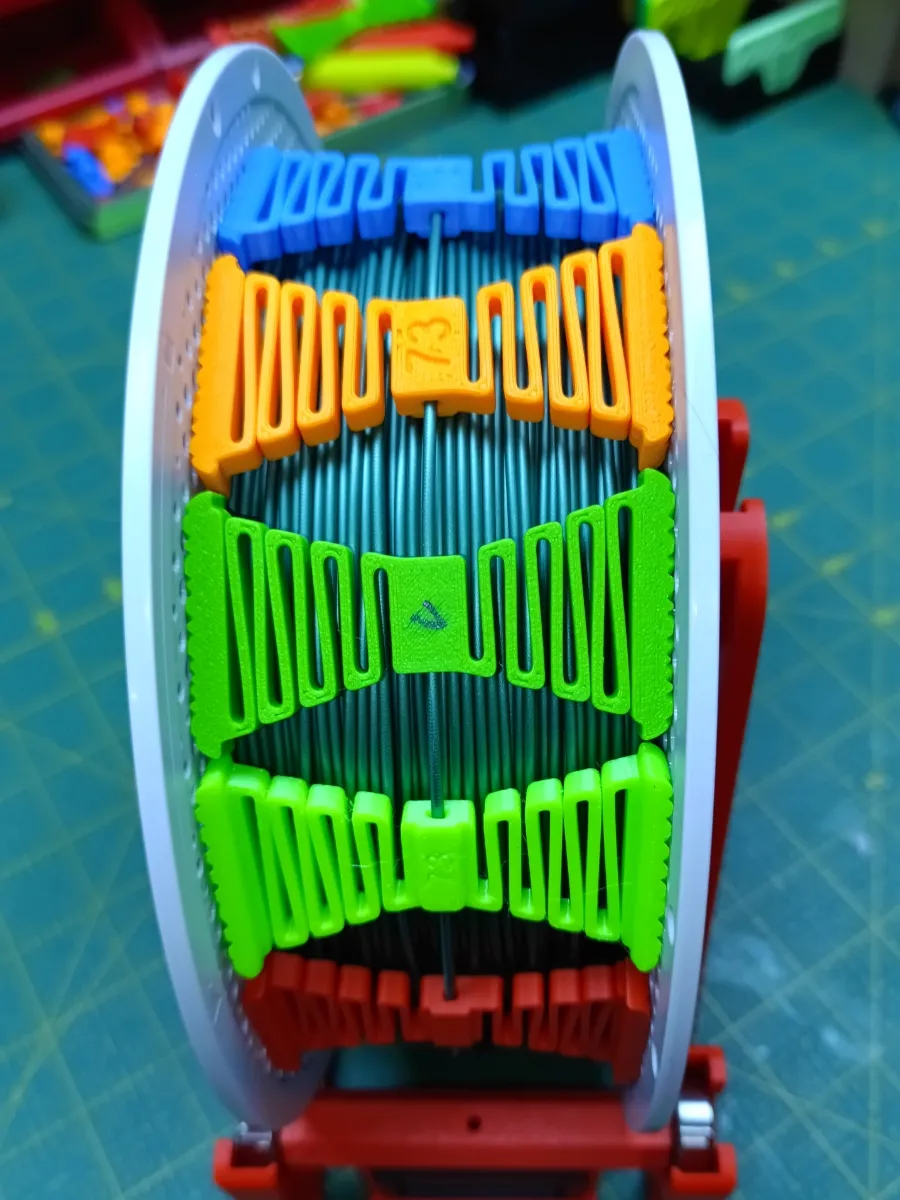
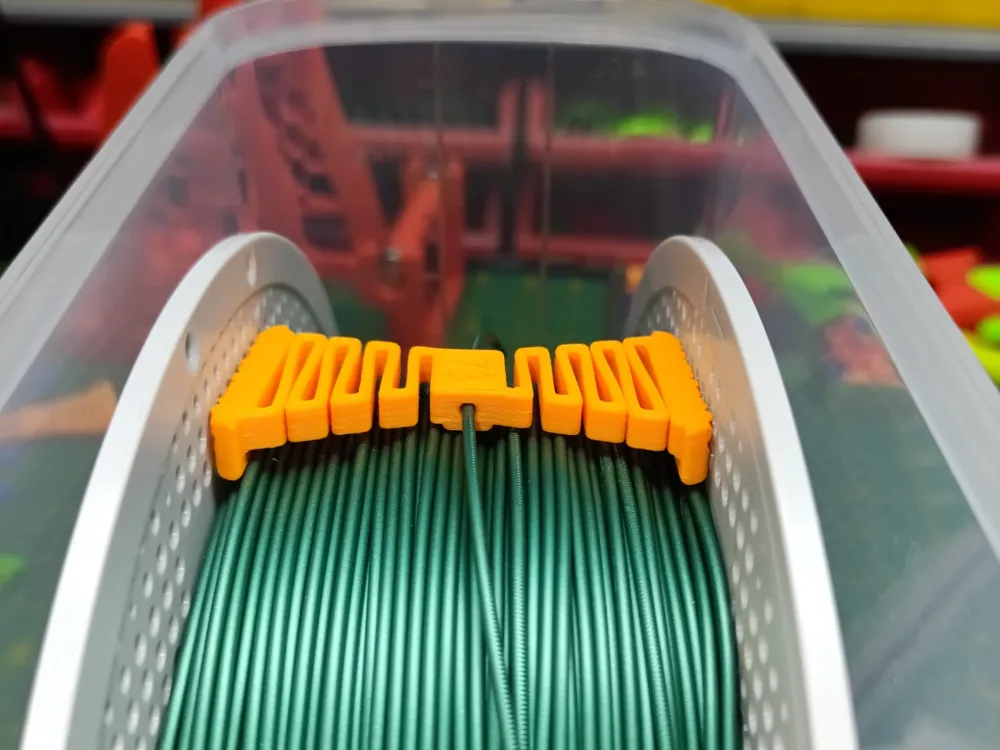
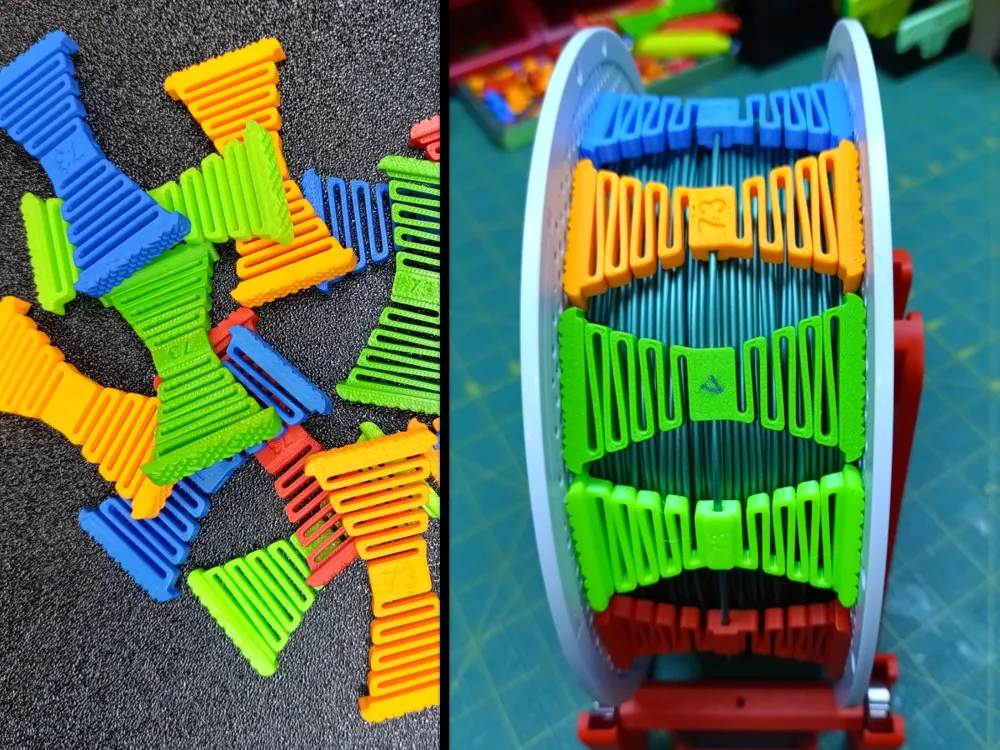
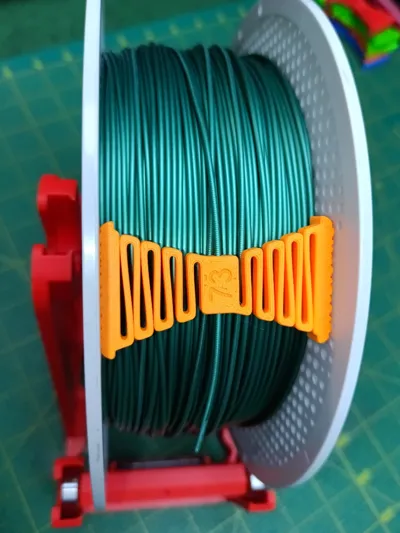
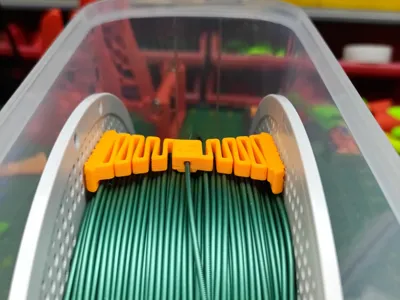
Flexible Clip for attaching filament to the spool, with as hassle-free use as possible. Easy installation without unnecessary winding of the filament back and forth.
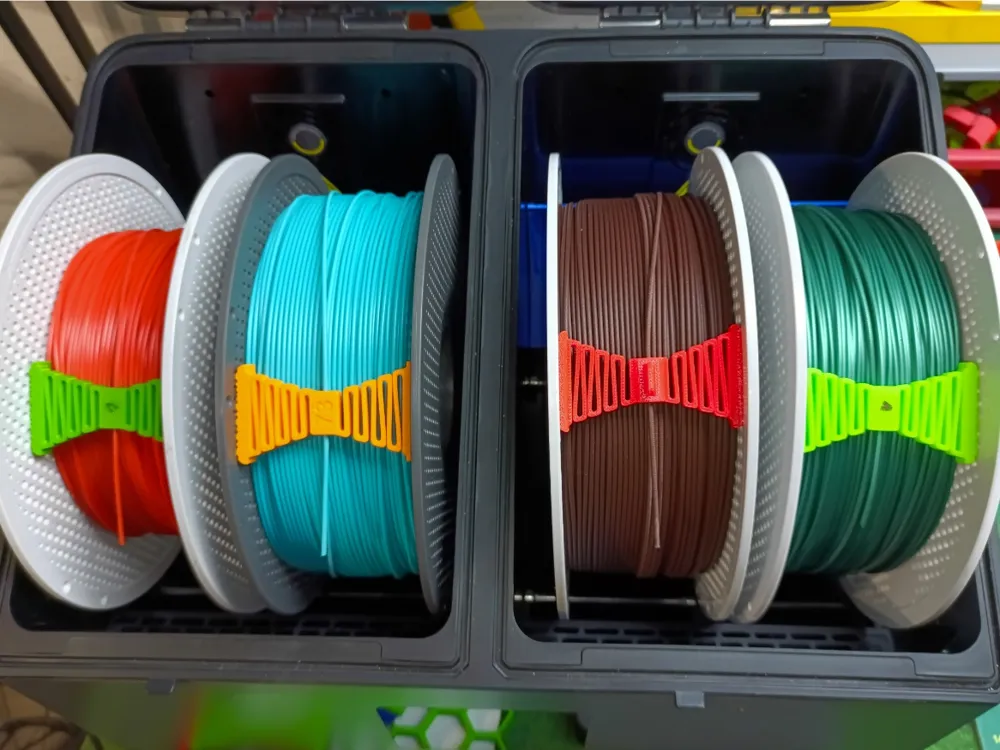
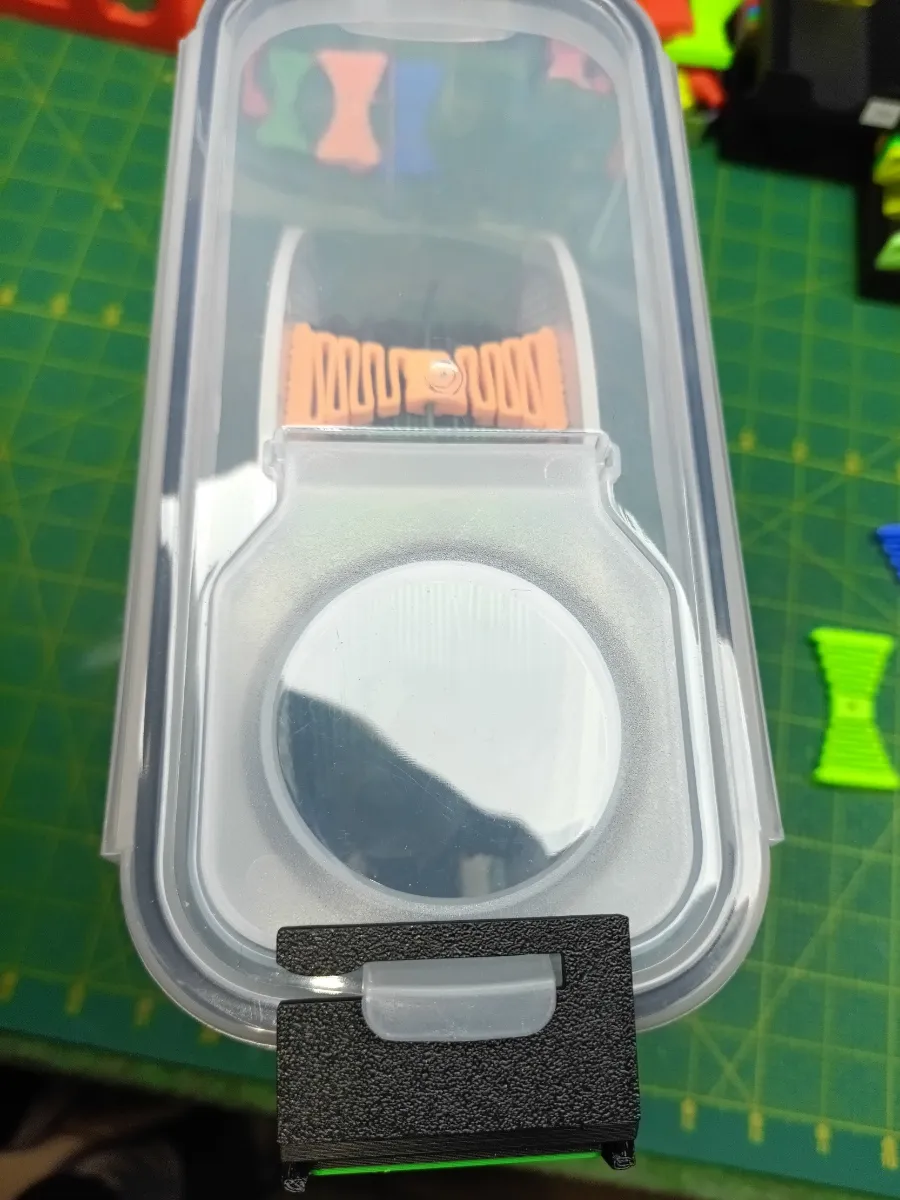
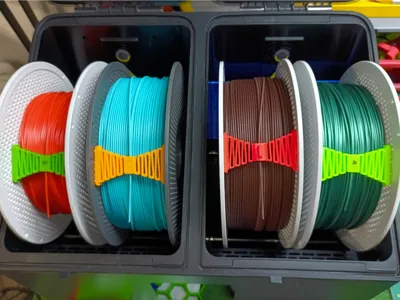
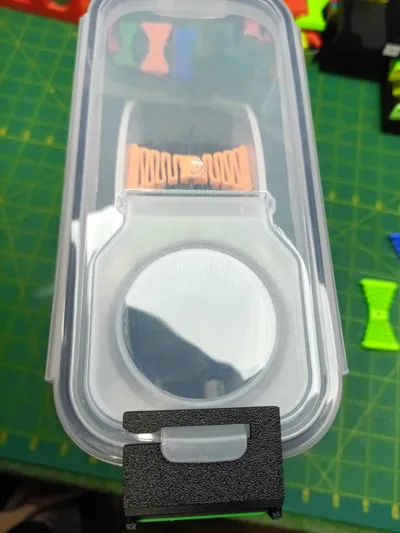
Simply thread it on, insert it into the spool... and done = it stays in place. Nothing sticks out, nothing protrudes... trouble-free use in Cereal Boxes, Filament Dryers, or AMS... basically anywhere.
I tried a lot of clips, but none of them were what I was looking for. Actually, I really liked one - flexible, simple, and elegant - it seemed like I had found the perfect solution. Unfortunately, its elegant design proved to be a "weakness" at the same time - pretty soon, the material became "tired", shortened, lost its elasticity ... and fell out of the spool. I tried different materials, but the result was always the same.
So, I decided to design my own, more robust Flexi Filament Clip.
I admit... it may not be as elegant as the original inspiration, but thanks to its design, it should last much longer.
BTW, if you like this model, take a look at my other Flexible Filament Clip design - which I call "Chicago style." It has a different, rounder shape that some people may prefer, but it is, of course, just as reliable as the F2Clip.
You can find more information about the Chicago FlexiClip model here ... | 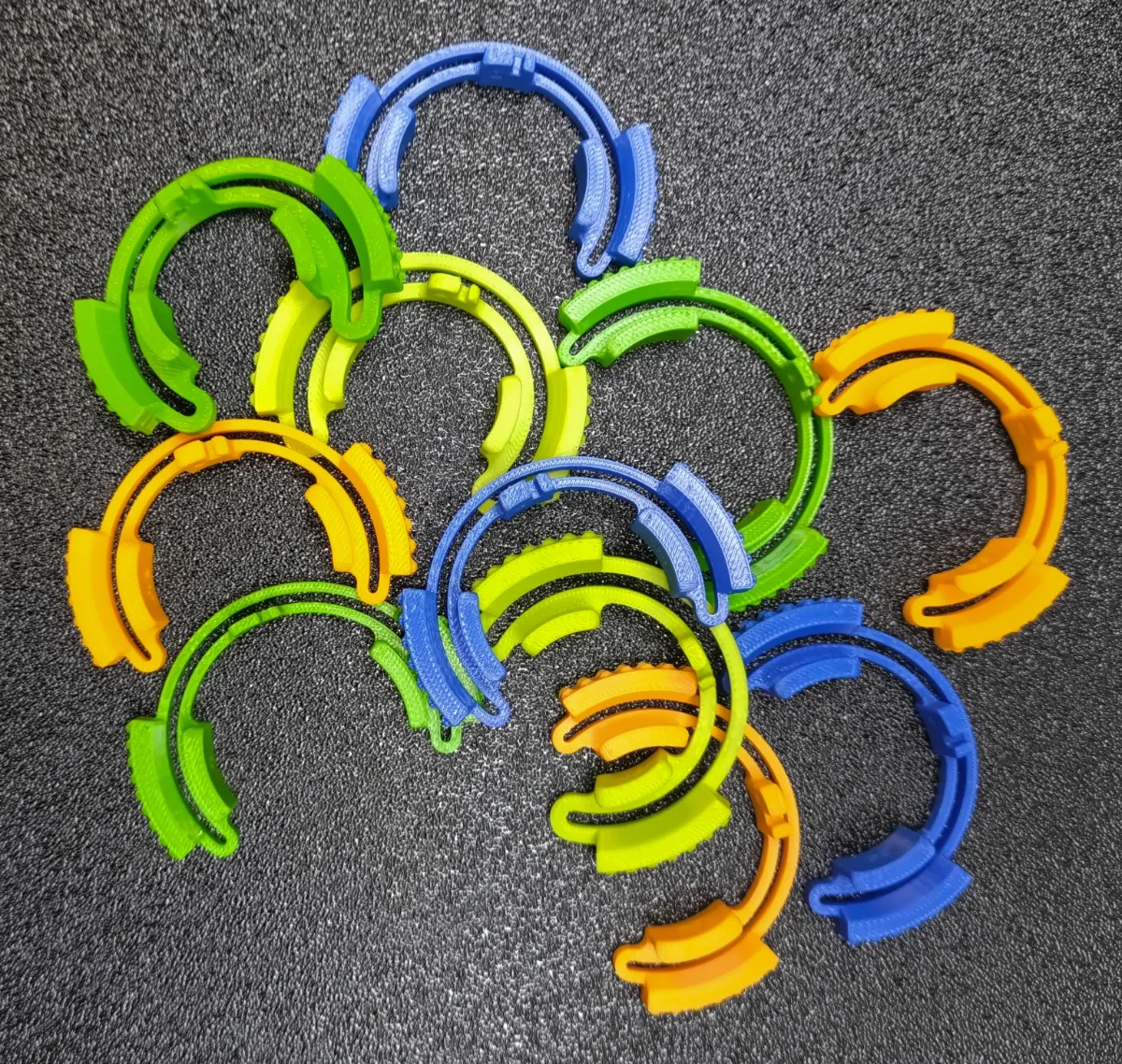 |
What material to use?
Choose the material with regard to the intended use, especially with regard to temperatures and, of course, your possibilities.
- PLA is not ideal - not as flexible as, for example, PETG. It "tires" more quickly, but it can be used if you don't have anything better. However, if you expose it to higher temperatures... it's “done” (I mean destroyed and useless).
- PETG (the material used for design and main model testing) is OK. It lasts longer and can even be used in a dryer if the temperature does not exceed 55°C. At higher temperatures, however, it begins to lose its flexibility and "collapses." However, even then still works somehow ...
- TPU for AMS - originally seemed like an interesting idea to me, but it only works “so-so” at normal temperatures (as soon as you use it in a dryer, even at "PLA" temperatures), it becomes soft, loses its shape and shrinks. Basically I don't recommend it …
- ASA - For truly universal use, ASA proved to be the best - it works perfectly under normal conditions and is not "threatened" by the temperatures normally used for drying filament - I tested it up to 80C and F2Clip basically lost none of its original capabilities (yes, it "shortened" a little bit, but then the size was stable & it kept its shape and remained flexible).
Conclusion - if you want the clip that will last and have the option to print from ASA, it is your best bet. The second best option is to use PETG.
Size
The flexible clip must, of course, be larger than the inner width of the spool. How much larger is a matter of trial and error:
- A clip too large will have greater strength (and last longer), but will be more difficult to install and may tend to "pop out" on new, completely full spools.
- A clip that is too small will (understandably) not hold well.
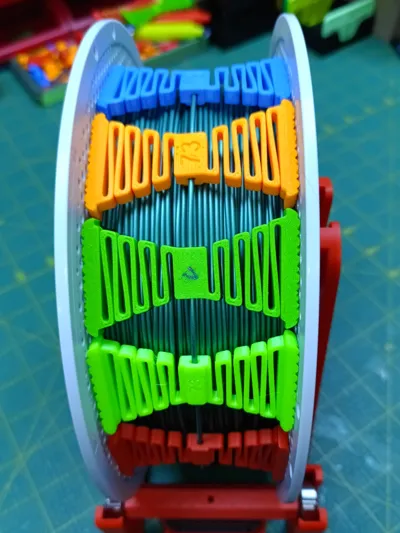
Personally, I have found that a size of approximately +10mm compared to the inner width of the spool works well. E.g., for a Bambu Spool with an inner width of 62mm, I use an F2Clip with a size of 73mm. For a spool from Devil Filament (inner width 58mm), a size of 73mm can also be used, but a smaller clip size of 68mm is more convenient.
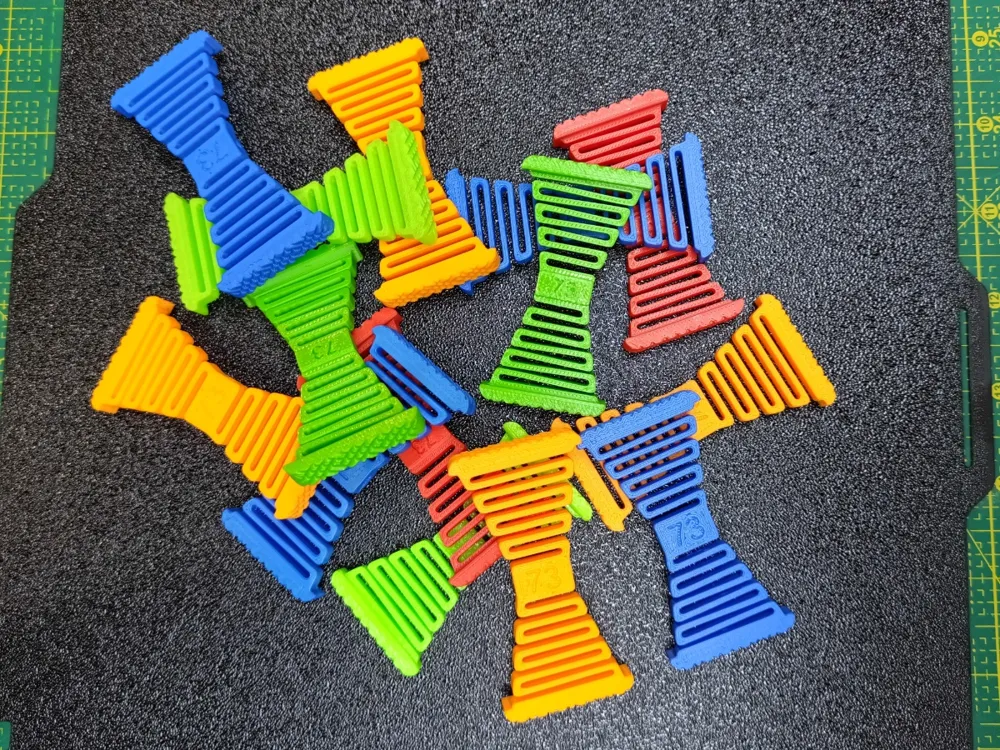
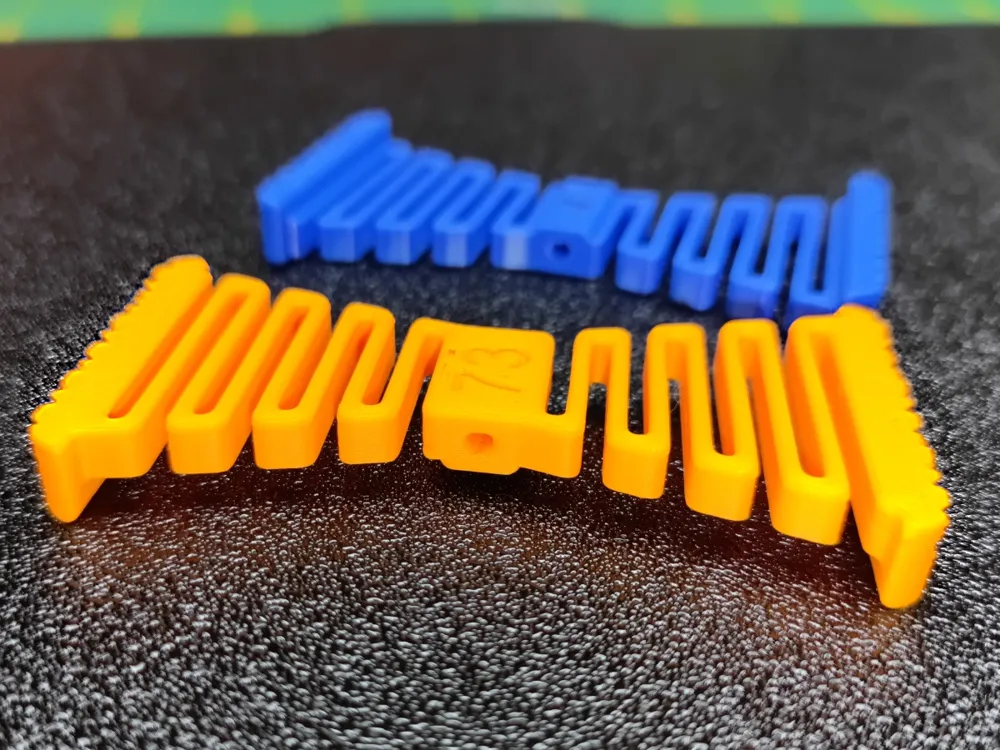
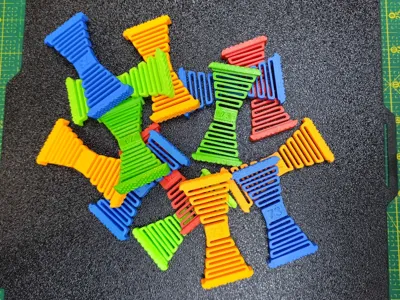
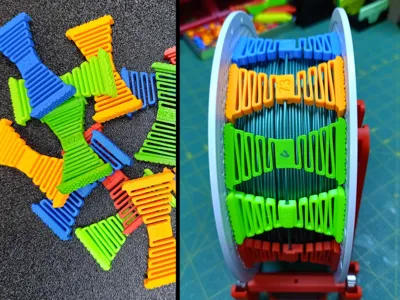
F2Clip is currently available in 4 sizes - 63mm, 68mm, 73mm, and 78mm (suitable for all the spools I use). All these are in the Main Print Profile (BTW: the clip size is stamped on its center part).
If you need a different size, let me know... additional sizes (if necessary/requested) will be available in extra Print Profiles.
TIP
F2Clip was designed for installation "with the number on top" (the number indicating the clip size, stamped on the center part). However, it can also be used the other way around ("number down"). Ideally, it should be adapted to the shape of the filament on the spool. With the "number up" the clip has an arched shape after installation, while with the "number down" it will lie flat. Try both options - after threading the end of the filament into the clip hole, simply rotate it and see which one works better.
TIP2 (advanced)
If you plan to use F2Clip printed from PETG in the dryer more often, you can choose a size that is "one number larger" (e.g., use 78 mm instead of 73 mm for the Bambu spool). At first, the clip may be slightly larger than necessary, but after a few uses in the dryer, when it shrinks slightly, it will reach its optimal size, which will be stable = it will not change and you will get perfect fit.
That's all, I think. If you like F2Clip, it's available to you... Enjoy!
*****************************************************
*****************************************************
Now … for those who have an more analytical mind... or are curious about some details, here are some numbers and photos from design testing (they may help you choose the material/size that suits you best).
I tested F2Clip printed from:
- PLA Tough (Bambu) - dark orange
- PETG (Devil) - green
- TPU/AMS (Bambu) - neon green
- ASA (Devil) - orange
- ASA (Bambu) - blue
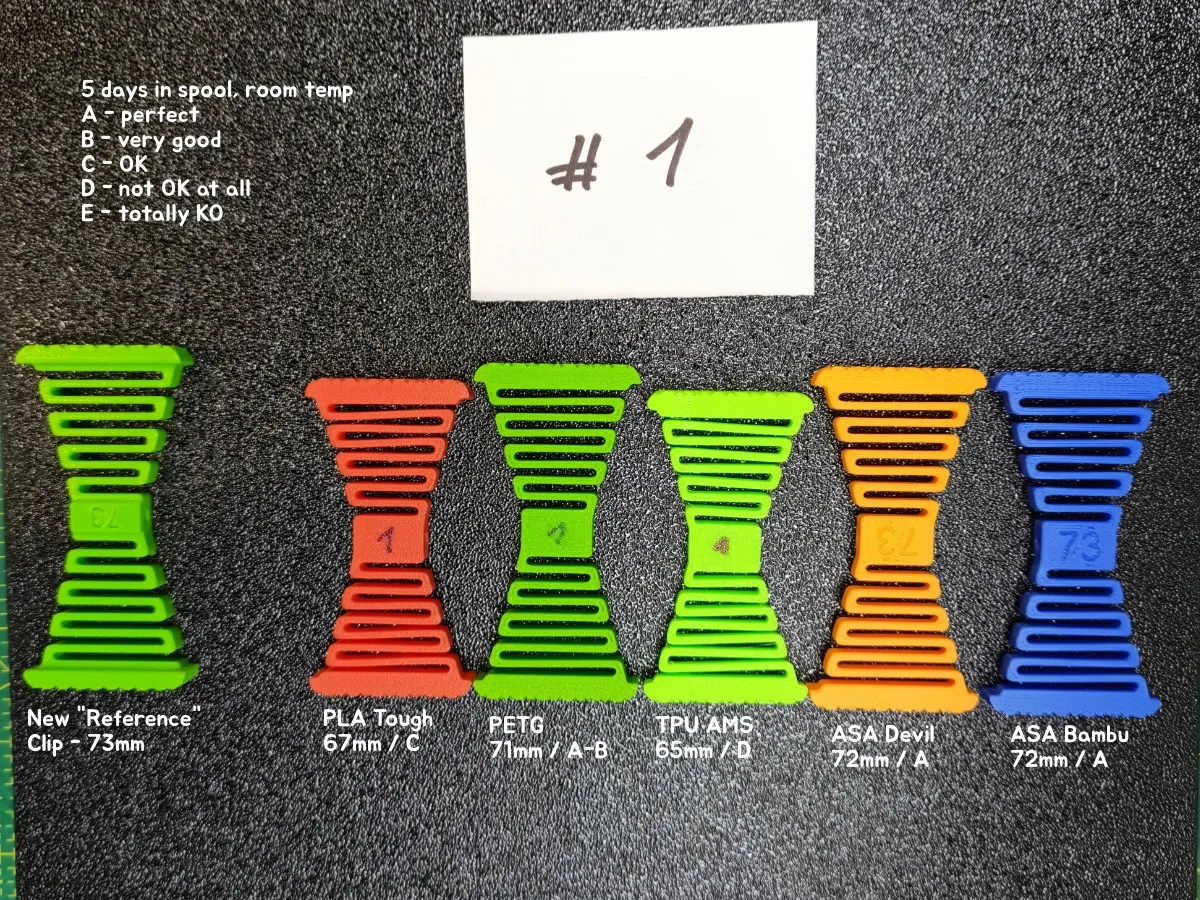
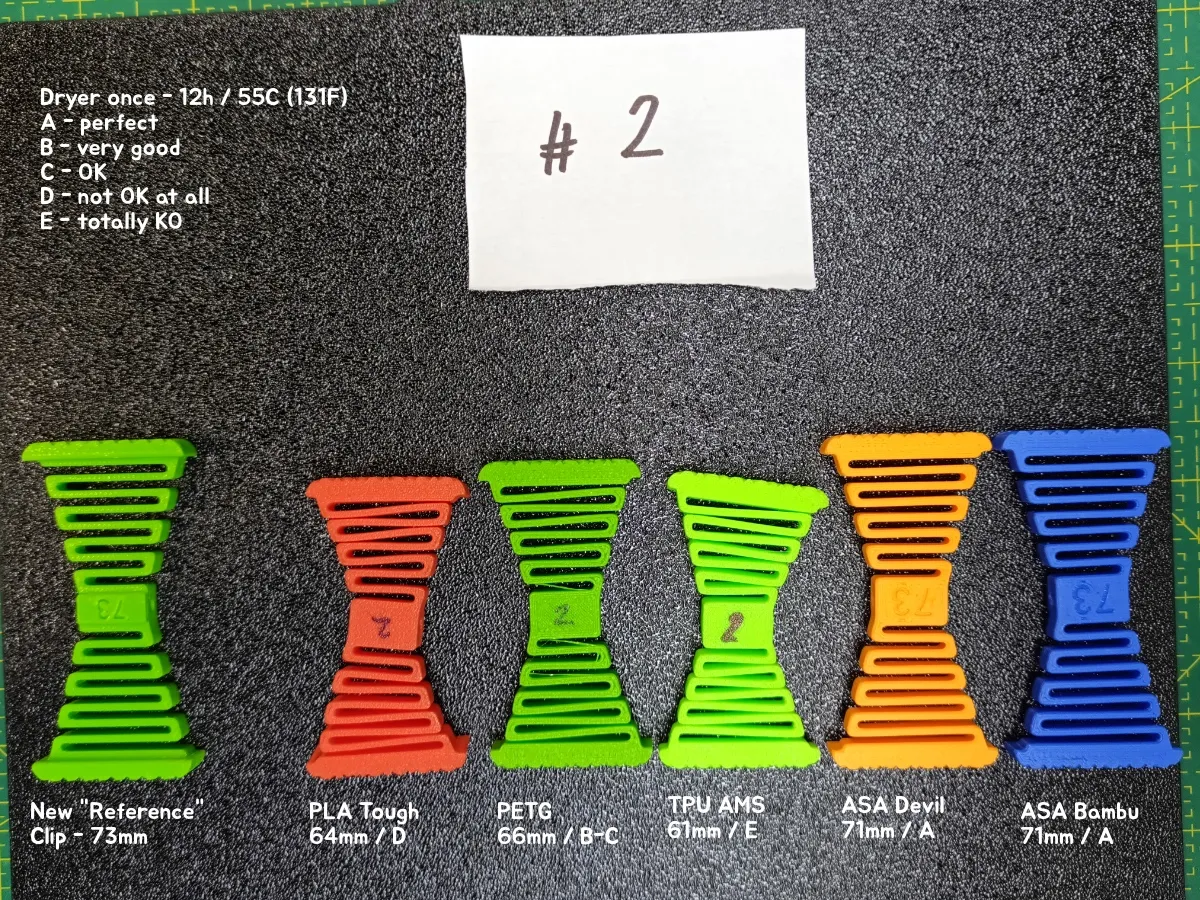
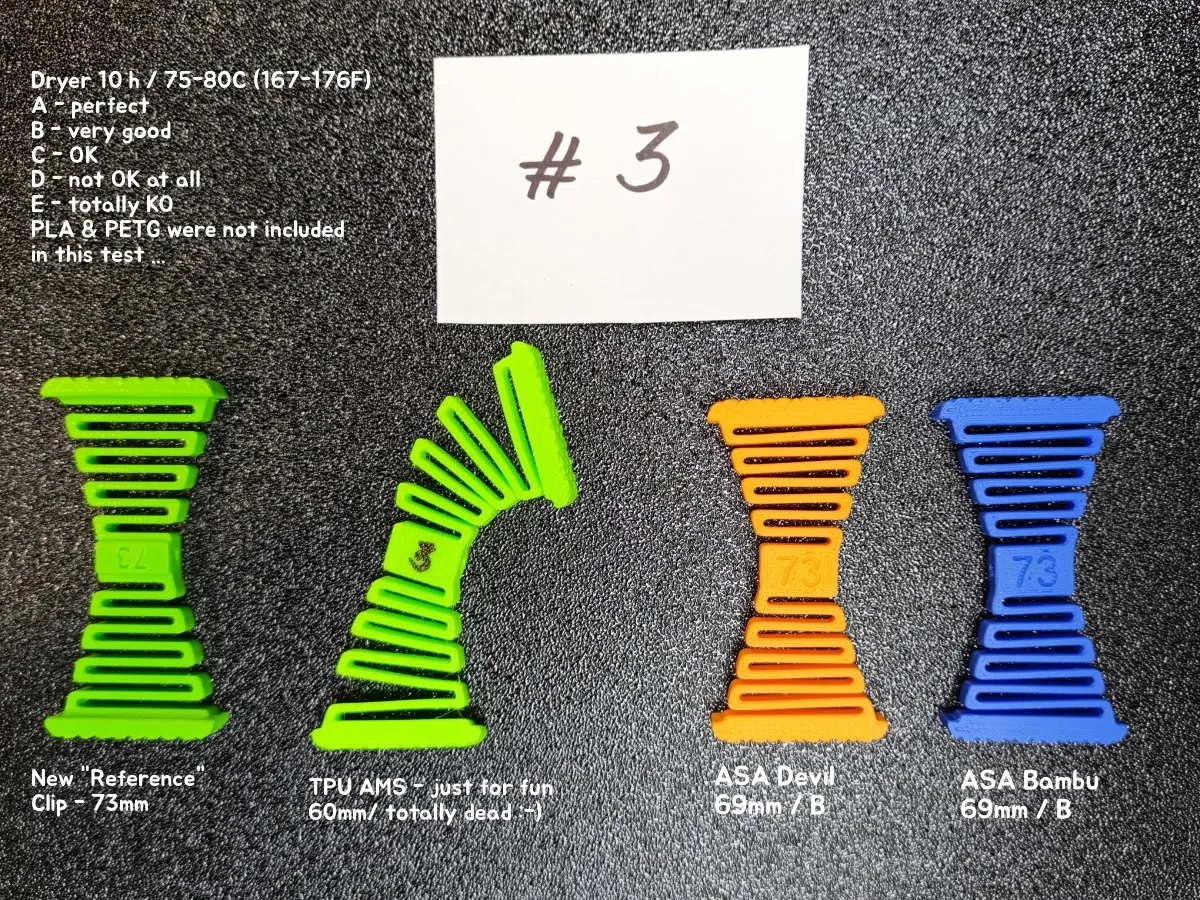
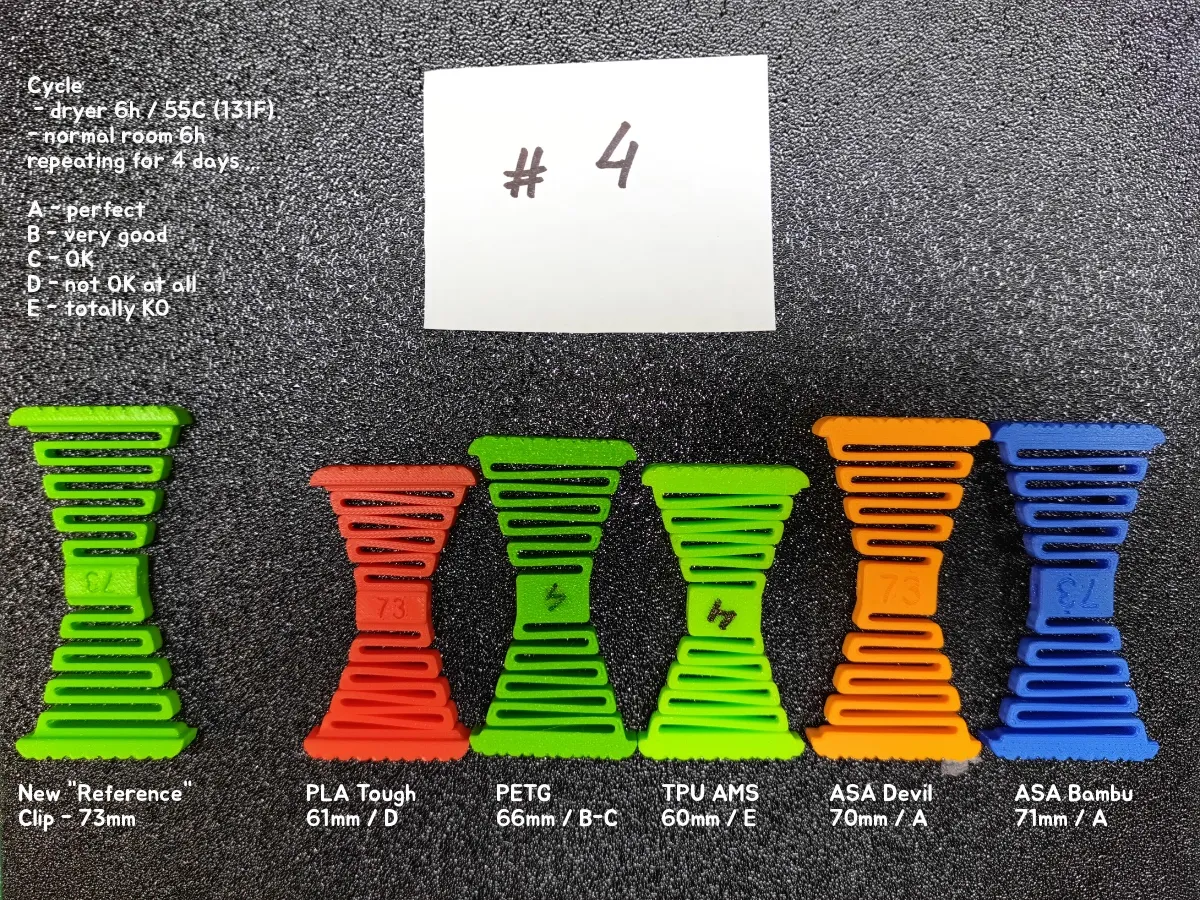
... under various conditions. All clips are 73 mm in size. On the far left is always the "reference F2Clip" which was freshly printed - it has never been used in a spool or dryer - and serves only for comparison with "clips" that have undergone "real-world conditions" :-) Each photo contains information about the "new size" of the clip (how much it has "shrunk") and my assessment of its functionality - how flexible it is, how well it holds... The rating ranges from A (best) to E (practically unusable).
Set #1:
These clips were installed in the spool and stored in a cereal box at normal "room temperature" (approx. 20 °C/68 °F) for 5 days. So it simulates normal, common use (without drying). The photo/measurements were taken immediately after removing them from the spool.
Set#2:
Another set of clips that went through the filament dryer – 12 hours at 55°C (131°F). PLA significantly lost its size, shape, and flexibility. TPU/AMS practically lost its usability under these conditions (it fell off the spool). PETG shortened slightly, but is still usable. ASA had no problems at all.
Set #3
Another set of clips (#3) that went through the dryer, but this time at significantly higher temperatures - 10 hours at 75-80°C (167-176°F).
I did not include clips made from PLA and PETG in this test because we simply could not expect them to last.
Just out of curiosity, I added TPUforAMS, which collapsed within the first few minutes, fell out of the coil, and you can see the result of its stay in the dryer in the photo :-) Both ASA clips survived without any problems - although they shortened slightly, their shape and flexibility remained fully usable.
Set #4
The last set of clips was exposed to conditions similar to those of set no. 2, but with repeated cycles of drying (55 °C/131 °F) and exposure to normal room temperature (20 °C/68 °F) ... always at 6-hour intervals over a period of 4 days ... The aim was to better simulate repeated use in "normal mode". The results are essentially identical to the test where there was only one drying cycle - this shows that a new clip changes its properties during its first visit to the dryer, but then remains more or less stable.
I hope you found this interesting and that it will be useful for choosing the right material and the right size of clip...
License

You may create derivative works based on this object, provided that all such derivative works are published exclusively on the MakerWorld platform and include proper attribution to the original creator. You may not share, upload, host, distribute, or publish this object—or any derivative work of this object—on any other digital platform, marketplace, or distribution channel. Commercial use of this object and any derivative works is strictly prohibited. This includes, but is not limited to, selling, renting, sublicensing, or using the object in any context in which you receive monetary compensation or other financial benefits.


Comment & Rating (11)