
Z-Step Size Calibration - Z Characterization
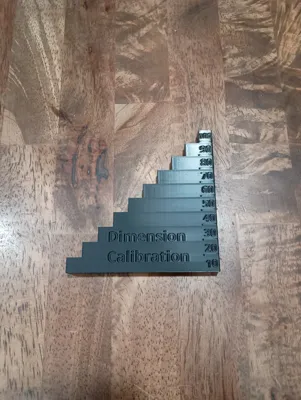
Print Profile(1)

Description
Add your data, help us learn about the Bambu printer consistency and have data to request features!
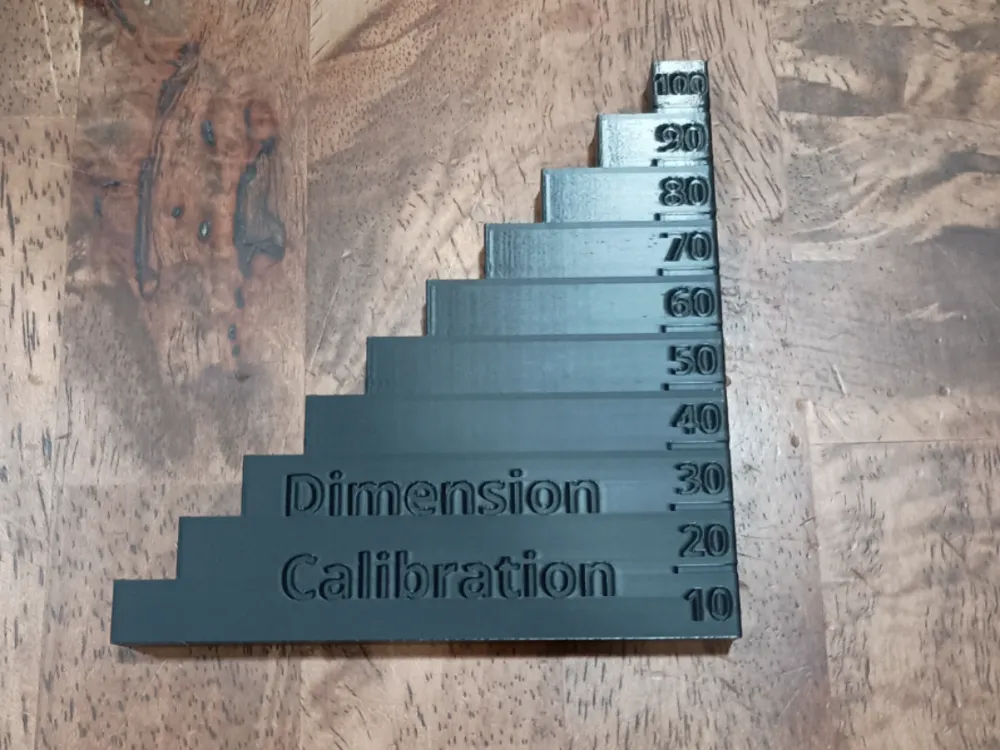
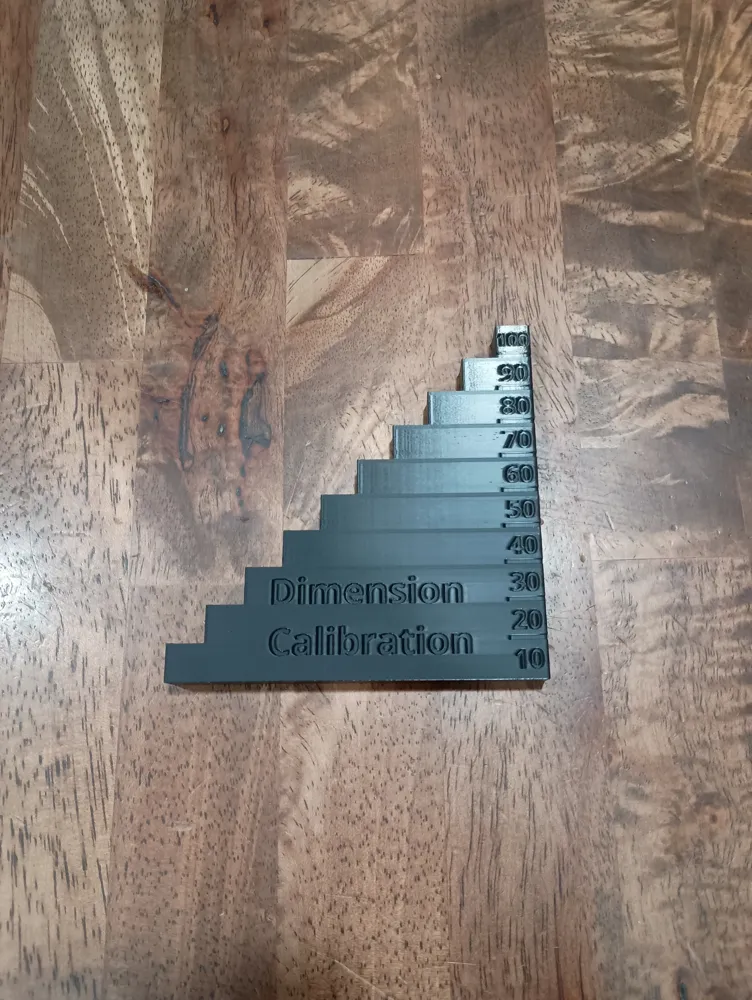
By printing this design and submitting results of your z-heights to the survey, you will be helping create a database of z step-size issues that we can use to understand the limitations of these printers and, hopefully one day, use as a clear indicator of why we need to be able to adjust our own z-step size on these closed environment printers.
How to help the cause:
- Print this design,
- measure the height of each stair step carefully using calipers
- submit results here: https://forms.gle/5CgT8hwu7gda3YXY9 (No email etc are collected… I am not doing this as a business, just for fun and in hopes of raising awareness and data that could maybe help sway Bambu to allow manual changes)
- [Optional] Check back here in a few months and I will have more statistical analysis available (once I have enough data)
- [Optional] I will post results I obtain periodically here, in case you like playing with data like me!
Why am I doing this:
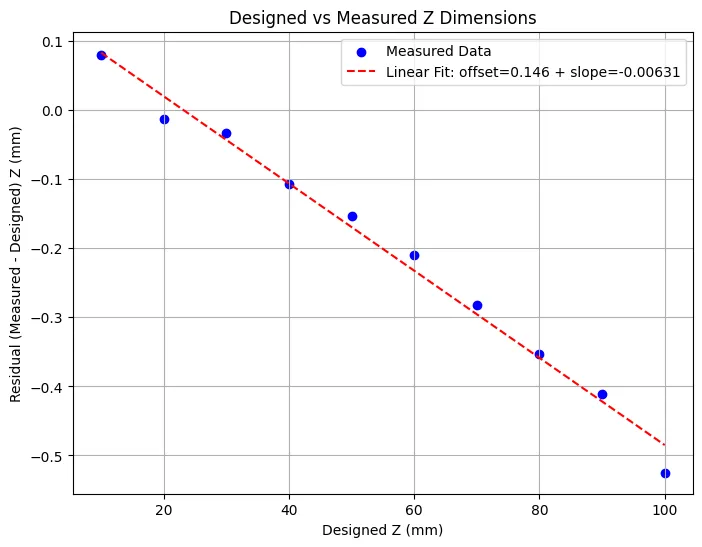
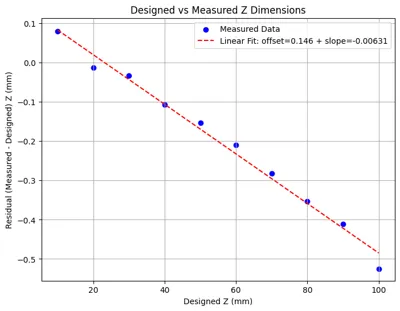
To be honest, the reason is that my functional prints don't always work when the tolerance is in the z-dimention. I expected better than loosing 3 layers of height (0.6 mm) over a 100 mm distance. Maybe that shouldn't surprise me, but it did. Everything else worked so easily but when I tried running the same part on the same printer type (3 P1S printers) and only two printers can produce functional parts (they loose 0.18-0.24 mm over 100 mm… so one printer is worse and so far Bambu support is not giving me options. So my thought is, either I have to know what the printer can actually do (and I need data for that) or I should be able to fix it (need Bambu software changes). So with data and everyones support, I hope to do both.
Future work:
If people actually care about knowing the limitations of their printers then
Expected FAQ's:
What about surface defects and sagging of the top layer?
Look, there are lots of metrics for surfaces in metrology and most just don't make sense when it comes to 3d printing. I am not going to say that it doesn't matter, but both the surface quality should affect every step in z the same… or close to it. So if I only look at changes between layers then it doesn't matter if there is extra material on the top of the print, as long at that doesn't increase on every step.
What about sagging, the top surface may be lower than expected
or a slightly sagging top surface
What if I know a way to fix this offset in gcode without causing problems to the 3d printer?
Please message me! I would love to be able to save my own calibration so that it automatically applies every time I print. If there is a solution, I will also add it here for others to try as well.
Are you going to do the other two axis or other characteriztions:
Depends on how many people show an interest here. I am interested in knowing the limitations better and what to expect as I get more printer.
Are you going to compare Bambu printers to see which have the most consistent z step-size?
YES!
Are you going to compare other non-bambu printers to Bambu printers?
NO! I feel like that is a waste of time. The reason is that other printers have methods of updating the step size in the firmware, so if you don't have great z-step size… well that's kinda your fault. With Bambu printers, your stuck with what you are given and I want to know what range of values we are stuck with for each Bambu printer.
Thanks for your support and dont forget to boost if you want to seem more of this.
License



Comment & Rating (7)