
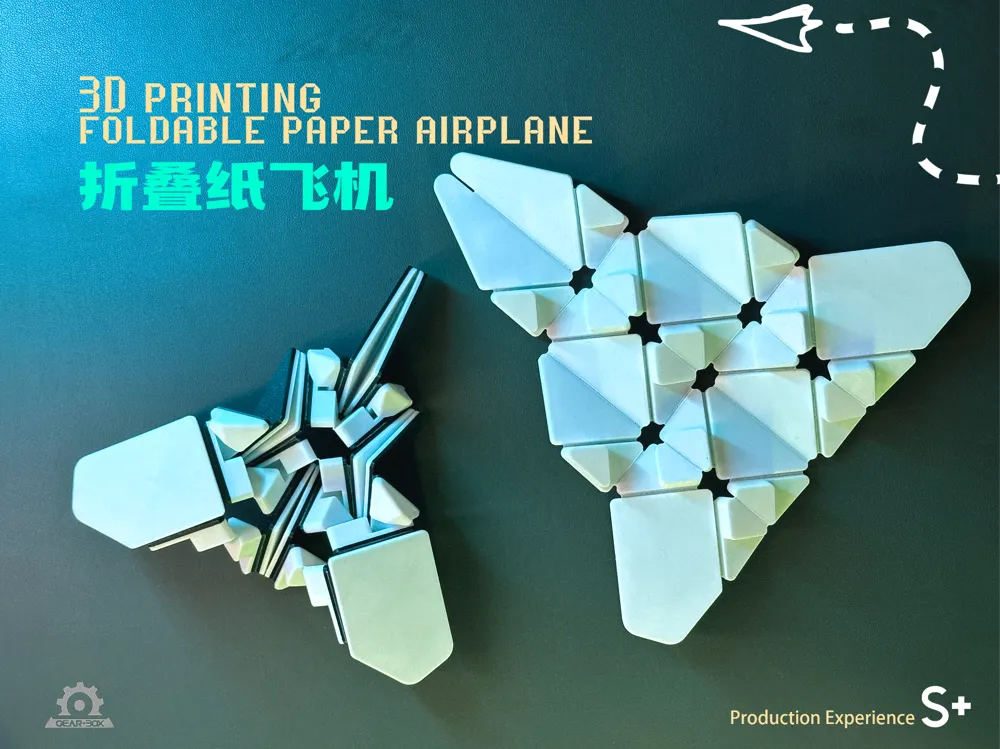
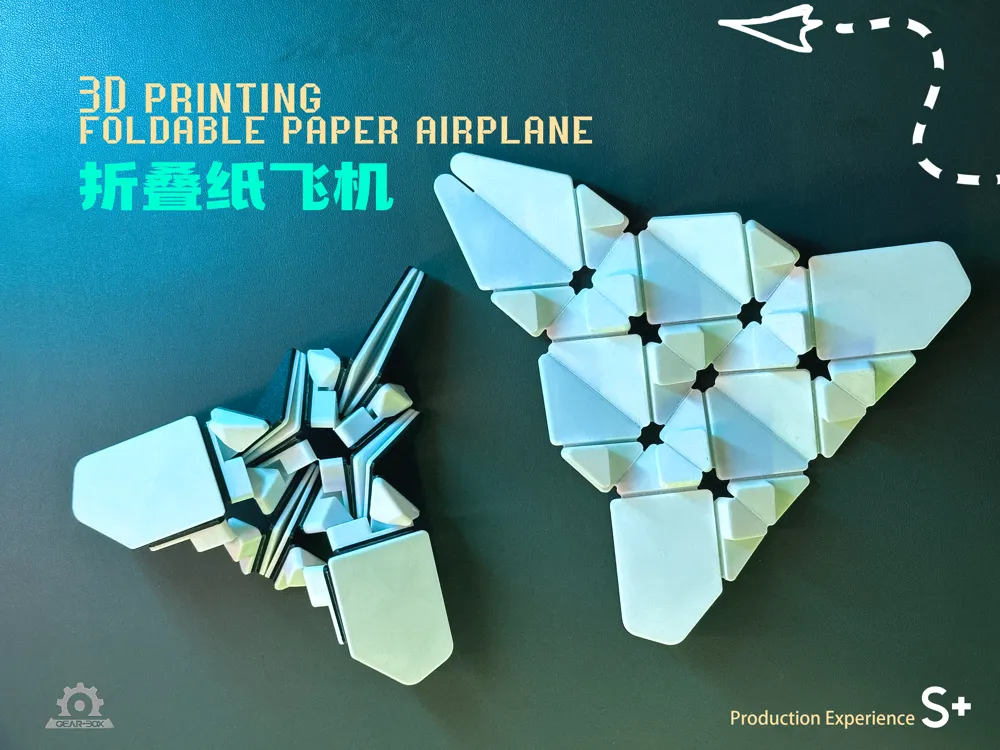
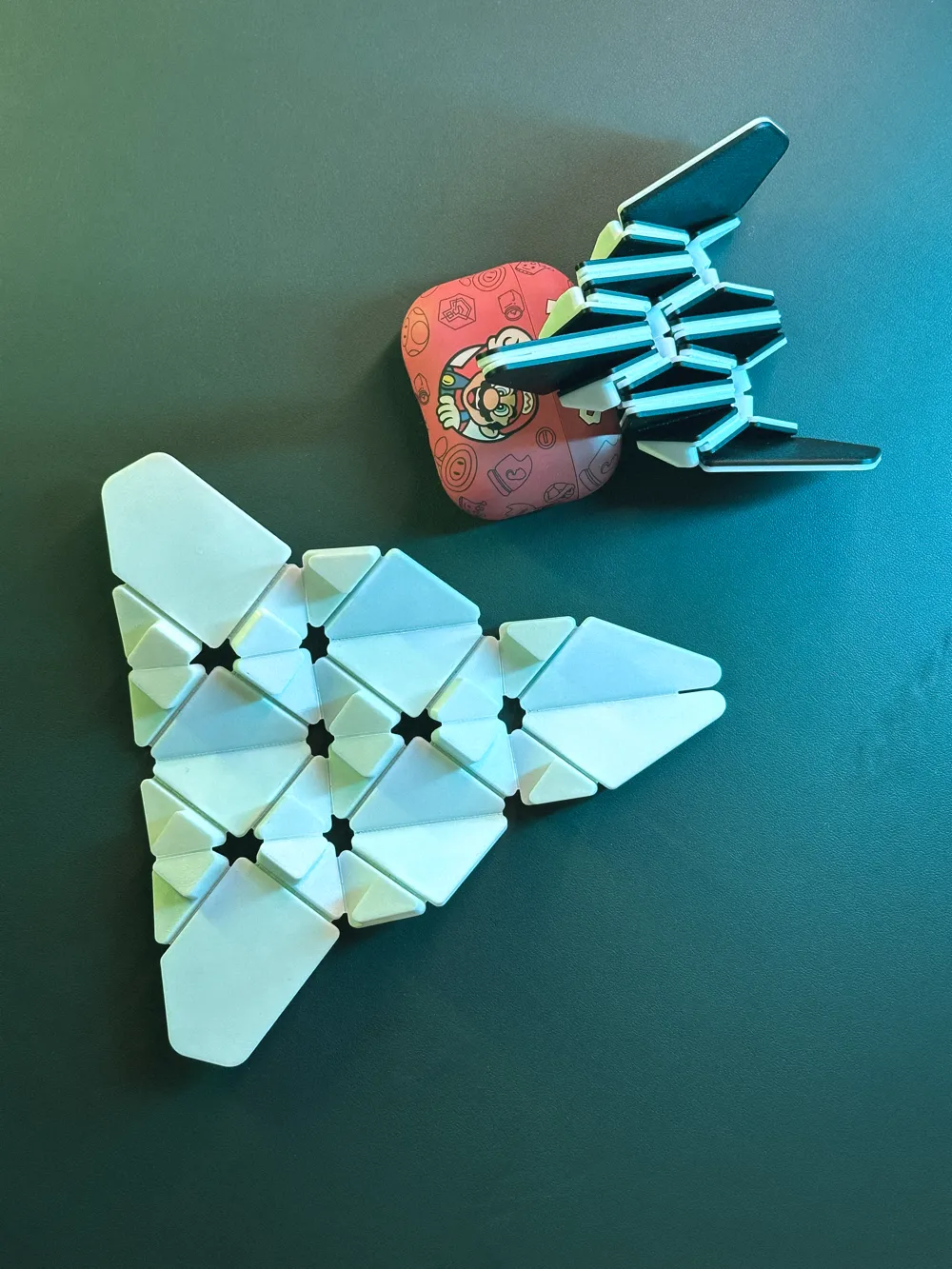
3D Printed Origami Paper Airplane
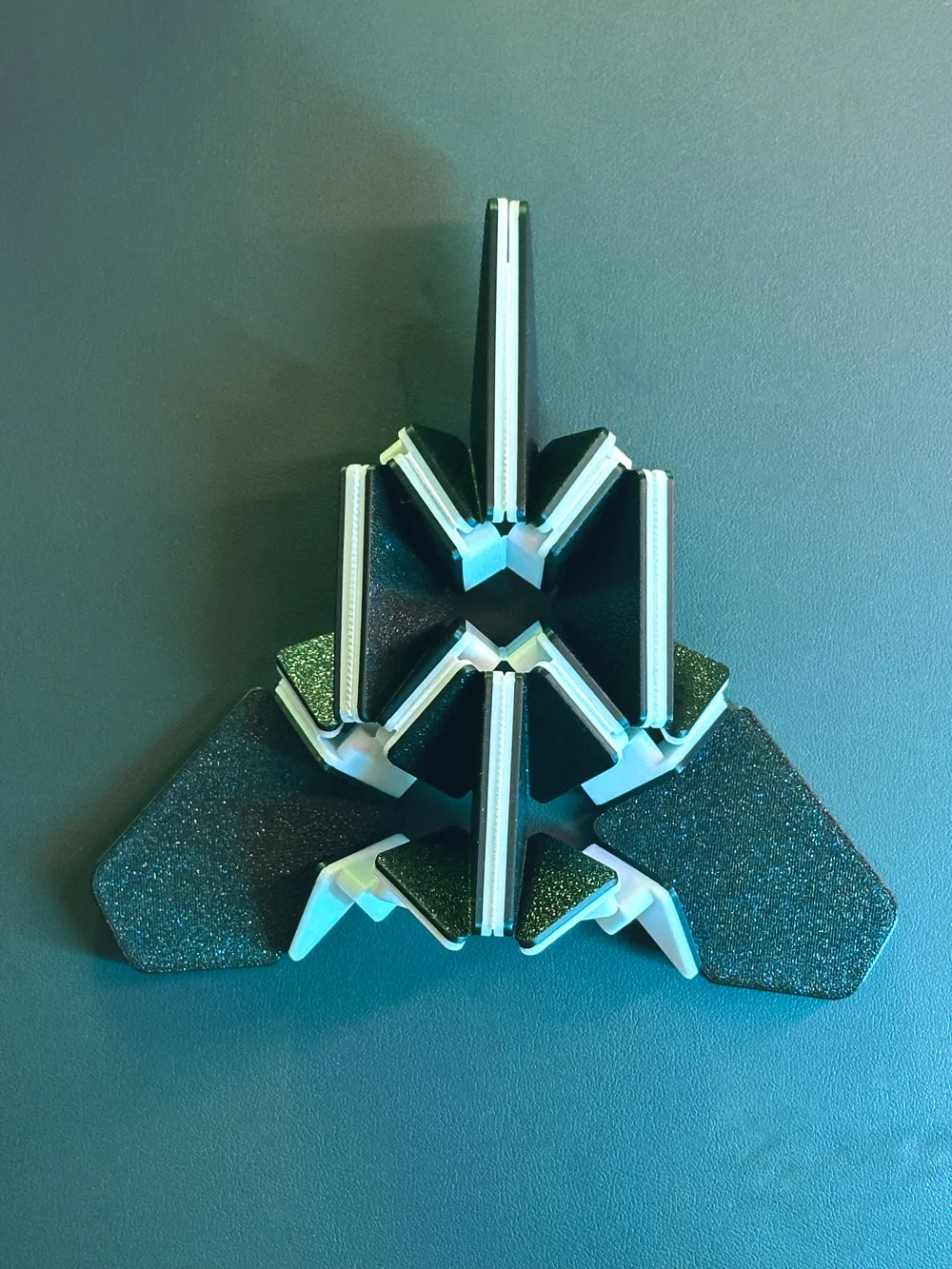
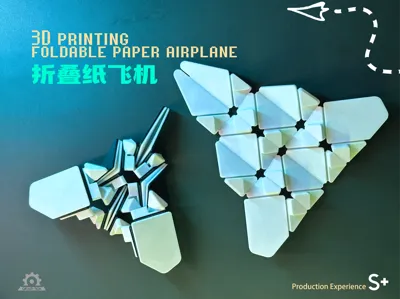
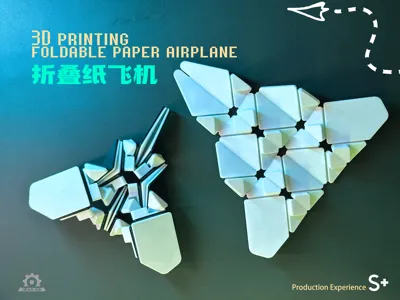
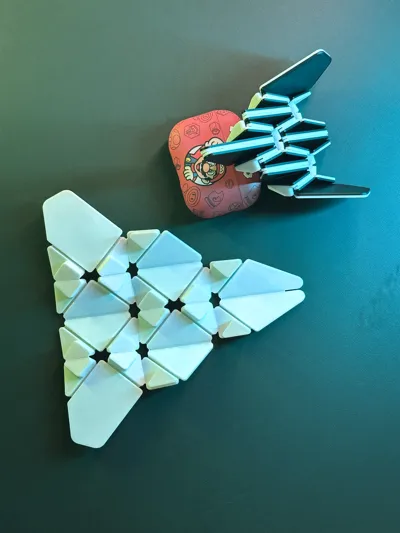
Print Profile(2)


Description
Boost Me (for free)
Please comment more to support my creation!
Latest work, click to view!
~~~~~~~~~~~~Divider~~~~~~~~~~~~
Boost Me (for free)
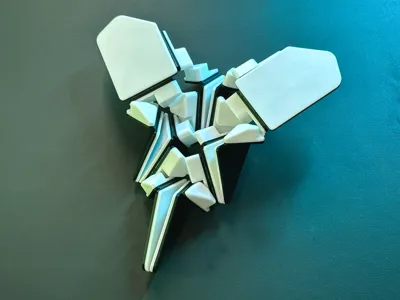
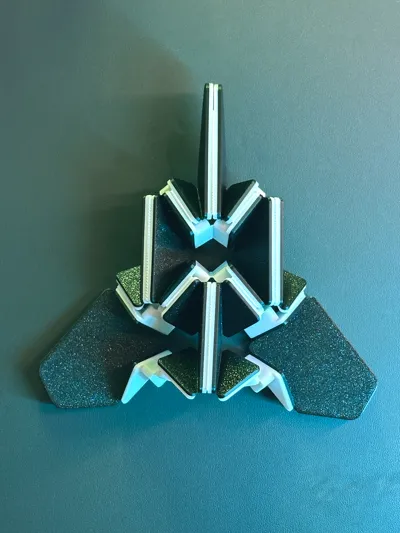
This is a model I really like. To understand its principle, I put aside my main tasks and spent two days delving into it, reading several papers and sketching a dozen versions. After understanding the principle, I realized the model wasn't as complex as it seemed; it only has two basic units! These can be freely combined and arranged, leading to this folding paper airplane!
The model is based on 6-crease vertex thick-plate origami principles, with references from the "Tianjin University Movable Structures Lab". The model's inspiration comes from matthewlim_diy's 3D printed origami video, which is another project that made me lose track of time!
Instructions
- The file has two versions, dual-color and single-color!
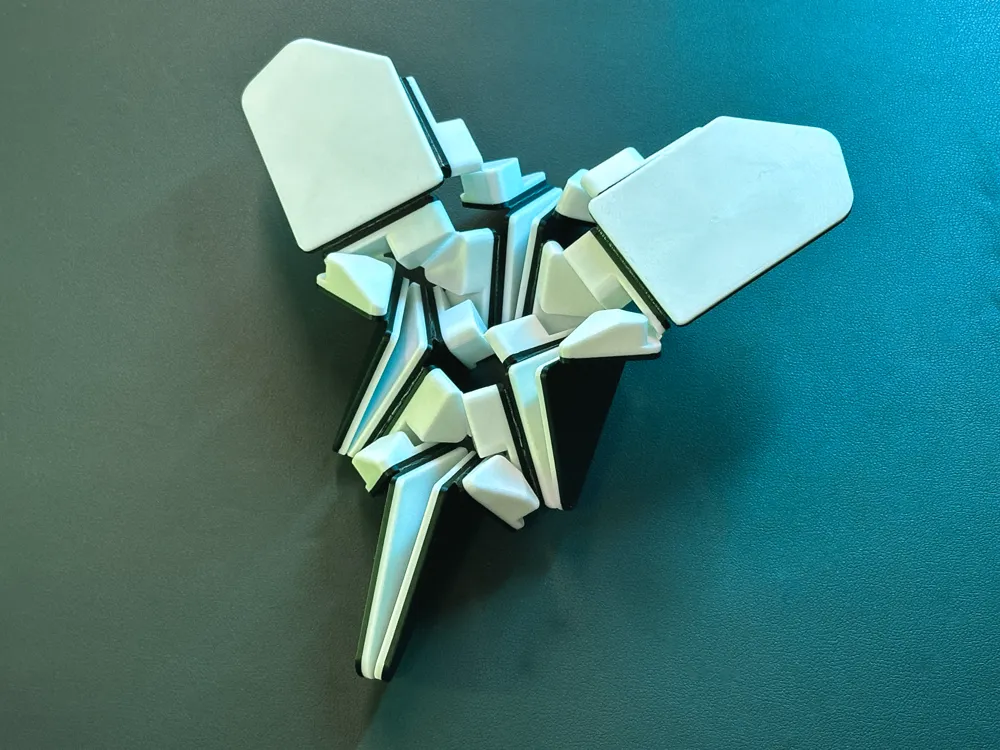
- Please be careful when folding; each unit of the model is an interconnected structure, so you cannot fold individual parts separately!
- When folding, first locate the two largest triangles; there are 4 sets of these in the model. By repeatedly and slowly folding these 4 sets of units, gradually allow all parts to come together. Forcing or folding too quickly may damage the hinges!
- For the complete Magic Ball Origami model, please check my homepage!
✅Crucial Tip: Be sure to watch the tutorial video for the first fold. This model is not beginner-friendly or suitable for those with less dexterity!
Important Additional Notes
This model has undergone rigorous testing from design to actual printing, and there are no inherent issues with the model. If your print fails, please first troubleshoot the cause and leave a comment. I will reply and provide solutions as soon as possible.
Some users have experienced print failures, primarily falling into two categories:
- Model's inherent limitations: 3D printed items are made of plastic and cannot achieve extreme bending. Forceful pulling or bending can easily cause hinge breakage, which is an inherent characteristic of the material.
- Printing equipment / filament issues: If the first layer fails, it is highly likely due to filament quality, bed leveling, or abnormal bed adhesion, and is unrelated to the model design.
⚠️Core reason for easy breakage: Flow rate deviation. Different colors of the same filament may have varying raw material flowability, making universal flow rate calibration difficult. This has minimal impact on ordinary models, but this model's hinge wall thickness is only 0.24mm: a low flow rate will significantly reduce structural strength, manifesting as uneven hinge surfaces, loose textures, and inconsistent wall thickness. The flow rate needs to be individually calibrated for the specific filament currently in use.
Out of approximately 2000 print cases, there are only 20 reviews of four stars or below, with neutral to negative reviews accounting for about 1%. For such a challenging model with ultra-thin hinges, this feedback ratio is within a reasonable range.
Feel free to print. If you encounter any problems, please leave a comment, and I will reply to each one!
Video Tutorial
https://v.douyin.com/BARHr2iwntg/
TikTok
commercial authorization https://www.patreon.com/c/WiSeGearDad
Buy me a cup of coffee, please.https://coff.ee/gbox
———————更多作品———————

License

You shall not share, sub-license, sell, rent, host, transfer, or distribute in any way the digital or 3D printed versions of this object, nor any other derivative work of this object in its digital or physical format (including - but not limited to - remixes of this object, and hosting on other digital platforms). The objects may not be used without permission in any way whatsoever in which you charge money, or collect fees.


Comment & Rating (2)