
USB-C to USB-C cable Power Labels
Print Profile(1)

Description
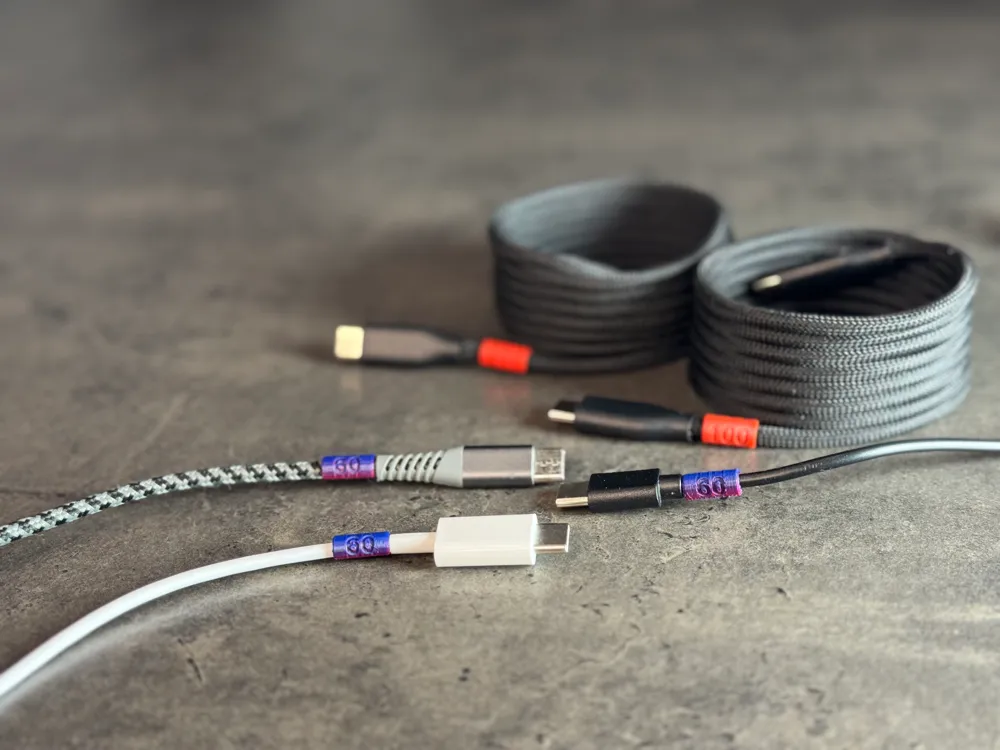
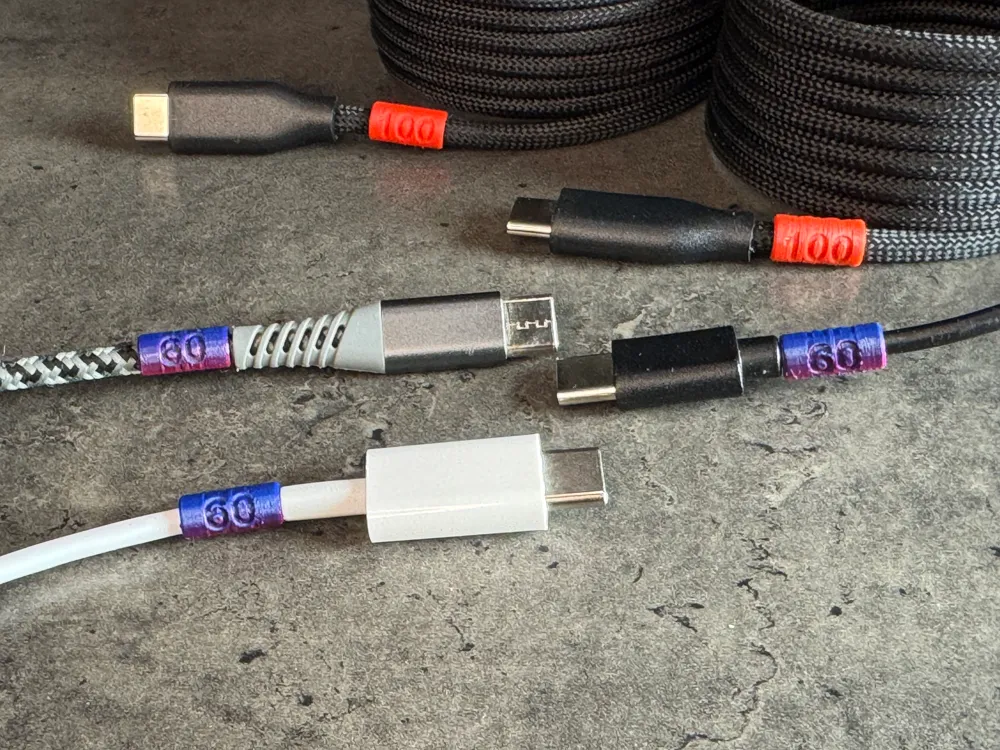
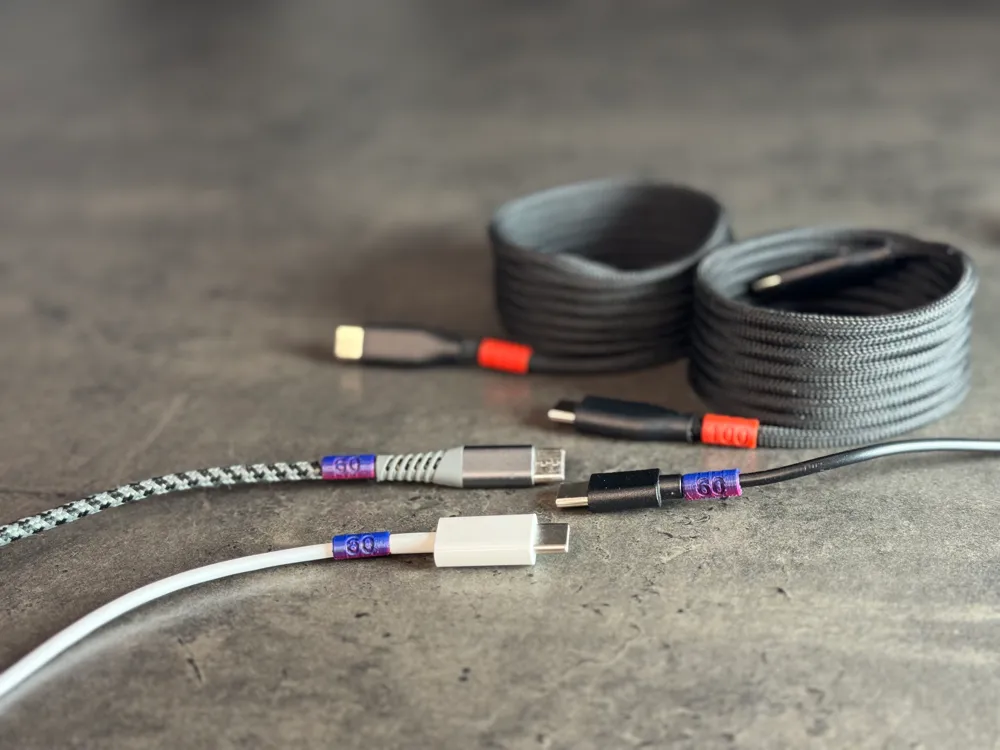
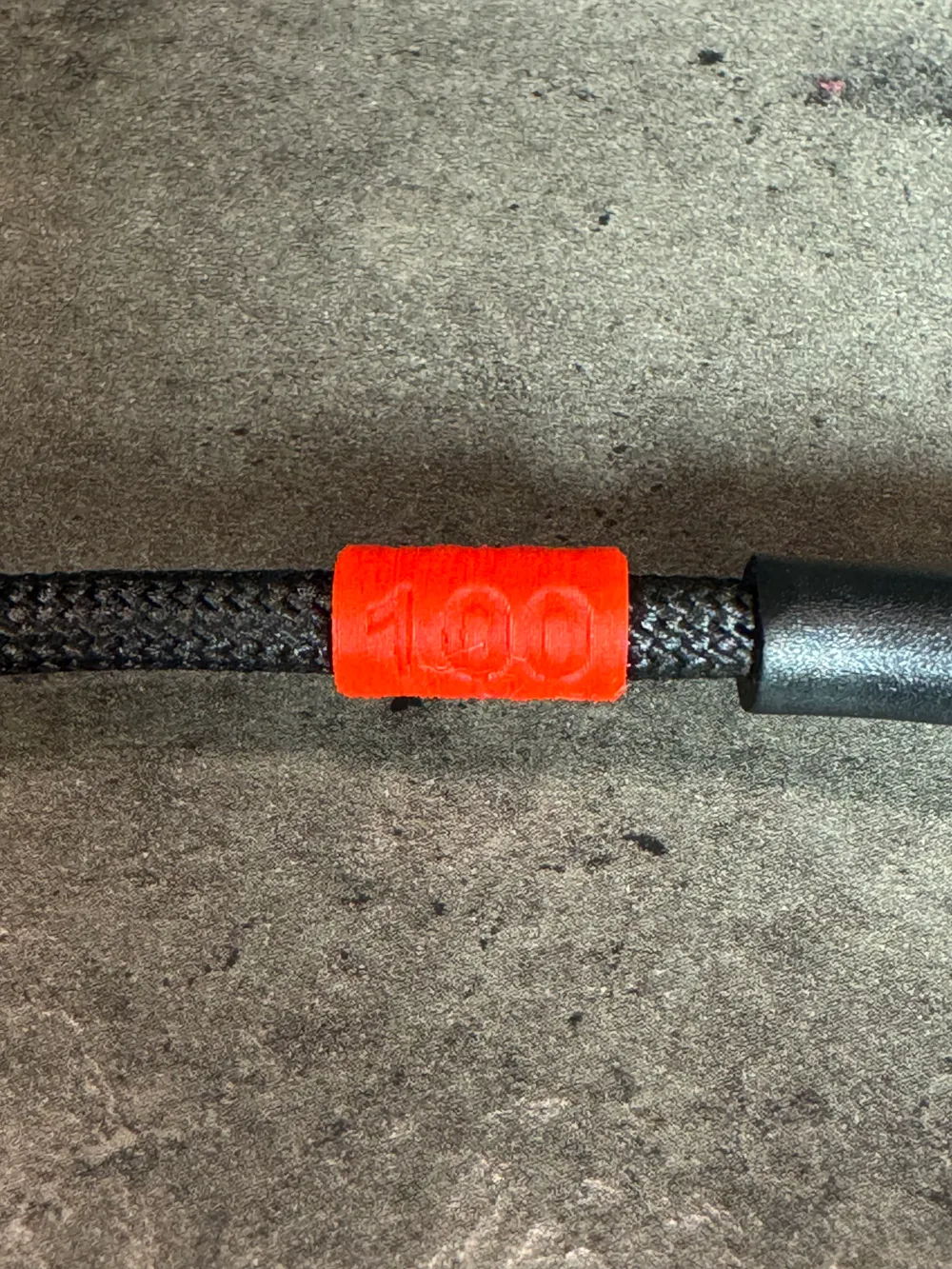
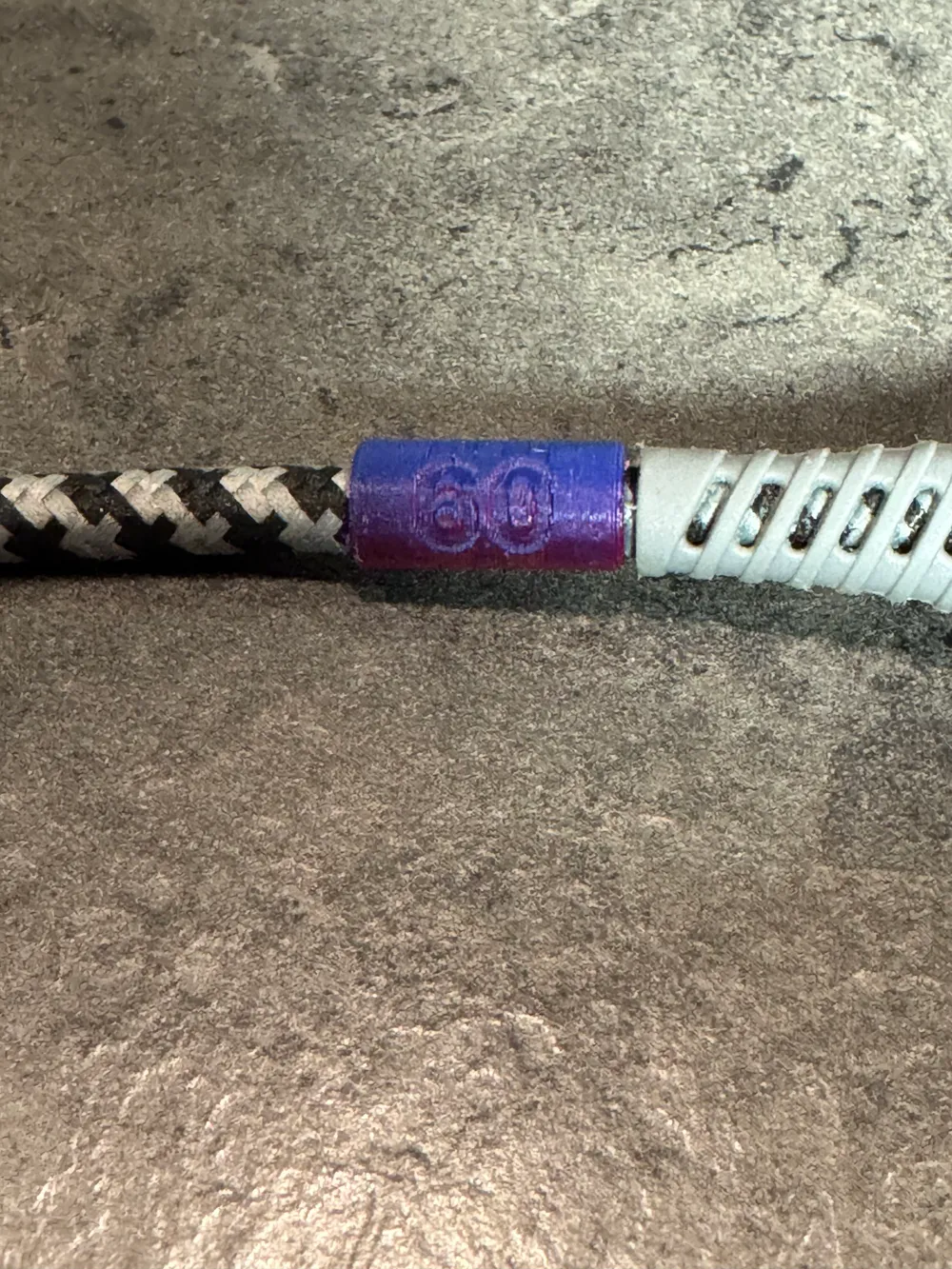
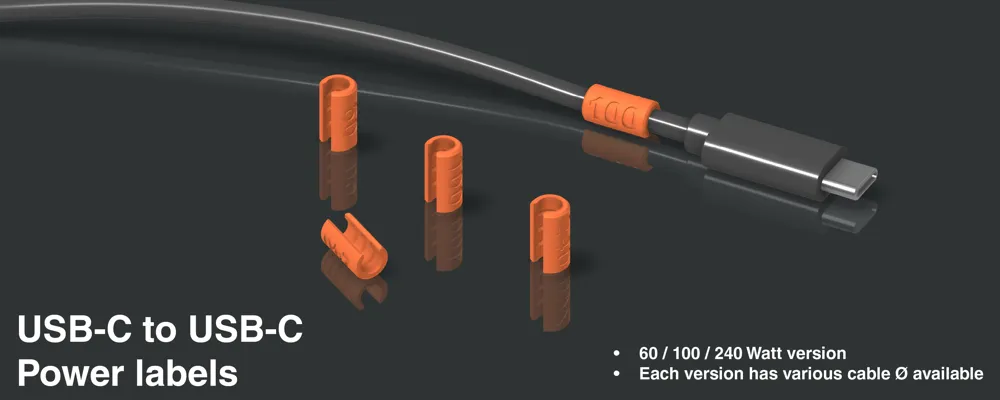
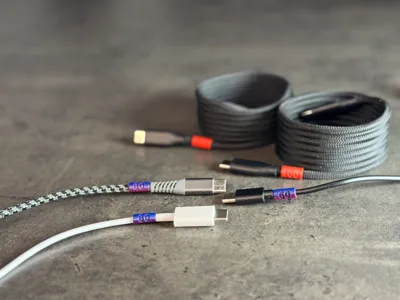
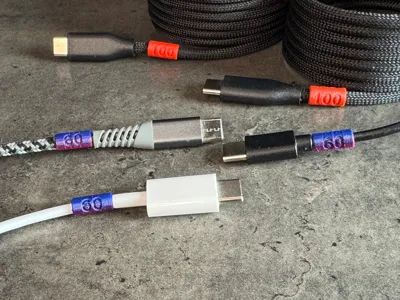
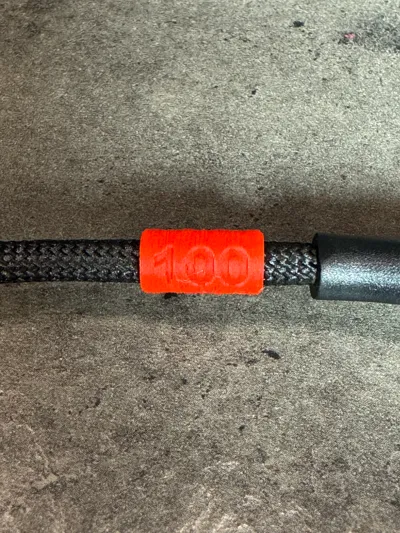
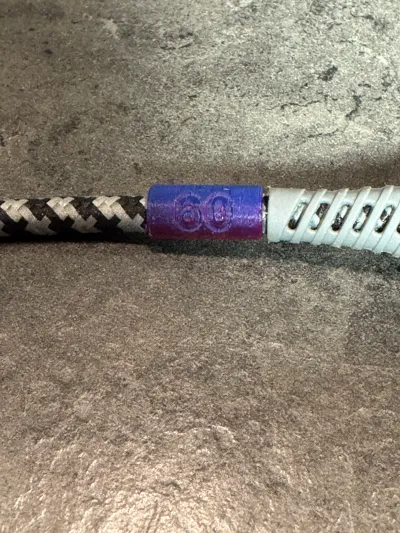
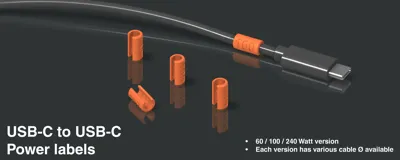
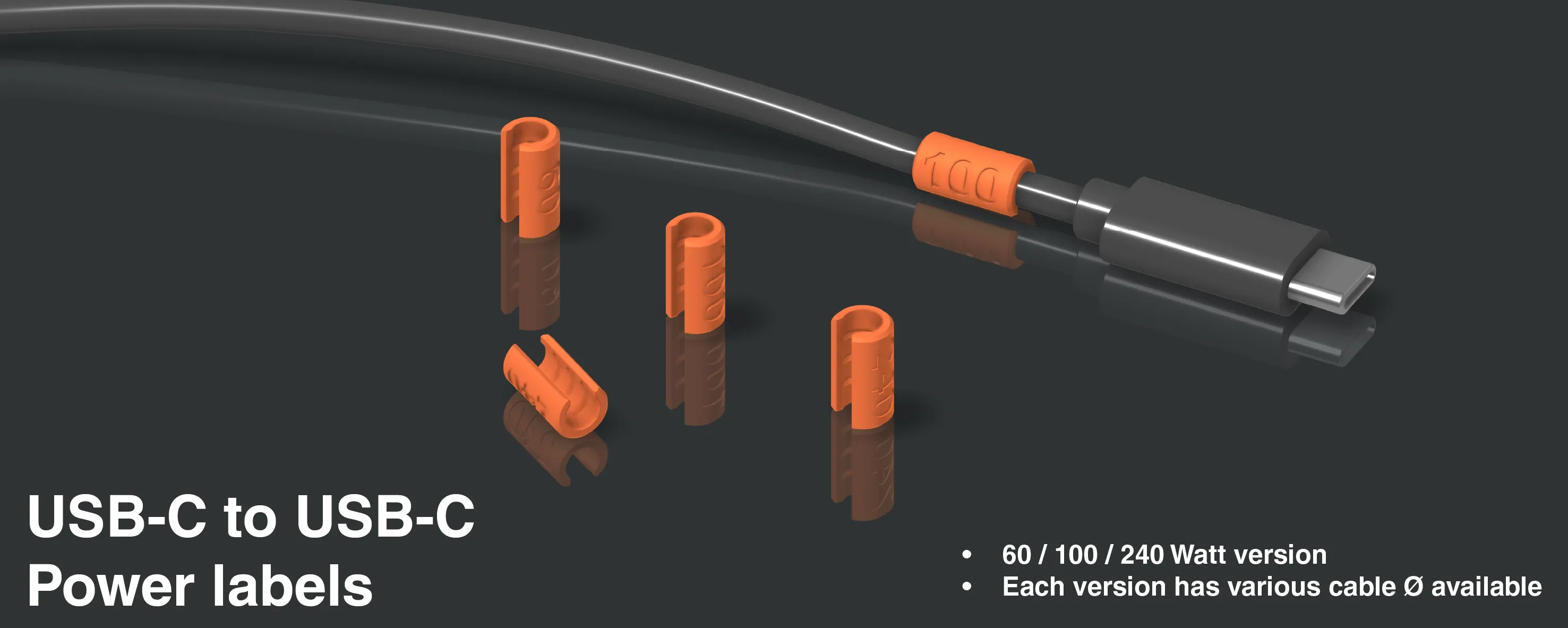
USB-C to USB-C Power labels
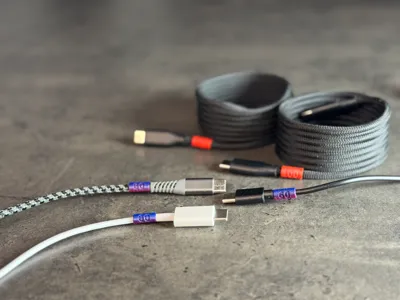
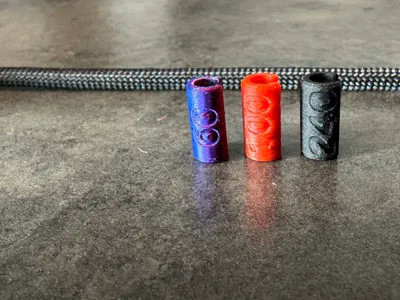
Some small labels indicating the max rated power (Watt) of and USB-C to USB-C cable
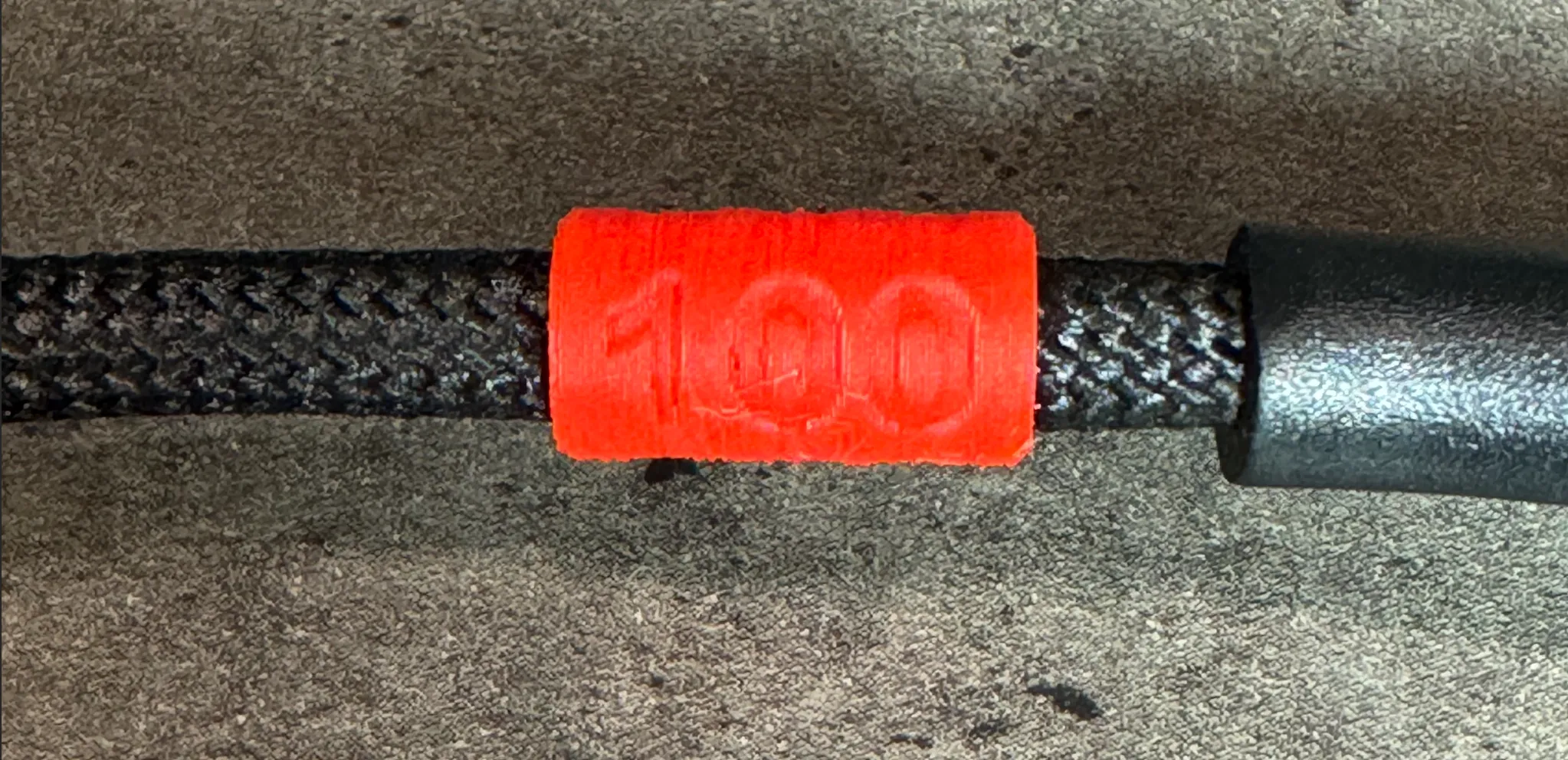
The variety of USB-C to USB-C cables available makes managing them a challenge, as their appearance offers no indication of their specific power capabilities (e.g., 60W, 100W, or 240W) or data transfer speeds.
Implementing simple, durable labels or tags indicating the cable's maximum power rating would be incredibly handy for easy sorting and identification. This labeling system would prevent users from accidentally using a 60W cable when a 240W capacity is needed, ensuring optimal charging speeds and device performance every time.
Certified higher power cables (100W and 240W) should have built in safety functions and the 240W cables must have their designated markings. Still to sort all your cables and find quickly the right one, labels are available for all three main power ratings.
Further below you can find more information about the USB-C power ratings.
Variants
1-Color Text cut
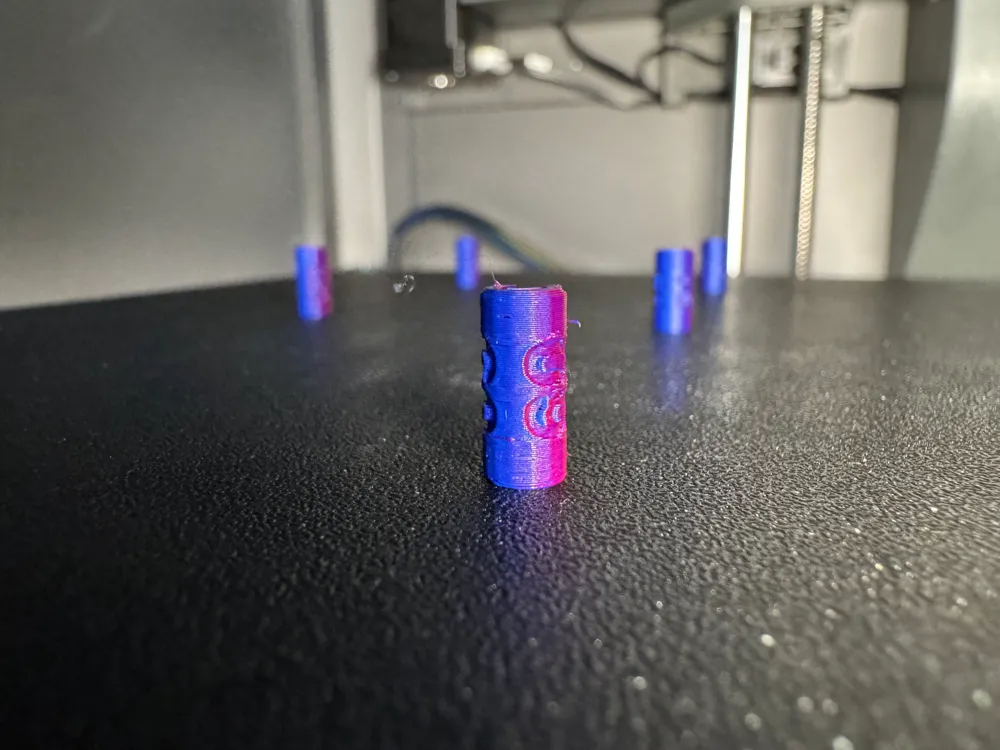
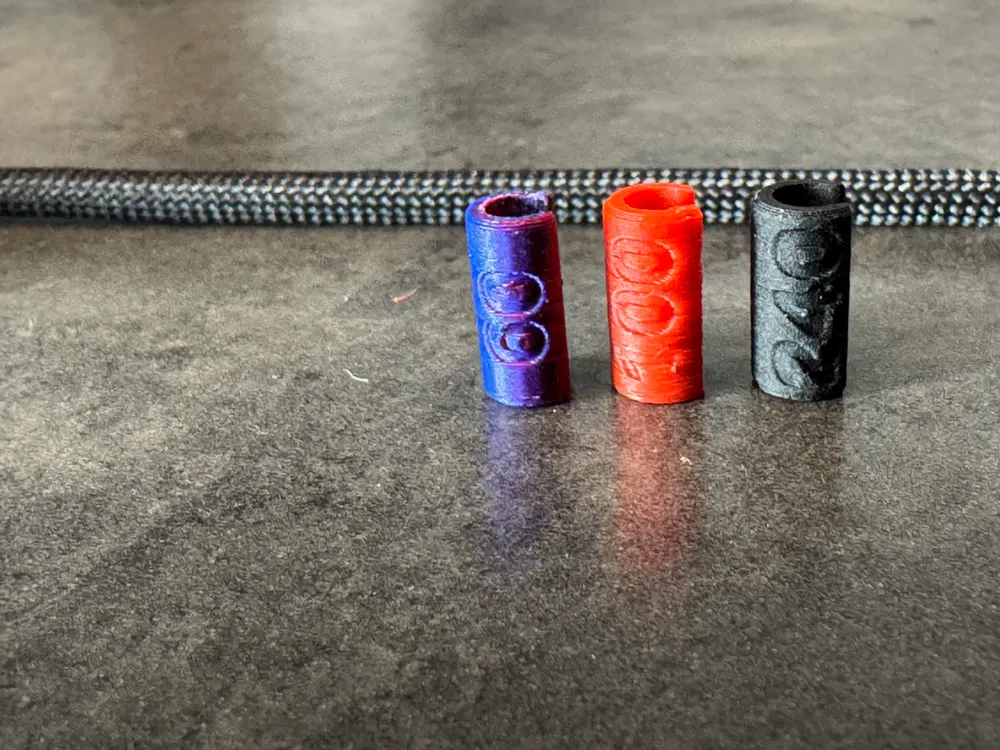
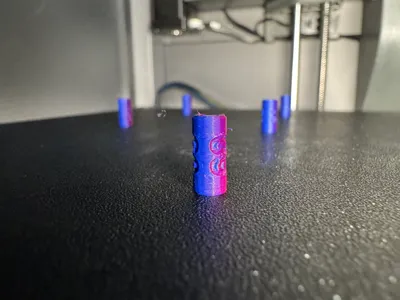
Label clips designed for one color prints have an text emboss of 0.3mm deep.
Use a different color for each power rating for quick identification.
Make sure your print bed sticks well due to the small surface area of the part on the print bed. Otherwise use a brim.
More info about Power ratings
USB-C to USB-C cables (certified) are available in main power categories.
- 60W (Standard Power Range - SPR): This is the baseline power rating that all certified USB-C cables must support, using 3 Amps of current at up to 20 Volts. This is suitable for most smartphones, tablets, and smaller laptops.
- 100W (Standard Power Range - SPR): These cables are designed to handle a higher current of 5 Amps at 20 Volts. They contain an internal e-marker chip that communicates their power capabilities to the connected charger and device, allowing for faster charging of power-hungry laptops and other devices.
- 240W (Extended Power Range - EPR): The latest specification, introduced in the USB PD 3.1 update, raises the maximum power to 240W by increasing the voltage to 48 Volts at 5 Amps. These are designed for high-power devices such as gaming laptops, large monitors, and workstations, and they are required to have specific visual markings or logos (e.g., "240W" or "EPR") for easy identification.
Some built in safety ""functions"
- E-marker Chip: Cables supporting more than 60W of power (i.e., 100W and 240W) must include an e-marker chip to ensure safe and optimal power negotiation between devices.
- Compatibility: A higher-wattage cable can safely charge a lower-wattage device because the device and charger negotiate the required power level. However, using a cable with an insufficient power rating will limit the charging speed to the maximum power the cable can safely handle (e.g., a 60W cable will limit a 100W charger/device combination to 60W).
License

You shall not share, sub-license, sell, rent, host, transfer, or distribute in any way the digital or 3D printed versions of this object, nor any other derivative work of this object in its digital or physical format (including - but not limited to - remixes of this object, and hosting on other digital platforms). The objects may not be used without permission in any way whatsoever in which you charge money, or collect fees.


Comment & Rating (1)