
Claude Code / OpenClaw Mac mini M4 Enclsoure
Print Profile(1)








Description
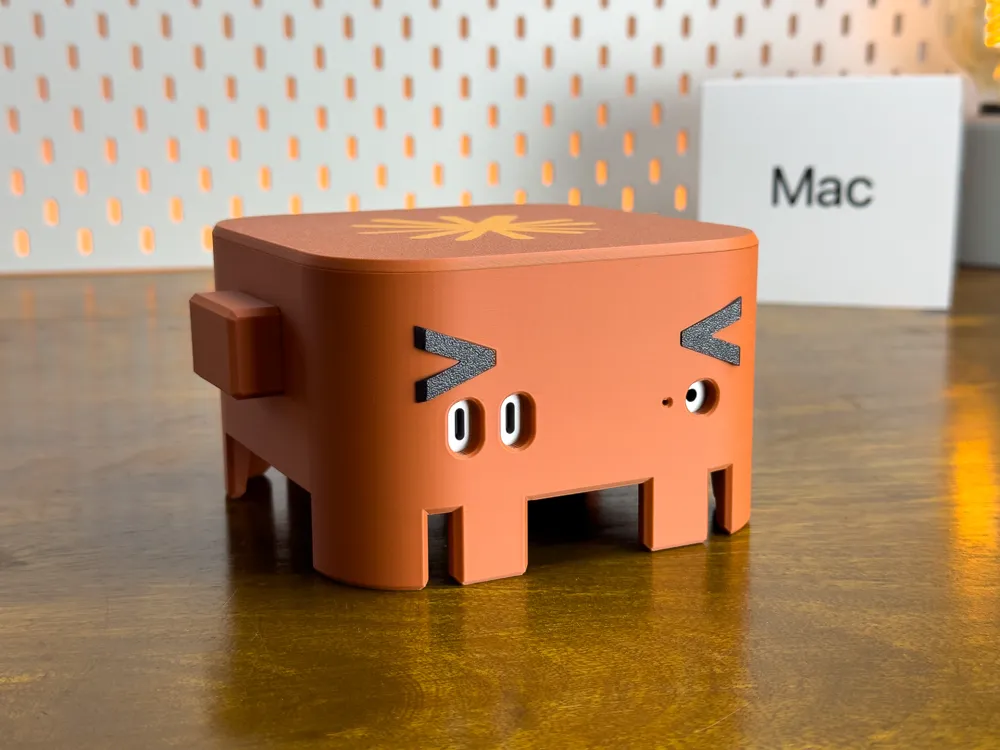
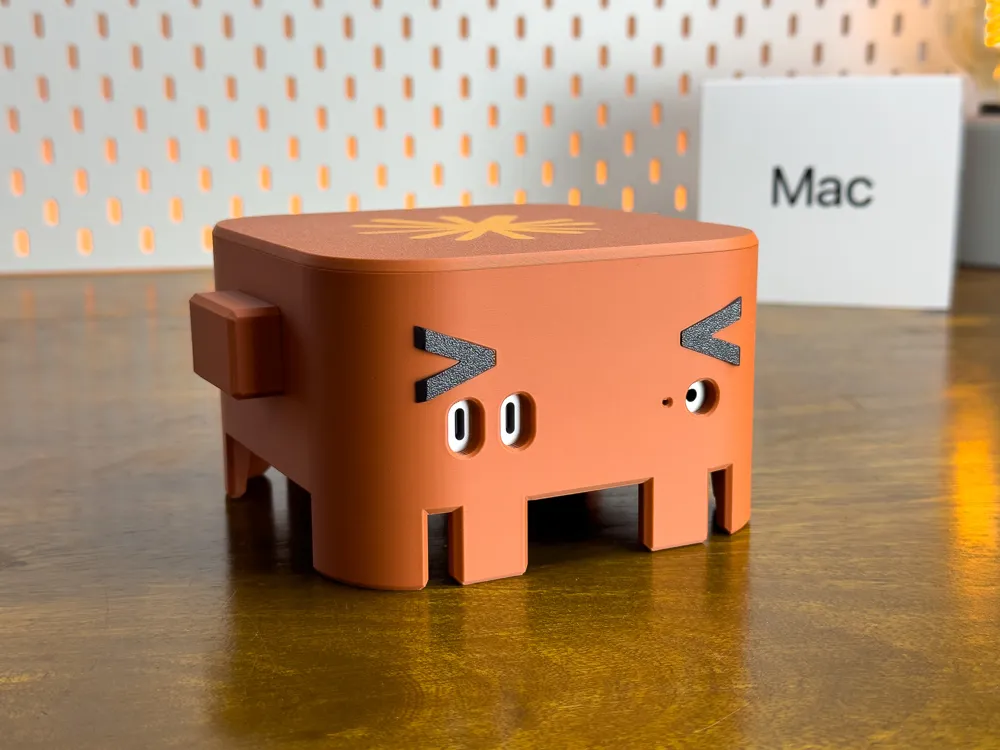
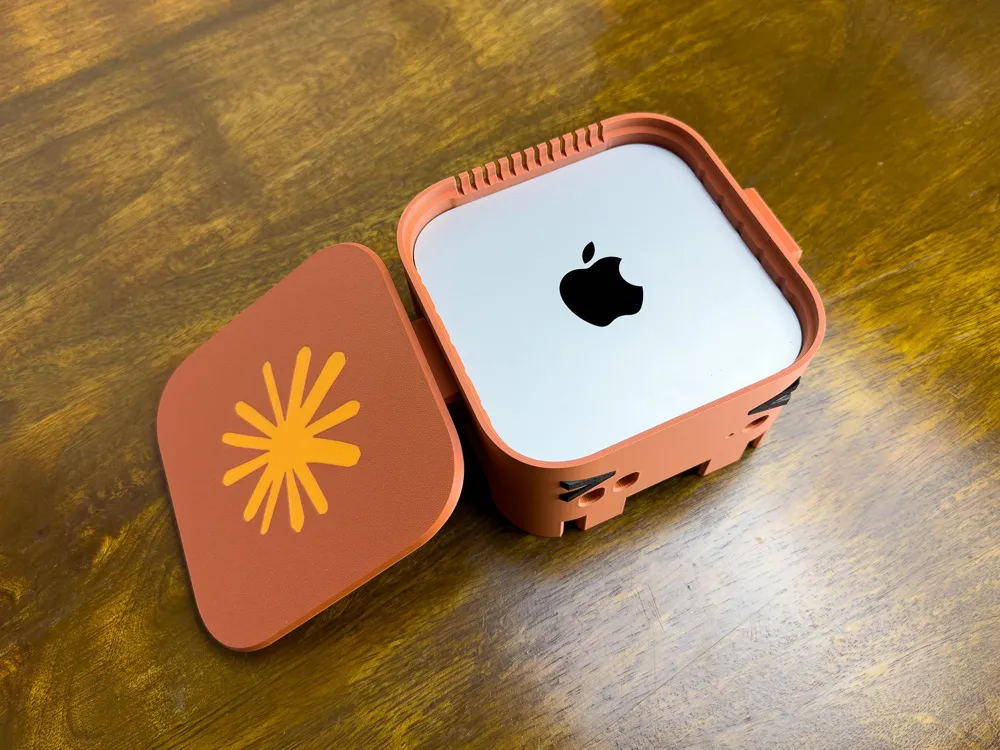
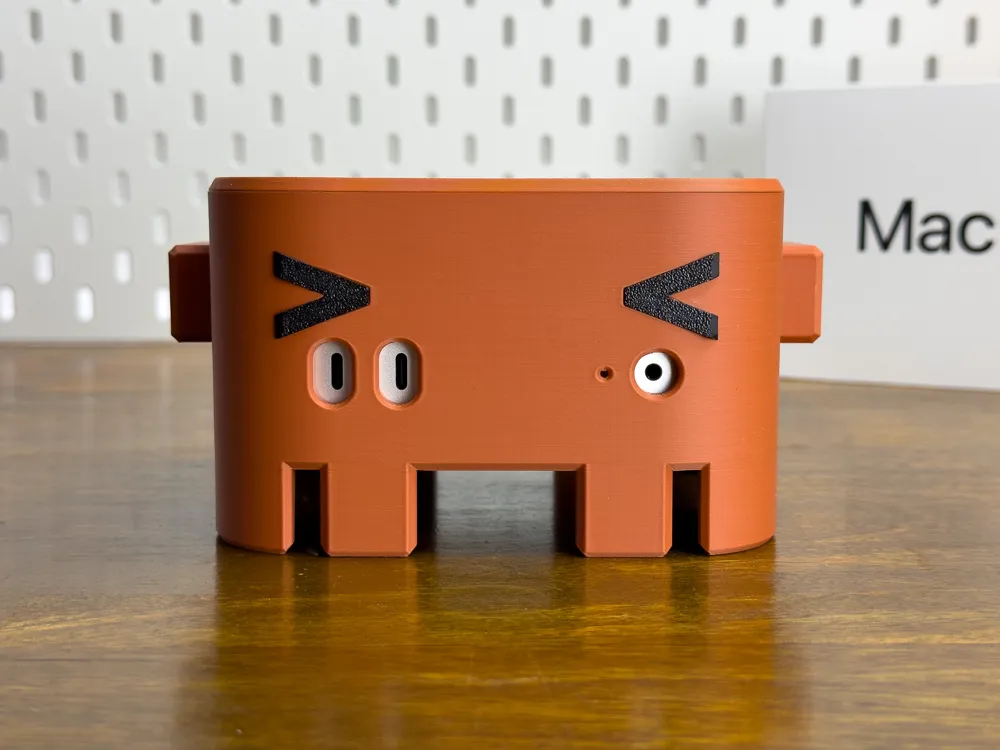
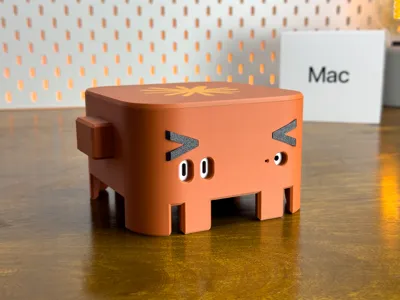
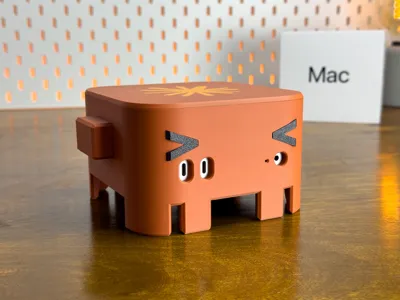
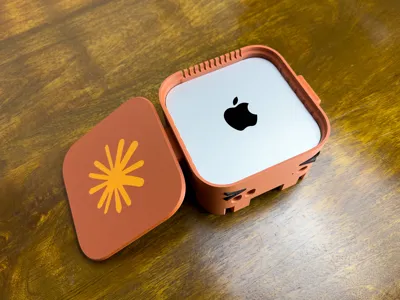
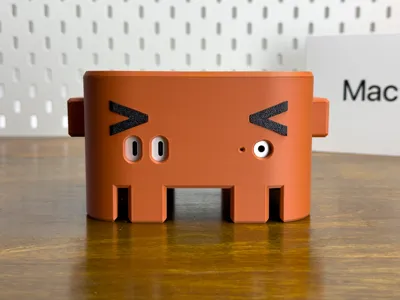
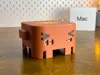
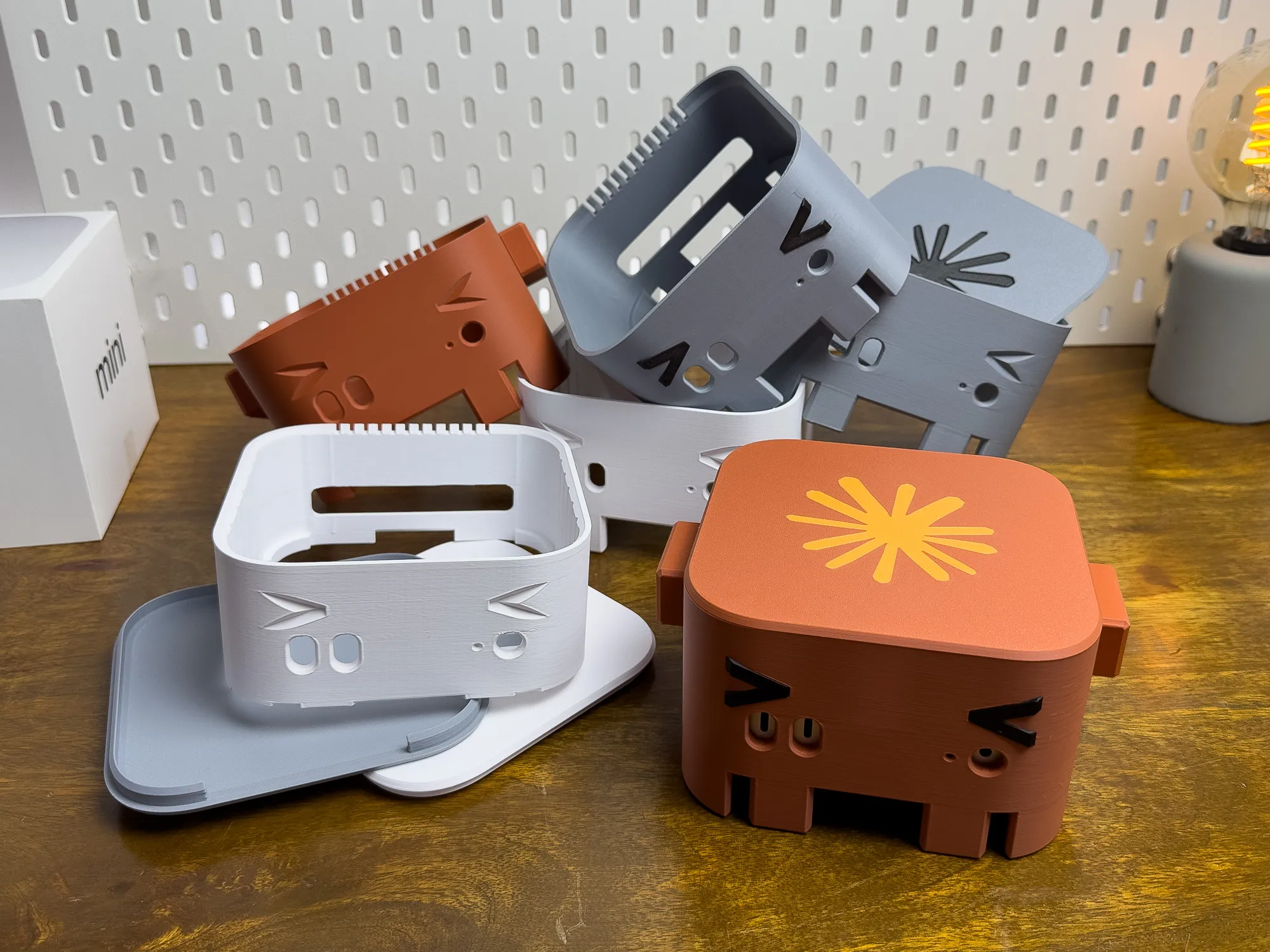
I use OpenClaw, formerly known als Clawdbot/Moltbot, on my Mac mini M4 and I thought, well, this powerful little crustacean needs a propper housing, as hermit crabs do. I call it Clawy MacOpenClawface.
---
A 3D print of this model can be ordered on SuperFantasticToys.com

---
Of course, the design had to be adapted to the shape of the Mac mini, and squashed a bit proportionally to not create so much empty space atop the Mac mini.
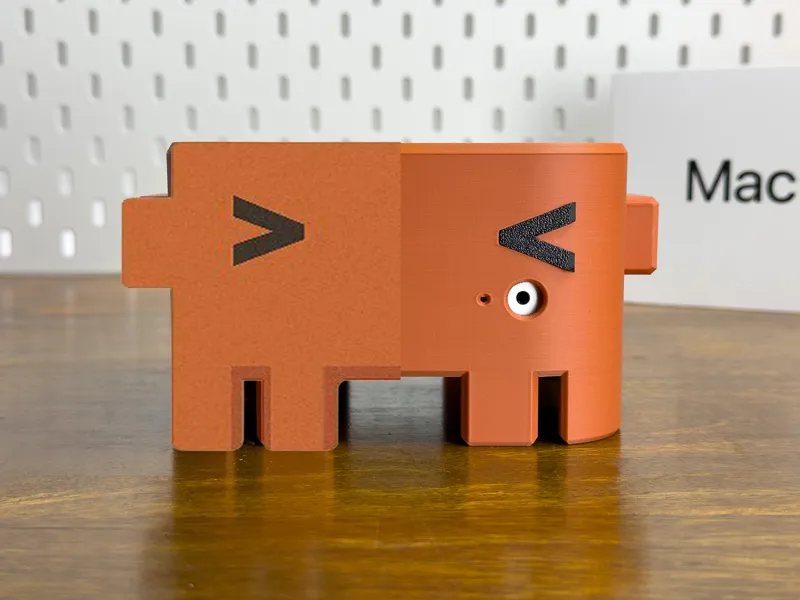
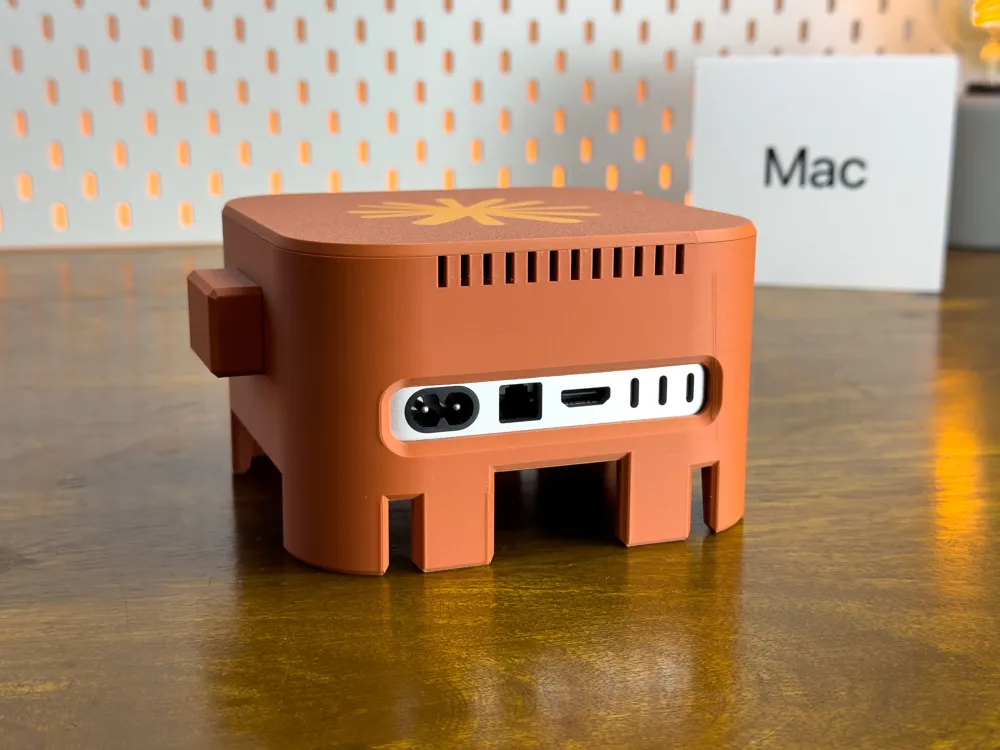
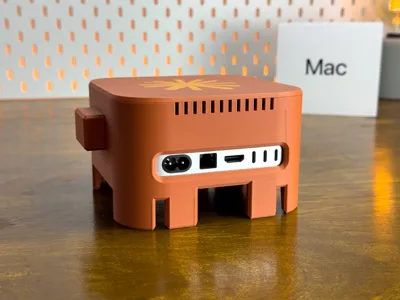
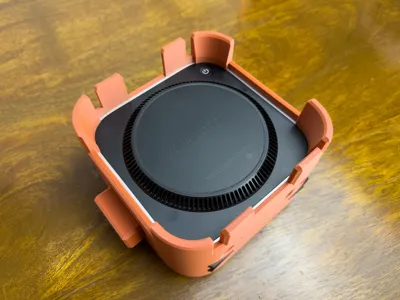
I put a lot of thought into designing this case to perfectly fit the Mac mini without obscuring ports or interfering with its cooling, while staying true to our favorite coding companion’s aesthetic.
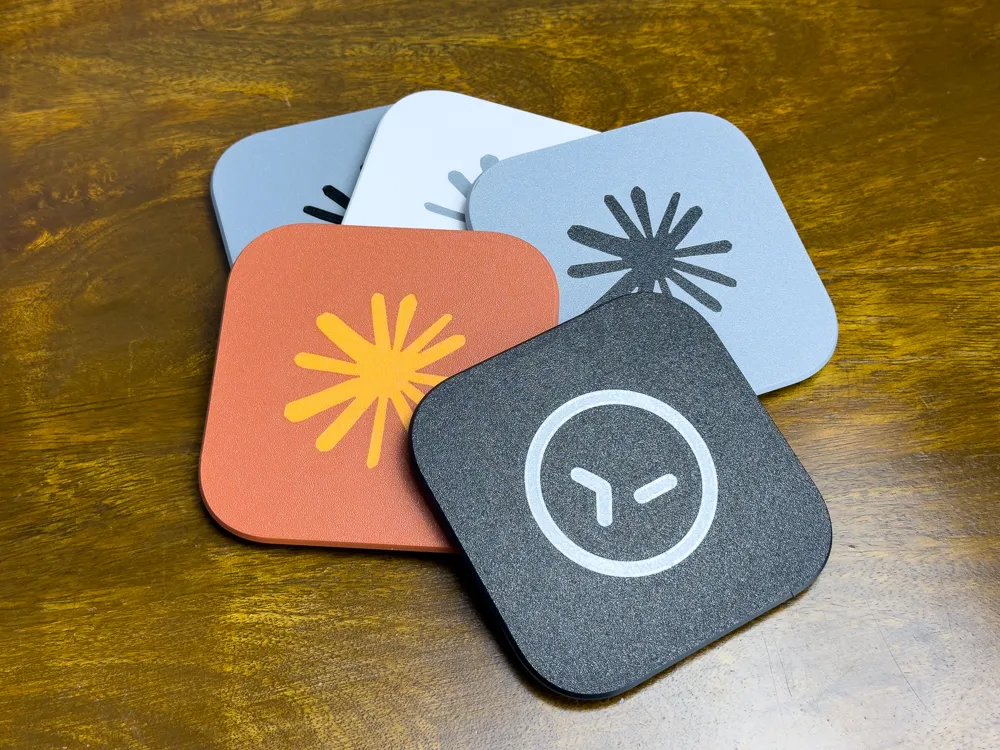
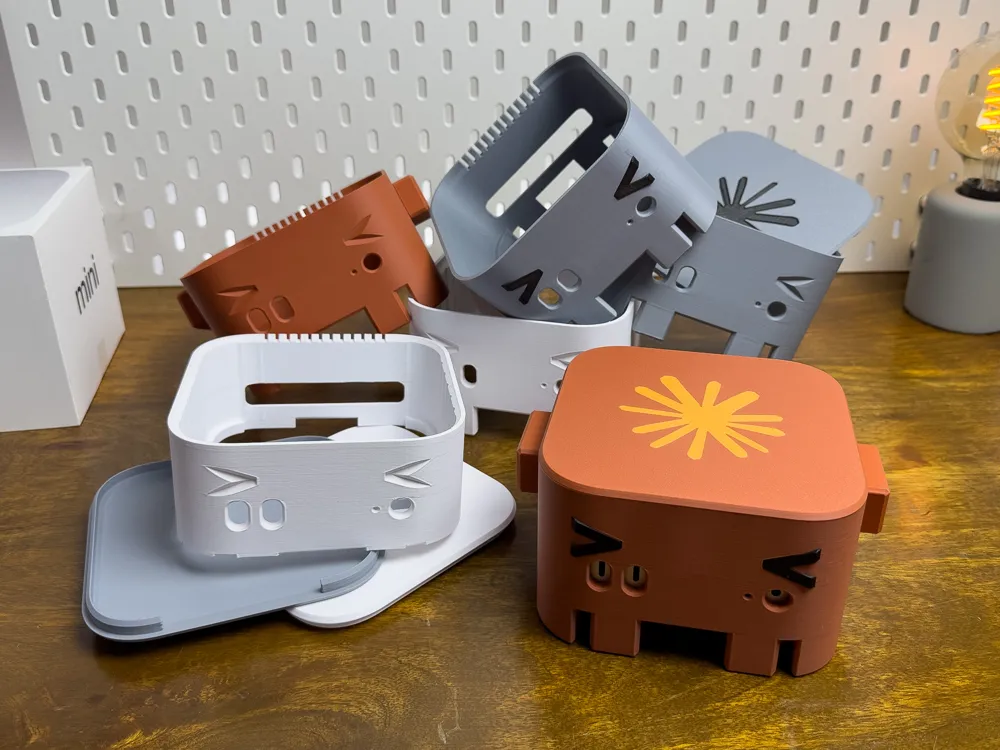
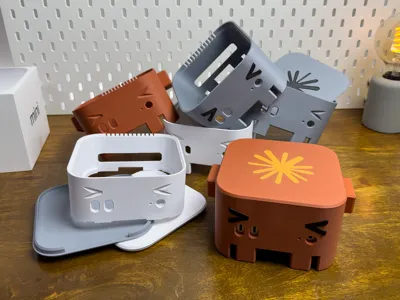
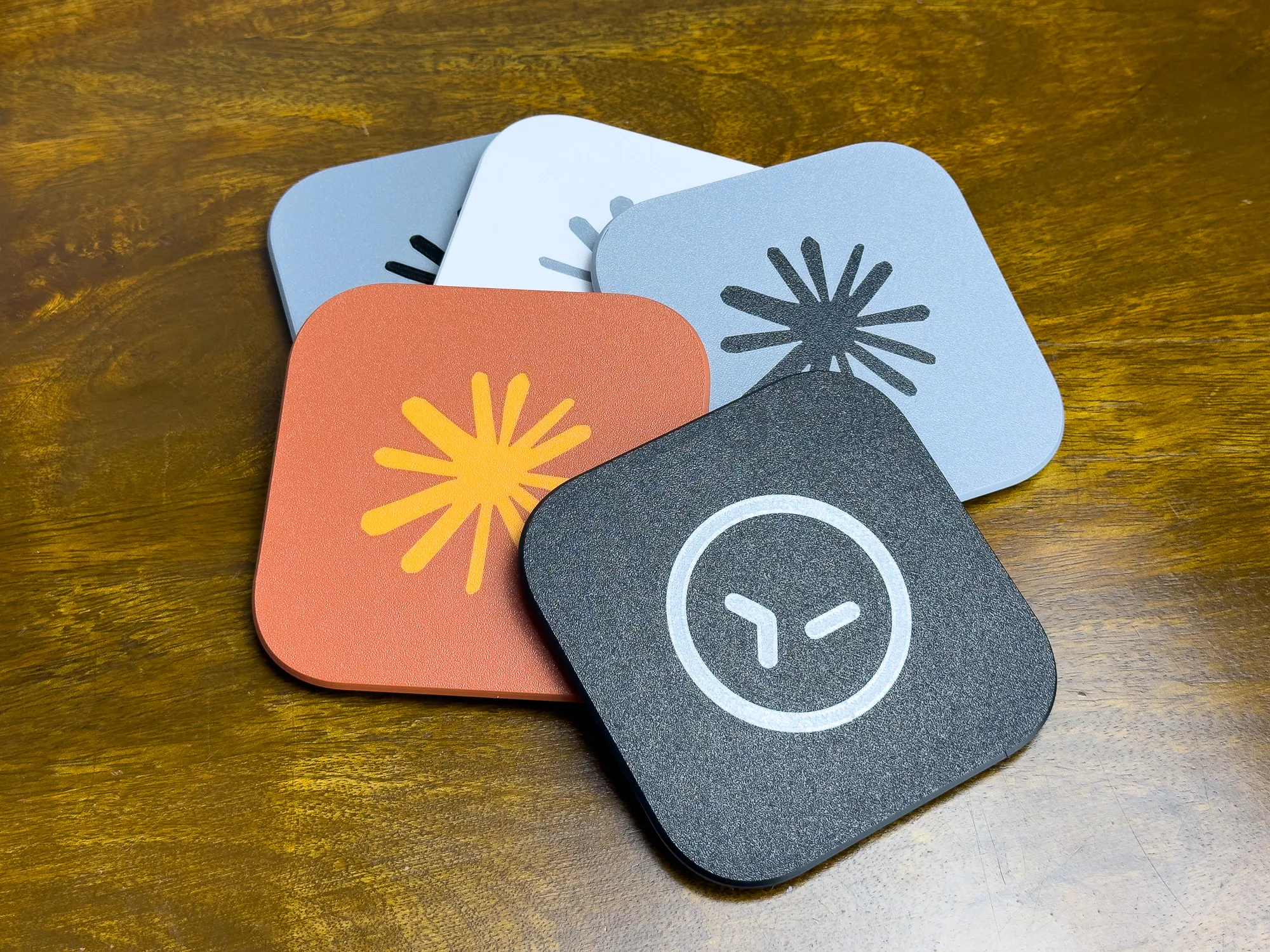
Customizable top cover
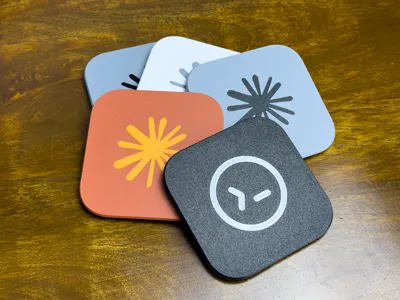
Clawy MacOpenClawface's design also allows you to create and use your own top cover featuring your logo name design or favourite vibe-coding companion.
Customizable Claw slots
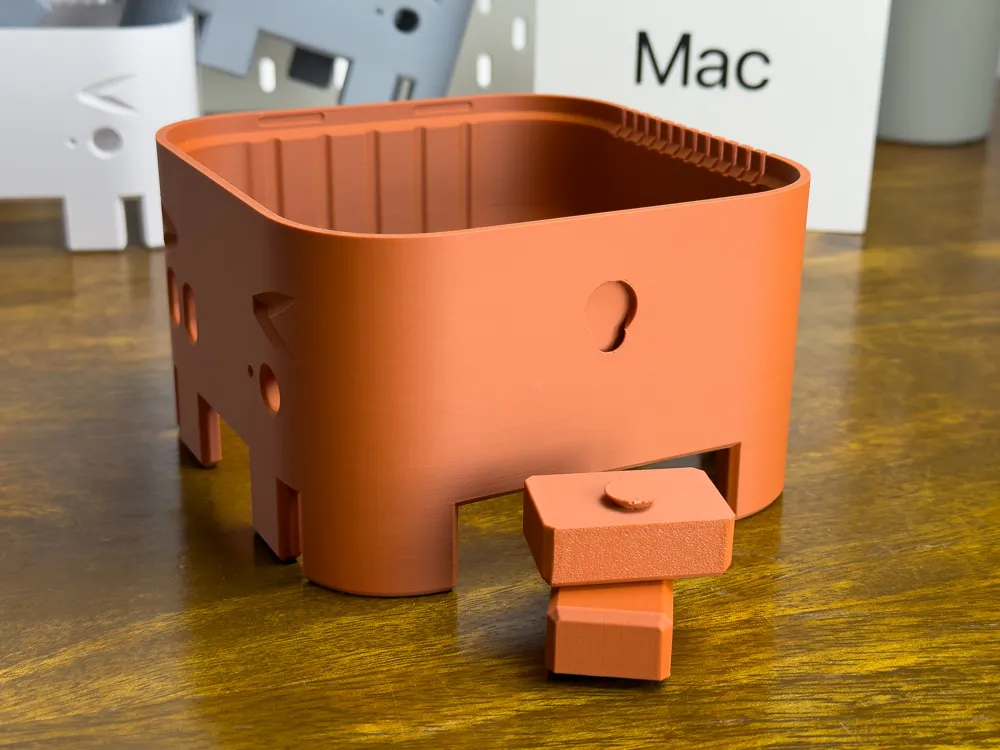
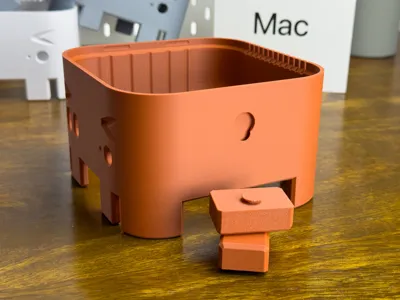
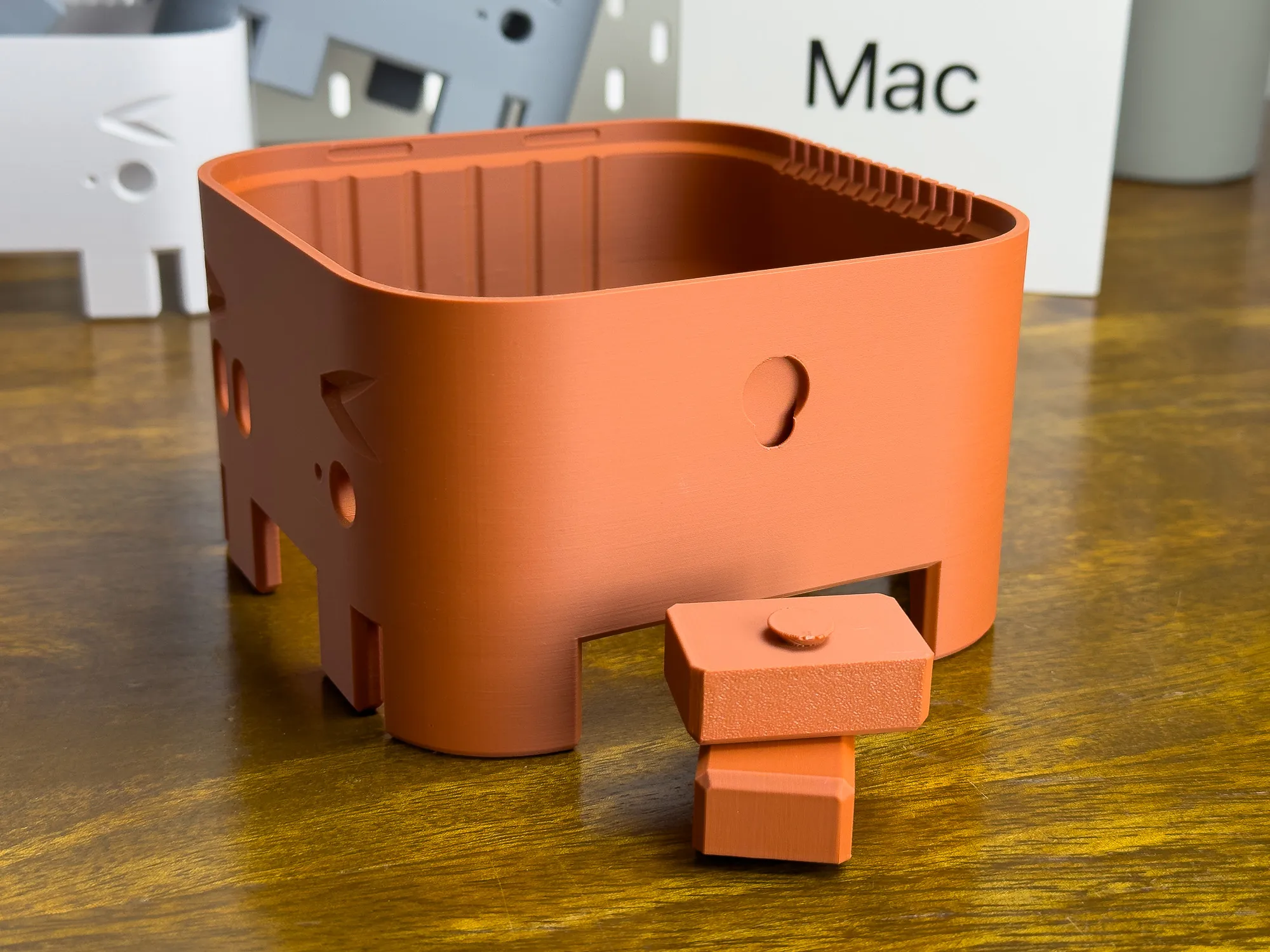
You have two body options: one with claw sockets on the left and right sides of the case and another without claw sockets. Theoretically, the claws could hide servos to make them wiggle if you wanted, they have enough volume, though I haven’t built that yet. Alternatively, you could add hands or something else.
Fitting
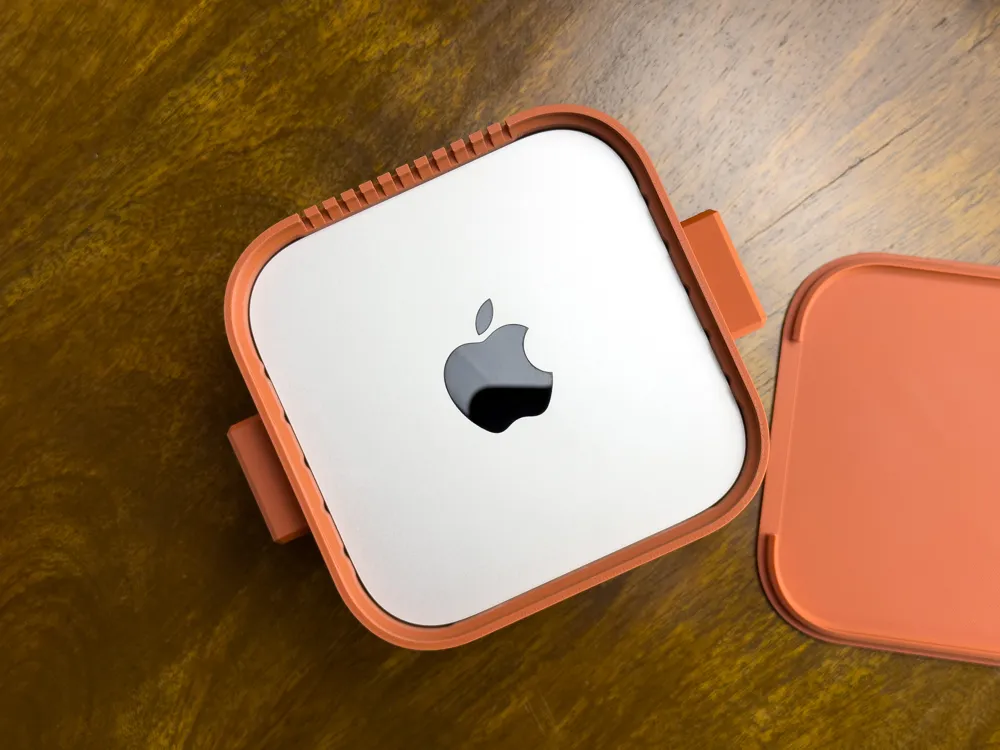
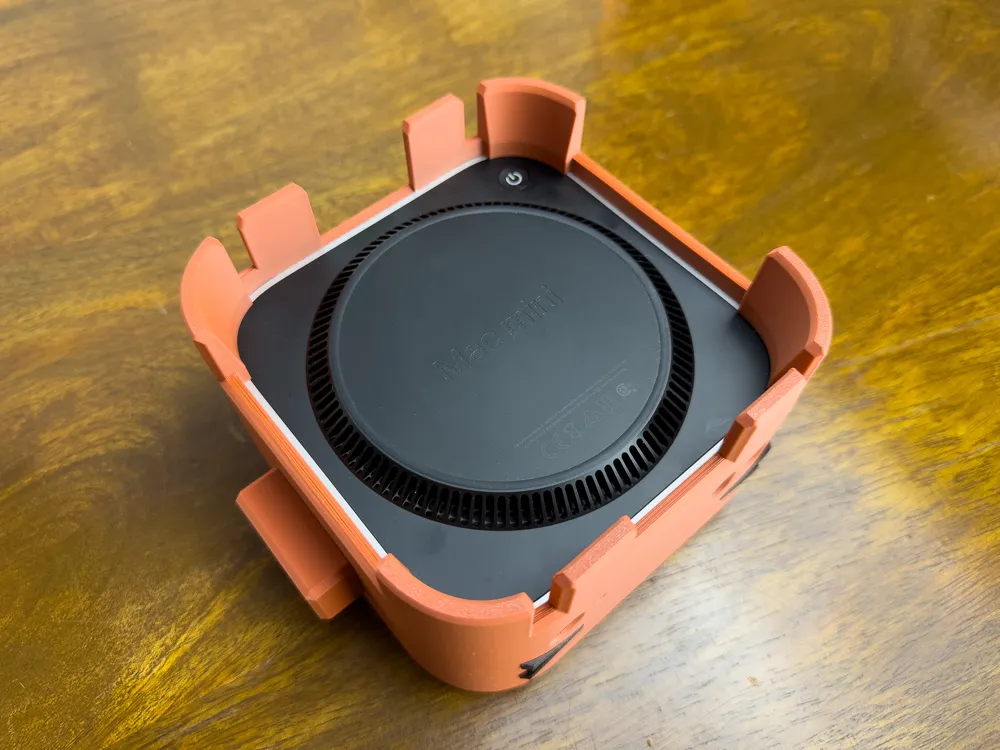
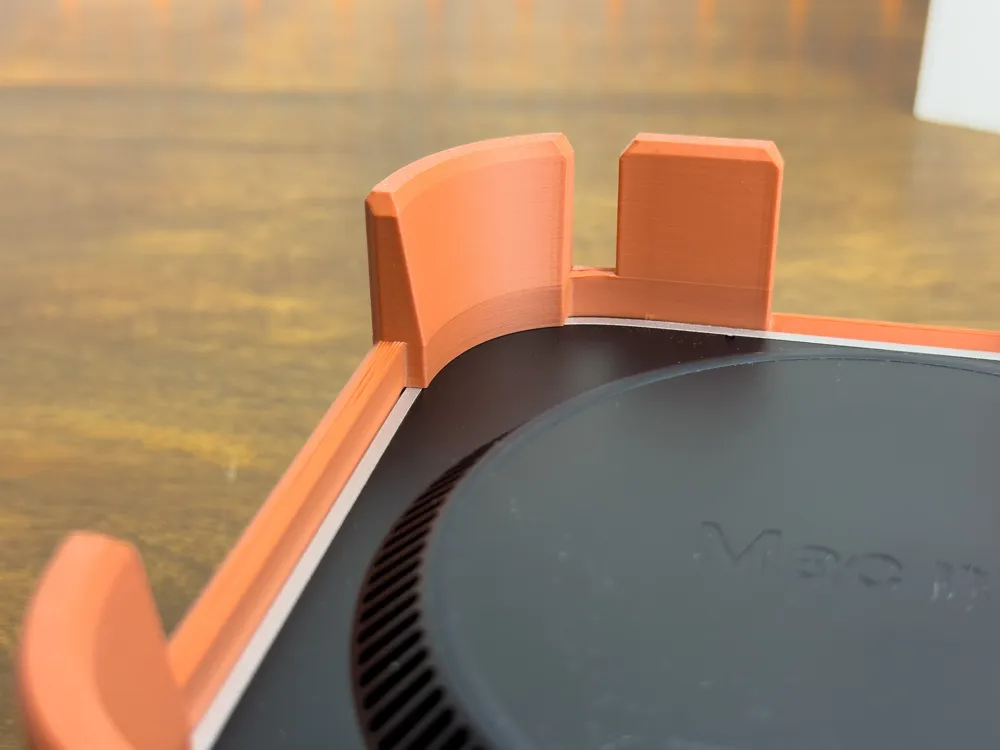
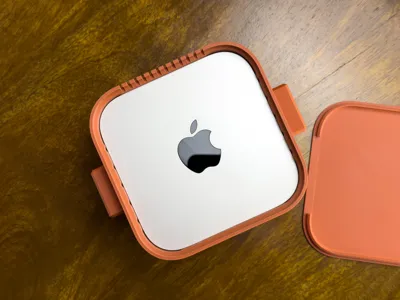
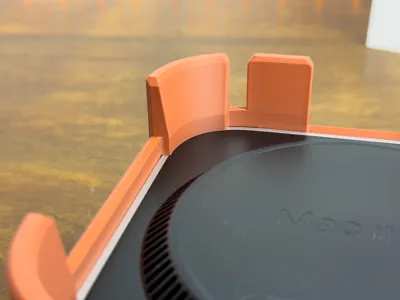
The case is designed to be very precise to not allow the Mac mini to wiggle around (if you happen to plug something in or so). It’s been extensively tested to ensure it doesn’t interfere with cooling or cause overheating. In fact, it actually improves cooling thanks to the extra space underneath the Mac mini.
The ridges in the side walls are there for 3 reasons:
- allow some air circulation (just a precaution),
- make it easier to put the Mac mini inside (less point of contact = less prone to "jam")
- allow the case to adapt to thermal expansion (it is miniscule).
Printing
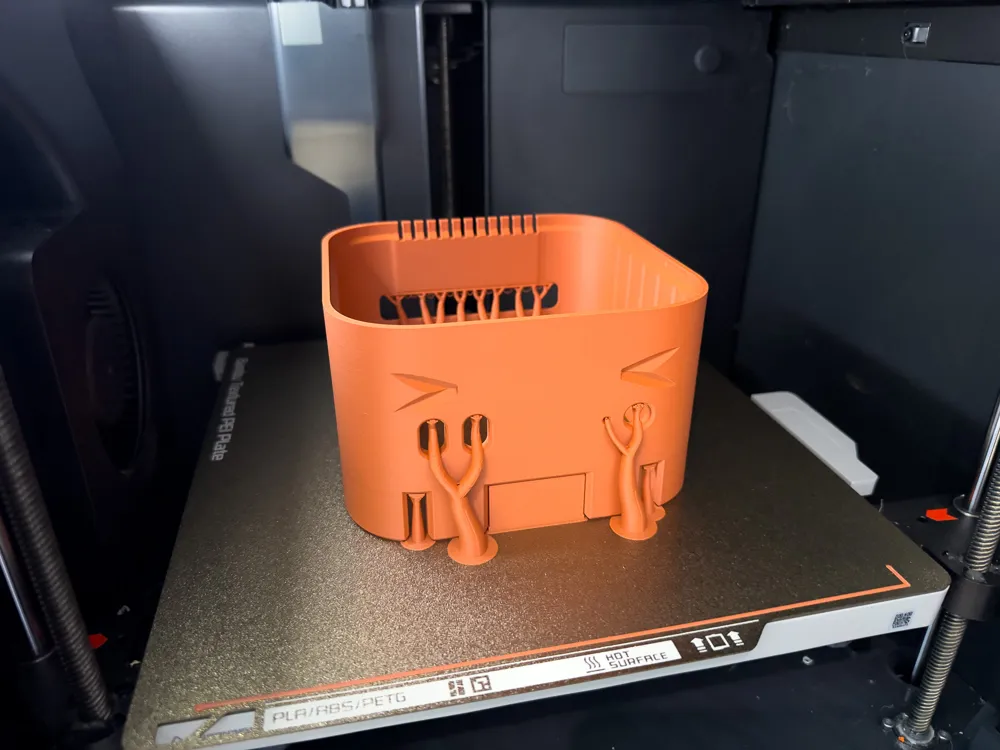
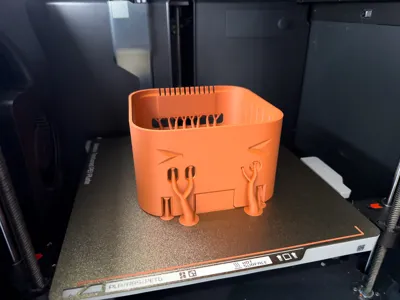
It may not look like it, but printing this case upside down (initially designed specifically for that; I wasted a day optimising before I did a comparison) doesn't provide much advantage. You would only shave off merely 2 g and 9 min of print time. Clawy MacOpenClawface is a resourceful crustacean and was designed to use as little material and support as possible.
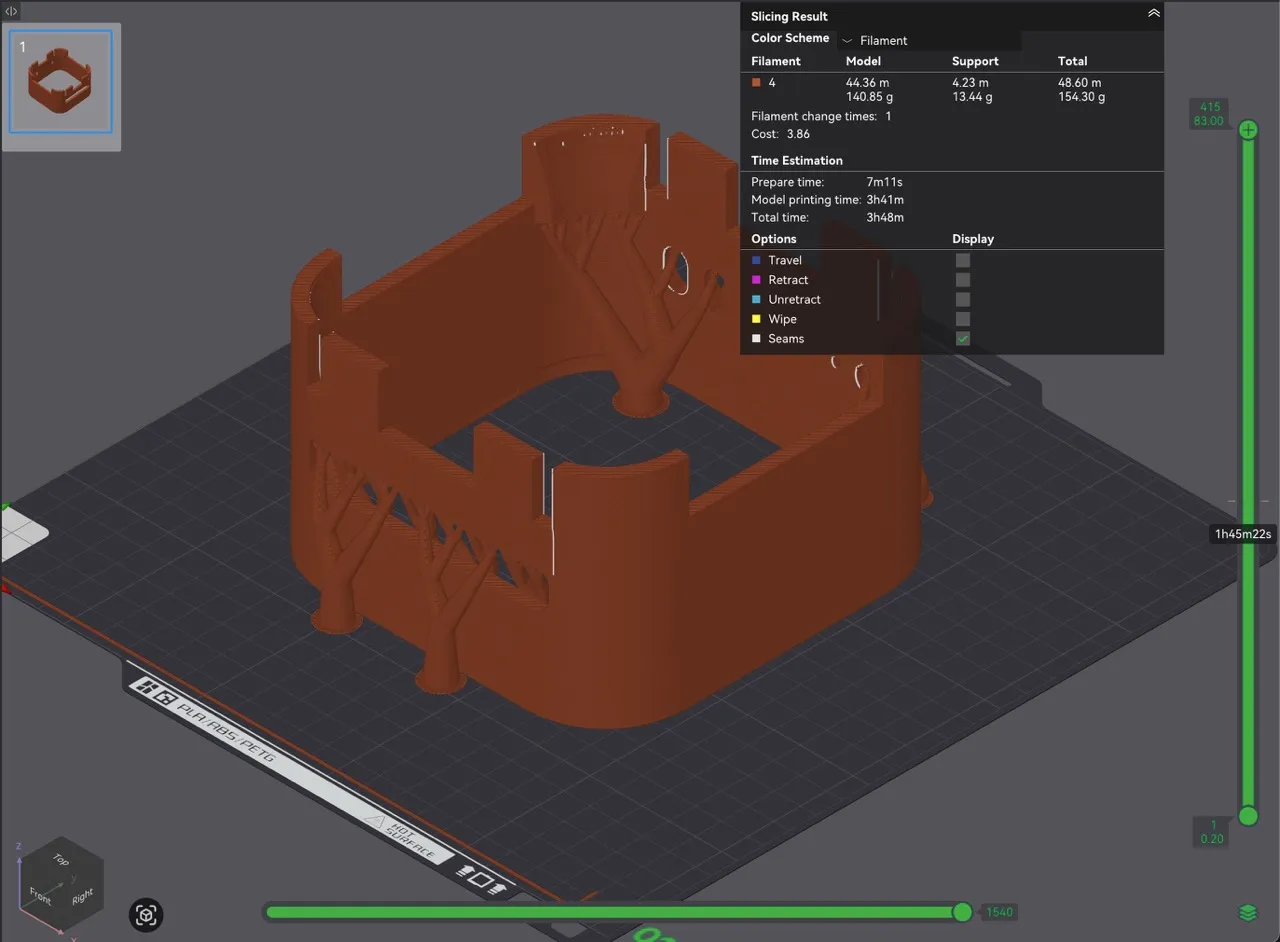
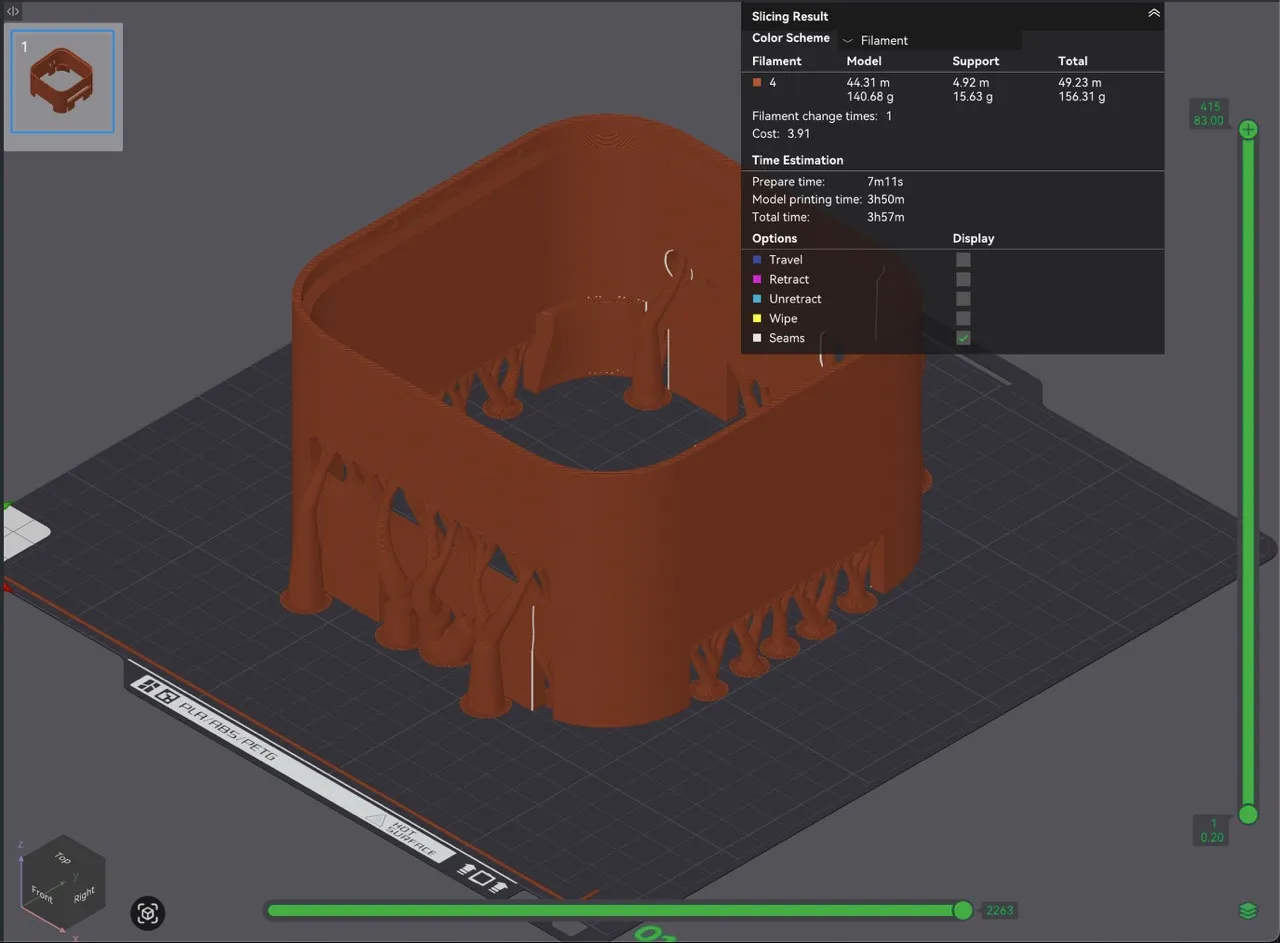
- Filament: PLA, PETG
- Supports:
- Style: Tree hybrid
- Top Z distance:
- with default print profile (0,2 mm layer height): 0.3 mm
- or with higher quality profile (0,16 mm layer height): 0.2 mm
- Top interface spacing: 0.1 mm
- Support/object first layer gap: 0.3 mm
- Layer height:
- Default 0,2 mm settings or
- Higher quality 0,16 mm settings.
- Precision: Enable "Precise wall" and "Precise Z height".
- Wall generator: "Arachne"
- Walls: 2 or 3
- Infill: 10% or 15% Gyroid or Cross Hatch
The eyes are printed seperatly for good reason, so everyone can print it without a hassle (or AMS/filament changer). You for sure have a dab of glue at home. Even with multitool/AMS, printing them seperately uses less material and less time.
Not affiliated with Anthropic.
License



Comment & Rating (14)