Search models, users, collections, and posts

Top Surf Line Width vs Speed (Smooth Calibration)
IP Report
Print Profile(1)
0.2mm layer, 2 walls, 15% infill
Designer
1.4 h
1 plate
Open in Bambu Studio
Boost
12
22
0
1
24
17
Released
Description
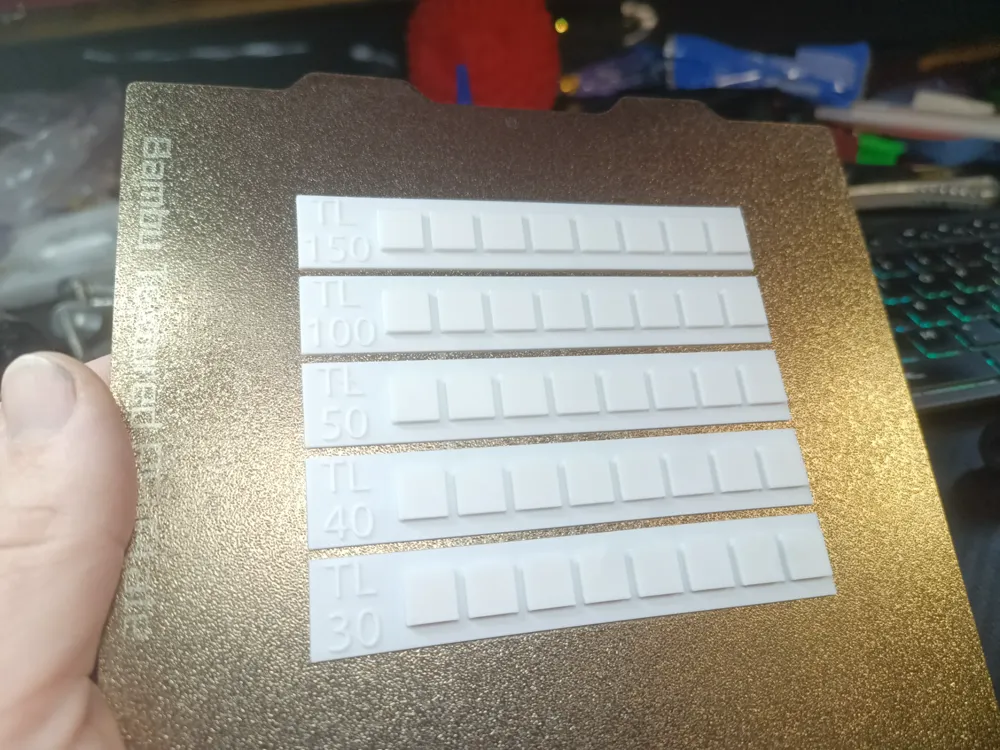
This calibration model is designed to test top surface quality by combining different line widths with different top surface speeds in a single print.
Each section prints a flat top surface using a specific line width and printing speed, allowing direct comparison of how these parameters affect:
- surface smoothness
- visibility of individual lines
- line-to-line fusion
- ripples caused by excessive speed
- overfill or drag marks caused by too wide lines
The purpose of this model is to help you select the smoothest and most consistent top layer for your printer, nozzle, and filament.
Tested Line Widths
Top surface line widths used in this model:
0.28 / 0.30 / 0.32 / 0.34 / 0.36 / 0.38 / 0.40 / 0.42 / 0.44 mm
Tested Speeds
Top surface printing speeds used in this model:
150 / 100 / 50 / 30 mm/s
How to Use
- Slice the model using your standard profile (same nozzle, layer height, filament, and temperature).
- Do not change flow, temperature, or cooling during the test.
- Assign the provided line widths and speeds to the corresponding sections in the slicer (top surface / top solid settings).
- Print the model and compare the results:
- View the surface under angled light
- Feel the surface with a fingertip or fingernail
- Check for gaps, ridges, and drag marks
What to Look For
The optimal combination will show:
- a fully closed top surface
- minimal visible line separation
- no rippling or waviness
- no material buildup or nozzle dragging
Notes
- Designed primarily for 0.4 mm nozzles, but usable with others by adjusting the line width range.
- Extremely high speeds (150 mm/s) are included intentionally to show surface breakdown limits.
- Ideal for tuning prints where the top finish is critical: molds, signs, flat plates, decorative parts, and calibration tiles.
License

This user content is licensed under a
Creative Commons Attribution-Noncommercial


Comment & Rating (0)