
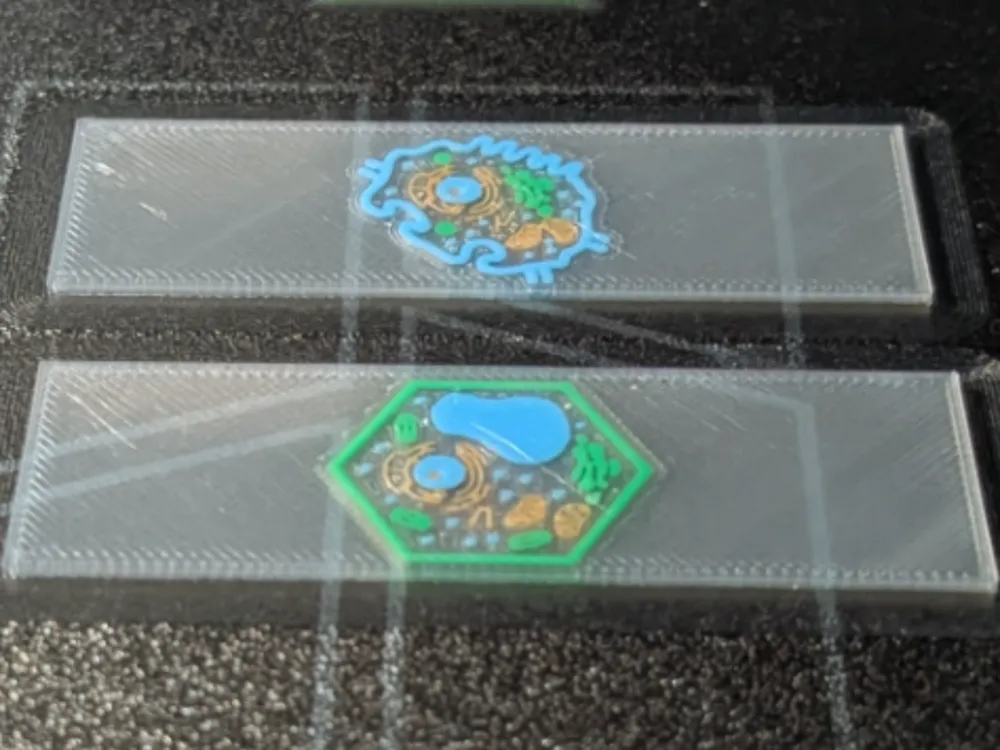
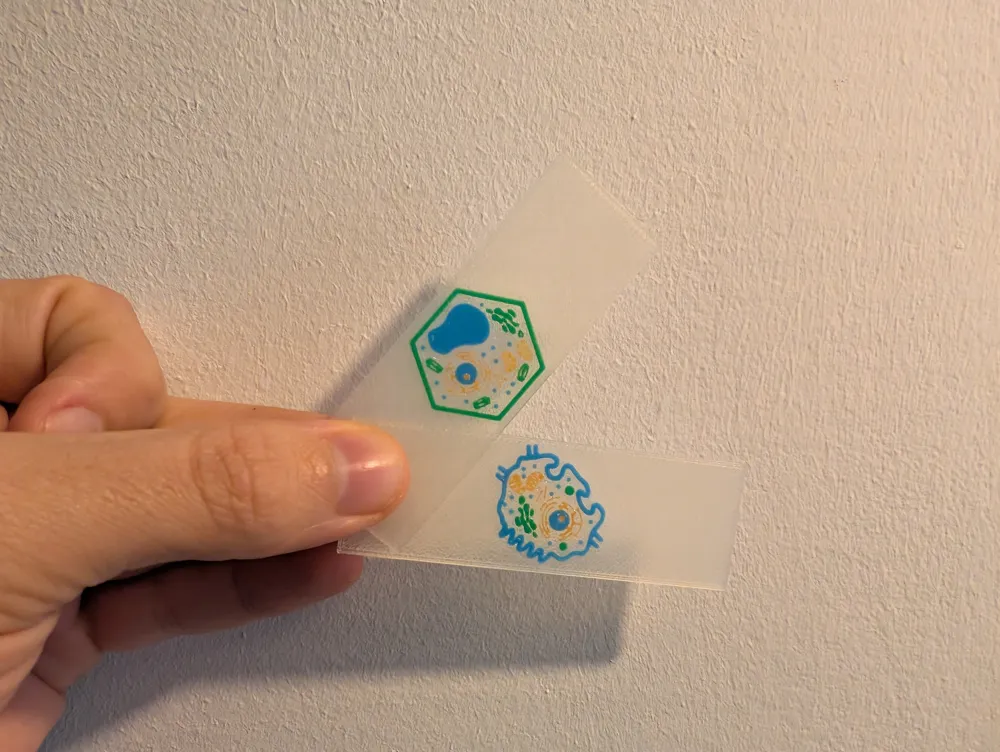
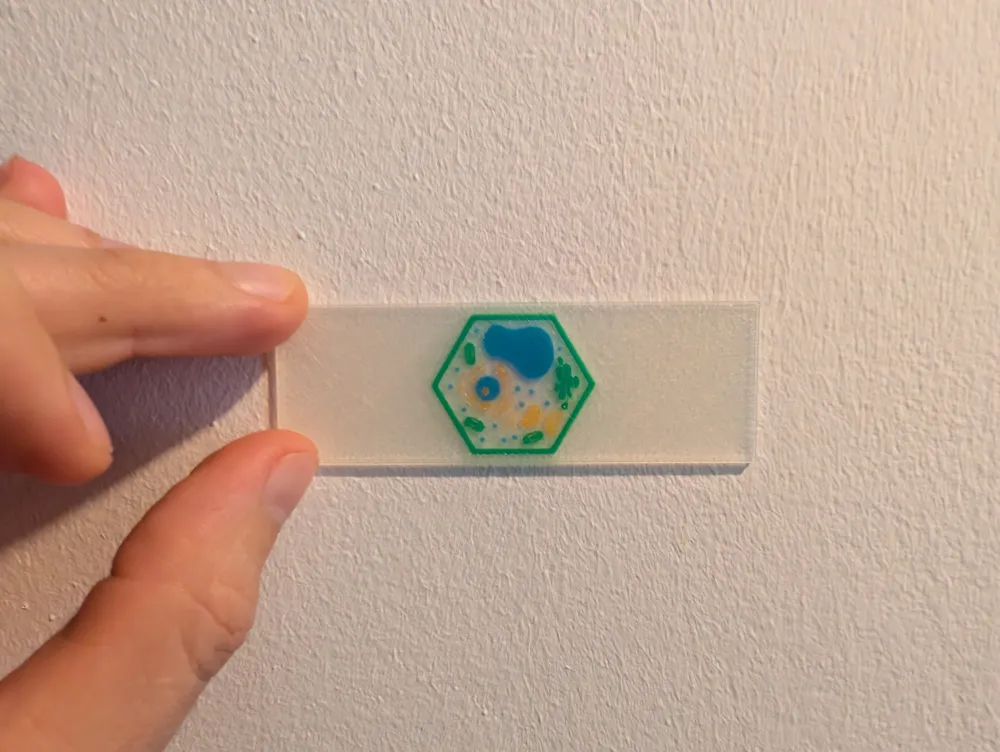
Animal and Plant Cell on Microscope Slide
Print Profile(1)
Bill of Materials


Description
General
In a challenging classroom environment, traditional glass slides are often more of a barrier than a tool. They are fragile, difficult to focus, and lack the tactile feedback needed for many learners.
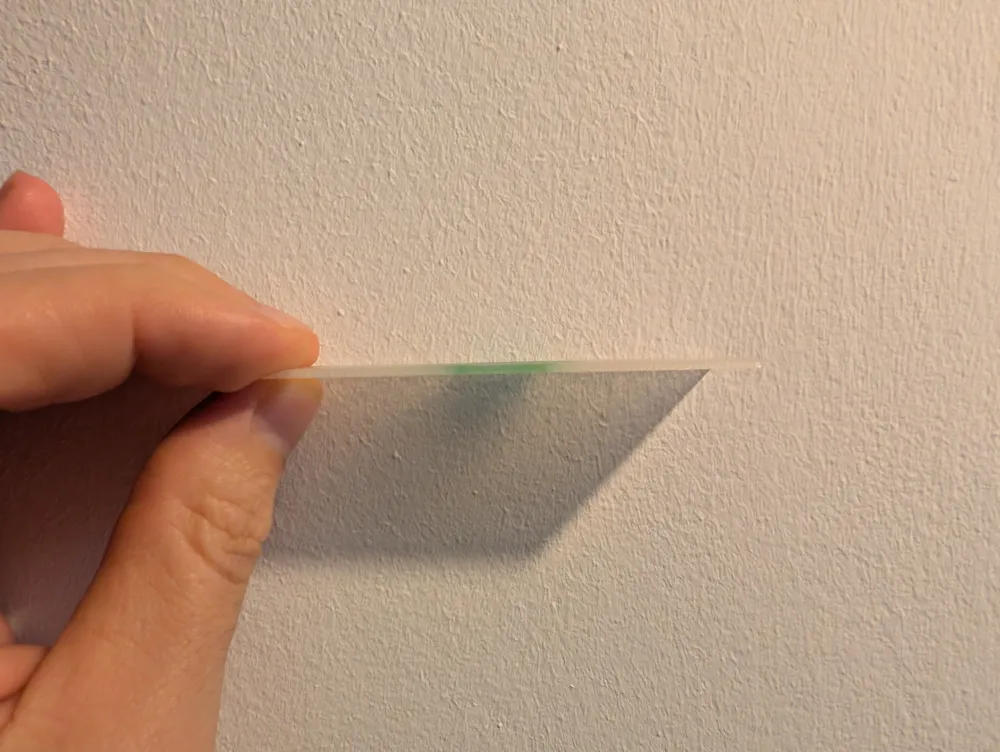
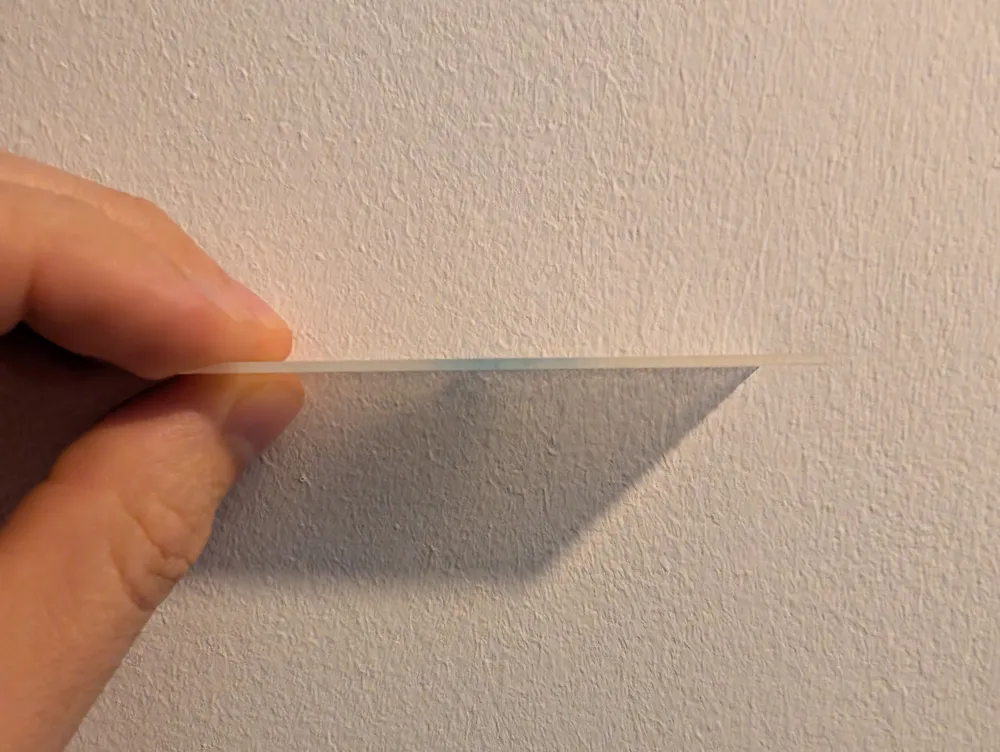
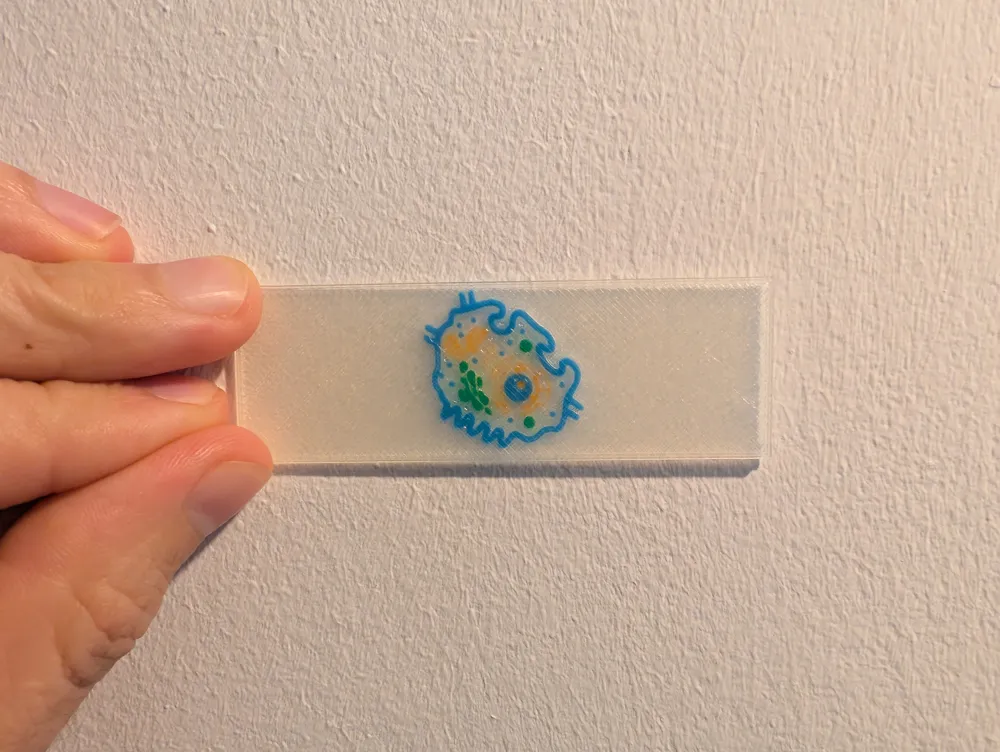
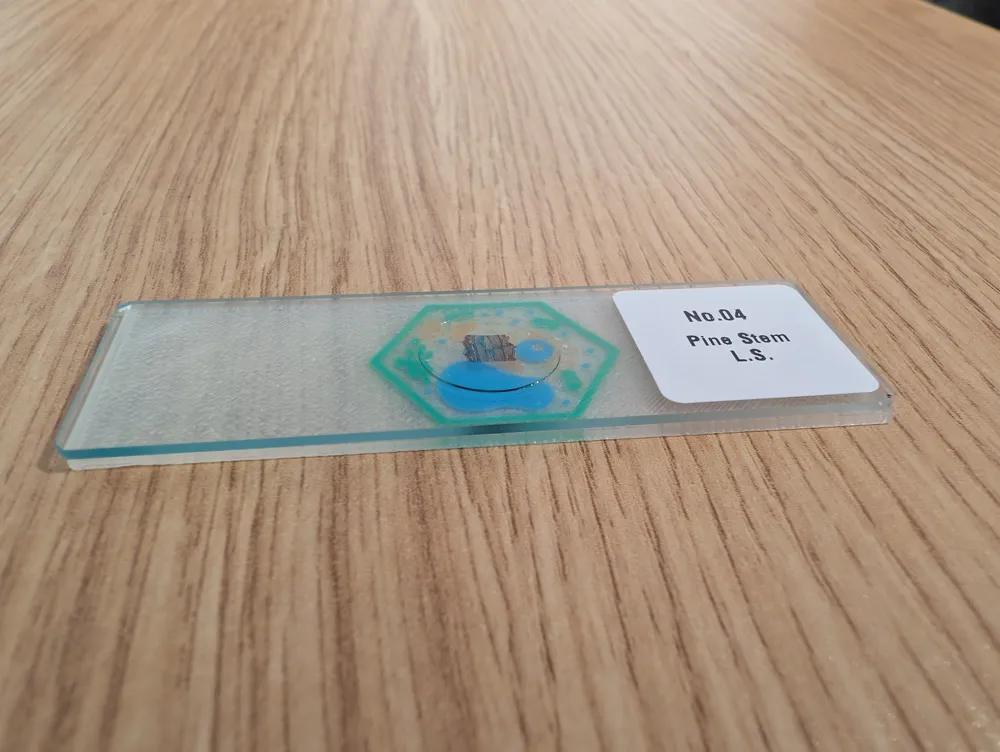
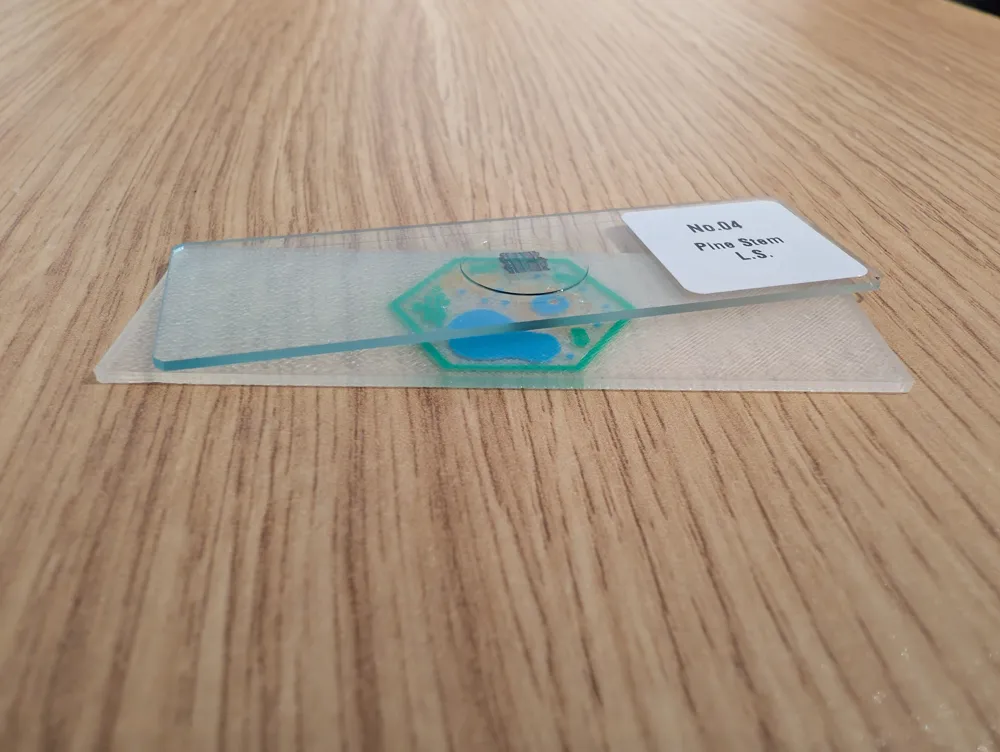
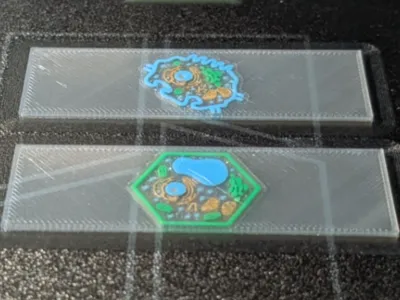
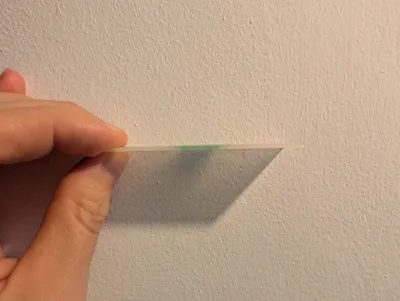
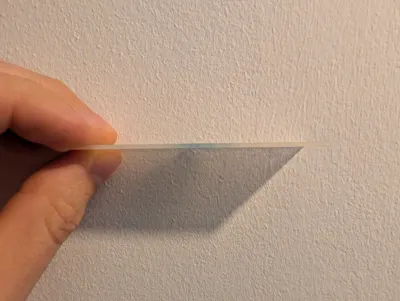
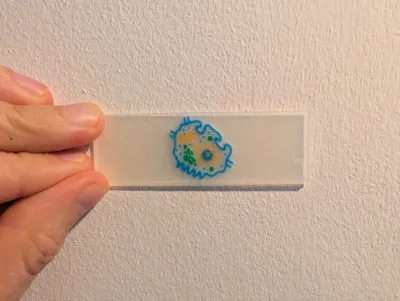
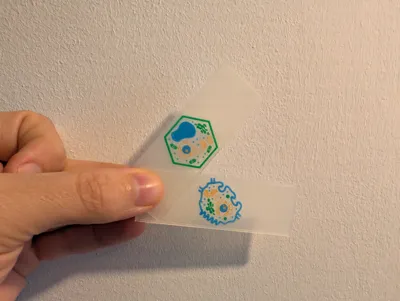
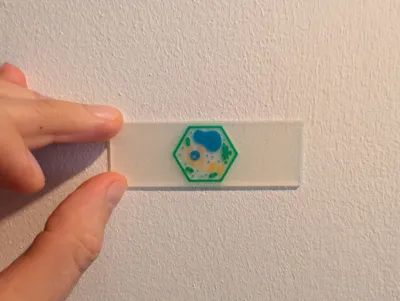
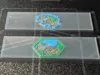
This project takes the brilliant concept of Val’s Animal and Plant Cell Printable Microscope Slides and remixes it for the modern 3D-printed classroom. While I loved the idea of an enlarged cell on a 1:1 slide, I wanted a version that felt more "real" and was truly classroom-proof. These slides were modeled from scratch in TinkerCAD to allow the cells to be physically embedded within a translucent prism—creating a "suspended in amber" effect that is durable, safe, and highly detailed.
Detailed Specimen Anatomy
To ensure high educational value, I have included a comprehensive list of organelles, scaled specifically to be printable with a standard 0.4mm nozzle:
- Plant Cell: Cell Membrane, Cell Wall, Cytoplasm, Chloroplast, Mitochondria, Ribosomes, Golgi Body, Endoplasmic Reticulum, Cytoskeleton, Nucleus, Nucleolus, and Vacuole.
- Animal Cell: Cell Membrane, Nucleus, Nucleolus, Lysosome, Vacuole, Ribosomes, Golgi Body, Mitochondria, Endoplasmic Reticulum, Cytoskeleton, Cilia, and Cytoplasm.
Technical Details (v1: 4/4/4 Distribution)
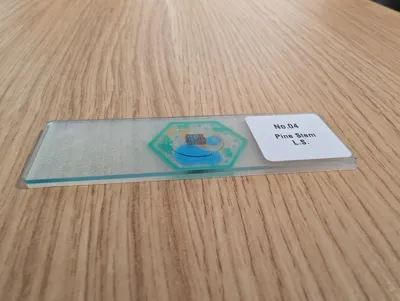
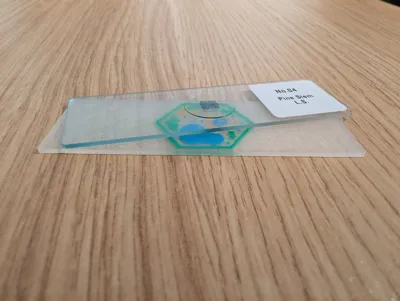
Achieving glass-like transparency on an FDM printer requires overriding standard settings. This v1 model uses a 4/4/4 Layer Stack (12 layers total at 0.1mm):
- 4 Layers of Translucent Base.
- 4 Layers of Embedded Cell Geometry.
- 4 Layers of Translucent "Cover Slip" top.
Recommended Print Settings (Optimized for Bambu P1S/AMS):
- Filaments Used: Elegoo PLA Transparent (Slide) & Bambu PLA Basic in Green, Blue, and Orange (Cell structures).
- Layer Height: 0.1mm.
- Infill: 100% Aligned Rectilinear.
- Infill Direction: Set to 0° for ALL layers. (Do not allow the slicer to rotate the grain; stacking lines perfectly is the key to transparency).
- Speed: 15–20 mm/s for all layers.
- Cooling:
- Part Cooling Fan: 0% (after the first 1 layer).
- Auxiliary Fan: 0% (Off).
- Initial Layer Fan: 10% (Prevents blobbing/dragging).
- Bed Temp: 65°C on a surgically clean PEI plate.
- Z-Hop: 0.4mm (Prevents the nozzle from catching on the cell layers).
Educational Impact
- Classroom-Proof: Shatterproof design intended for high-traffic school environments.
- Tactile & High-Contrast: Designed to help students see the structures clearly without the struggle of finding a focal plane under a 400x lens.
- Precision Modeling: Ribosomes and fine structures have been specifically sized to ensure they print clearly without being lost in the slicer.
Remix Credits & Licensing
Inspiration: This project is a total ground-up remodel inspired by the Animal and Plant Cell Printable Microscope Slides by Val. The layout was reimagined to embed the cell for a more realistic "specimen" feel.
License: CC BY-NC-SA (Attribution-NonCommercial-ShareAlike) You are free to remix this model for your curriculum (e.g., creating specialized cells). However, you must credit The Projected Classroom, you cannot sell these models/prints commercially, and adaptations must be shared under this same license.
About The Projected Classroom
Created by a veteran Math and Computer Science teacher, The Projected Classroom focuses on high-utility, project-based learning. Follow for future iterations, including v2 (6/4/2 stack) and specialized Mitosis/Bacteria series!
This remix is based on


License



Comment & Rating (2)