
Print Profile(1)
Bill of Materials



Description
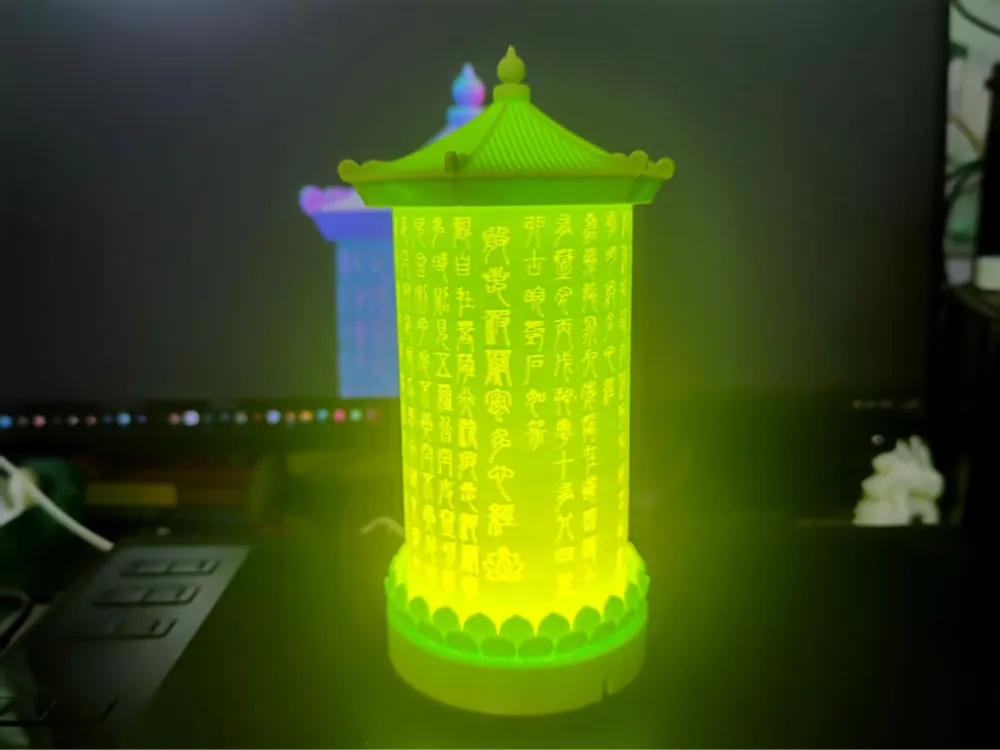
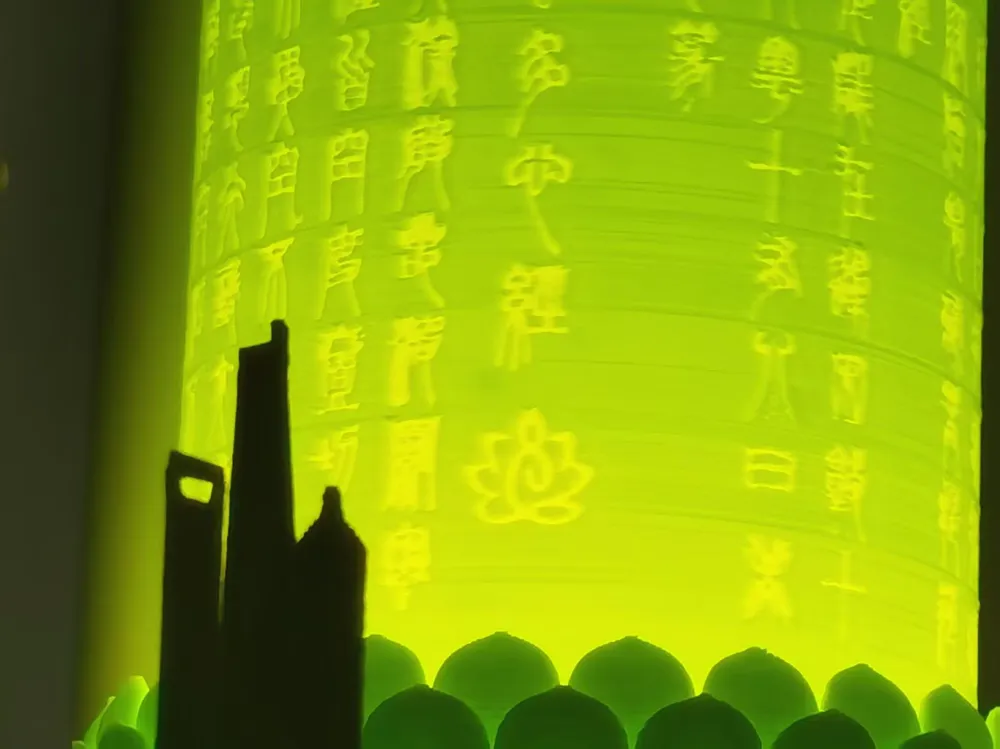
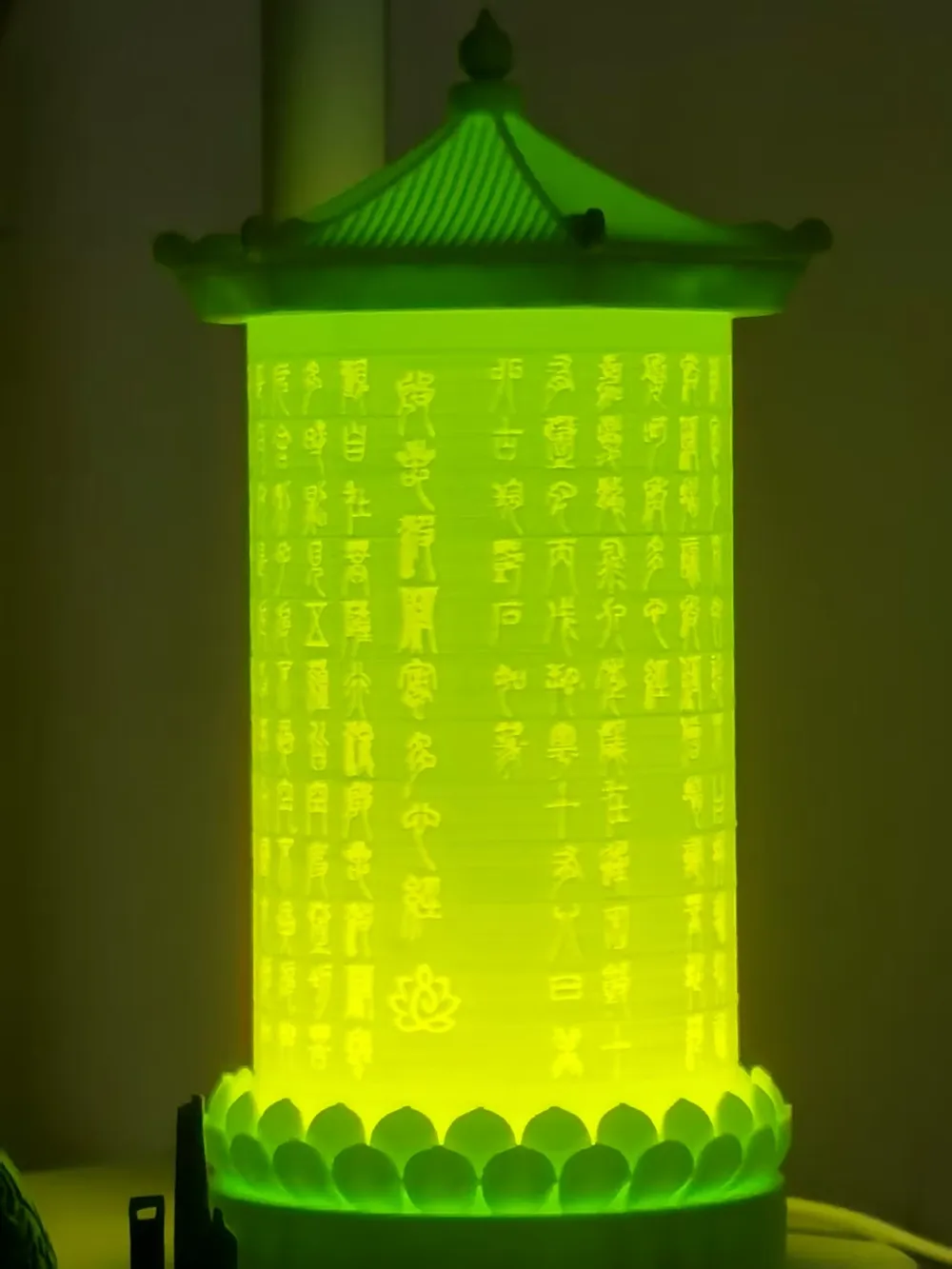
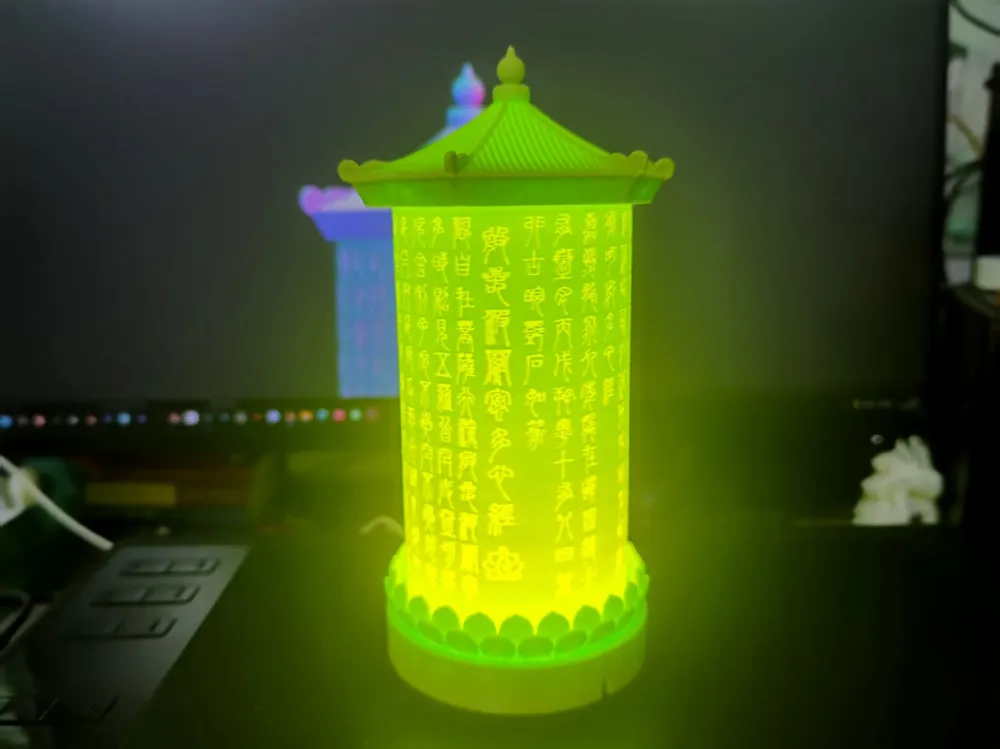
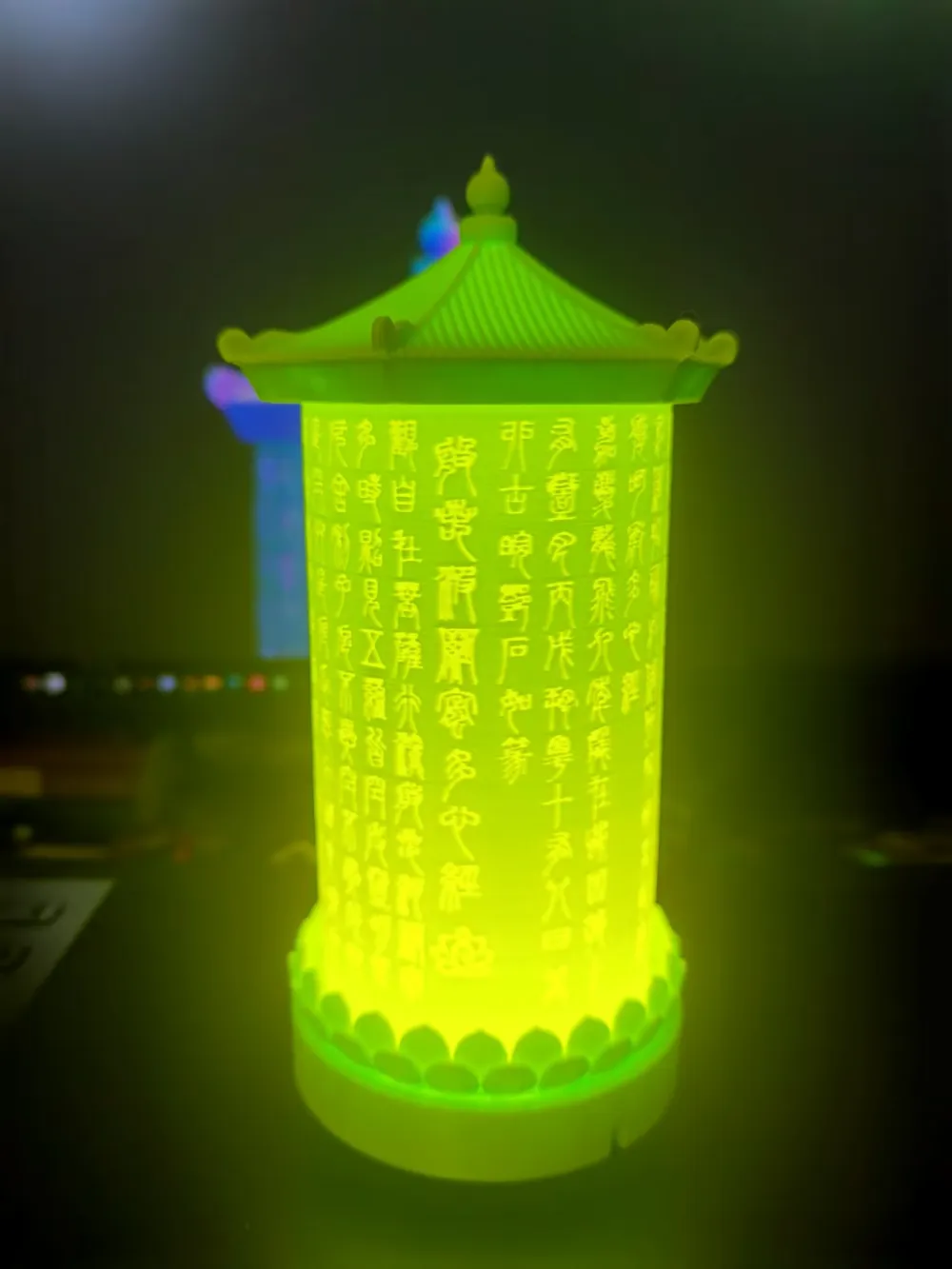
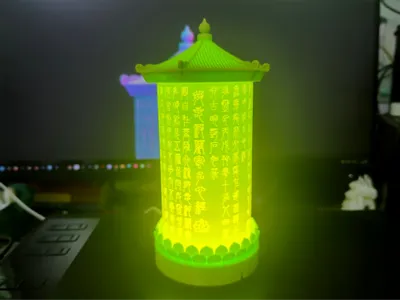
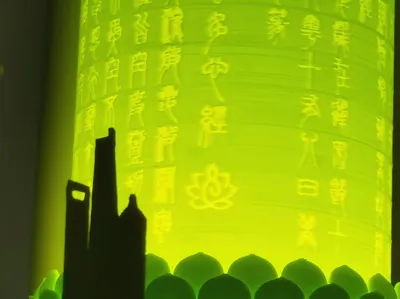
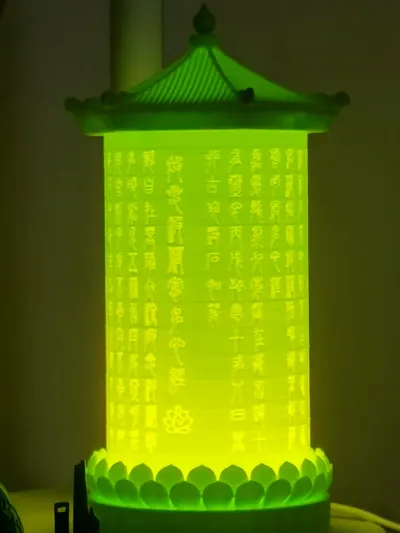
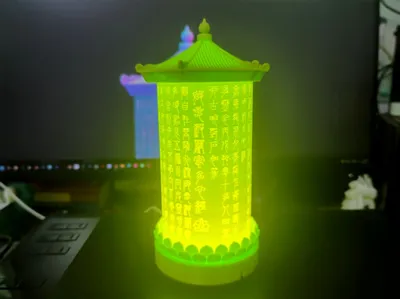
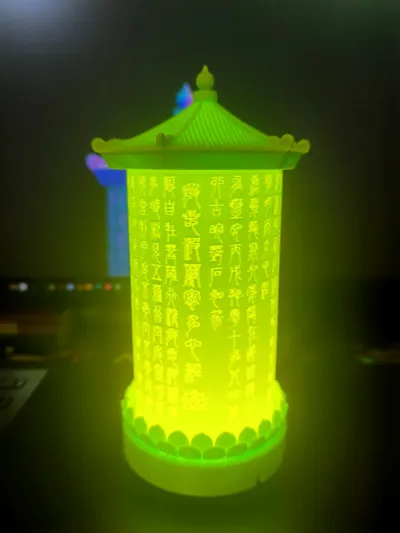
Heart Sutra Lotus Tower Night Light
The base is compatible with Bambu Lab LED Kit 001: The base has precise slots for the official Bambu Lab LED Kit 001, ensuring a secure and seamless fit
The full name of the Heart Sutra is Prajnaparamita Hridaya Sutra, and it is one of the shortest yet most profound texts in Buddhist scriptures. The entire text is only 260 characters, yet it condenses the core of Prajna thought. "Prajna" means "transcendent wisdom", and "Paramita" means "reaching the other shore"
The Heart Sutra, Mahaprajnaparamita Great Bright Mantra Sutra
Translated by Tripitaka Master Kumarajiva from Kucha during the Later Qin dynasty
Avalokiteshvara Bodhisattva, when practicing the profound Prajnaparamita, clearly saw that the five skandhas are empty, and thus transcended all suffering
Shariputra, because form is emptiness, there is no aspect of disturbance and decay; because feeling is emptiness, there is no aspect of feeling; because perception is emptiness, there is no aspect of cognition; because volition is emptiness, there is no aspect of action; because consciousness is emptiness, there is no aspect of sensation. Why so?
Shariputra, form is not different from emptiness, emptiness is not different from form; form is precisely emptiness, emptiness is precisely form; feeling, perception, volition, and consciousness are likewise. Shariputra, all dharmas are marked by emptiness; they neither arise nor cease, neither are defiled nor pure, neither increase nor decrease. This emptiness is not of the past, not of the future, not of the present. Therefore, in emptiness, there is no form, no feeling, perception, volition, or consciousness; no eye, ear, nose, tongue, body, or mind; no form, sound, smell, taste, touch, or mental object; no realm of sight, and so forth, up to no realm of consciousness; no ignorance and no end to ignorance, and so forth, up to no old age and death, and no end to old age and death; no suffering, no origin, no cessation, no path; no wisdom and no attainment
Because there is no attainment, Bodhisattvas rely on Prajnaparamita, and their minds are free from hindrance. Being free from hindrance, they are fearless, transcending all deluded thoughts and suffering, ultimately attaining Nirvana. All Buddhas of the three times rely on Prajnaparamita to attain Anuttara-samyak-sambodhi. Therefore, know that Prajnaparamita is the great bright mantra, the supreme mantra, the unequalled mantra, which can eliminate all suffering, true and not false
Therefore, proclaim the Prajnaparamita mantra, and the mantra is proclaimed thus: Gate Gate Paragate Parasamgate Bodhi Svaha
Author of the Seal Script Calligraphy
Deng Shiru (1743-1805) was a renowned calligrapher and seal carver of the Qing dynasty, and also the founder of the Deng School of seal carving. He was born in Bailin Fan, Huaining County, Anhui (now Bailin Village, Wuheng Township, Yixiu District, Anqing City). His original name was Yan, his courtesy name was Shiru, and later he changed his courtesy name to Wanbo. He once resided with Mei Liu in Jinling for eight years, meticulously copying all the ancient bronze and stone inscriptions from the Qin and Han dynasties that Mei Liu collected. After his studies, he served as a guest in the private secretariat of Bi Yuan, the Governor-General of Liangjiang. Deng Shiru excelled in calligraphy and seal carving. He was proficient in all calligraphic styles, with seal script and clerical script being his most refined. He deeply grasped ancient methods, integrated the strengths of various schools, and formed a unique style. His calligraphy was praised by Li Zhaoluo of the Qing dynasty as "overflowing with true spirit, complete with standards. The movement of his hand and the pursuit of his mind completely transcended contemporary conventions, aligning with antiquity. He served as a bridge for later generations, revered by an entire era." Deng Shiru's works had a profound influence on the calligraphy world of the mid-to-late Qing dynasty. His writings, such as "Wanbai Shanren Zhuanke Oucun" (Random Notes on Seal Carving by Wanbai Mountain Man), were published and have been handed down to this day
License

You shall not share, sub-license, sell, rent, host, transfer, or distribute in any way the digital or 3D printed versions of this object, nor any other derivative work of this object in its digital or physical format (including - but not limited to - remixes of this object, and hosting on other digital platforms). The objects may not be used without permission in any way whatsoever in which you charge money, or collect fees.


Comment & Rating (0)