
WindFlux - Mechanical Wind Indicator Anemometer
Print Profile(1)
Bill of Materials





Description
Product Description
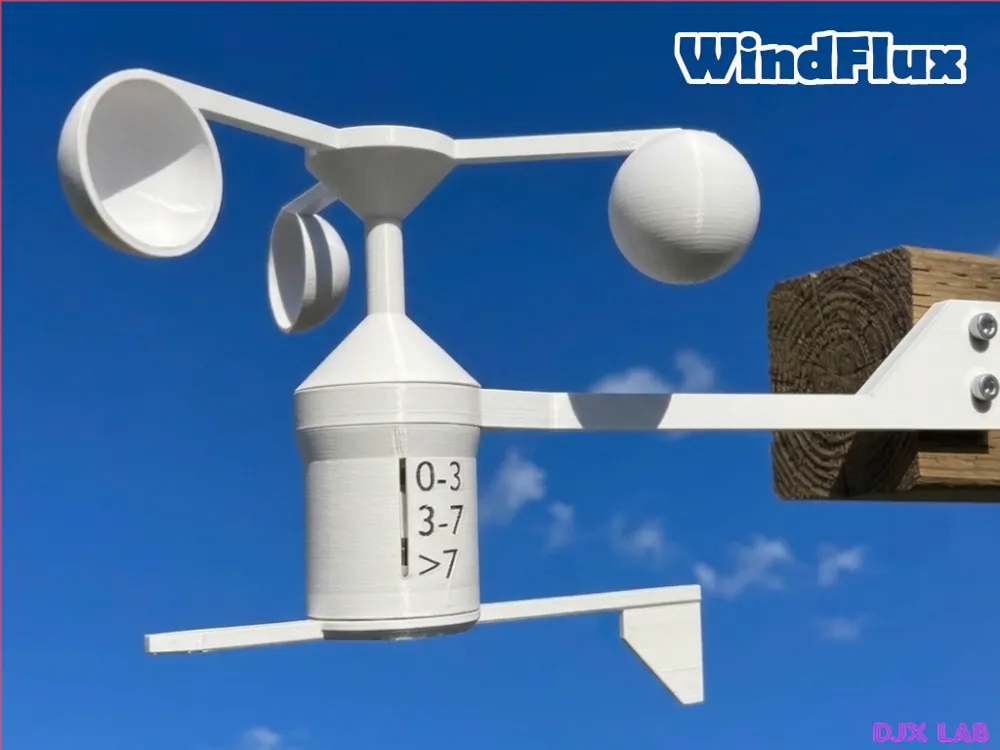
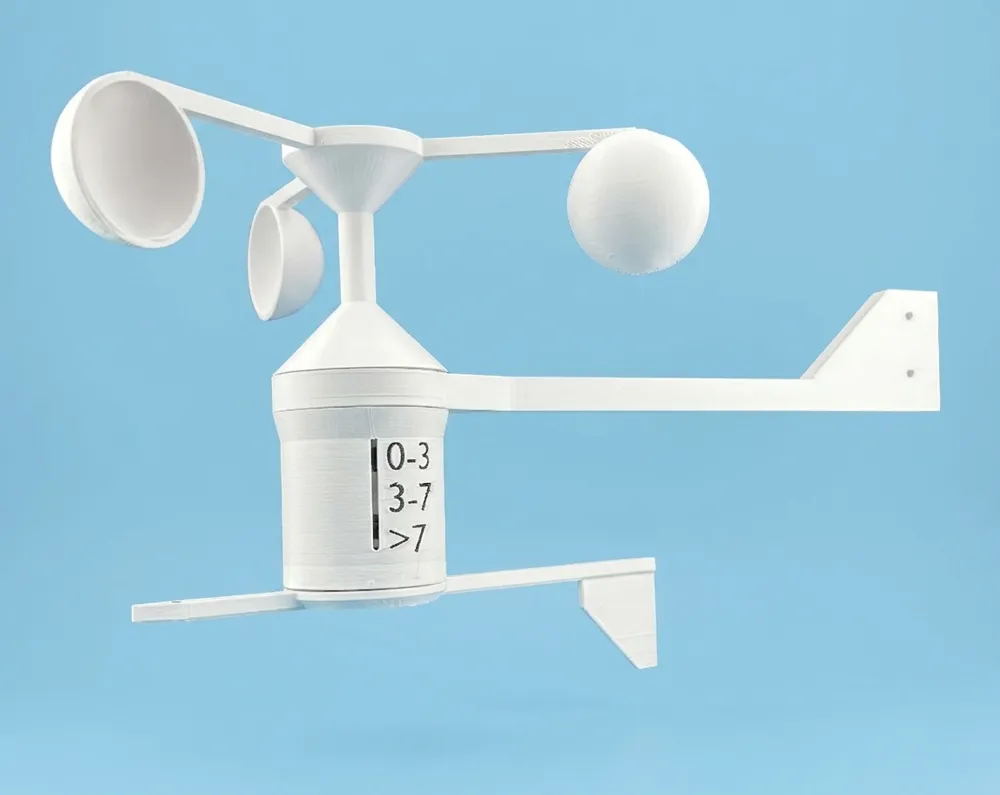
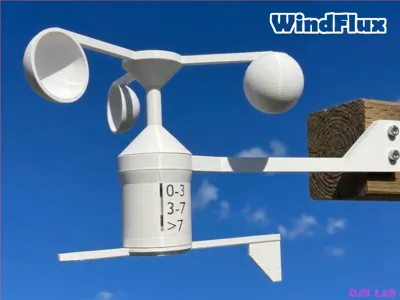
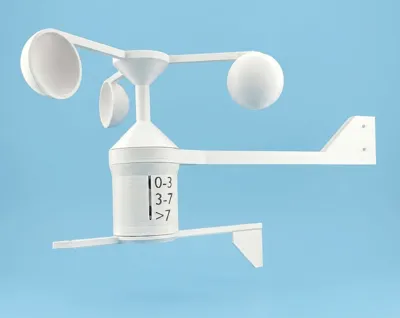
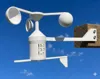
The WindFlux is a purely mechanical wind measurement device that transforms wind speed into a dynamic visual signal—no electronics, no batteries, just precision engineering.
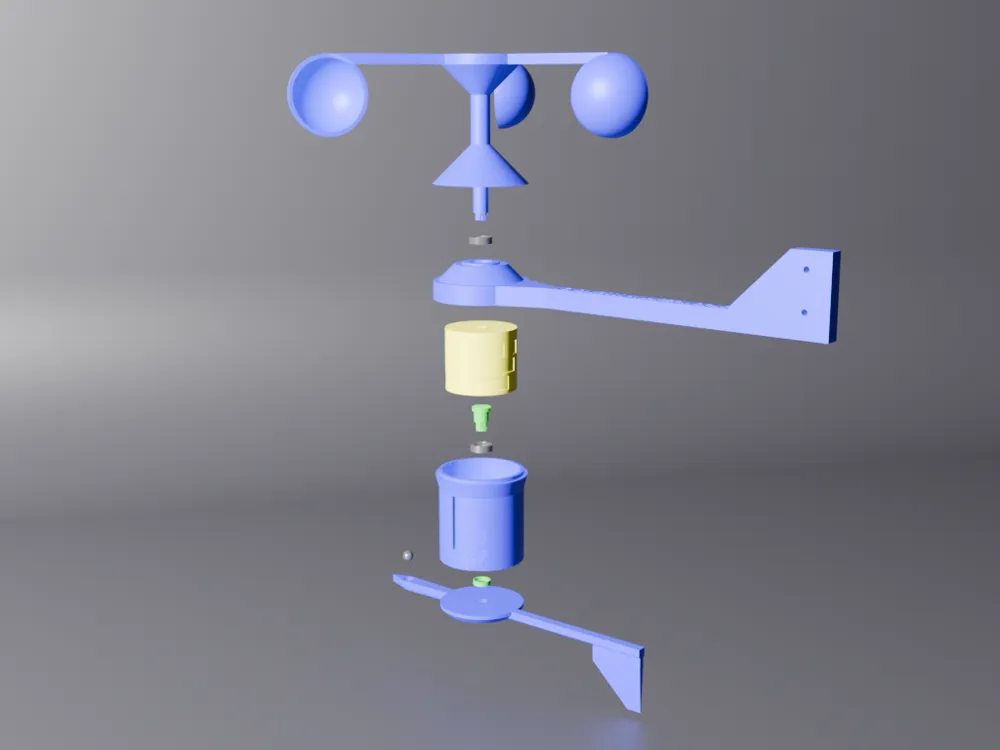
At its core, a three-cup rotor captures wind energy and directly drives an integrated impulse drum. As the drum rotates behind a narrow viewing window, specially designed patterns generate a distinct optical pulse. Each wind speed range produces a unique visual rhythm—allowing intuitive interpretation at a glance.
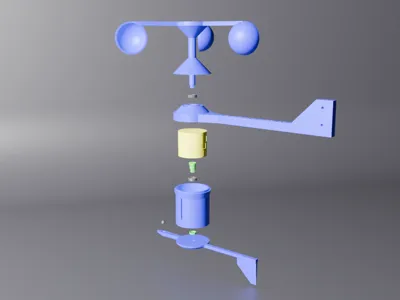
The system combines low-friction bearings, balanced rotor geometry, and a compact modular design for smooth operation even at low wind speeds. Its dual-subassembly construction ensures straightforward assembly and reliable alignment of all moving parts.
3D Printing Notes
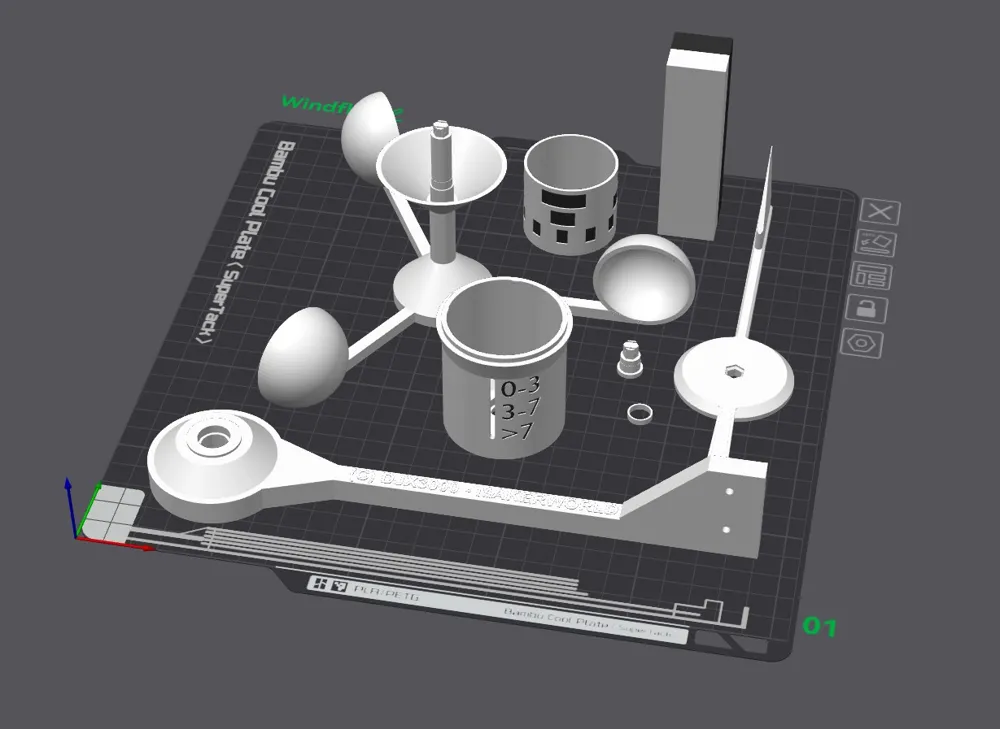
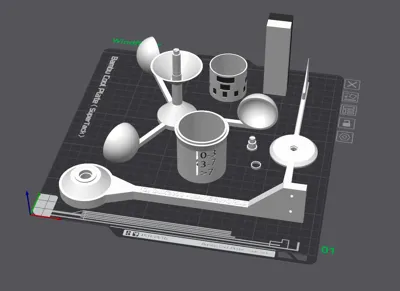
- Recommended material: PETG, due to its superior weather resistance compared to PLA.
- No supports required – all parts are designed for clean, support-free printing.
- No screws or glue needed – the design relies entirely on press-fit connections.
- Printable without AMS (multi-material system):
If printing in a single color, simply fill in the text fields and impulse bars afterward using a permanent marker for clear contrast.
Reading and Interpreting Wind Speed
WindFlux uses a three-zone impulse drum, where each zone is tuned to a specific wind speed range. As the drum rotates, you observe which zone produces a clear pulsation in the viewing window.
- 0–3 m/s (Low Wind Zone):
The section with the finest pattern produces a distinct, slow pulsation. Individual transitions are visible and easy to follow. - 3–7 m/s (Medium Wind Zone):
The middle section generates a steady, rhythmic pulse, which is typically the most stable and clearly defined signal. - >7 m/s (High Wind Zone):
The section with the coarsest pattern produces a fast, compact pulsation, appearing more intense and slightly fused.
How to Read It
Instead of tracking position, you simply observe:
Which zone shows the clearest, most stable pulsation
- If the fine pattern pulses clearly → low wind
- If the middle pattern dominates → moderate wind
- If the coarse pattern becomes most active → strong wind
All three zones may be visible simultaneously, but only one will produce the most distinct pulse at a given wind speed. This makes interpretation fast, intuitive, and independent of numerical scales.
Built for clarity, durability, and mechanical elegance, WindFlux offers a unique analog approach to wind indication—turning invisible airflow into a visible, tactile experience.
Boost Me (for free)
Small click, big smile 😊.
Documentation (1)
License

You shall not share, sub-license, sell, rent, host, transfer, or distribute in any way the digital or 3D printed versions of this object, nor any other derivative work of this object in its digital or physical format (including - but not limited to - remixes of this object, and hosting on other digital platforms). The objects may not be used without permission in any way whatsoever in which you charge money, or collect fees.


Comment & Rating (16)