
Accurate Mechanical Planetarium
Print Profile(1)
Description
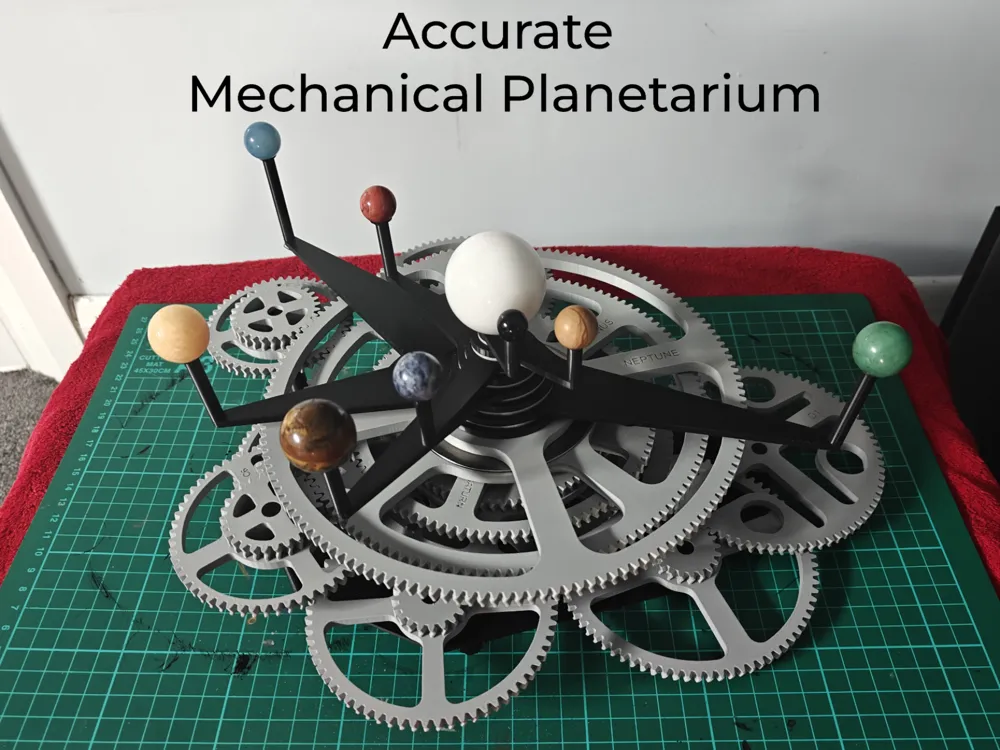
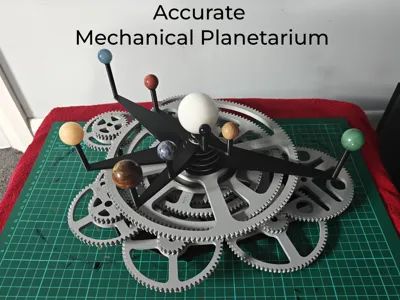
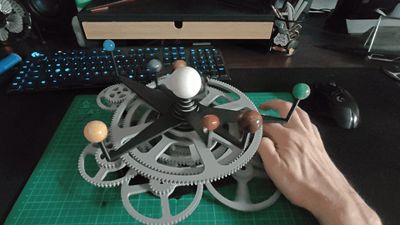
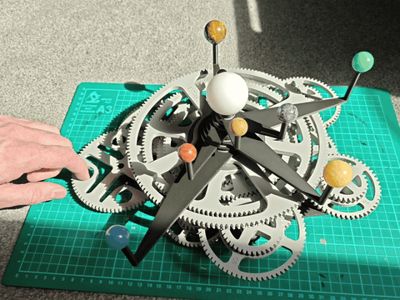
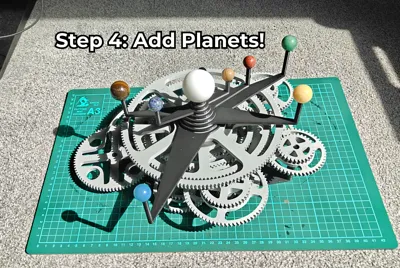
Mechanical planetarium with accurate relative orbital periods.


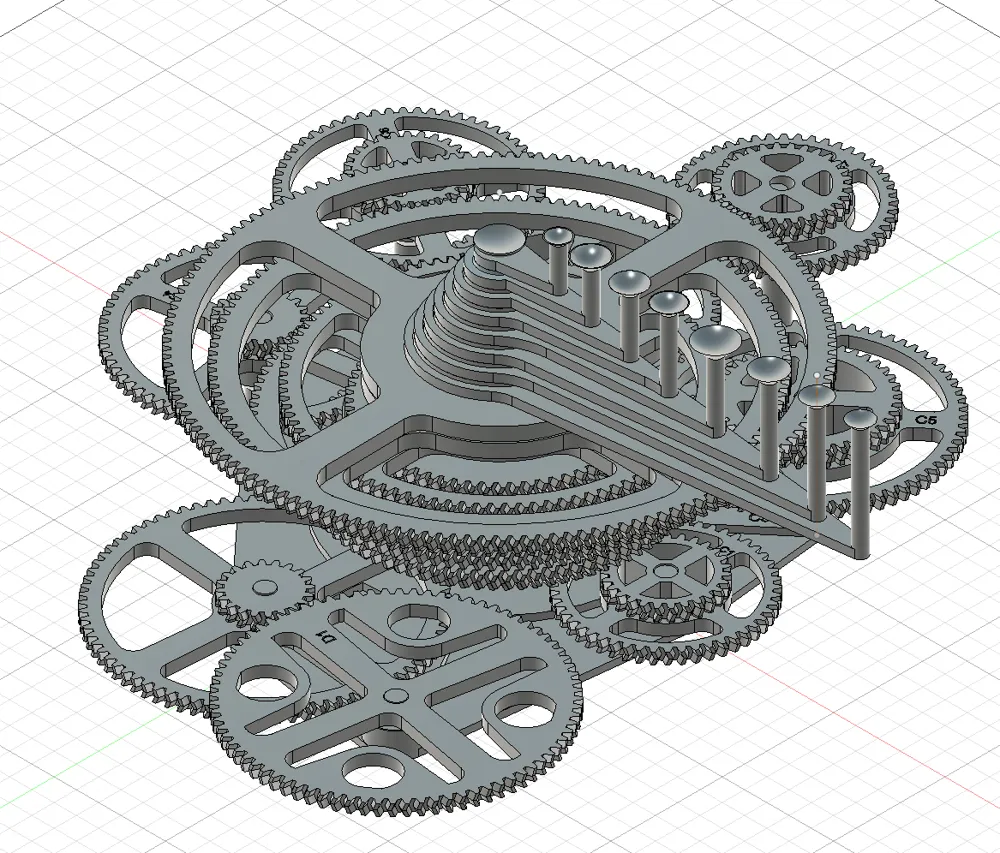
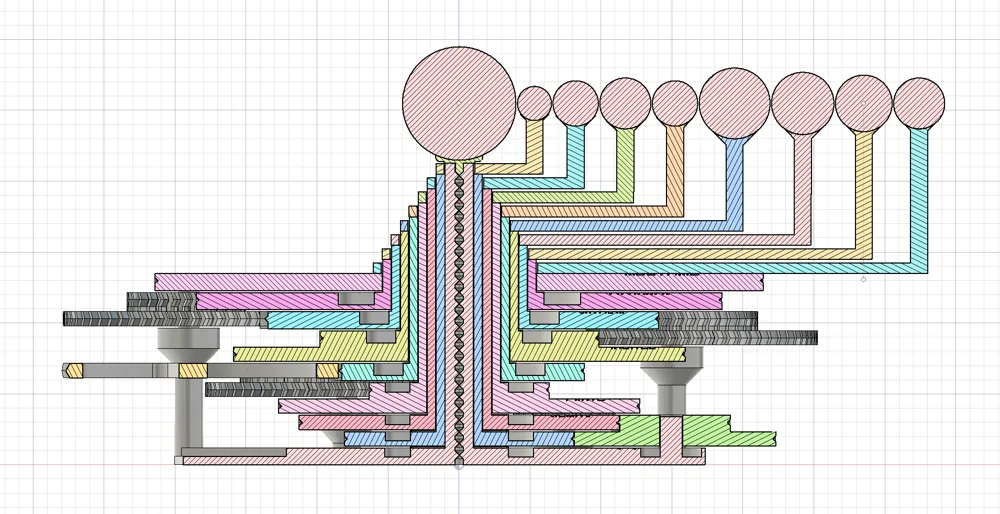
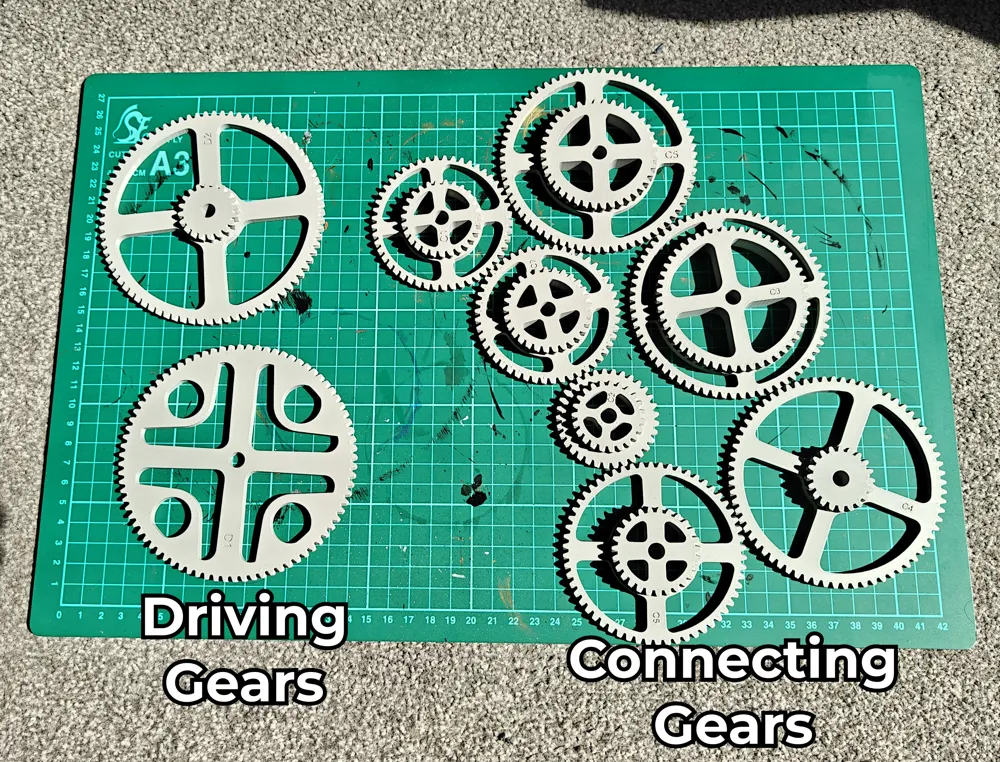
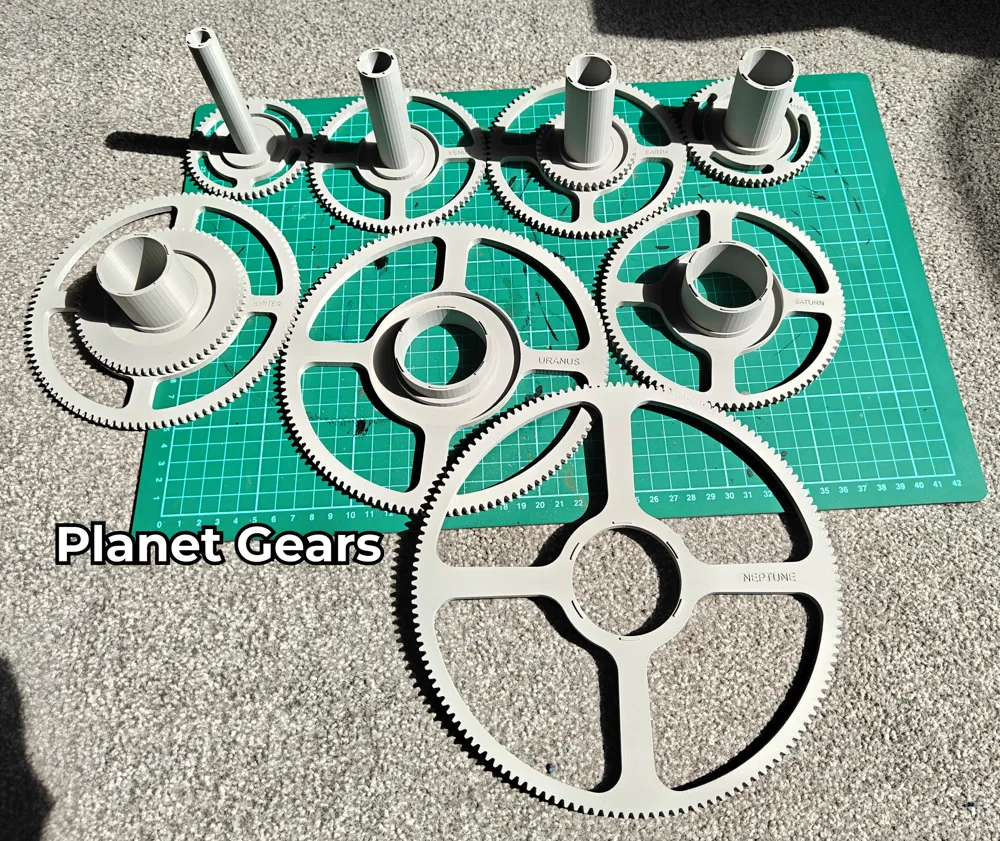
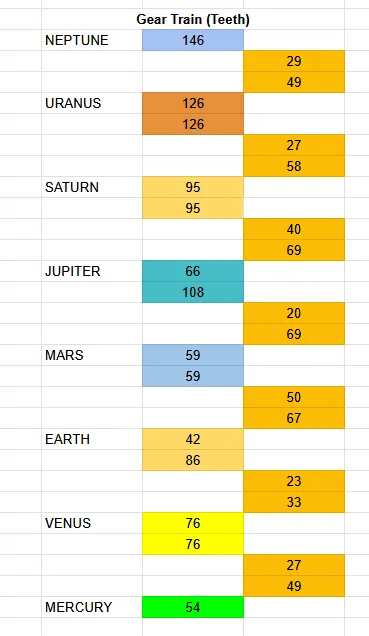
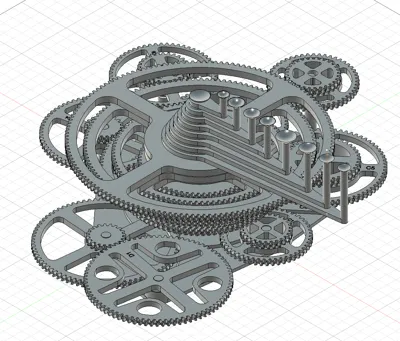
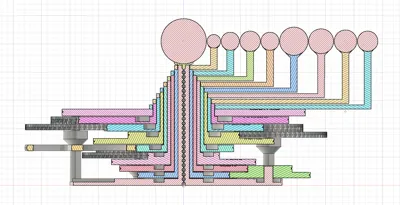
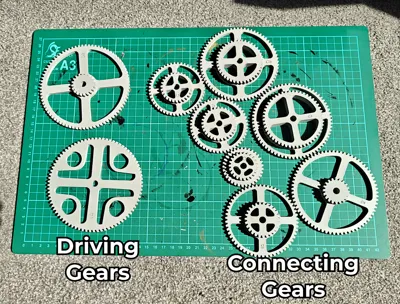
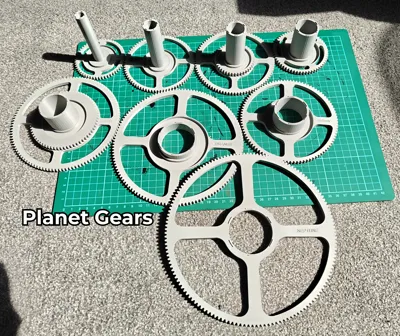
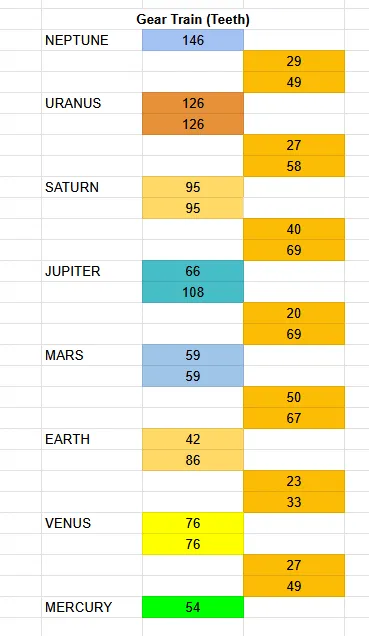
This hand-driven 17 gear train model of the solar system accurately shows the relative orbital periods of the 8 planets (Pluto can get lost).
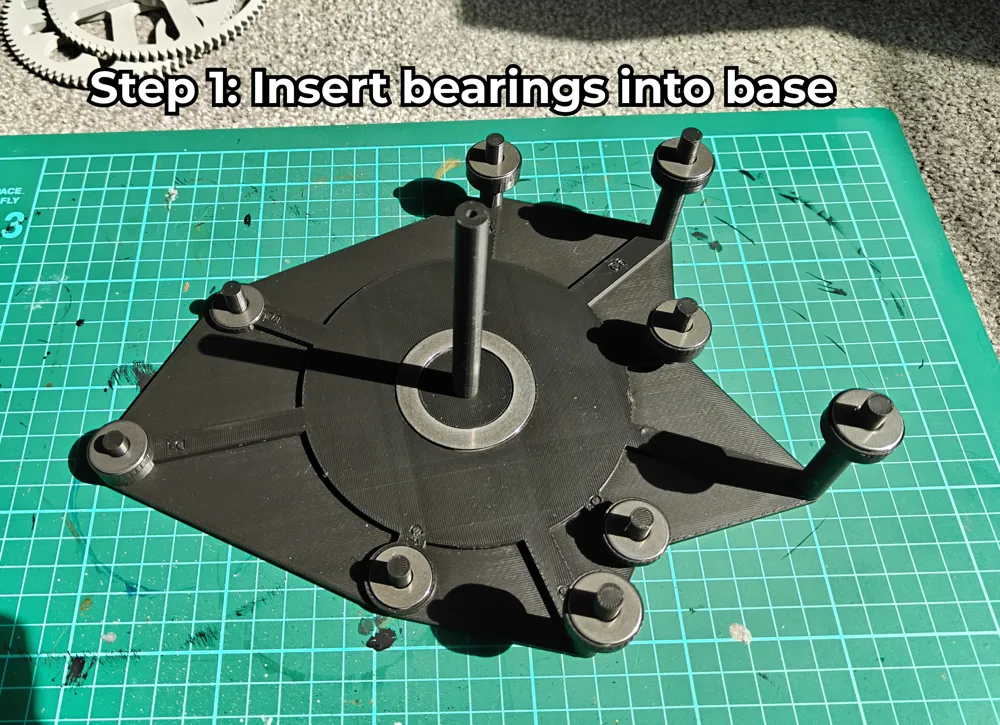
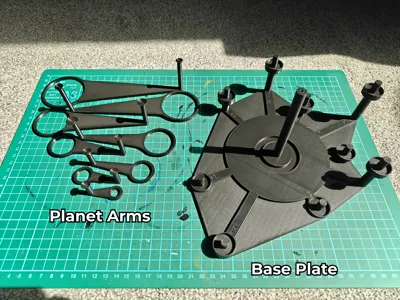
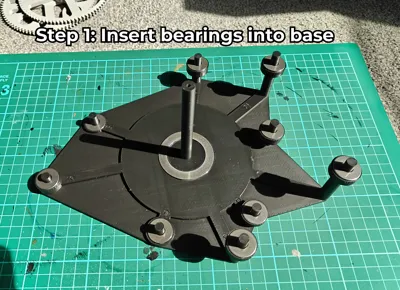
Herringbone gears and needle thrust bearings are used to reduce friction.
UPDATE 23-June-2026:
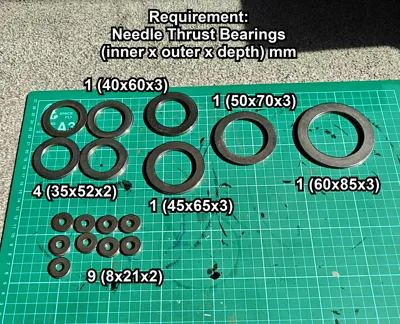
I have corrected the needle thrust parts list - I incorrectly had (65x90x3) for Uranus, and left out (50x70x3) for Saturn. Thanks to user_3243033349 for pointing out my mistake. Correct parts list is below.
Orbital Periods and Errors
Orbital periods are calculated relative to Mercury.
| Planet | Actual Period (days) | Model Period (days) | Error (%) |
| Neptune | 60195 | 60068 | 0.21 |
| Uranus | 30688 | 30683 | 0.02 |
| Saturn | 10755 | 10767 | -0.11 |
| Jupiter | 4331.74 | 4336.70 | -0.11 |
| Mars | 686.98 | 686.73 | 0.04 |
| Earth | 365.24 | 364.80 | 0.12 |
| Venus | 224.7 | 224.69 | 0.00 |
| Mercury | 87.97 | 87.97 | 0.00 |
Parts List
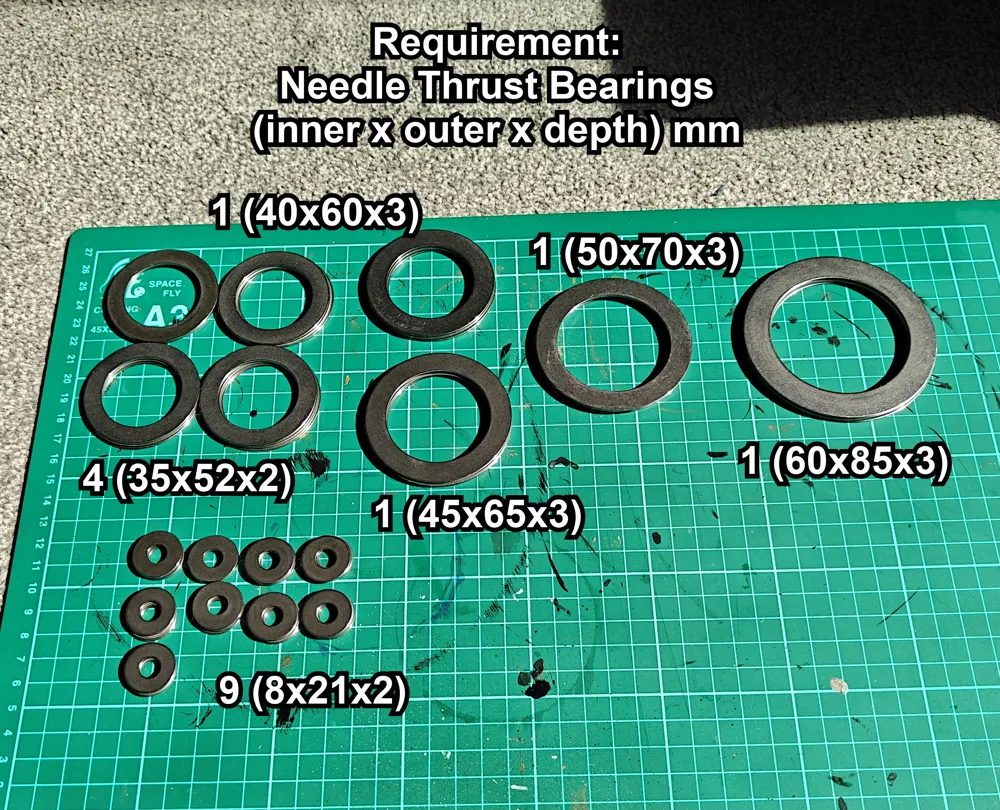
- AXK Needle thrust bearings: these are used to reduce friction. Can be found cheaply on AliExpress (all of the bearings should be < €30 in total). The following are quantity x (inner x outer x depth) in mm:
- 9 x (8x21x2) - for the connecting and driving gears
- 4 x (35x52x2) - for base, Mercury, Venus and Earth
- 1 x (40x60x3) - for Mars
- 1 x (45x65x3) - for Jupiter
- 1 x (50x70x3) - for Saturn
- 1 x (60x85x3) - for Uranus
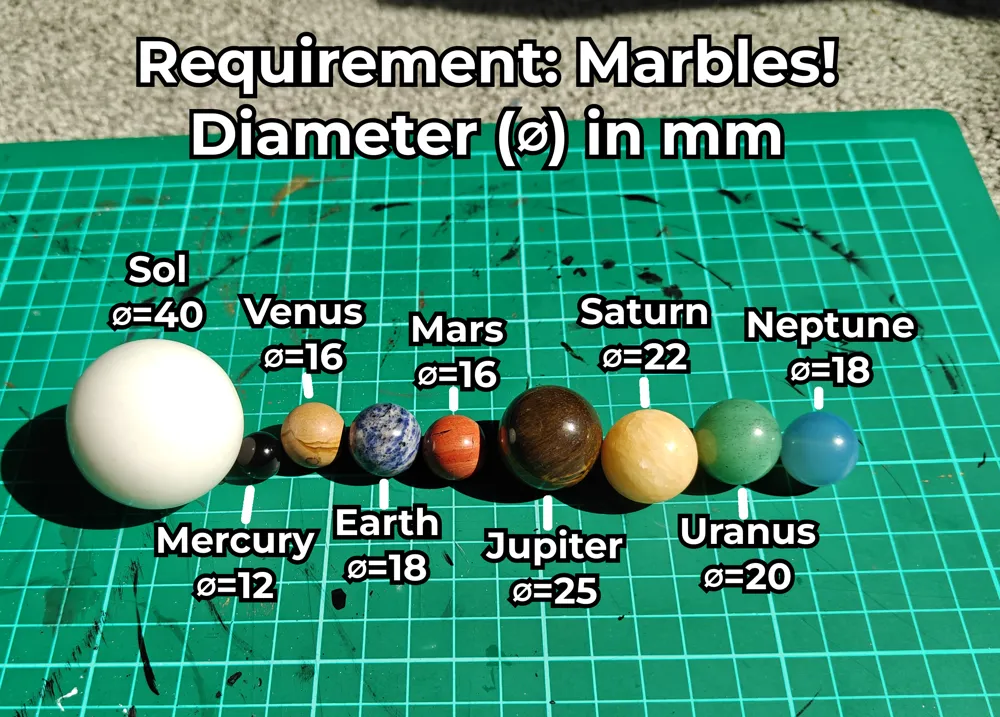
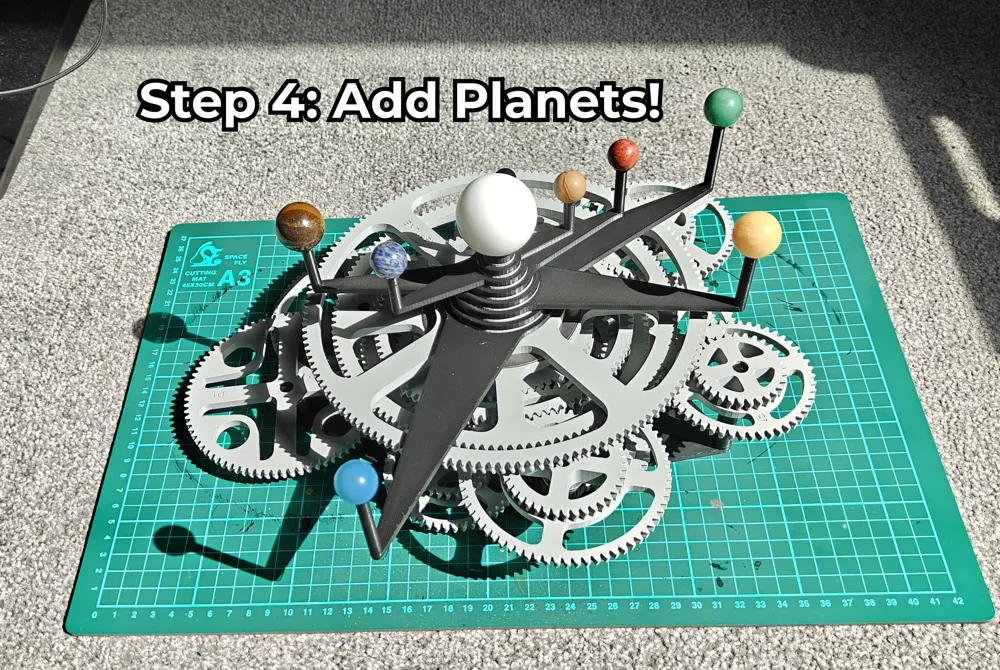
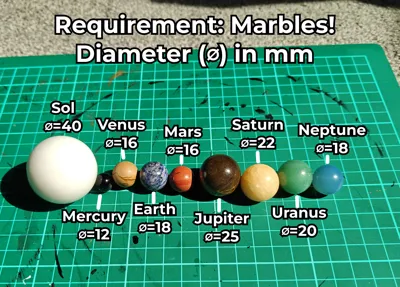
- Marbles for the Sun and planets. These can be found fairly cheaply on AliExpress. The relative size of the planets are not accurate to real life! Diameters for the marbles are:
- Sun: 40 mm
- Mercury: 12 mm
- Venus: 16 mm
- Earth: 18 mm
- Mars: 16 mm
- Jupiter: 25 mm
- Saturn: 22 mm
- Uranus: 20 mm
- Neptune: 18 mm
Printing Instructions
- Printed entirely with PLA, with P1S 0.4mm nozzle
- For the gears I used a really small layer height (0.08 mm) and slow first layer printing
Notes on Assembly
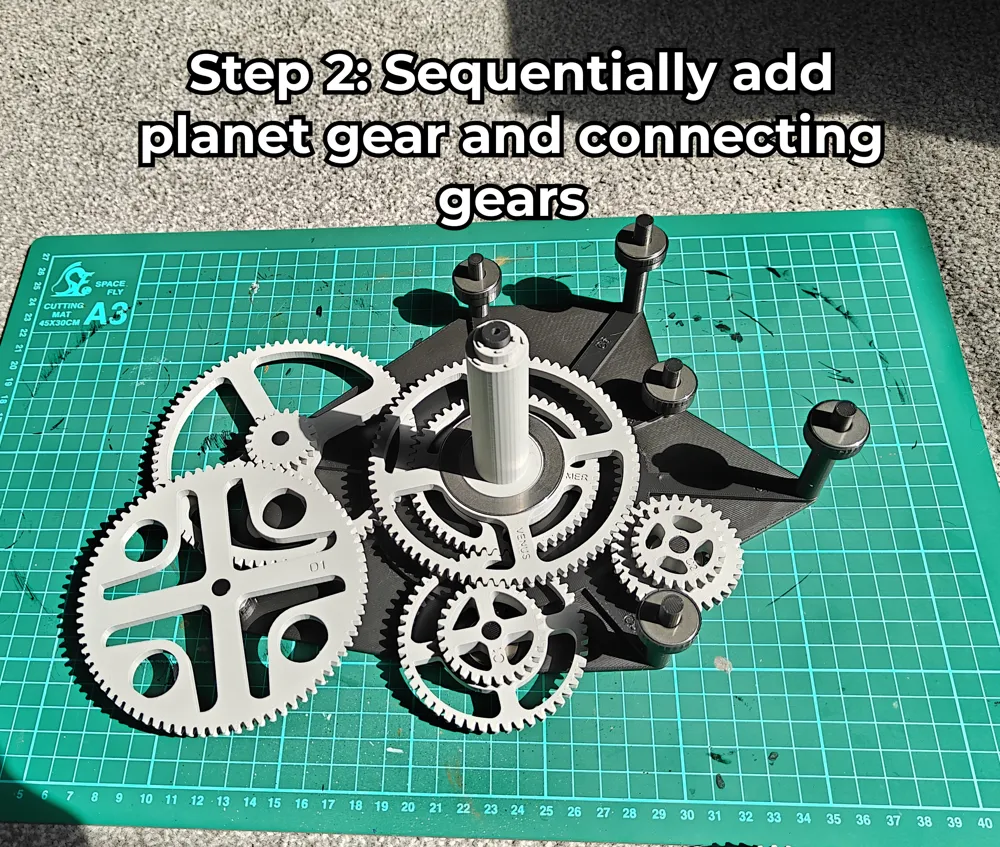
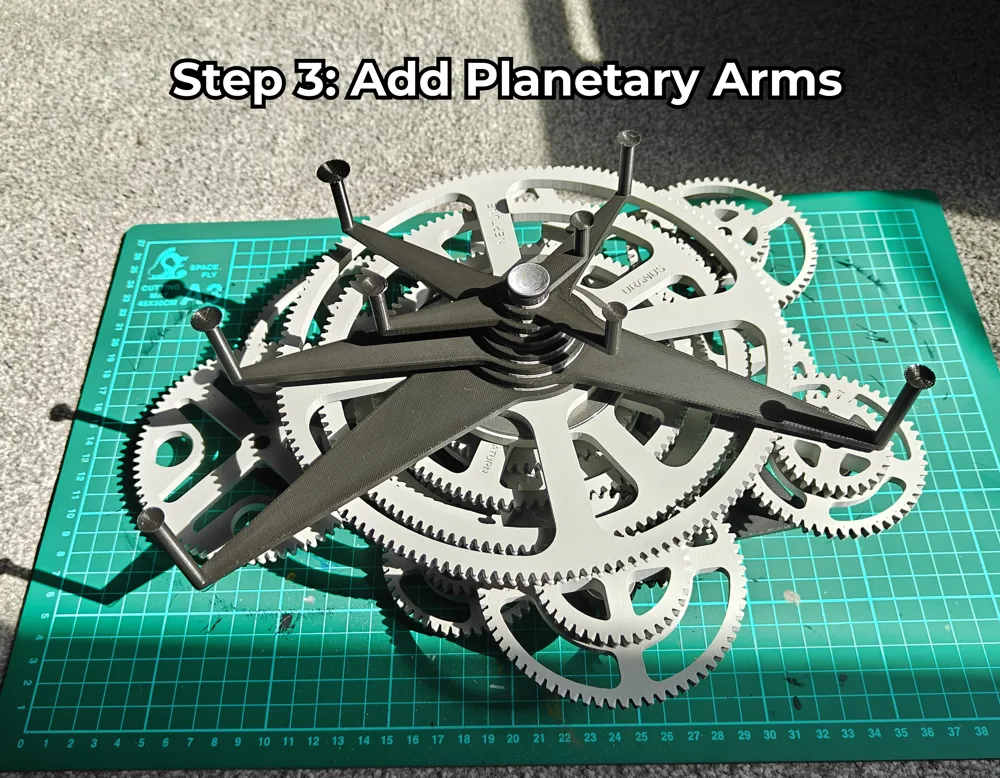
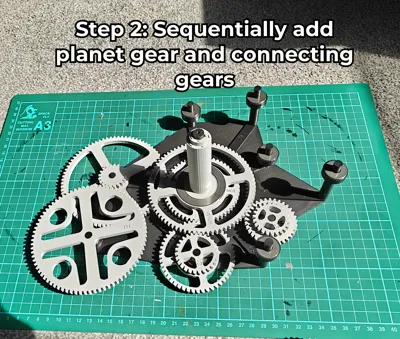
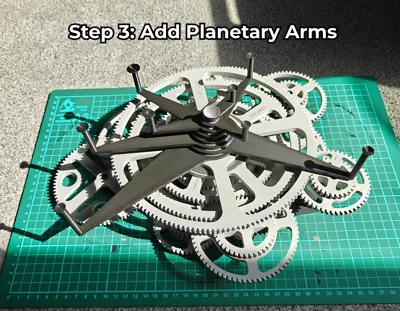
As the gears are herringbone, they cannot just be dropped in place from above. It can be a little tricky to assemble them.
Mesh the gears and then try to drop into place. There will be enough flex to allow them to get into place.
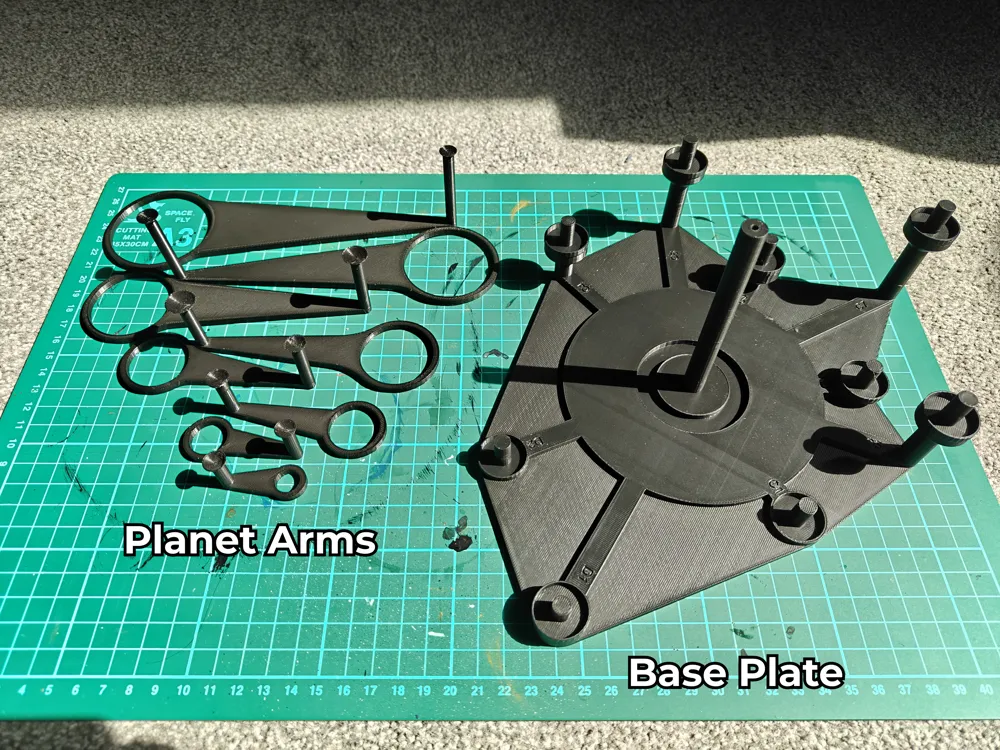
If the base plate is flexed, the connecting gears may not sit high enough. This can introduce some friction when driving the gears. I included some thin spacers - these can be used to sit the connecting gears slightly higher.
License



Comment & Rating (14)