
Galileo's Inclined Plane Experiment Demonstrating Newton's First Law Physics Experiment Teaching Aid for Primary and Secondary Schools
Print Profile(1)
Description
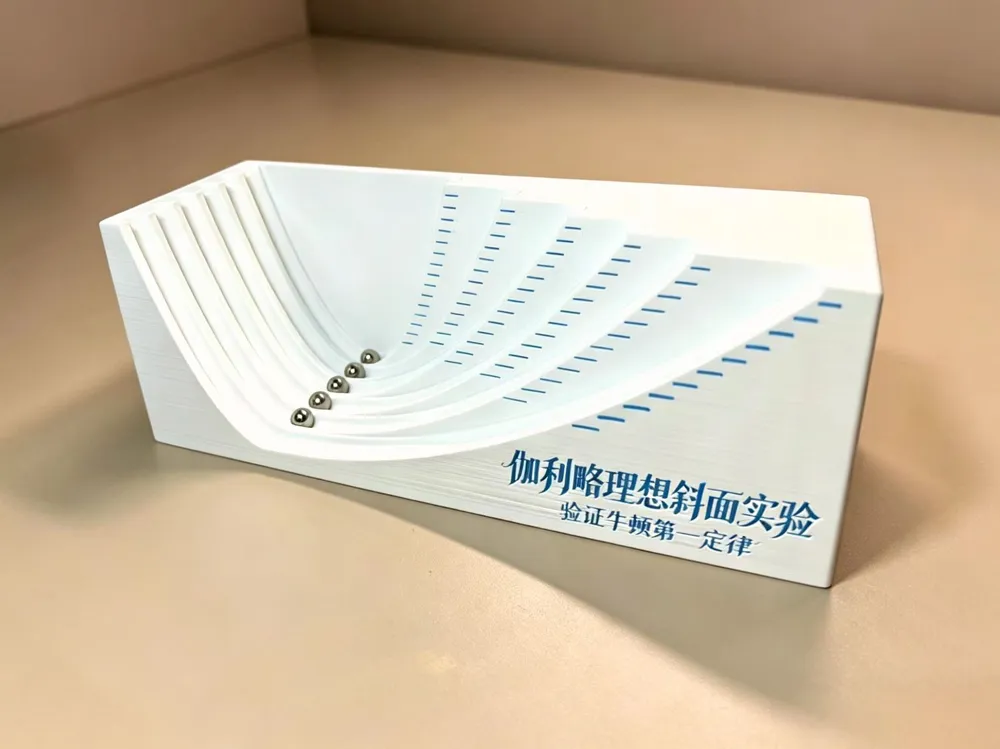
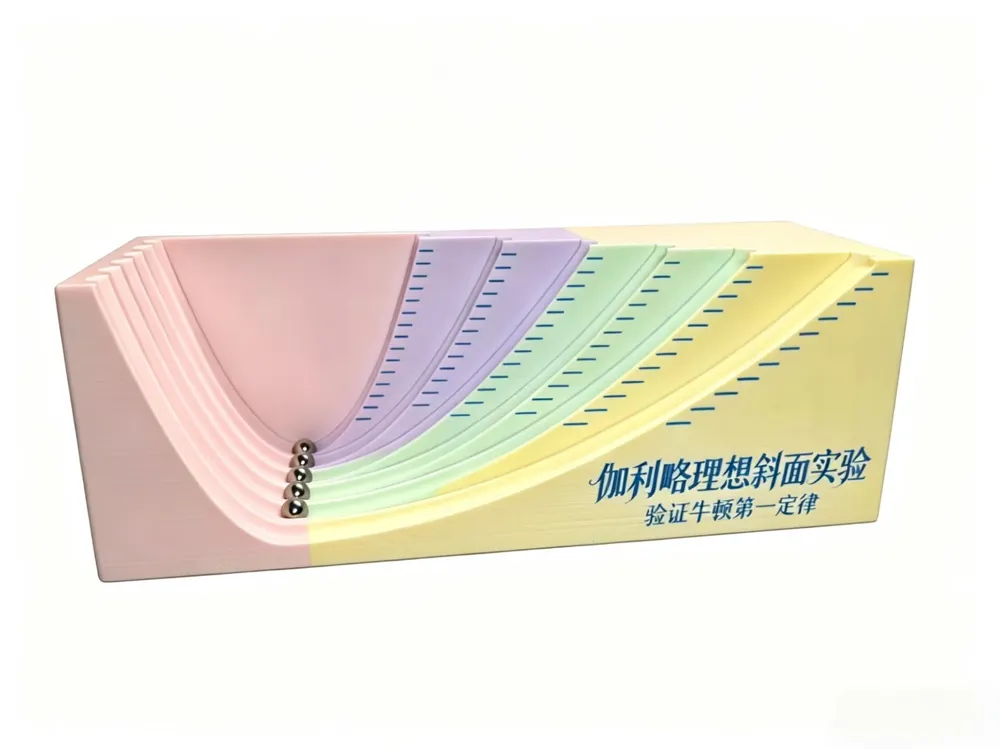
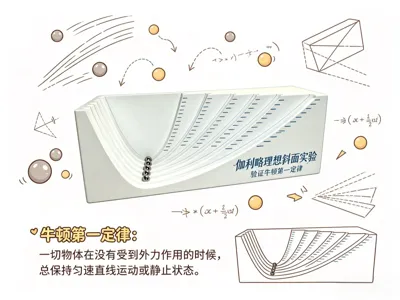
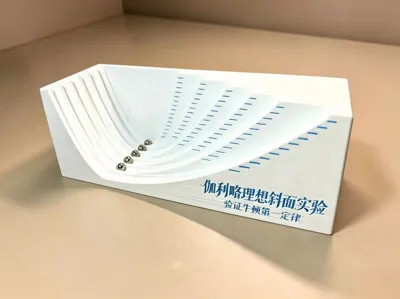
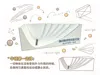
3D Printed Galileo's Ideal Inclined Plane Experiment Model | Newton's First Law Visualization Teaching Aid
✨ Classic Physics Experiment, Perfectly Replicated with 3D Printing ✨
📚 Background Knowledge:
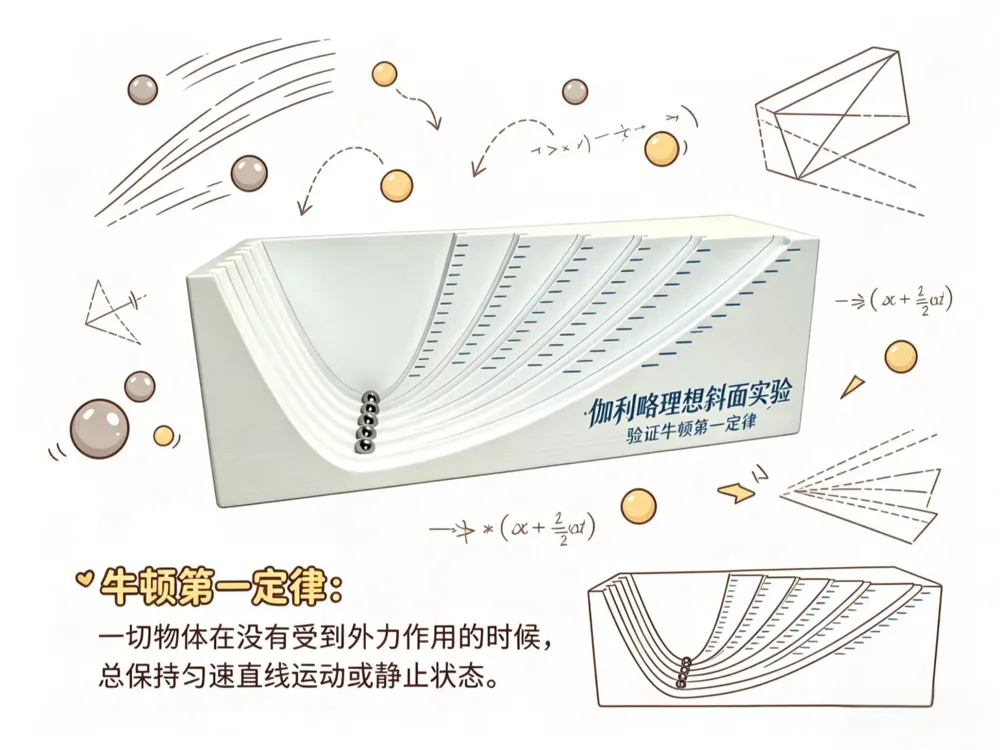
Galileo's ideal inclined plane experiment is one of the most significant thought experiments in the history of physics. It overturned Aristotle's mistaken view that"force is the reason objects keep moving", laying a solid foundation for the proposition of Newton's First Law (Law of Inertia).
This experiment tells us that an object, when not subjected to external forces, will maintain uniform linear motion or a state of rest.
🎯 Model Purpose:
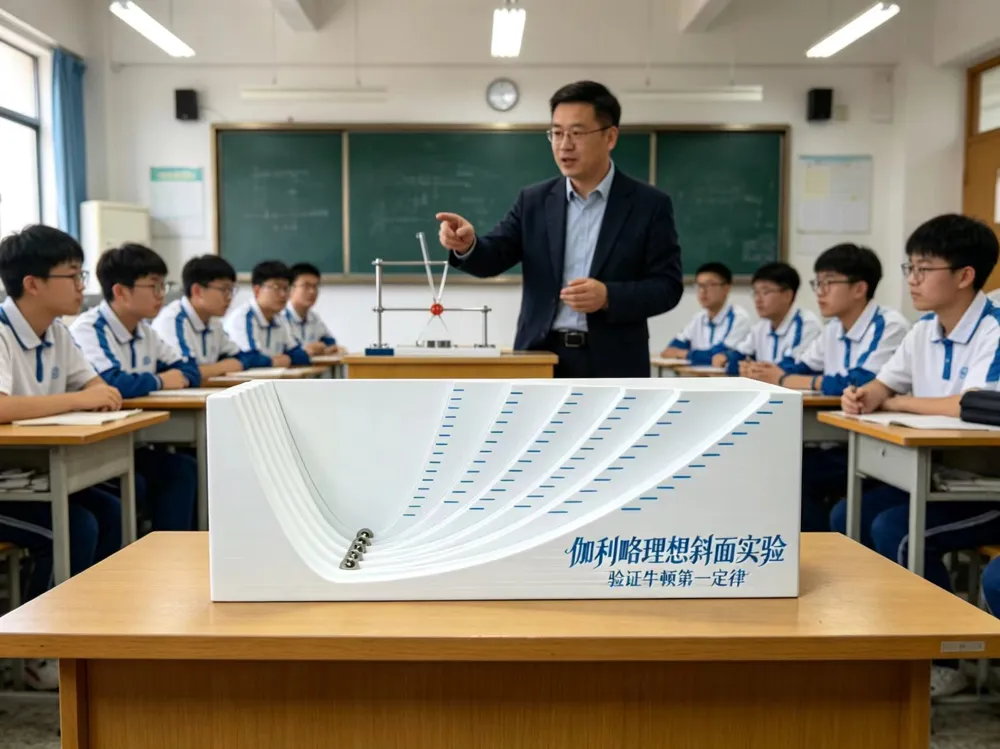
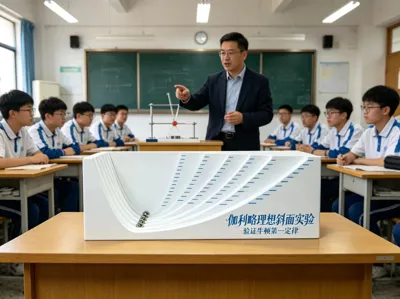
Designed specifically for primary and secondary school physics classes, it transforms the abstract concept of "inertia" into intuitive and visible experimental phenomena. It helps students easily understand Newton's First Law and stimulates their interest in physics.
🧪 How to Use:
1. Place the steel ball at the highest point of the track
2. Release the steel ball
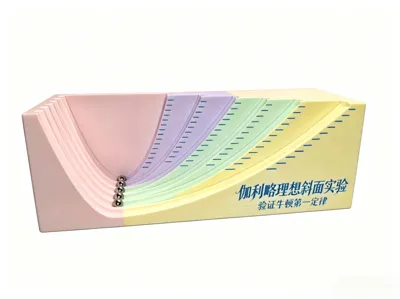
3. Observe the motion of the steel ball on inclined planes with different angles
4. It can be inferred that: if the inclined plane is completely horizontal and frictionless, the steel ball will continue to move indefinitely
🔧 Model Features
- ✅ Precise Scale: The track has scale markings for easy observation and measurement
- ✅ Safe and Durable: Made from eco-friendly PLA material, with smooth, burr-free edges
- ✅ Teaching Friendly: Moderately sized for easy classroom demonstration and student hands-on operation
💡 Teaching Suggestions
It can be used in conjunction with the experiment on "the effect of resistance on object motion", allowing students to understand the essence of the law of inertia more deeply through comparative experiments.
This model is not only a teaching tool, but also a bridge connecting history and modernity, allowing students to personally experience the sparks of thought from scientific giants!
Steel balls can use the 3D printed model special standard part stainless steel ball ≤8mm from the Bambu Lab Maker's Supply
License

You shall not share, sub-license, sell, rent, host, transfer, or distribute in any way the digital or 3D printed versions of this object, nor any other derivative work of this object in its digital or physical format (including - but not limited to - remixes of this object, and hosting on other digital platforms). The objects may not be used without permission in any way whatsoever in which you charge money, or collect fees.


Comment & Rating (0)