
Hinge Mounting Plate Template (Blum Compatible)
Print Profile(1)
Description
Boost Me (for free)
If you found this model useful, please consider giving it a Boost — it really helps support future designs and projects!
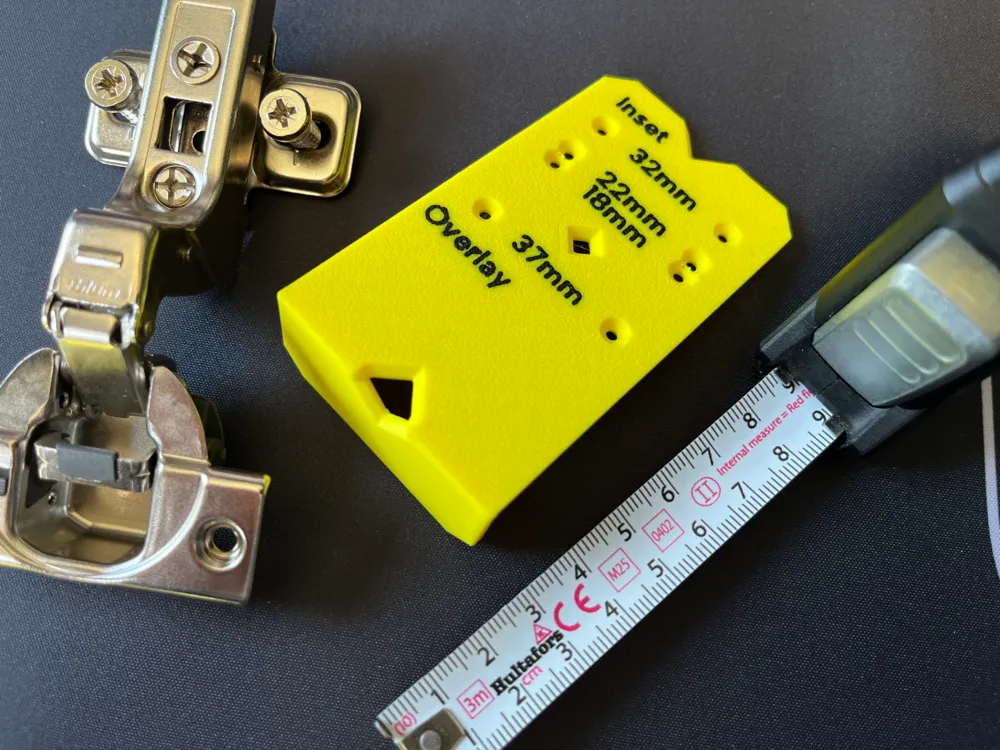
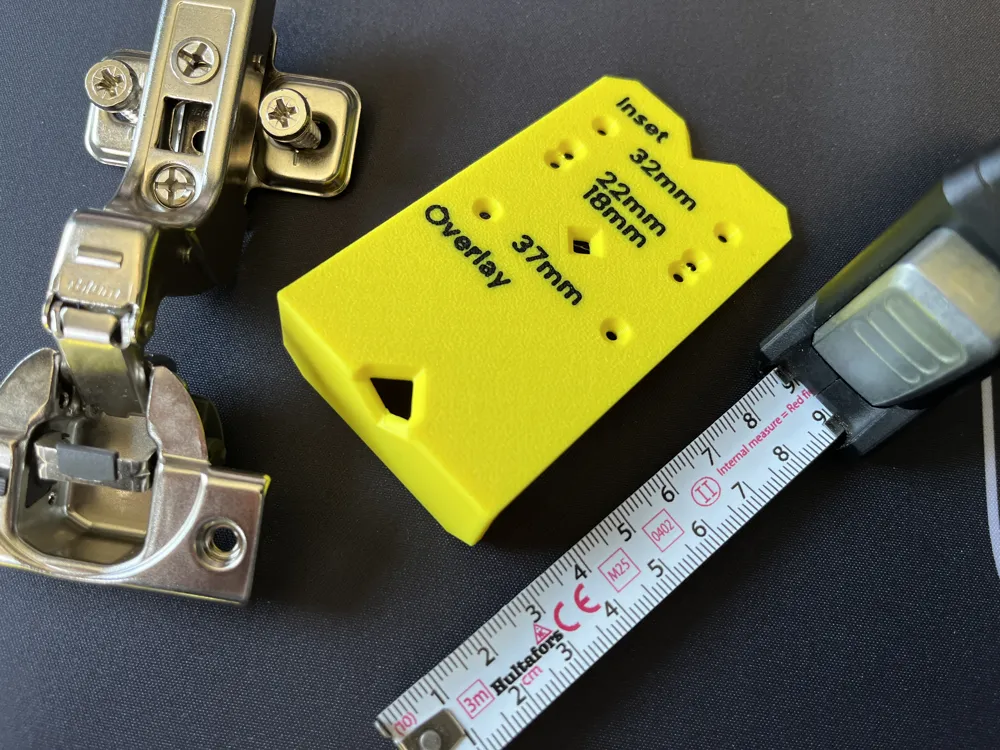
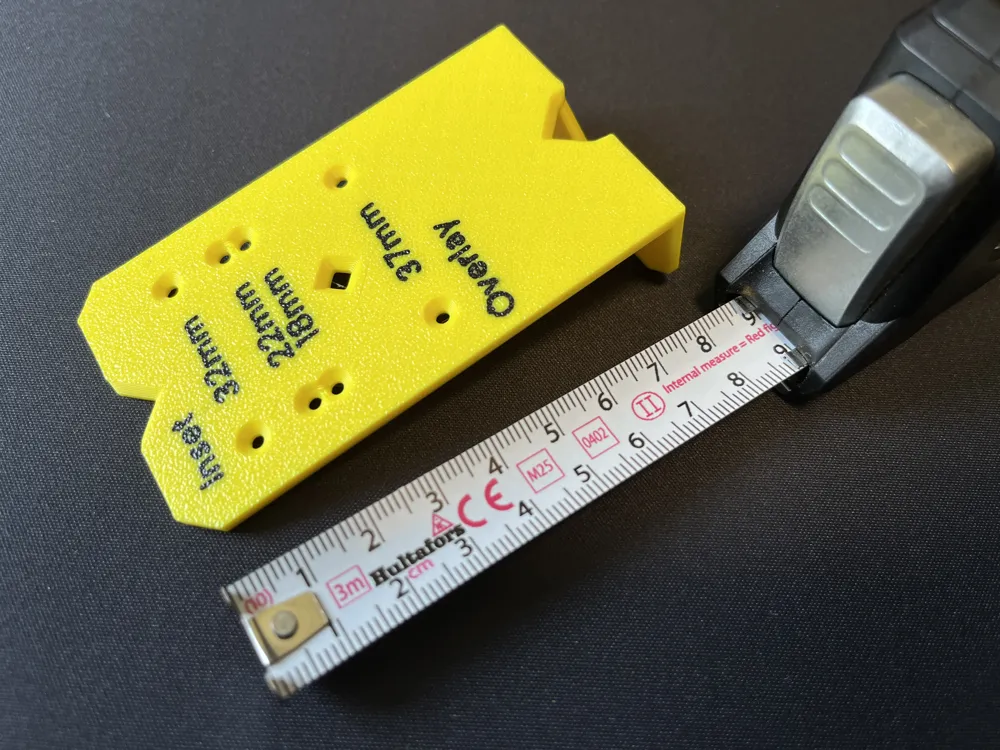
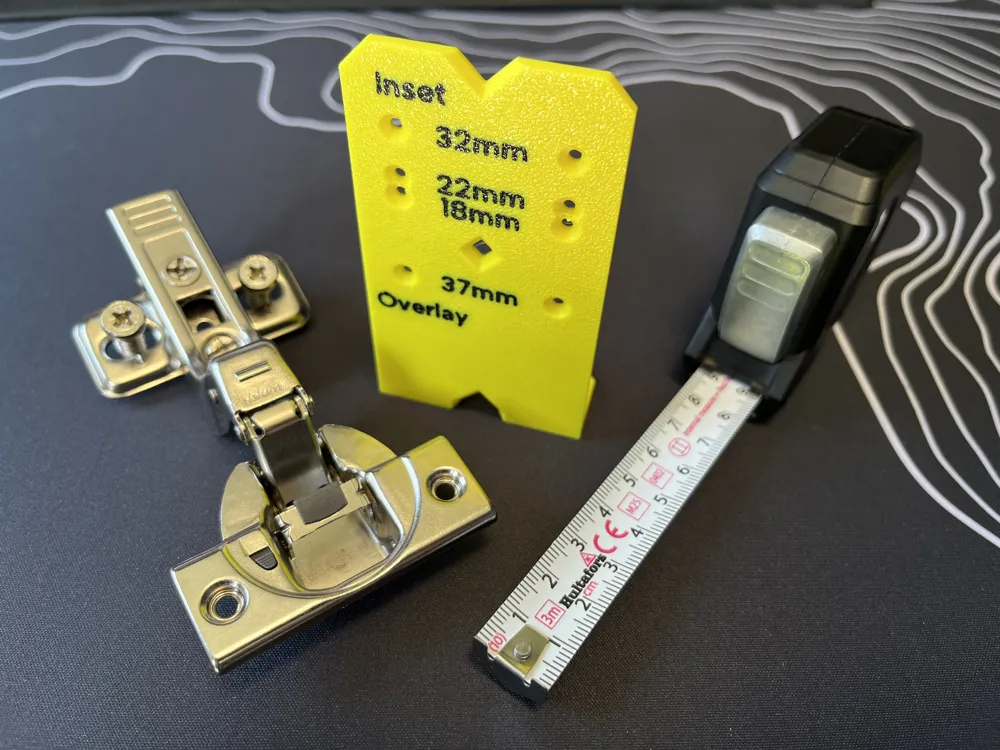
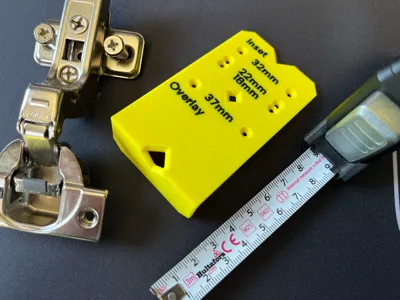
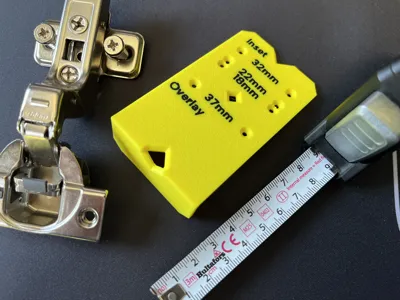
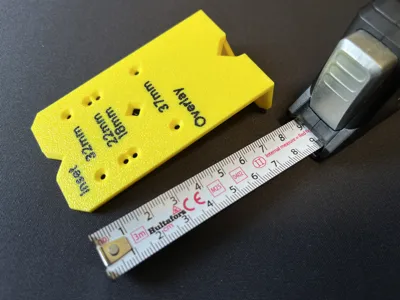
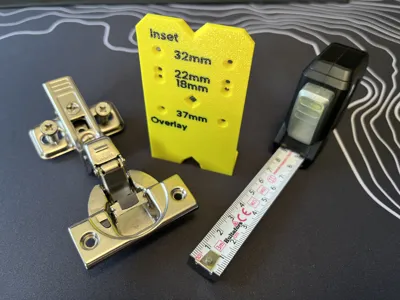
A simple and accurate jig for marking cabinet hinge mounting plates on both overlay and inset cabinet doors. Designed around standard Blum hinge specifications, but also suitable for many other European-style concealed hinges using the common 37mm system.
This template is designed to make hinge installation faster, easier, and more repeatable — especially useful when fitting multiple doors or cabinets.
Features
- Supports both overlay doors (door covers cabinet carcass)
- Supports inset doors (door sits flush within cabinet opening)
- Compatible with:
- 18mm doors
- 22mm doors
- 32mm doors
- Based on standard Blum hinge mounting dimensions
- Easy to print with no supports required
- Compact and quick to use
- Designed for accurate and repeatable results
How To Use
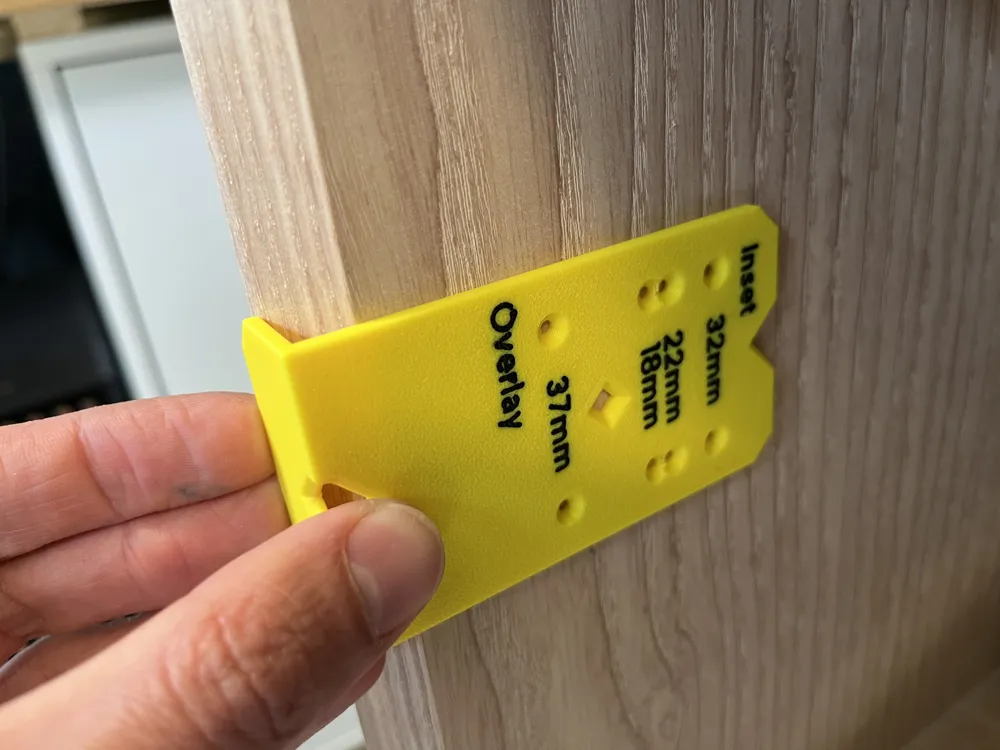
- Mark the desired hinge height position on the cabinet side panel.
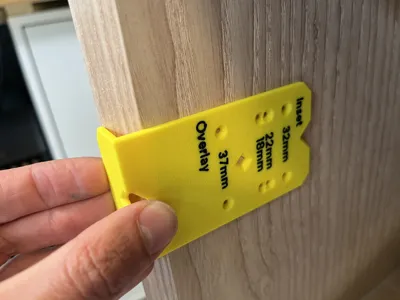
- Place the jig against the cabinet edge.
- Select the correct guide position depending on:
- Overlay or inset application
- Door thickness
- Align the viewing slot with your hinge height mark.
- Hold the jig firmly in place.
- Use a scribe, bradawl, pencil, self-centering drill bit, or Vix bit to mark the screw hole locations.
- Drill holes.
- Install the hinge mounting plate.
The jig positions the mounting plate correctly relative to the cabinet edge, removing the need to repeatedly measure and mark hole spacing manually.
Overlay vs Inset
Overlay Doors
Use the overlay positions when the cabinet door overlaps and covers the cabinet carcass edge.
Inset Doors
Use the inset positions when the door sits inside the cabinet opening and the carcass remains visible around the door perimeter.
Recommended Hinge Cup Drilling Jig
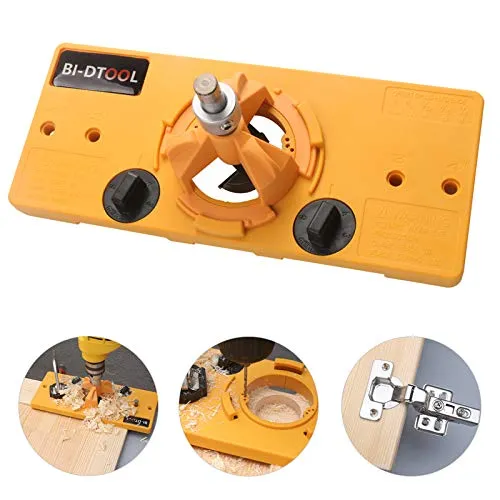
For drilling the concealed hinge cup holes in the doors themselves, I recommend using this concealed hinge drilling jig: https://geni.us/HingeJig
It works very well alongside this mounting plate template and helps ensure accurate hinge alignment between the cabinet and door.
Printing
- Prints flat on the bed
- No supports required
- Recommended material: PLA, PETG, or ABS
- 3–4 perimeters recommended for durability
- 25% infill
- Use fill tool to ensure lettering shows up (or just use the Print File)
Notes
- Designed around Blum hinge standards
- Compatible with many other concealed hinge systems using similar mounting dimensions
- Always test on scrap material before final installation if using non-standard hinges or reveal dimensions
If you find the jig useful, please consider posting a make or rating the model.
------------------------
If you’d like to support my work, you can buy me a coffee here ☕

You can also find more projects, tutorials, and workshop content over on YouTube.

Membership
Want to Donate or use my models for Commercial Purposes, please consider becoming a Member.
License

You shall not share, sub-license, sell, rent, host, transfer, or distribute in any way the digital or 3D printed versions of this object, nor any other derivative work of this object in its digital or physical format (including - but not limited to - remixes of this object, and hosting on other digital platforms). The objects may not be used without permission in any way whatsoever in which you charge money, or collect fees.


Comment & Rating (1)