
Print Profile(3)

Description
【Spools】
Small spools are inherently less stable than factory-produced large spools because the winding method is not as precise as in factories, leading to unavoidable imperfections. If you are concerned about this, it is recommended to purchase finished spools.
Spools – Introduction
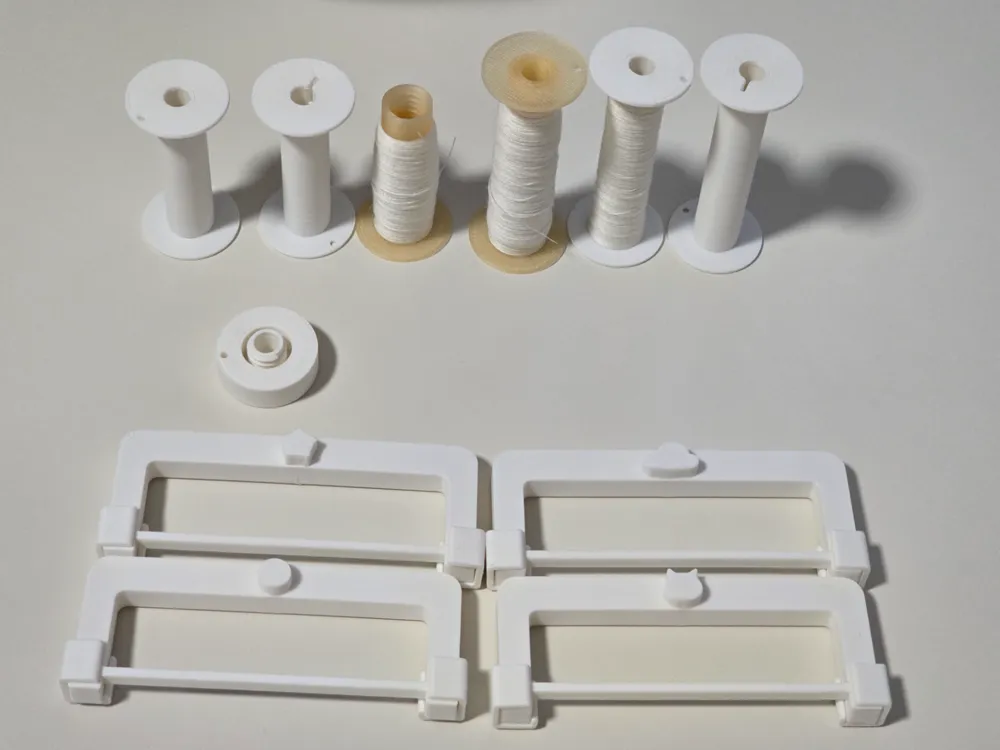
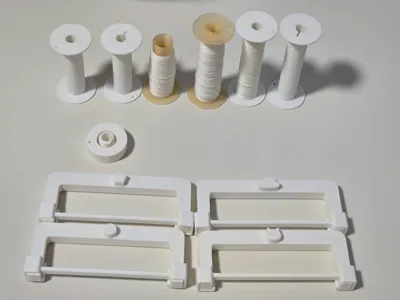
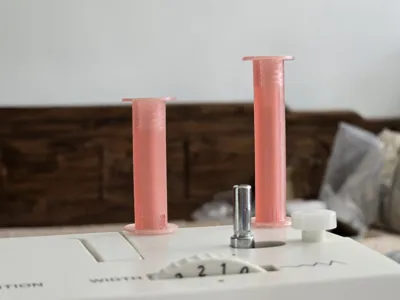
This is a small spool that can be used in two ways (vertically on its own "Fig-1", or horizontally mounted on a horizontal holder "Fig-2"). It allows you to divide large rolls of sewing thread into smaller spools for use on your overlock or coverstitch machine, helping you save money on buying separate large rolls of the same color thread.
The small thread splitter spool is available in two styles with base diameters of 20mm and 25mm. Each style comes in two heights: 6cm and 4.5cm.
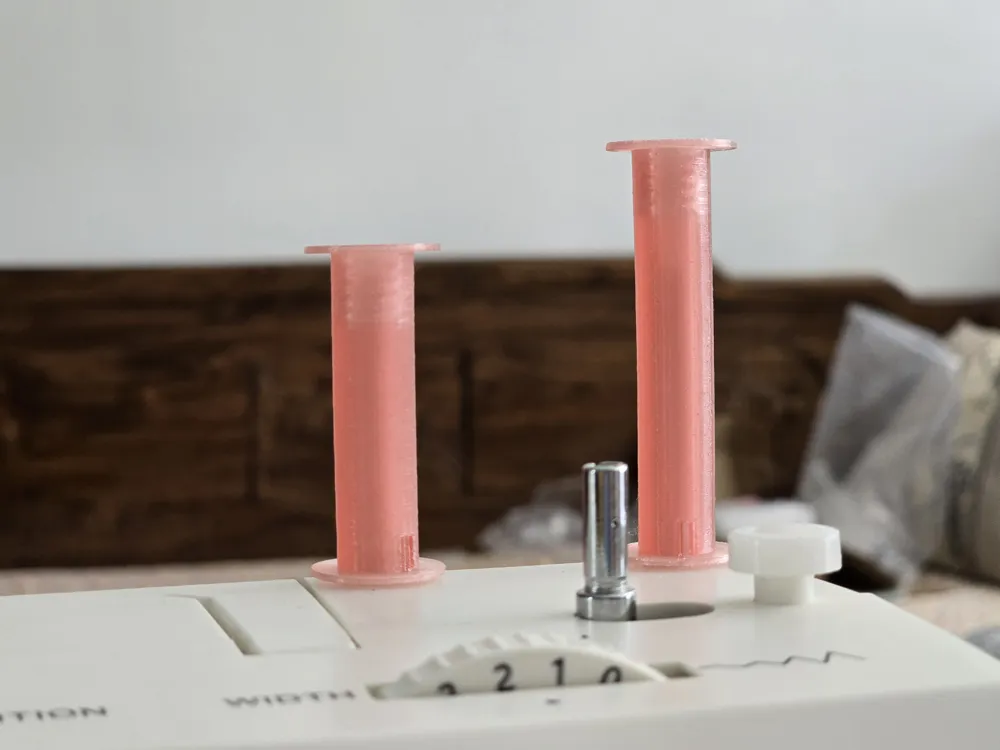
Among them, the small spool with a 20mm base diameter is specifically adapted for household sewing machine winding. For household sewing machine winding, please select the "Small Spool". There are no restrictions for industrial sewing machines.
After multiple tests, the vertical use is relatively stable. However, when there is very little thread left on the spool, it may jump or the thread may snag. This can be improved by winding the thread evenly.
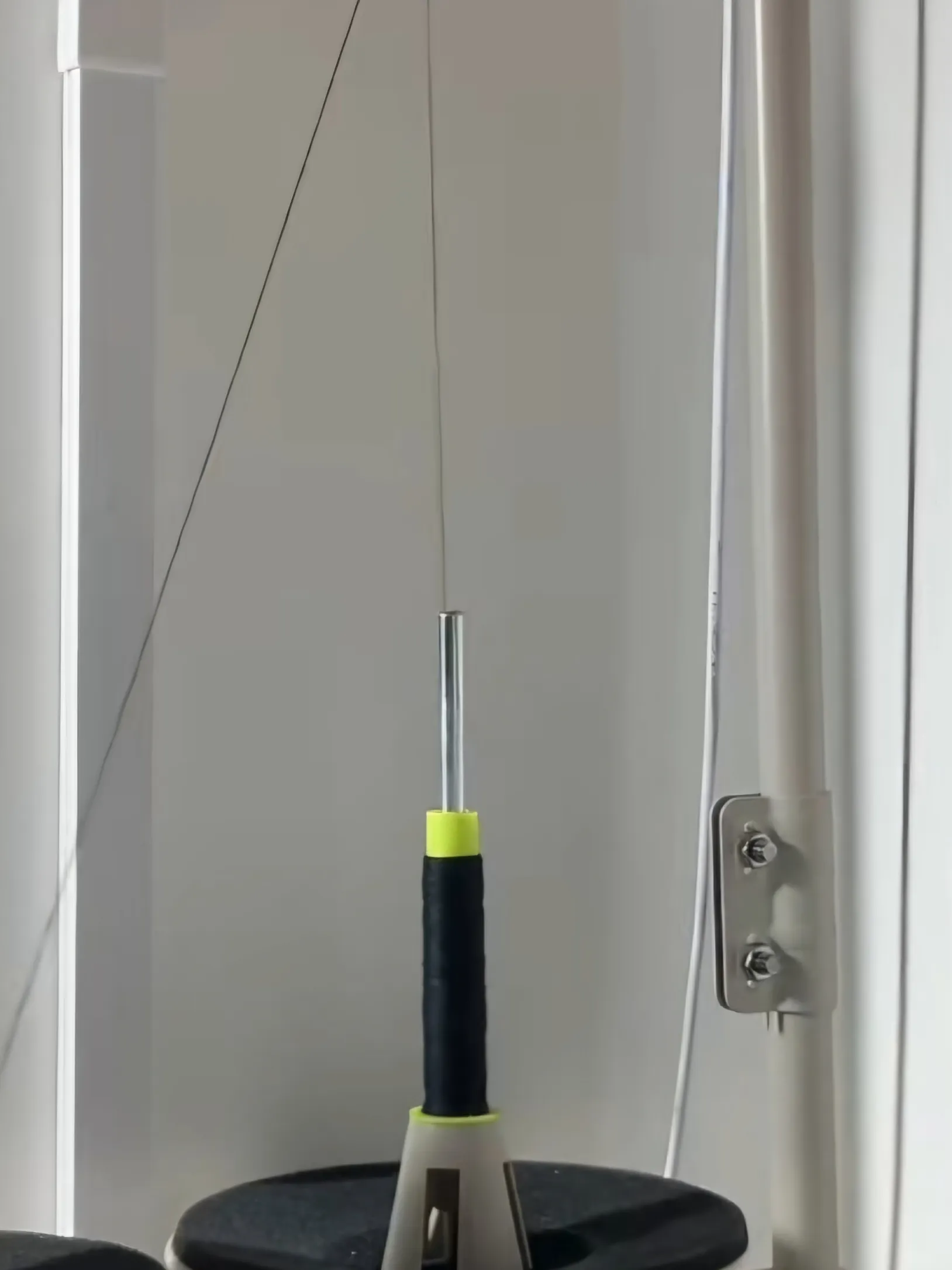 Fig-1
Fig-1
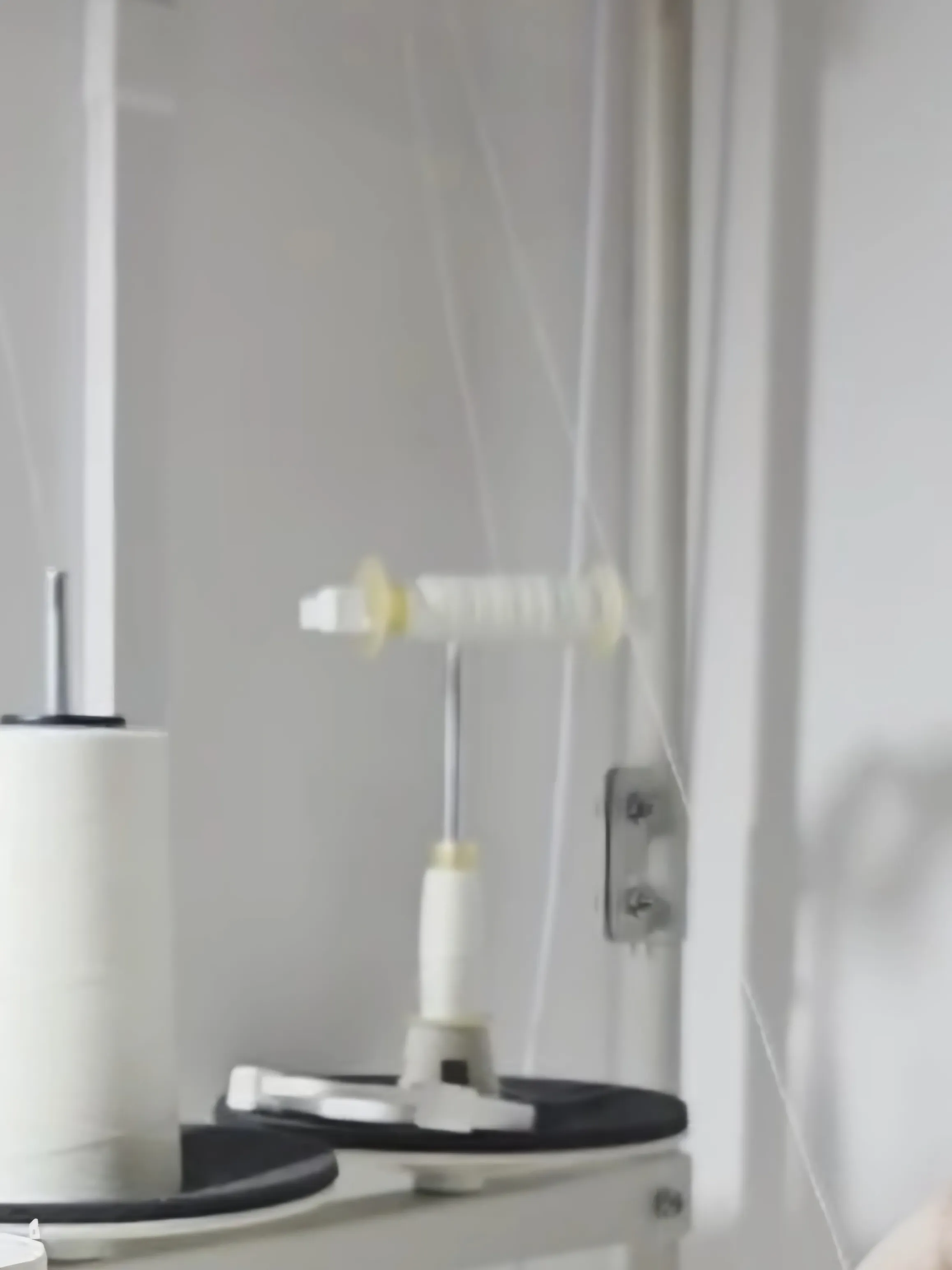 Fig-2
Fig-2
Spools – Instructions for Use
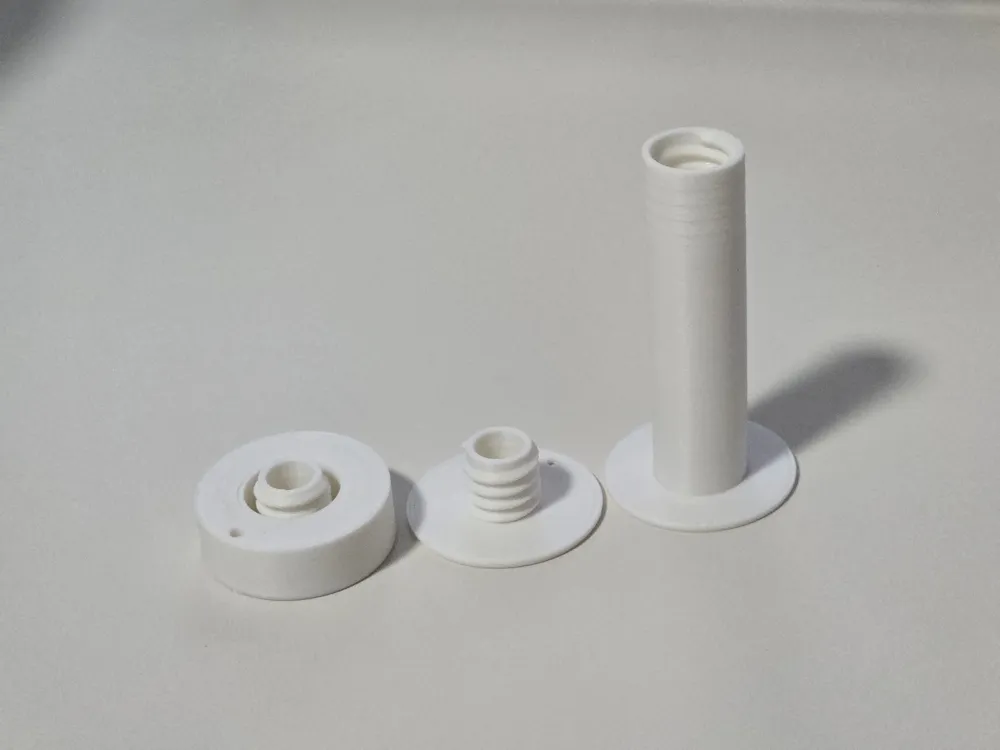
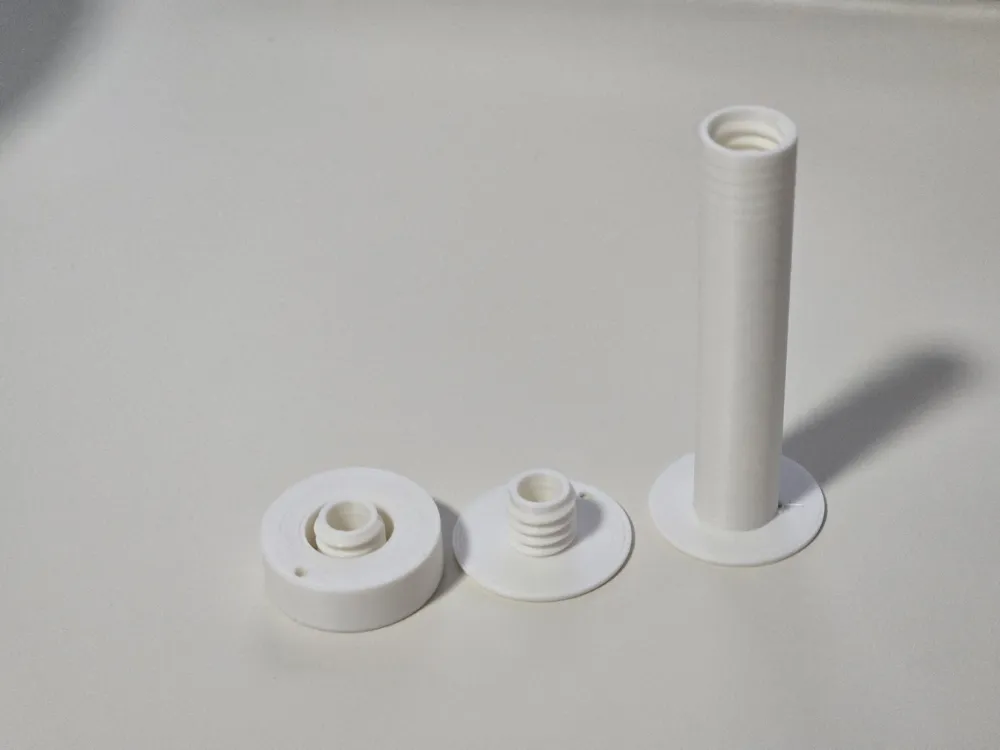
This spool features a split design with a main body and a cap. The top cap is installed using the same principle as screwing in a screw.
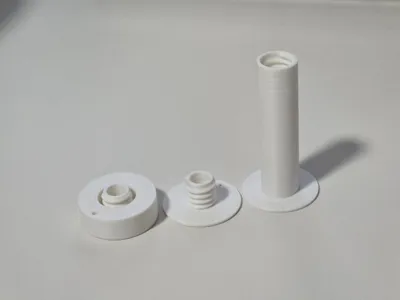
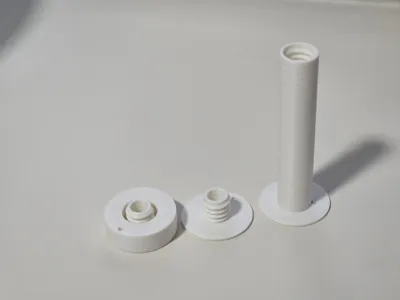
When winding, you need to choose a different spool cap depending on whether it's for horizontal or vertical use (for horizontal use, select the thin spool cap; for vertical use, select the thick spool cap; see Fig-3 for cap comparison).
When winding for vertical use, please note that the maximum winding height should be 1-2mm from the bottom of the "thick spool cap" (see Fig-4). Also, try to keep the thread parallel to the machine while winding to ensure tightness at the top of the winding.
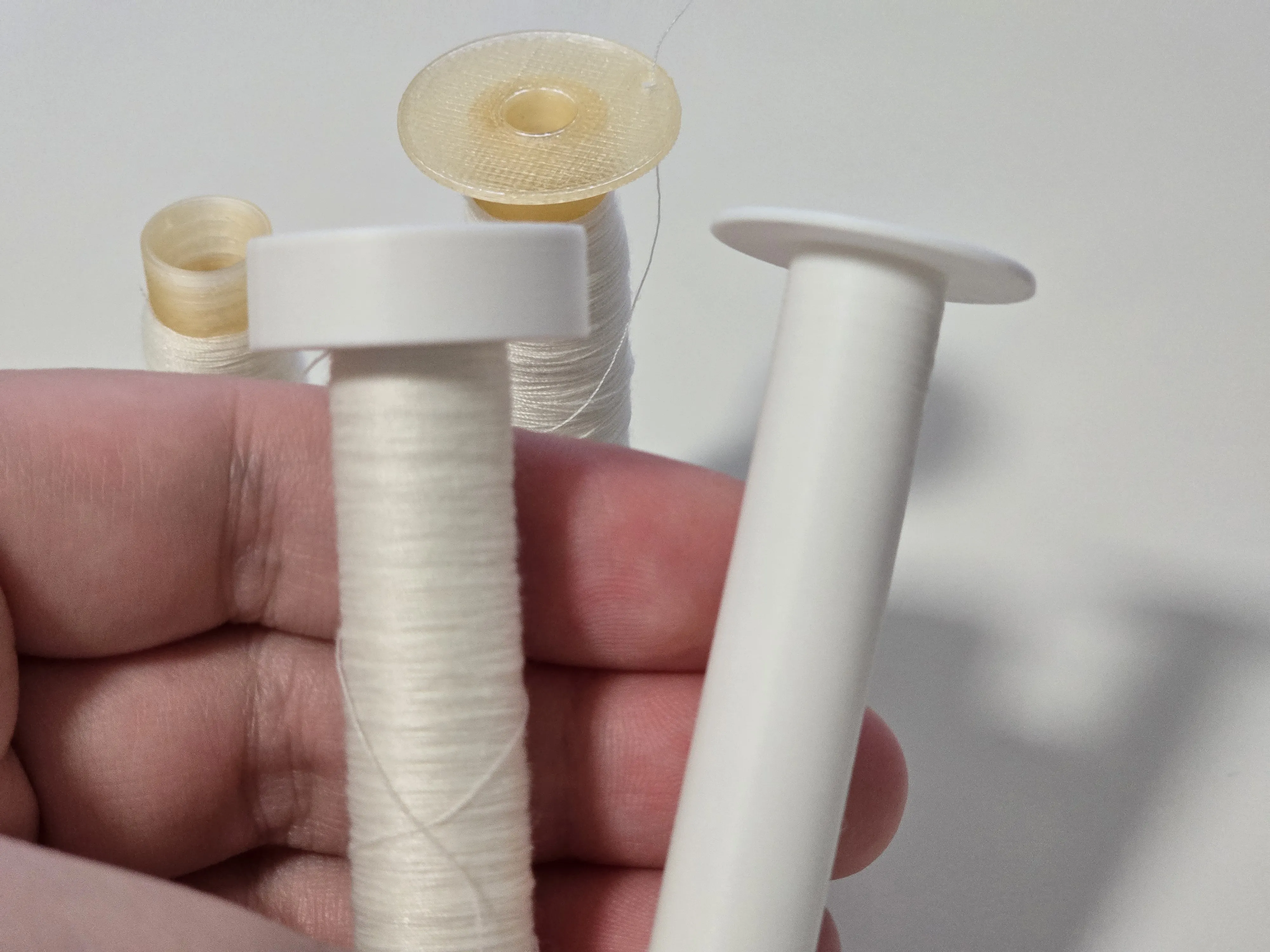 Fig-3
Fig-3
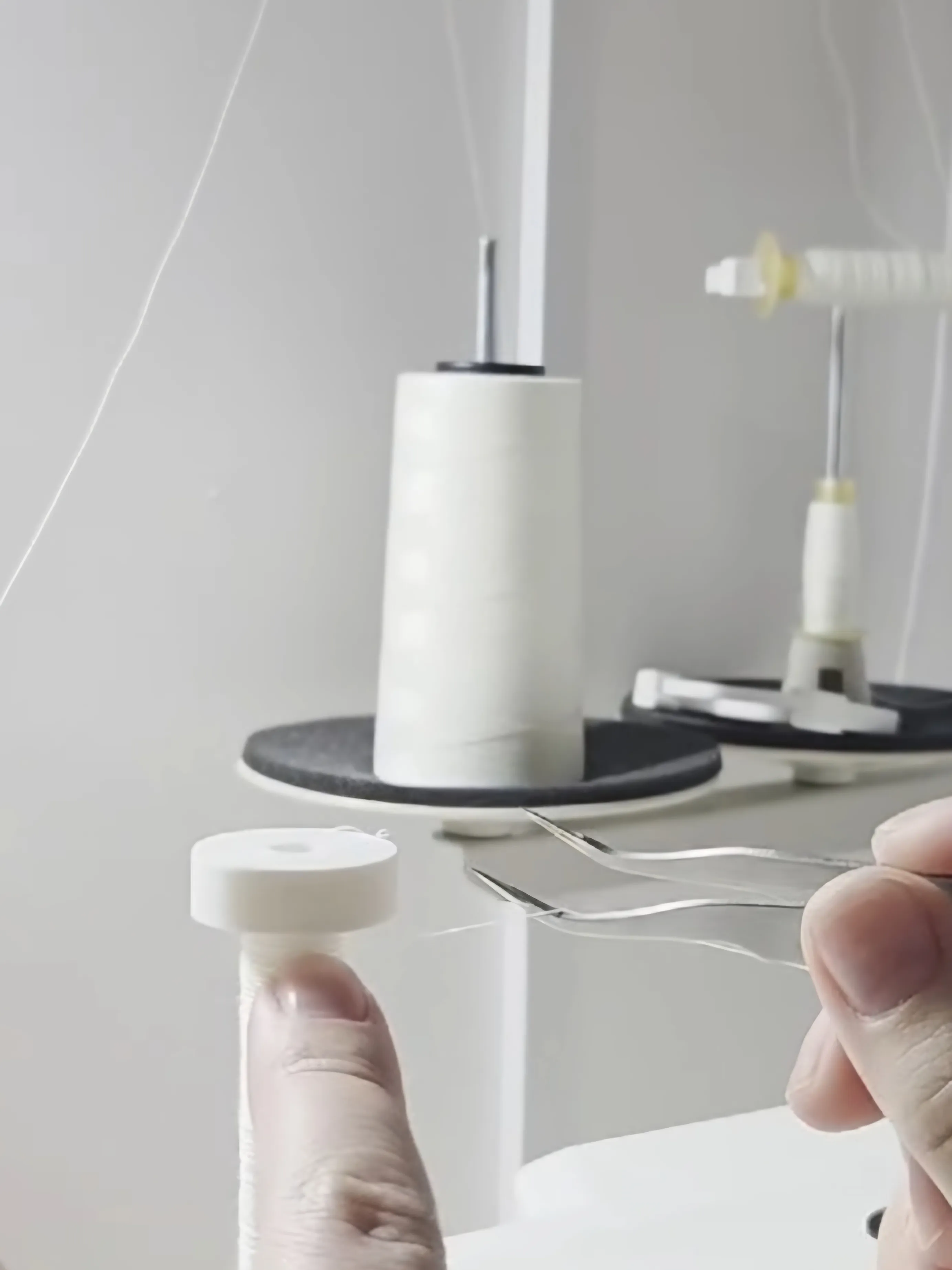 Fig-4
Fig-4
【Horizontal Holder】
Horizontal Holder – Introduction
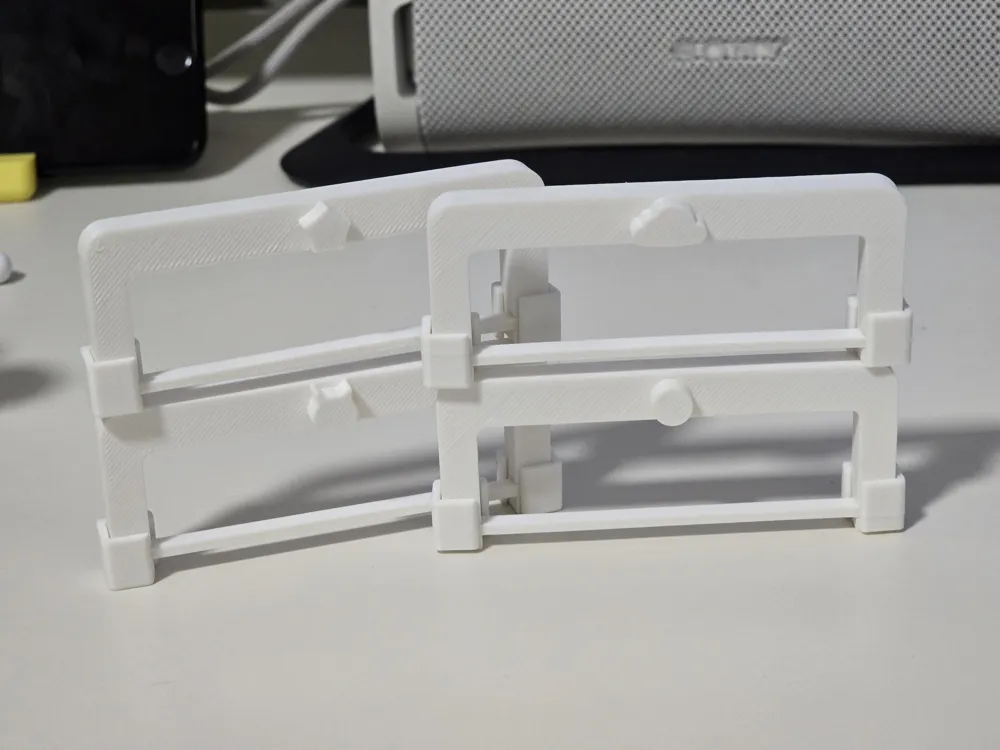
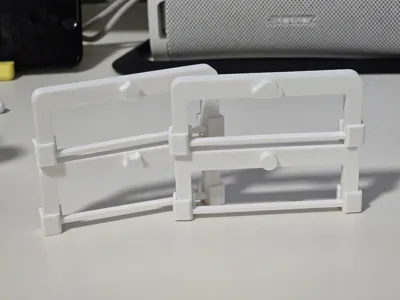
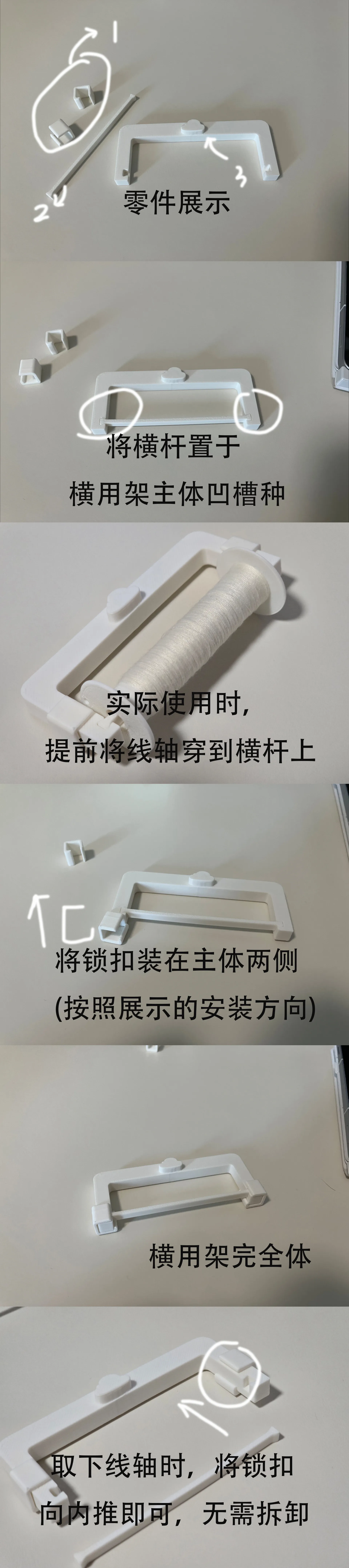
I have independently designed a matching horizontal holder that can be inserted into the rod of the sewing machine's thread stand, see Fig-2. (The horizontal holder's aperture matches the rod diameter of "industrial machine thread towers". For household machines, you need to wrap a bit of toilet paper around the thread stand rod to enhance stability.)
The 6cm spool must use the thin spool cap when mounted on the horizontal holder.
A total of four different patterned top cap styles have been made (cats, polka dots, clouds, and stars).
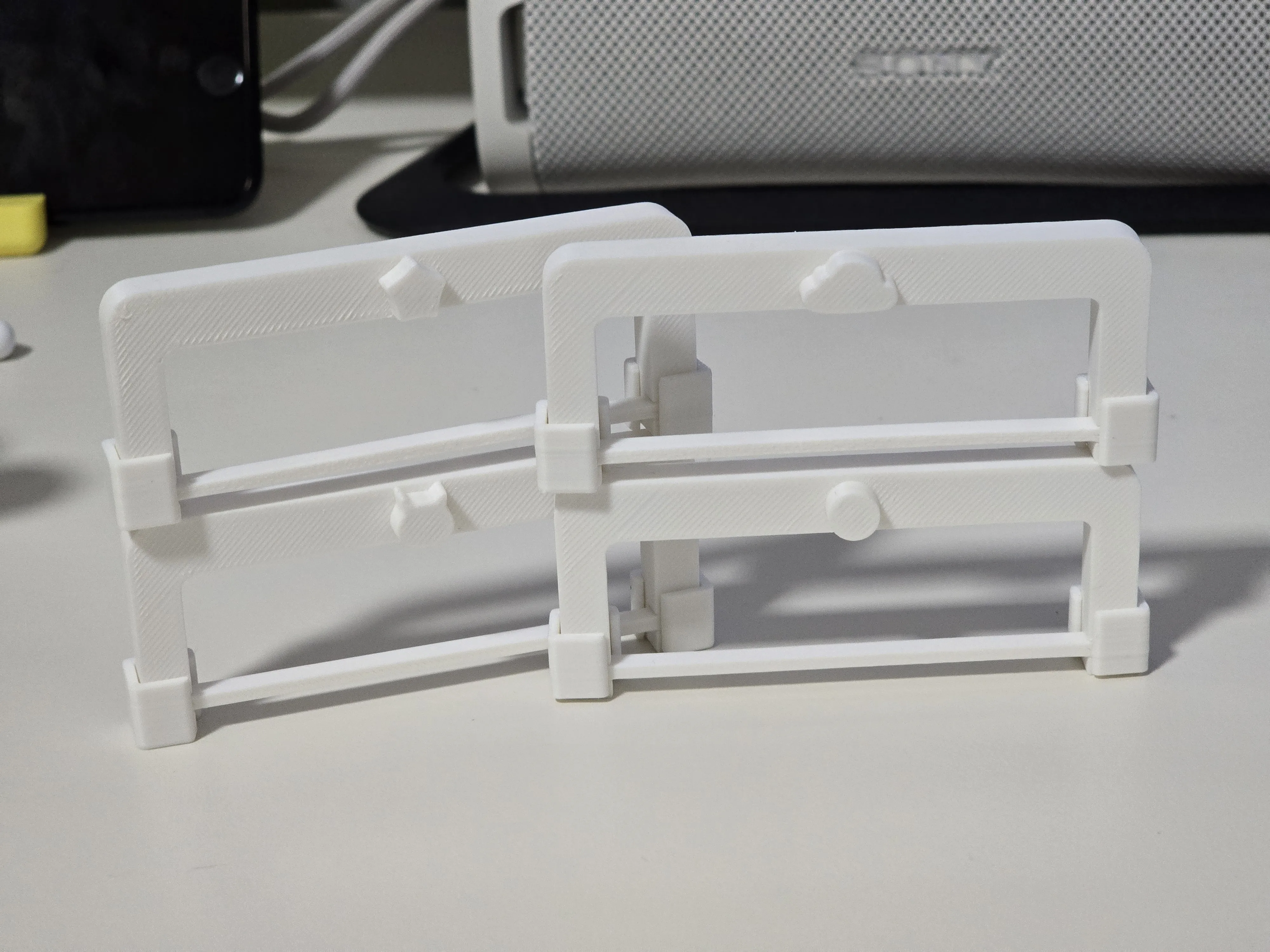
Horizontal Holder – Specific Use/Installation Demonstration:
License

You shall not share, sub-license, sell, rent, host, transfer, or distribute in any way the digital or 3D printed versions of this object, nor any other derivative work of this object in its digital or physical format (including, but not limited to, publishing derivative works outside the Makerworld platform or hosting on other digital platforms). The objects may not be used without permission in any way whatsoever in which you charge money or collect fees. Subject to the above restrictions, derivative works may be published only within the Makerworld platform, and all such derivative works must be licensed under the same SDFL‑C license, without modification or additional terms. You may download the digital versions of this object, 3D print it, and display images, videos, or usage demonstrations of 3D printed versions of the object on personal social media platforms or Makerworld official channels, provided that no digital versions of the object are shared or distributed.


Comment & Rating (0)