
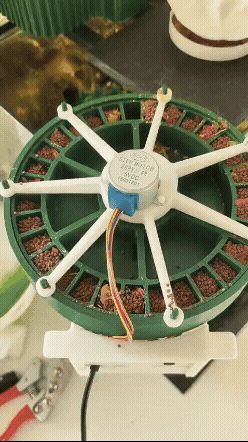
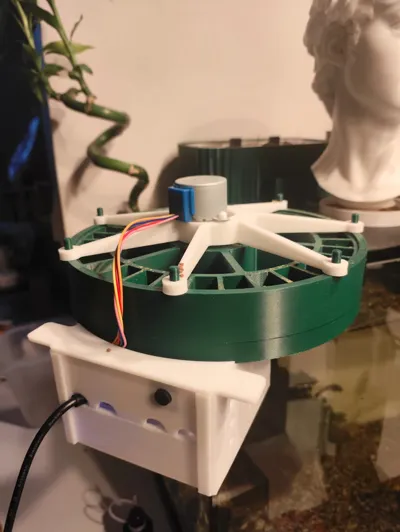
Print Profile(1)
Description
🐟 30-Day ESP8266 Fish Feeder V2
Better. Smarter. Slightly Less Ugly.
Based on user feedback, months of real-world testing, and several fish that have become suspiciously demanding, I decided to make a V2.
Some suggestions were incorporated.
Some suggestions were carefully evaluated and then professionally ignored.
Sorry.
The good news is that all V2 printed parts are backwards compatible with V1, so existing users can upgrade only the parts they want instead of reprinting the whole feeder.
🆕 What's New in V2?
👀 New Transparent-Friendly Lid
The original lid worked.
Mostly.
The problem was that it was surprisingly difficult to see how much food remained inside the feeder.
After running V1 for months, I redesigned the lid to:
- Improve visibility of remaining food
- Reduce filament usage
- Improve tolerances
- Further reduce humidity-related issues
Which means you now get a better lid while simultaneously using less plastic.
Engineers call that a win.
📦 Electronics Box
One of the most common comments was:
"Could you please cover the electronics?"
Fair.
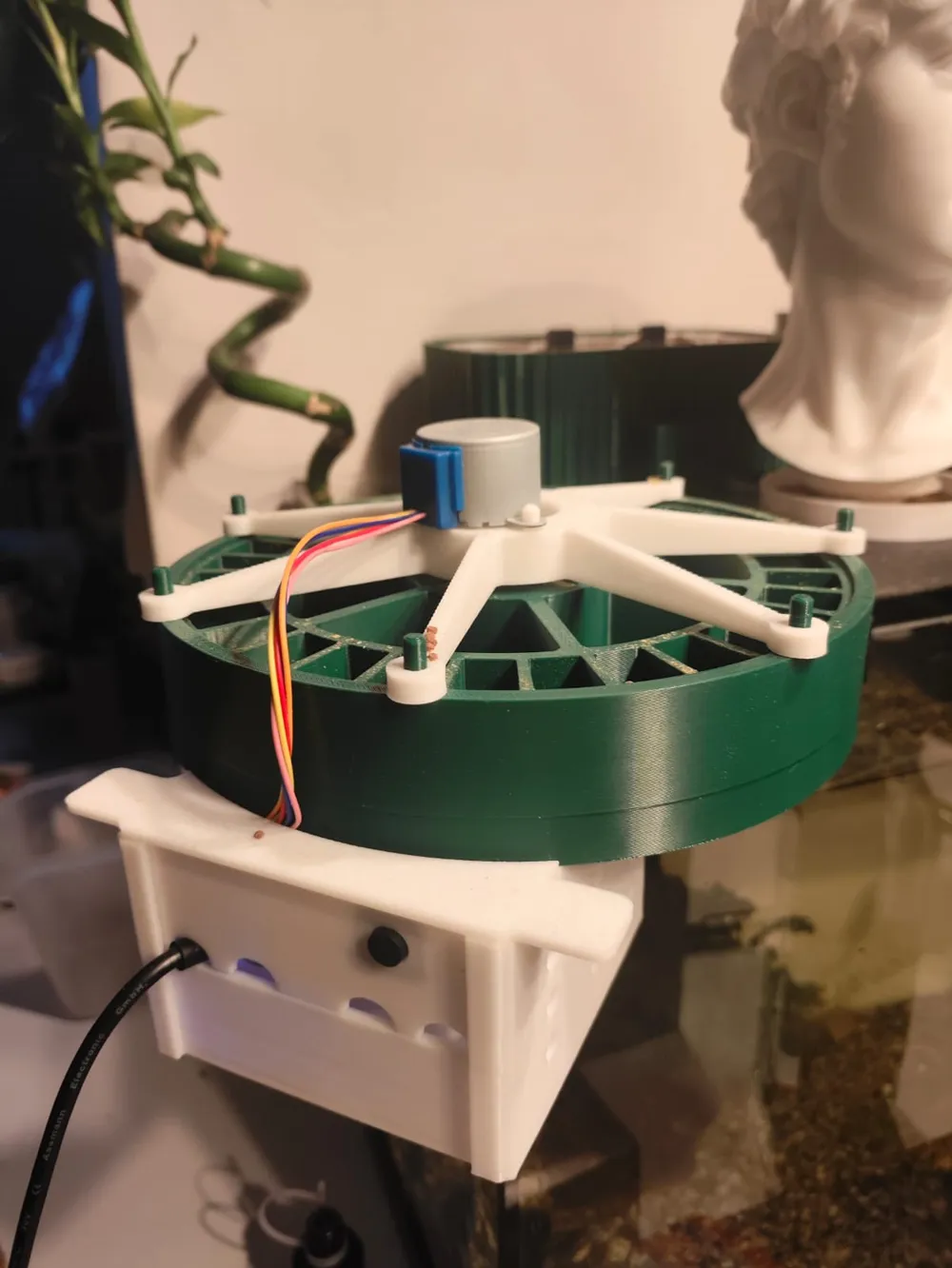
V2 now includes a dedicated electronics enclosure with a removable lid.
To maintain full compatibility with existing feeders, the enclosure includes a notch that fits around the existing glass-mount bracket and is attached using my old friend:
🧪 Superglue
Simple.
Cheap.
Effective.
The electronics are now protected from accidental cable incidents, curious fingers, and fish that may have developed technical interests.
🐠 100% Food Drop Reliability
This is the biggest improvement.


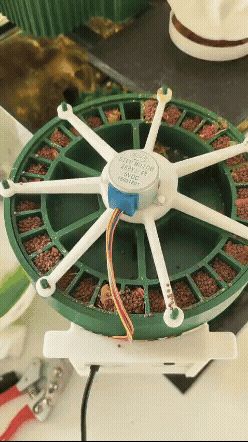
After a complete rework of the feeding logic and tray movement sequence, the feeder now achieves a consistent and reliable food drop.
You can see the result in the included GIF.
I know.
Fancy.
Months of testing revealed a few situations where food could occasionally hesitate before dropping.
The new sequence completely eliminates those issues in normal operation.
The feeder now feeds with the confidence of a fish that already knows feeding time is approaching.
🍽️ Feed Now Button
Because fish are manipulative.
Sometimes I wake up earlier than the programmed feeding schedule.
Sometimes the fish notice.
Sometimes they begin performing synchronized starvation theater near the glass.
V2 now includes a Feed Now button.
Press it and the feeder immediately performs a feeding cycle.
But here's the important part:
✅ The timer is automatically reset afterwards.
This means the next scheduled feeding is adjusted correctly and you don't accidentally double-feed your aquatic drama queens.
⚙️ Features
- Adjustable feeding interval (hours & minutes)
- 31-slot feeding tray
- ESP8266 web interface
- Mobile-friendly control panel
- Feed Now button
- Manual stepping controls
- Feeding statistics
- Auto motor shutdown after movement
- Power-loss recovery
- Improved feeding reliability
- Improved lid design
- Electronics enclosure included
- Full V1 compatibility
🧰 Hardware Required
Electronics
- ESP8266 NodeMCU V3
- 28BYJ-48 stepper motor
- ULN2003 driver board
- 5V power supply (≥500 mA)
Printed Parts
- V2 tray
- V2 lid
- Mounting bracket
- Electronics box
- Electronics box lid
Printed on the world's greatest printer:
🖨️ Bambu Lab A1 Mini
Naturally.
No supports required and all pieces are optimized for easy printing.
🔌 Wiring
| ESP8266 | ULN2003 |
|---|---|
| D1 | IN1 |
| D2 | IN3 |
| D3 | IN2 |
| D4 | IN4 |
Feed Button
Connect a push button between:
- D5
- GND
That's it.
No extra components required.
And yes, don't forget common ground.
I learned that lesson so you don't have to.
🌐 Web Interface
The feeder creates its own Wi-Fi hotspot.
No cloud.
No accounts.
No subscriptions.
No app asking for your birthday.
Connect directly to the feeder and configure everything through the built-in web interface.
Exactly how small projects should work.
📜 Existing V1 Users
If you're upgrading from V1:
Good news.
You do not need to rebuild everything.
The V2 components were specifically designed to remain compatible with existing feeders.
Print the updated parts, update the code, and enjoy the improvements.
🧠 Final Thoughts
This project started because commercial feeders were expensive.
Then it somehow evolved into months of testing, redesigning, debugging, fish observation, and arguing with humidity.
Now it feeds reliably, protects the electronics, lets you manually feed demanding fish, and still costs less than many commercial alternatives.
The fish approve.
Mostly because they think they trained me.
📌 Looking for assembly instructions?
The original V1 project contains detailed assembly photos, explanations, and build notes. I'll link it here because most of the construction process remains exactly the same. V2 focuses on improved parts, better reliability, and new features while staying compatible with the original design.
License

You may create derivative works based on this object, provided that all such derivative works are published exclusively on the MakerWorld platform and include proper attribution to the original creator. You may not share, upload, host, distribute, or publish this object—or any derivative work of this object—on any other digital platform, marketplace, or distribution channel. Commercial use of this object and any derivative works is strictly prohibited. This includes, but is not limited to, selling, renting, sublicensing, or using the object in any context in which you receive monetary compensation or other financial benefits.


Comment & Rating (0)