
Ironing calibration: larger, speed & flow





Print Profile(3)



Description
Update with V03: Added plate 3 with 90 to 150mm/s, contributed by @Error_
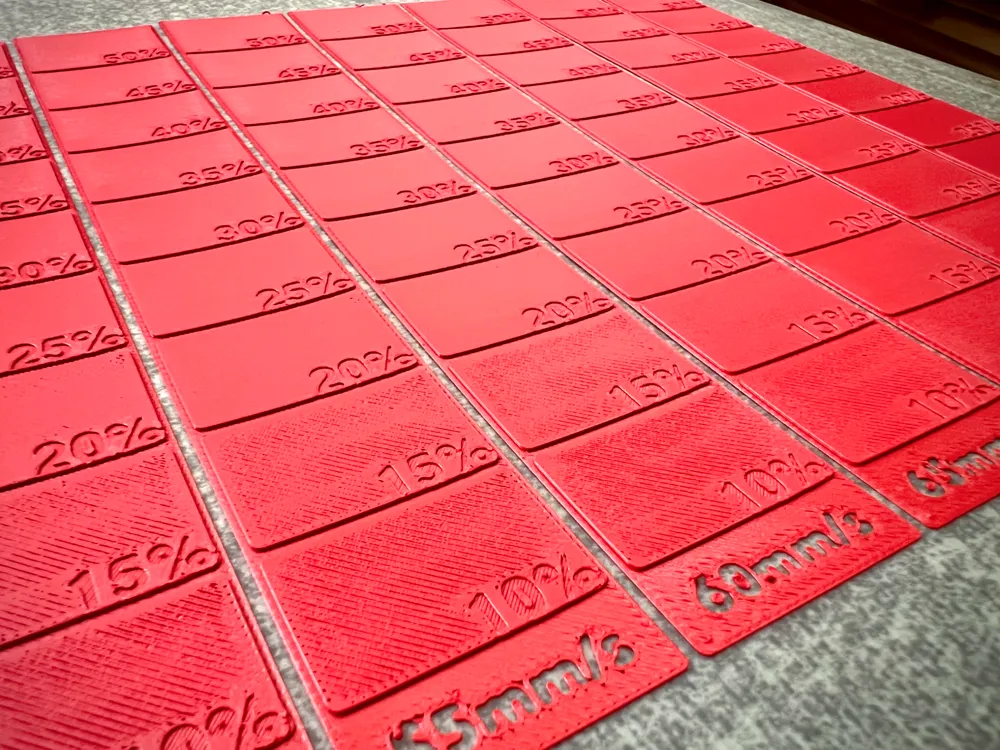
Ironing test for ironing speeds from 15 to 45mm/s (plate 1) or 50 to 80mm/s (plate 2) or 90 to 150mm/s (plate 3) and ironing flow from 10 to 50%.
This is a larger version for larger surfaces. If you are searching for a quicker print and/or want to know the best settings for smaller surfaces, my other model is probably better for you.
Rotated 90 degrees to get the slicer to begin the ironing with the smaller flow areas, to avoid problems with filaments that tend to blob (as much as possible).
Instructions
on bambu mobile: select your printer, plate and filament(profile) and just hit print
on bambu studio: same as above, but if you need to switch your printer, make sure you enable “Advance” in the “Process” Menu before switching printer, or some ironing settings might get lost (depending on your bambu studio version). Thanks to @GianfLab for letting me know!

Notes:
Dial in your filament first (flow, pressure advance) or this print won't make a lot of sense
If you don't know which plate to start with: start with the second one (50-85 mm/s) and only try the first / third if you have usable results on the 50 / 85 mm/s strip or no usable results at all
If you want to save time, it might make sense to try the smaller model first and in this model here, delete strips with ironing-speeds that gave you bad results before (dont print them)
Results will be different for different filament types (materials) and often also different filaments, sometimes even for the same brand&product but different color (same as with most filament settings/calibrations, especially for white and transparent VS other colors)
- For filaments that tend to blob (e.g. PETG) it might make sense to check for blobbing frequently and/or only print 1 stripe at a time. Having “half-liquid” filament around your nozzle while ironing will affect the ironing result.
License

You shall not share, sub-license, sell, rent, host, transfer, or distribute in any way the digital or 3D printed versions of this object, nor any other derivative work of this object in its digital or physical format (including - but not limited to - remixes of this object, and hosting on other digital platforms). The objects may not be used without permission in any way whatsoever in which you charge money, or collect fees.


Comment & Rating (768)