
Dragon Curve Fractal Conversation Piece

Print Profile(2)


Description
This model was inspired by Henry Segerman's Developing Dragon Curve YouTube video and 3D model.
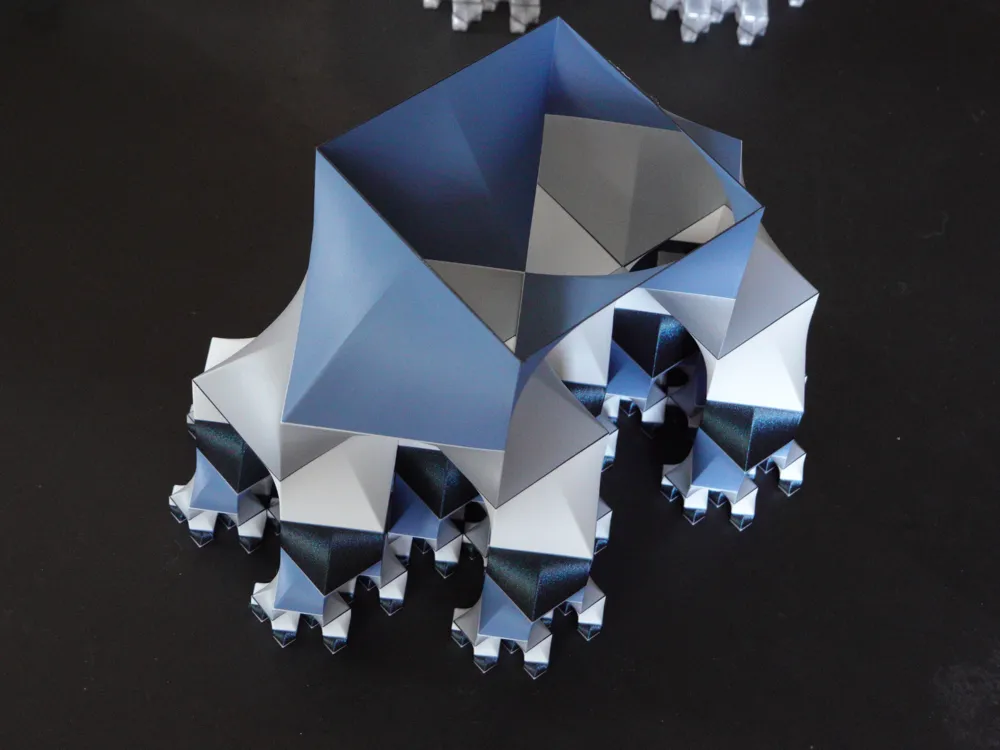
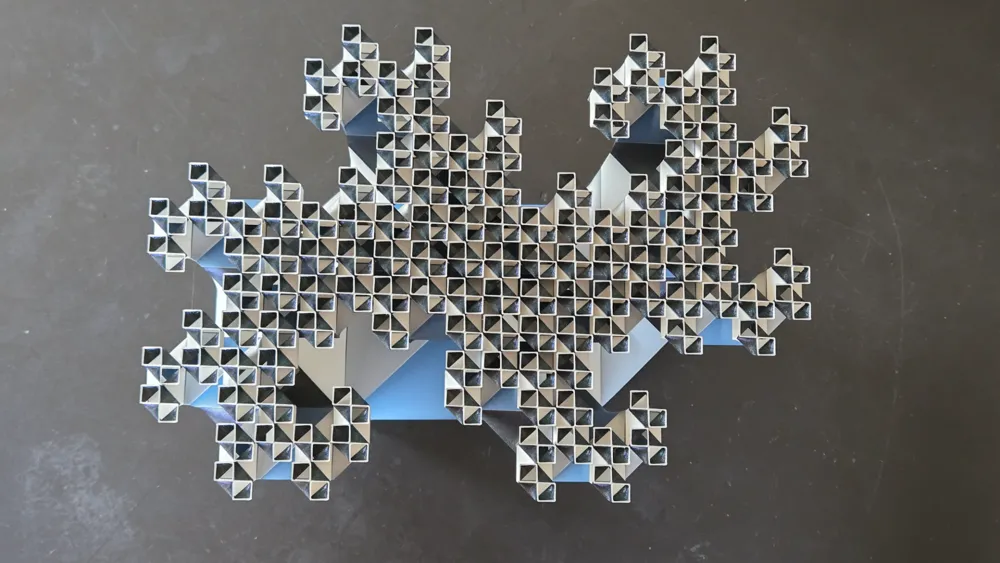
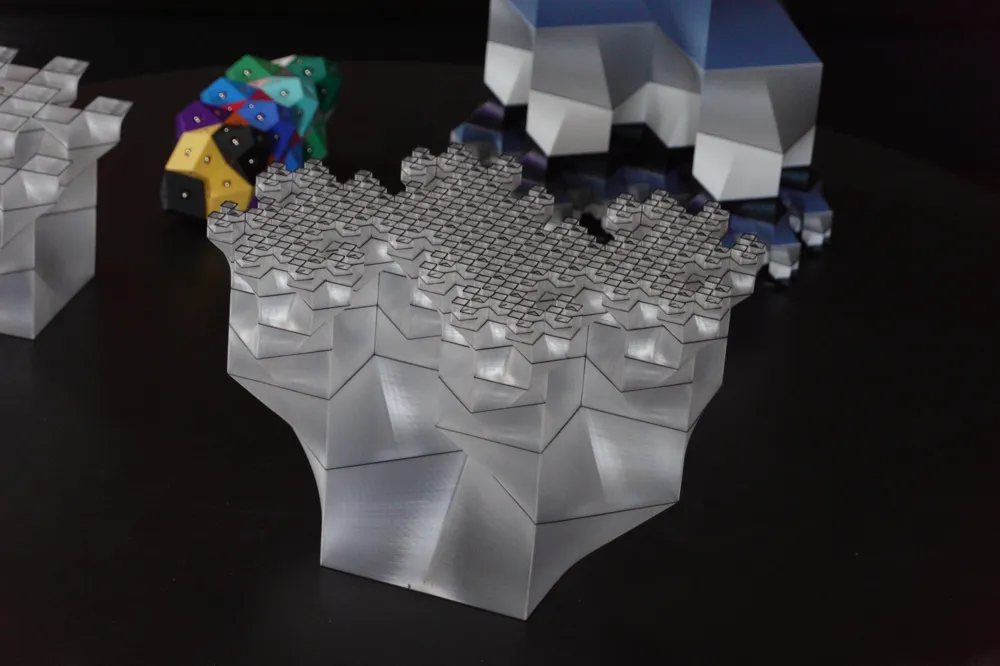
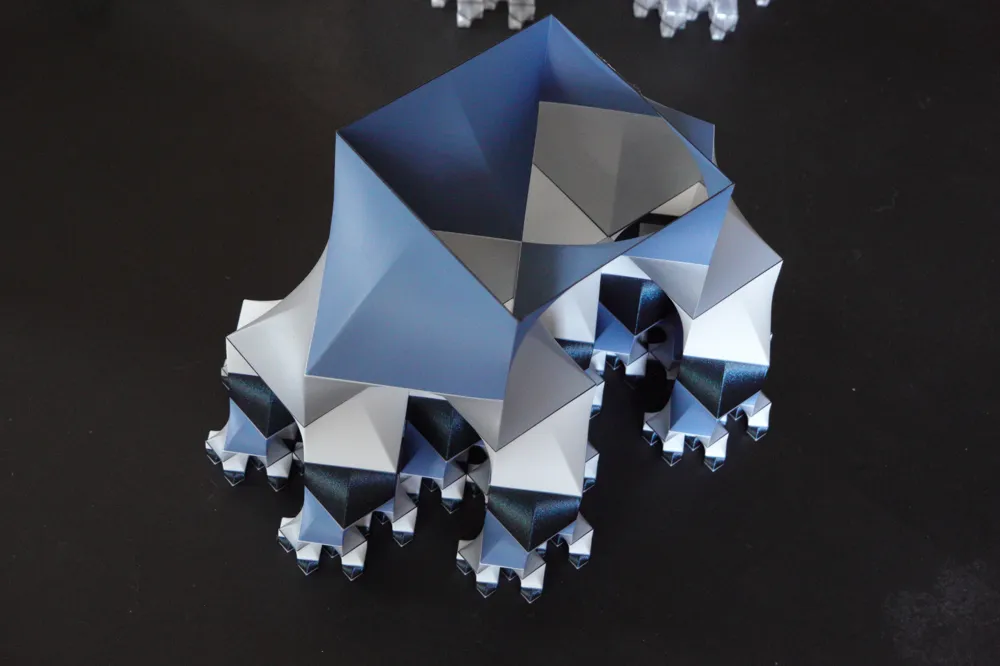
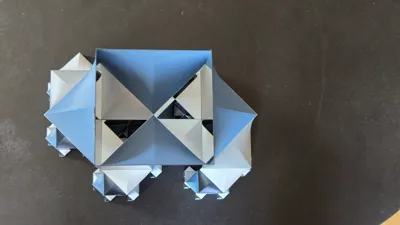
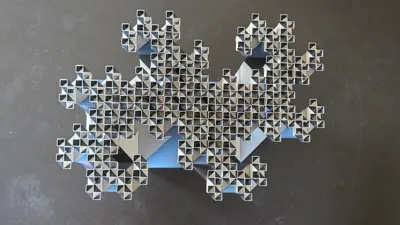
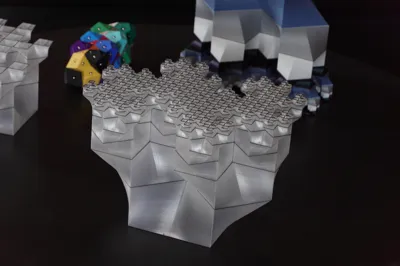
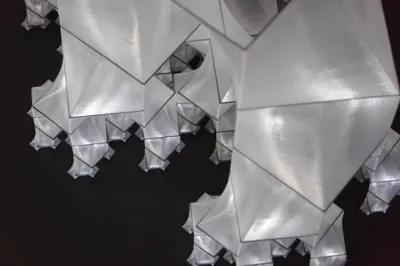
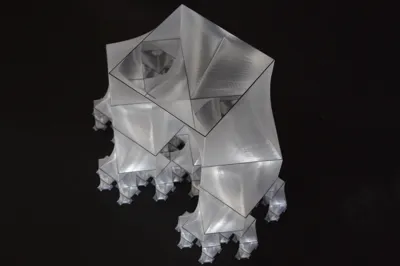
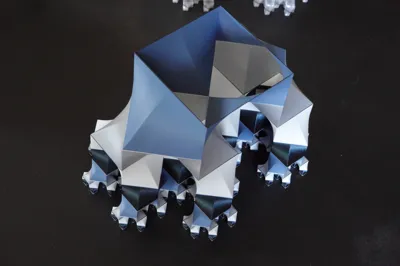
It's very easy to identify the Dragon Curve's recursive shapes, spirals, and iterative nature in this object. I find it entrancing, difficult to put down. The hard angled surface clearly illustrates the transitions between iterations.
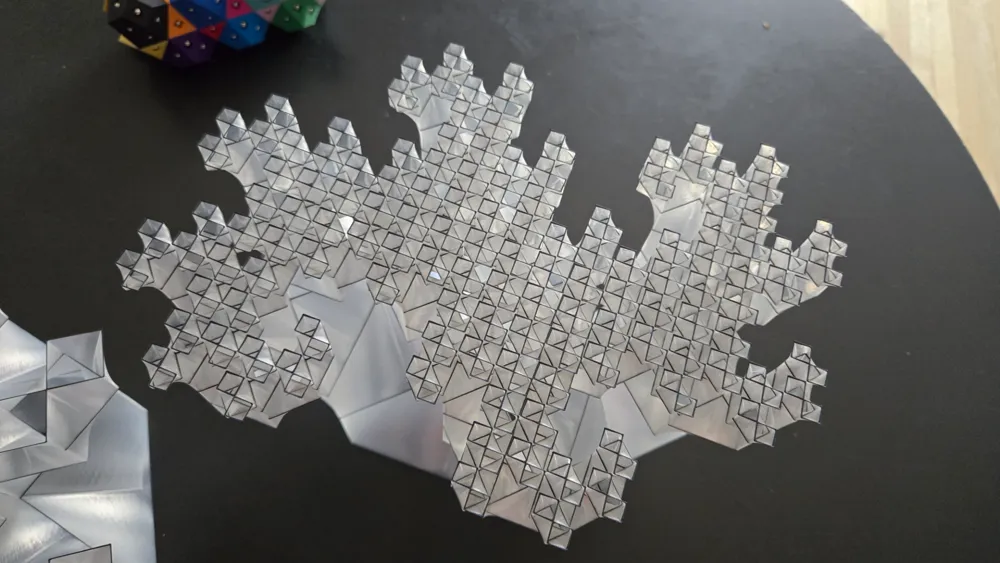
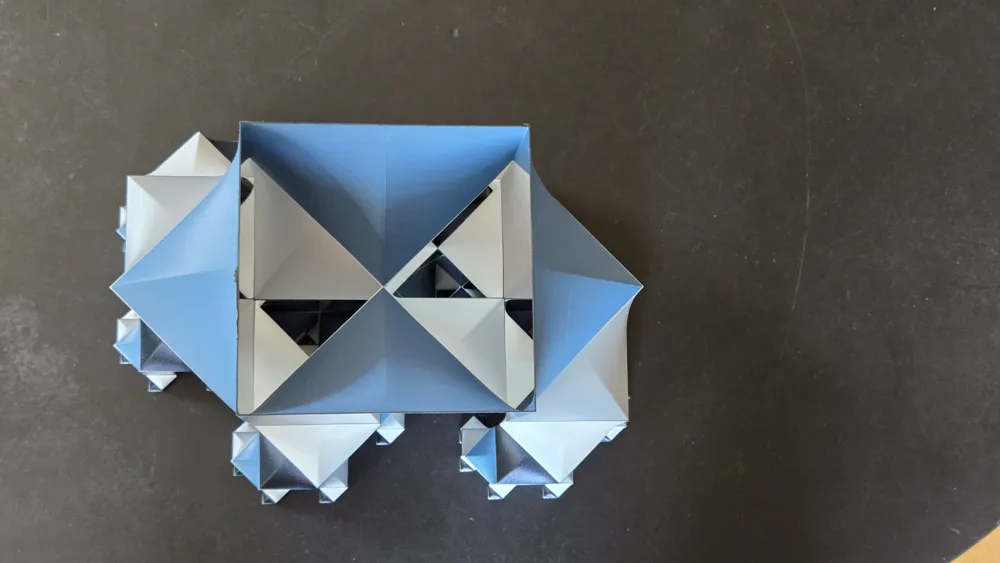
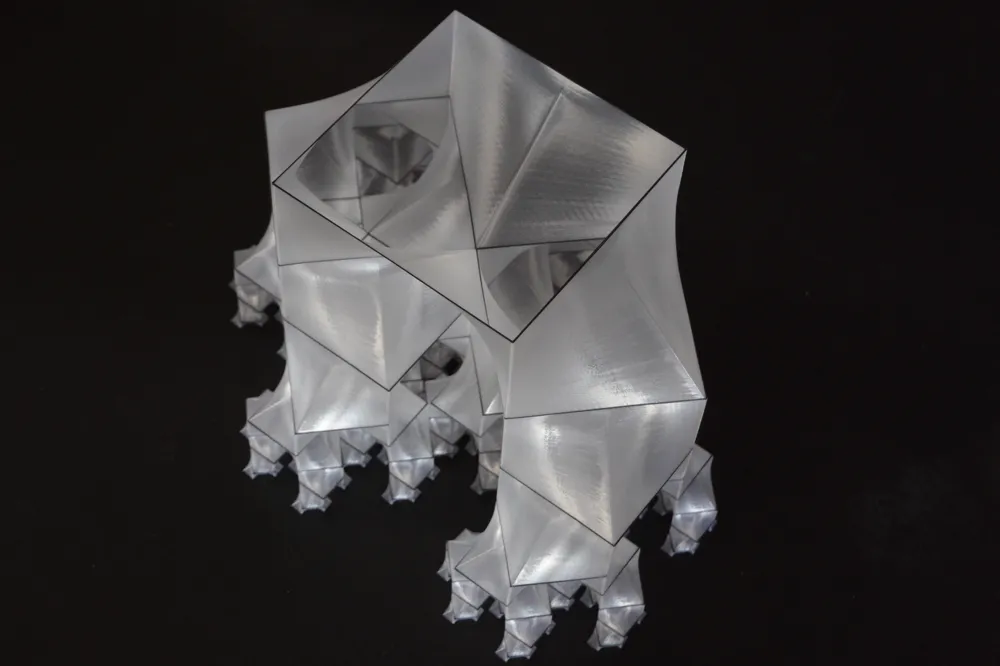
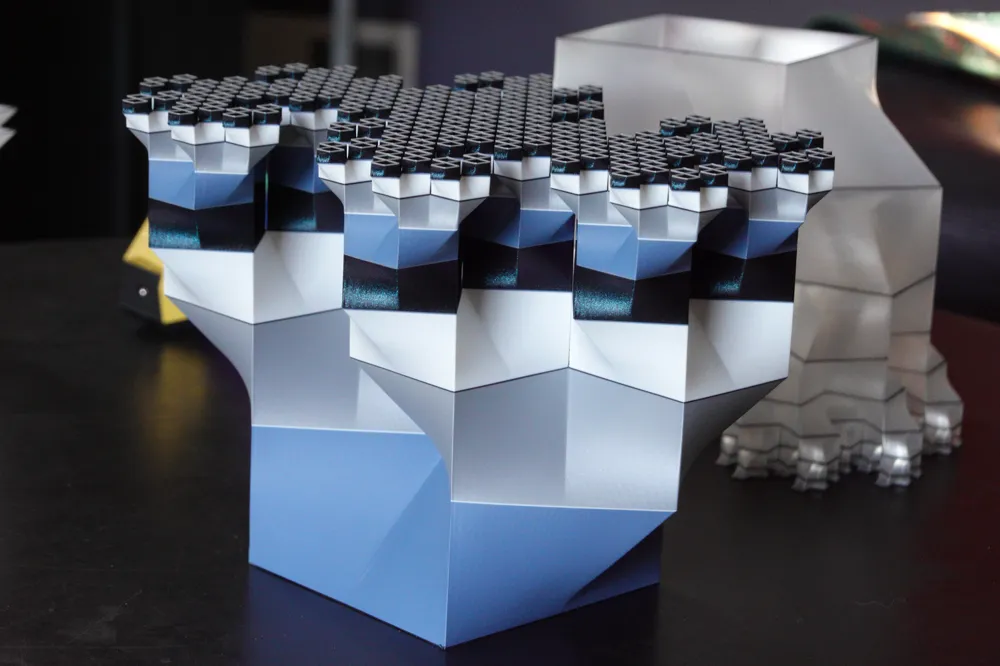
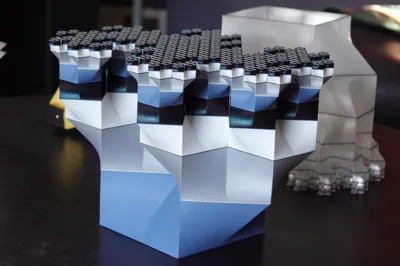
The base of the object starts with a pair of iteration 2 dragon curves, each a right angle, mated symmetrically to form a square. The top of the object is the 10th iteration.
I designed the height of each level to be proportionate to the length of the segments in that level's curve. This ensures consistent proportions between all levels.
Each iteration of the curves are illustrated by a few layers of color. These layers will not match the iterations if you change the scale of the object in the slicer. (Maybe changing layer height will also wreck the placement of the lines?) You may of course set your own filament changes to compensate.
A few "shortcomings" of this project:
- There is loss of integrity where corner edges of the Dragon Curve surfaces are adjacent. The slicing process may fill or create gaps along these edges. The nature of the single uninterrupted path of the curves is absorbed into a simple grid or individual squares.
- I have not yet learned how to generate a single thickened surface in a printable format. As a workaround I have enclosed surfaces into a volumes/parts, then printed the exterior only.
- My result is a symmetric volume enclosed by a mated pair of Dragon Curve surfaces. The result is pleasing, but that wasn't my objective.
- I have not yet learned how to script the creation of this iterative object. Though much time is saved with replication of parts, my process is still fairly manual and time consuming.
I've rendered this object with zero top and bottom layers, and a wall thickness of just one layer. I have not experimented much with line an wall thickness. Theoretically each layer of correctly modeled object could be a single non-crossing extrusion and thus a candidate for vase mode.
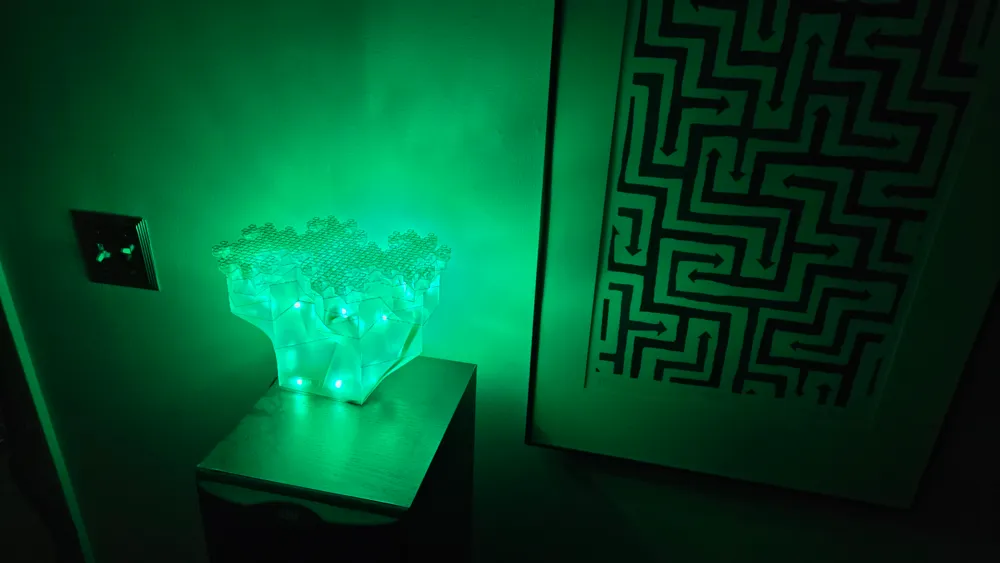
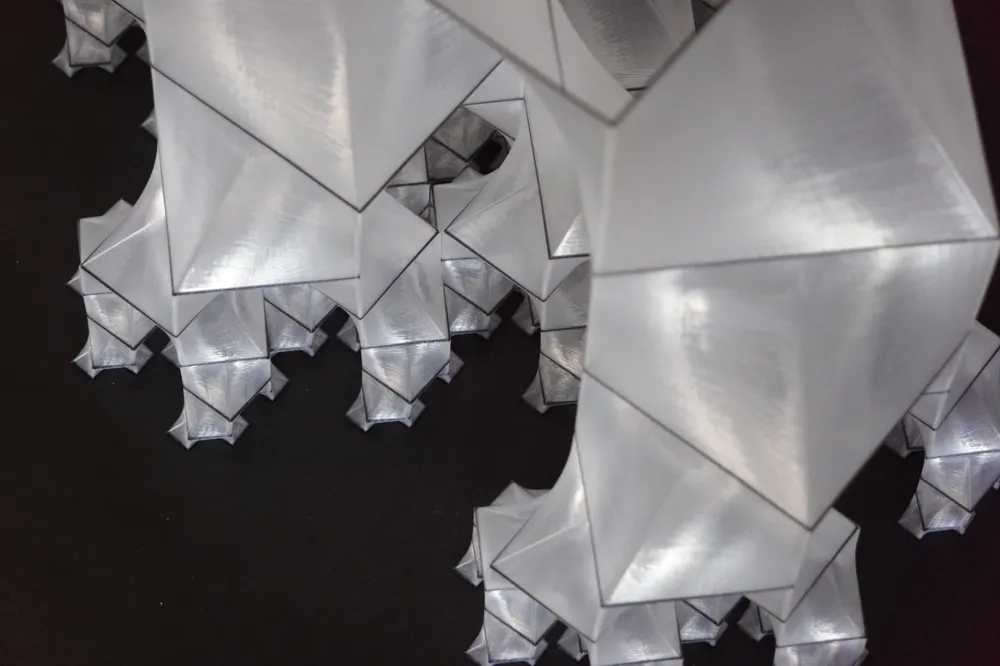
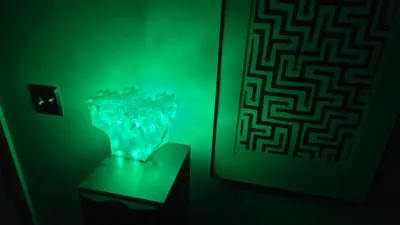
As you can see in one photo, you may stuff an LED strip into this object and trip-out on it.
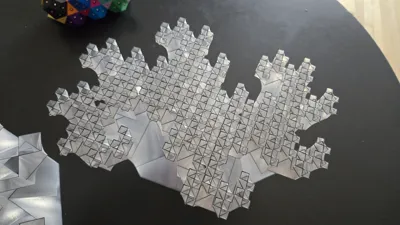
I'll try to include profiles for the two renders in the photos. On one I use translucent PLA with colored iteration lines. The other I chose a gradient of 4 opaque colors.
I've included the .step file to ease printing at different scales and other modifications.
License



Comment & Rating (2)