
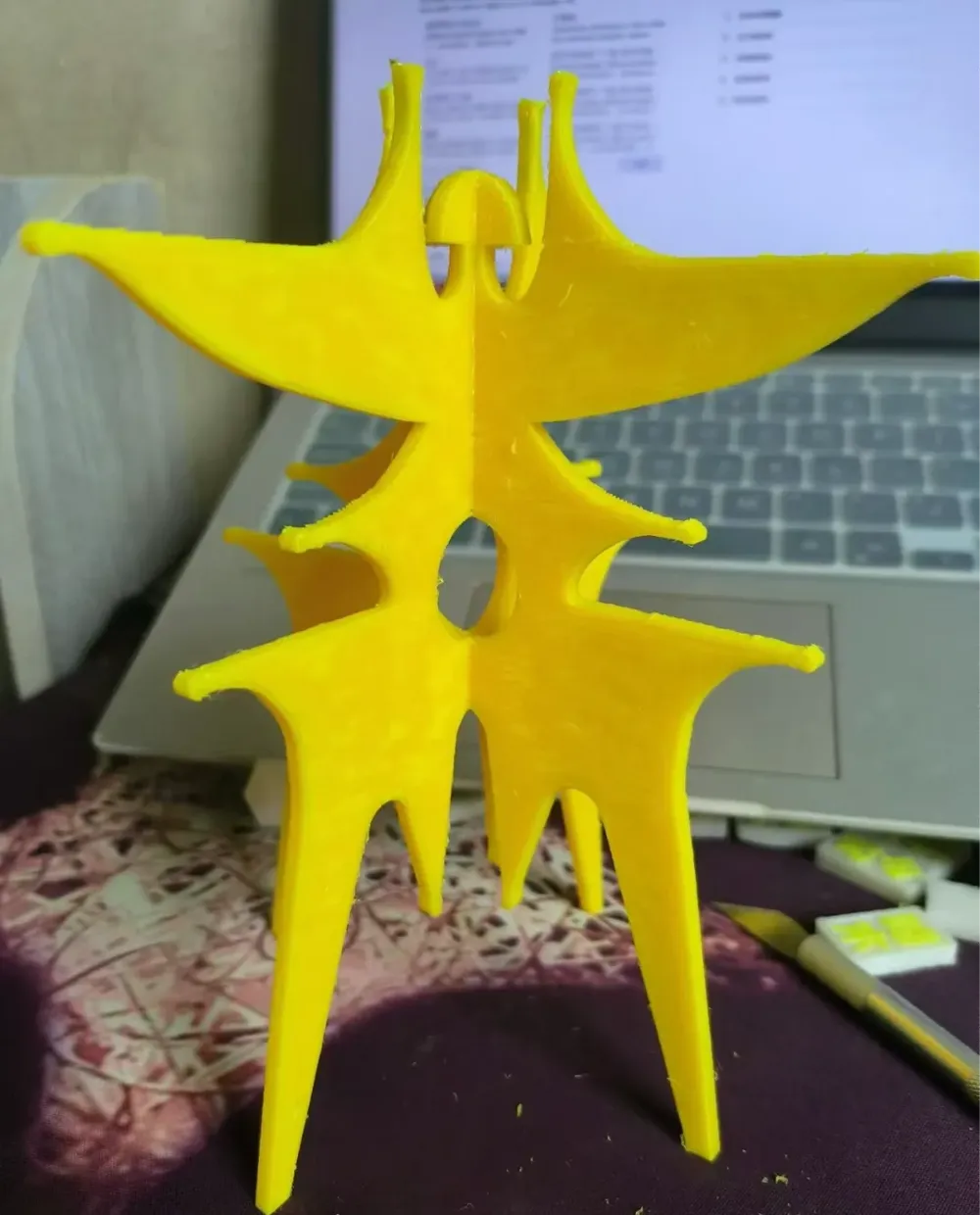
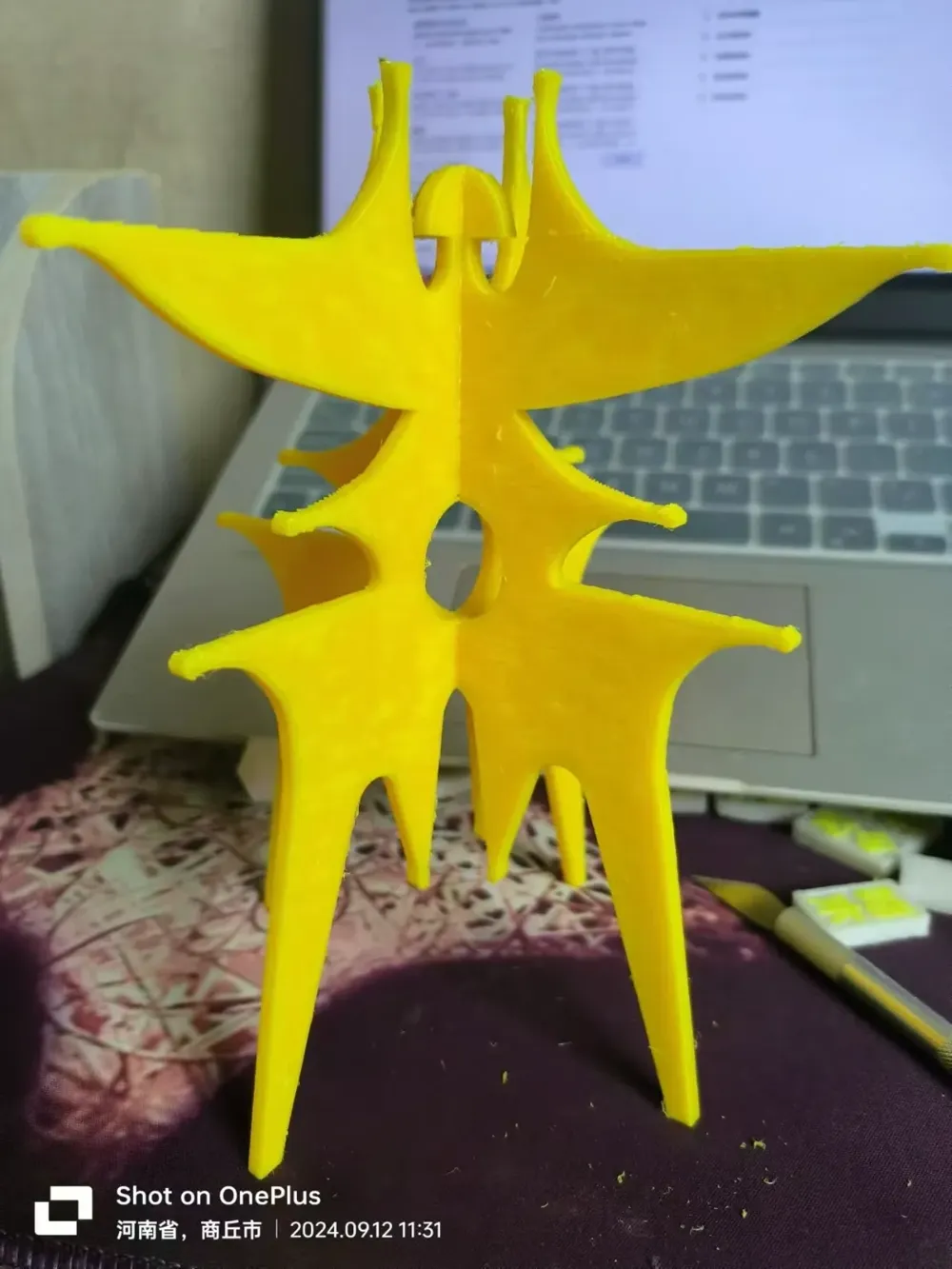
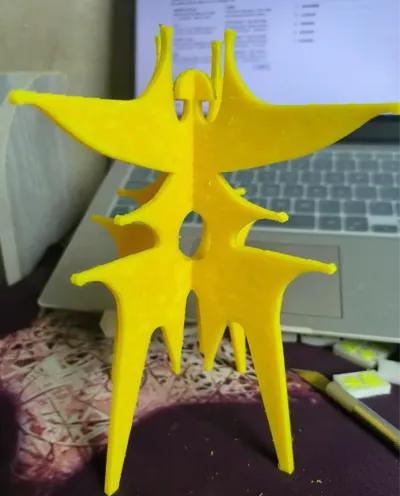
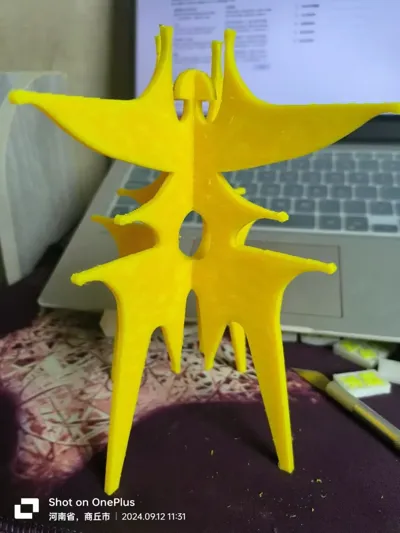
Shangqiu Shang character in Henan with texture
Print Profile(0)
Description
The Shang character sculpture is a landmark of Shangqiu City, located within the roundabout at the intersection of Shenghuo Avenue and Nanjing Road in Suiyang District, Shangqiu City, Henan Province. The sculpture is 21 meters high and 22 meters wide, standing majestically on a 2500 square meter roundabout. It was completed on June 29, 1997
The Origin of the Shang Character as Shangqiu's Symbol: The 'Shang' character sculpture is 21 meters high, 22 meters wide, and stands on a 2500 square meter roundabout, serving as Shangqiu's city symbol. Why is the 'Shang' character used as the city symbol of Shangqiu
The Shang character sculpture is based on the Shang character in oracle bone script, its design inspiration coming from the Shang tribe which originated in Shangqiu. According to "Records of the Grand Historian: Annals of Yin", Yin Qi's mother was Jian Di, a woman from the You Shi tribe and the second consort of Emperor Ku Gaoxin. While she was bathing, she saw a dark bird drop an egg. Jian Di swallowed the egg, became pregnant, and gave birth to Qi. Qi, also known as Ebo, is the legendary ancestor of Shang. Therefore, "Classic of Poetry: Odes of Shang: The Dark Bird" states: "Heaven commanded the dark bird to descend and give birth to Shang, establishing its abode in the vast land of Yin". Ebo's sixth-generation descendant, Wang Hai, invented the ox cart. Using ox carts, he initiated China's earliest commercial trade. From then on, activities involving the exchange of goods were called commerce, and those engaged in commercial activities were called merchants. Therefore, Shangqiu is the birthplace of commerce. Fourteen generations after Ebo, came Shang Tang. Shang Tang overthrew the Xia dynasty and established the most powerful slave-owning state in Chinese history, the Shang Dynasty, in Shangqiu. Because merchants, commerce, and commodities originated in Shangqiu, and the Shang Dynasty established its capital in Shangqiu, Shangqiu is known as "The Origin of the Three Shangs, Capital of Chinese Merchants". Therefore, the Shang character sculpture was placed here as a symbol of Shangqiu City
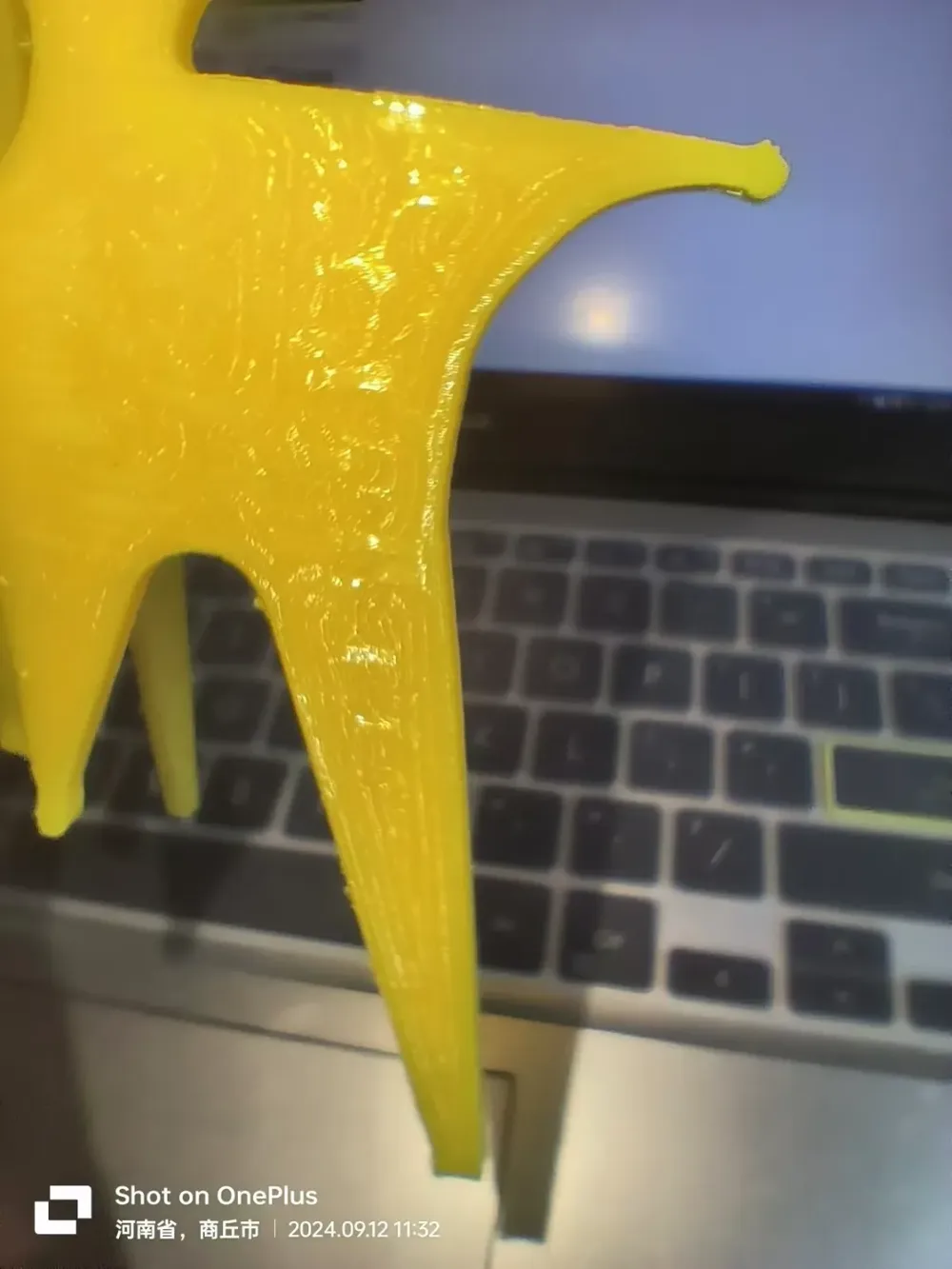
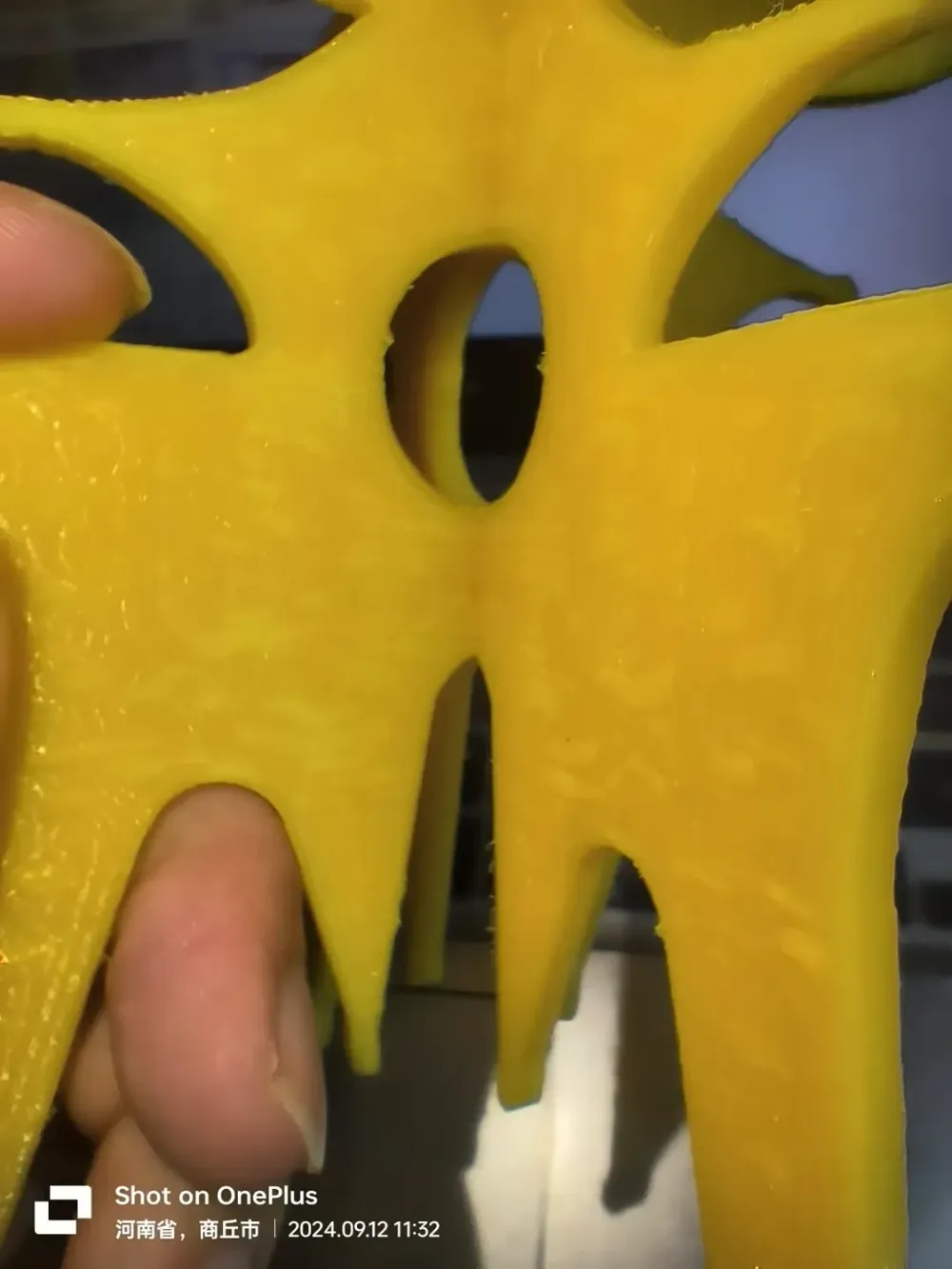
The Profound Symbolism of the Shang Character Sculpture's Design: This sculpture is based on the oracle bone script character 'Shang', incorporating variations, selections, and exaggerations. It is composed of two vertically intersecting 'Shang' characters, designed in the shape of a tripod cauldron. It appears identical from all four directions: front, back, left, and right, standing majestically. It not only embodies the rich heritage of Eastern culture but also symbolizes the origin of the Shang tribe here, the beginning of commerce from this place, and the prosperity of the pre-Shang people here. It also signifies that commerce is a great undertaking for the nation and a vital plan for the people. Furthermore, the entirely red 'Shang' character symbolizes this as the birthplace of fire. Upon closer inspection, we will find many patterns on the Shang character sculpture. This pattern is called the Taotie pattern, also known as the "beast mask pattern"
Taotie is a gluttonous mythical beast from ancient legends. "Lüshi Chunqiu" states: "The tripods of Zhou were adorned with Taotie, which had hands but no body. It ate people without swallowing, harming itself. This serves as a warning against retribution." Its image is based on a central nose bridge, split into left and right halves, with thick eyebrows, large eyes, a wide nose, a gaping mouth, and ears and horns on both sides. It is actually a terrifying beast mask image created by combining features from various animals. On bronze ware from the Shang and Zhou dynasties in China, exaggerated Taotie head images were often carved to form a patterned beast mask as a decorative motif. Its basic composition is symmetrical, either a frontal view of a single beast mask or a combination of two symmetrical beast-patterned profiles
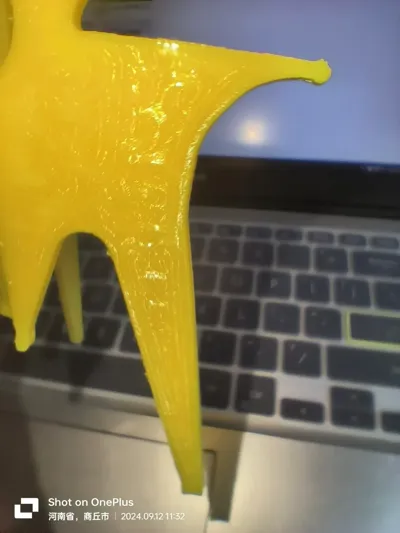
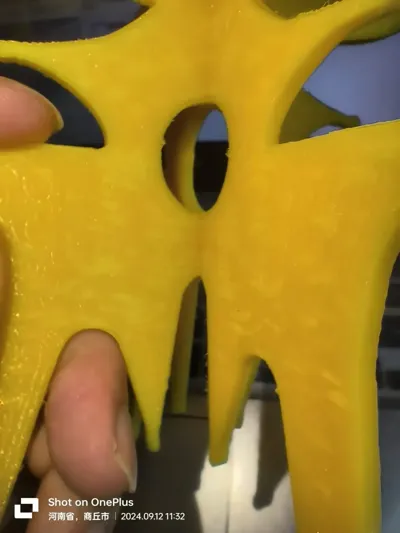
According to research, the Taotie pattern was prevalent during the Shang and Zhou dynasties of slave society. It was an auspicious symbol in ritual ceremonies of that time, a deity that upheld the ruling authority of slave owners, thus it was often used as a primary decorative motif. The style of the Taotie pattern is both fierce and majestic, yet also simple and archaic, reflecting the characteristics of the era of iron and fire that humanity had to pass through to enter civilization. When using the Taotie pattern for decoration, cloud and thunder patterns were often used to complement it. In the late Western Zhou Dynasty, the Taotie pattern gradually lost its dominant position as a primary motif, becoming subordinate, mostly adorning the legs or ears of vessels. The 'Shang' character adorned with the Taotie pattern also symbolizes that bronze culture flourished from here
License



Comment & Rating (0)