Search models, users, collections, and posts

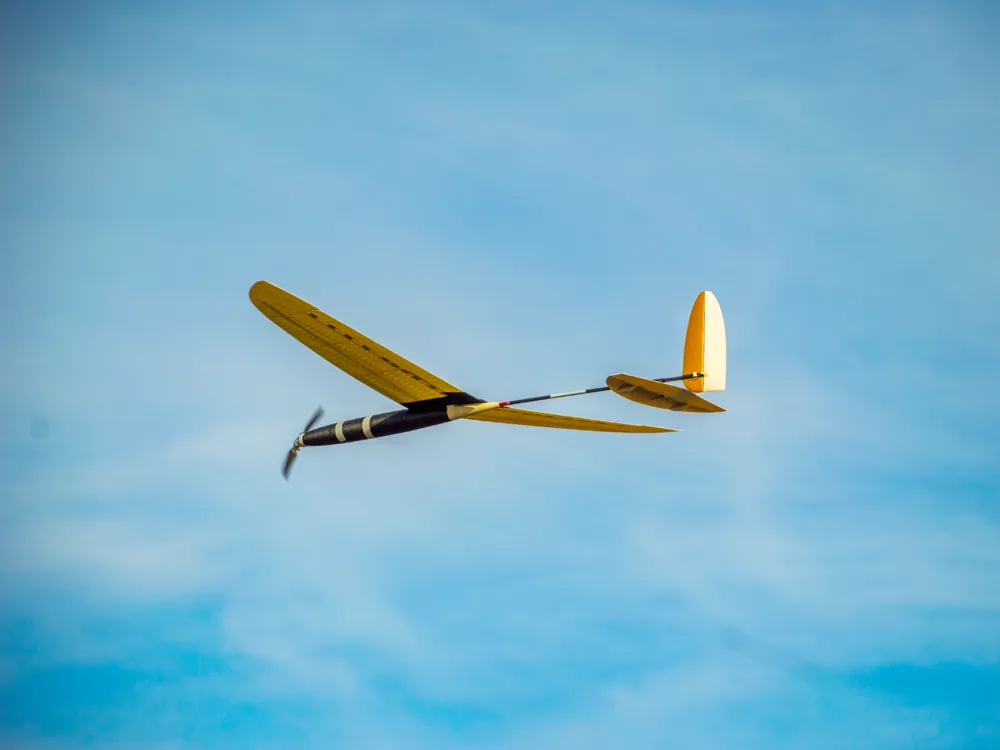
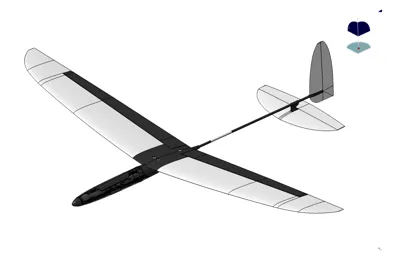
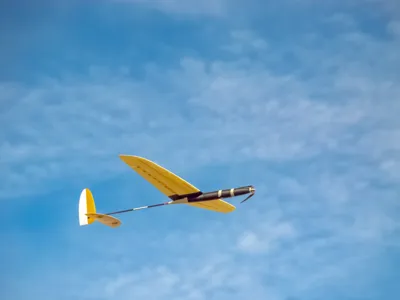
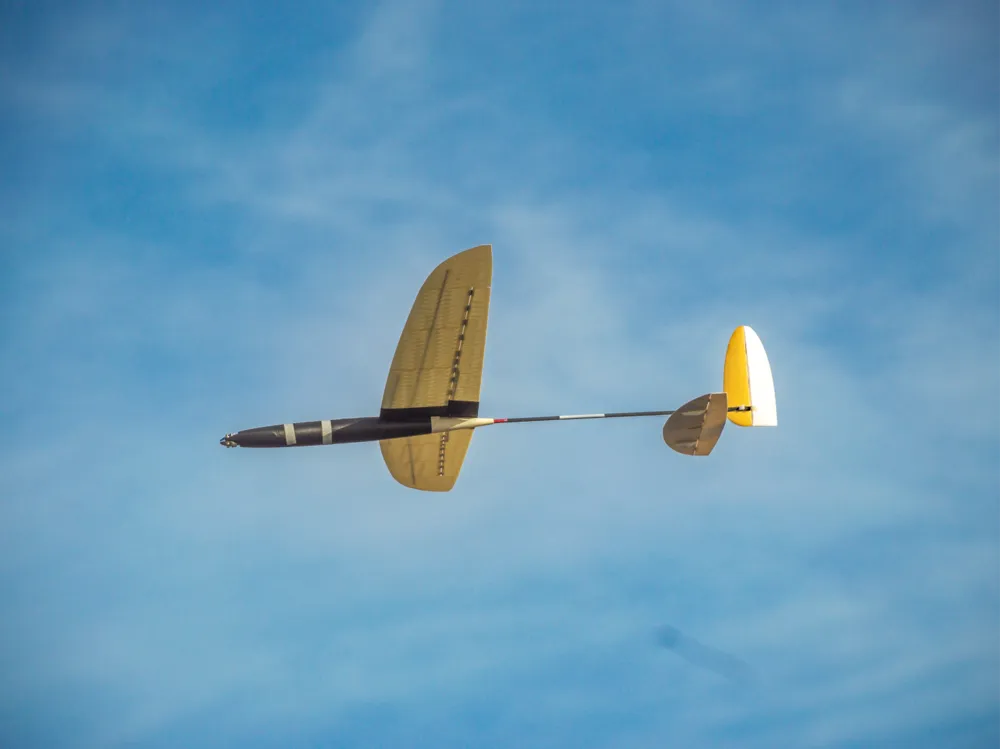
High Performance RC Glider, F5k, e-DLG Style, 1.5m
IP Report

Print Profile(2)

All
P1S
X1
X1 Carbon
X1E
A1 mini
P1P
A1
H2D
H2D Pro
H2S
P2S
H2C
X2D
A2L

0.2mm layer, 1 walls, 4% infill
Designer
47.1 h
36 plates
4.6(13)

0.2mm layer, 2 walls, 15% infill
48.6 h
36 plates
4.5(13)

Open in Bambu Studio
Boost
1447
2898
118
125
3.6 k
226
Released 

Description

INTRODUCTION


This is team “Jet Research”. We are happy to present our first aircraft design - the Jet Research High-Performance Glider. We are a group of students from Embry-Riddle Aeronautical University, Prescott, and we are highly enthusiastic about 3D printing technology. With this project, we have pushed our understanding of 3D printing to the limit, and we would like to apply what we've learned to our future project - a fully 3D-printed turbine-powered RC aircraft!


-------------------------------

Update 01/05/2025

Happy New Year Everyone!


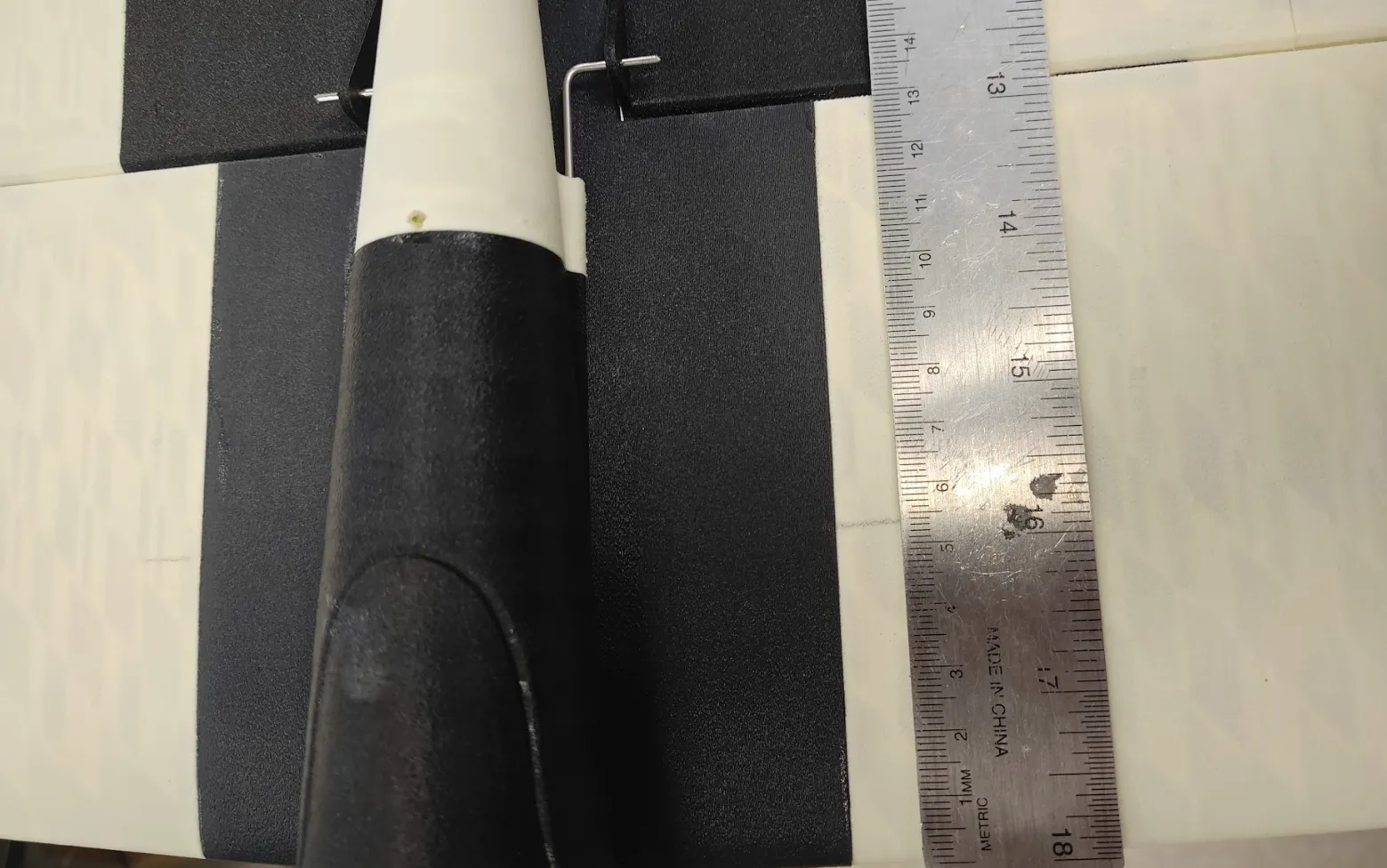
There was a mistake in the CG location. The correct CG location is 5.5 CM from the leading edge as shown in the picture below.


Also, I almost have my next two airplane designs ready to upload. Stay tuned for my new larger airplanes!


-------------------------------

Update 10/31/2024

Now, you can watch a full-flying video of our glider on YouTube!


-------------------------------

Update 11/01/2024

As requested, here are some instructions on installing the elevator, rudder, and torque springs.


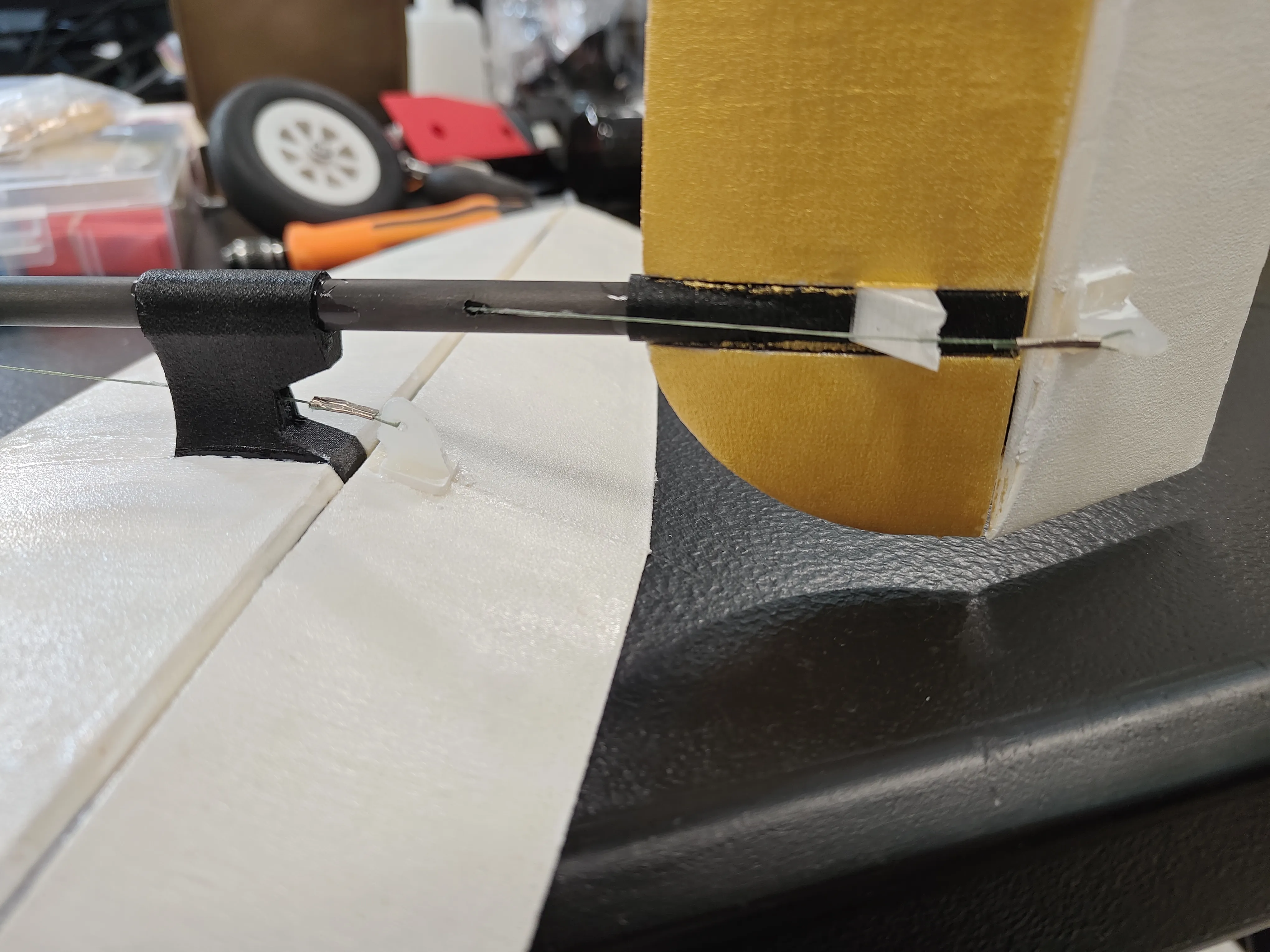
Here's a closer look at the tail assembly, the control horns are store-bought and cut to the length needed. The block that guides the fishing wire to the rudder is optional. Holes are simply cut to the arrow shaft with a drill bit. Make sure you take your time doing this because it is not easy.
 

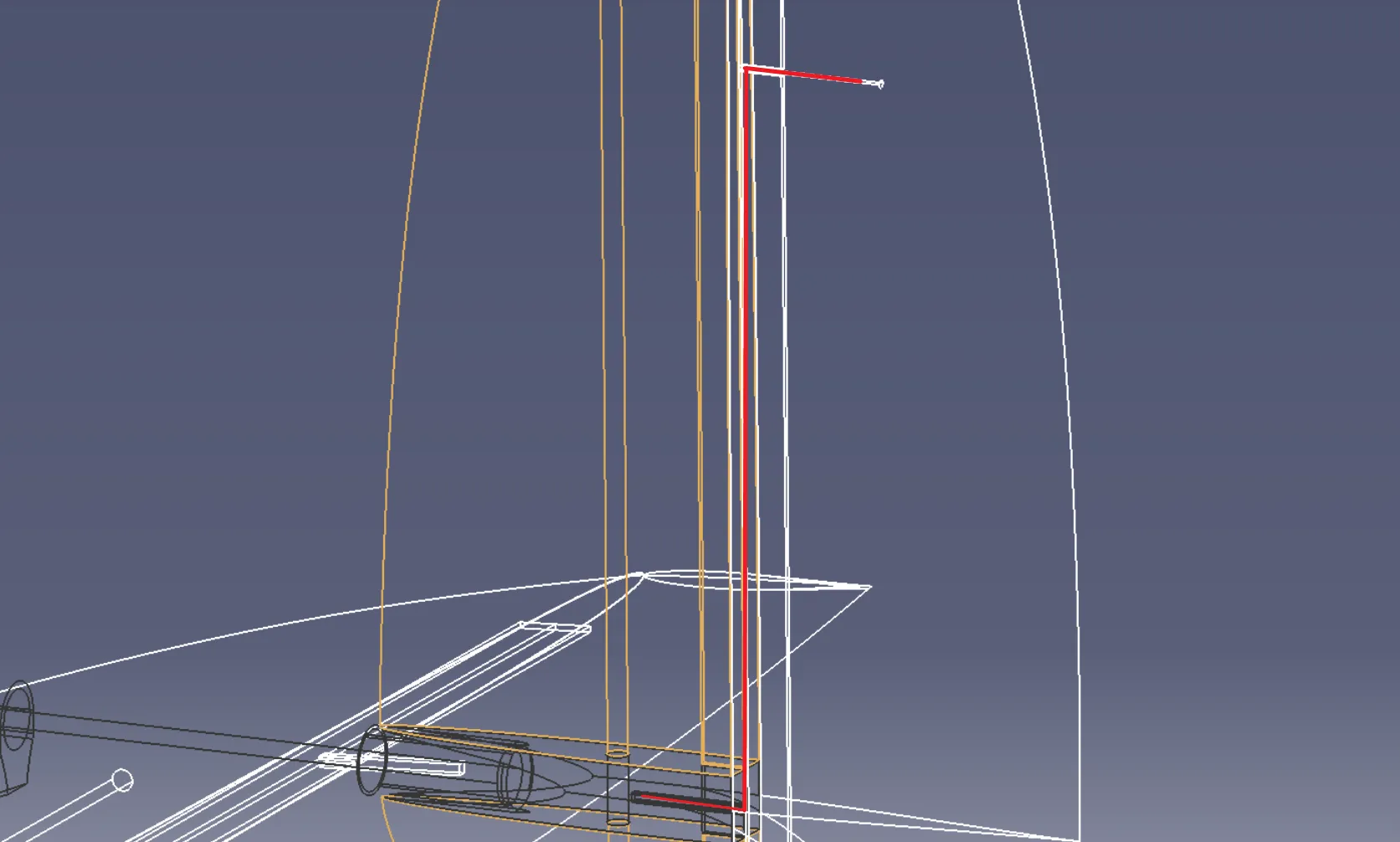
The picture below shows the position of the rudder torque spring in red color. I use 0.5mm music wire or spring steel wire as the torque spring. The length of the rudder torque spring is 10 cm.


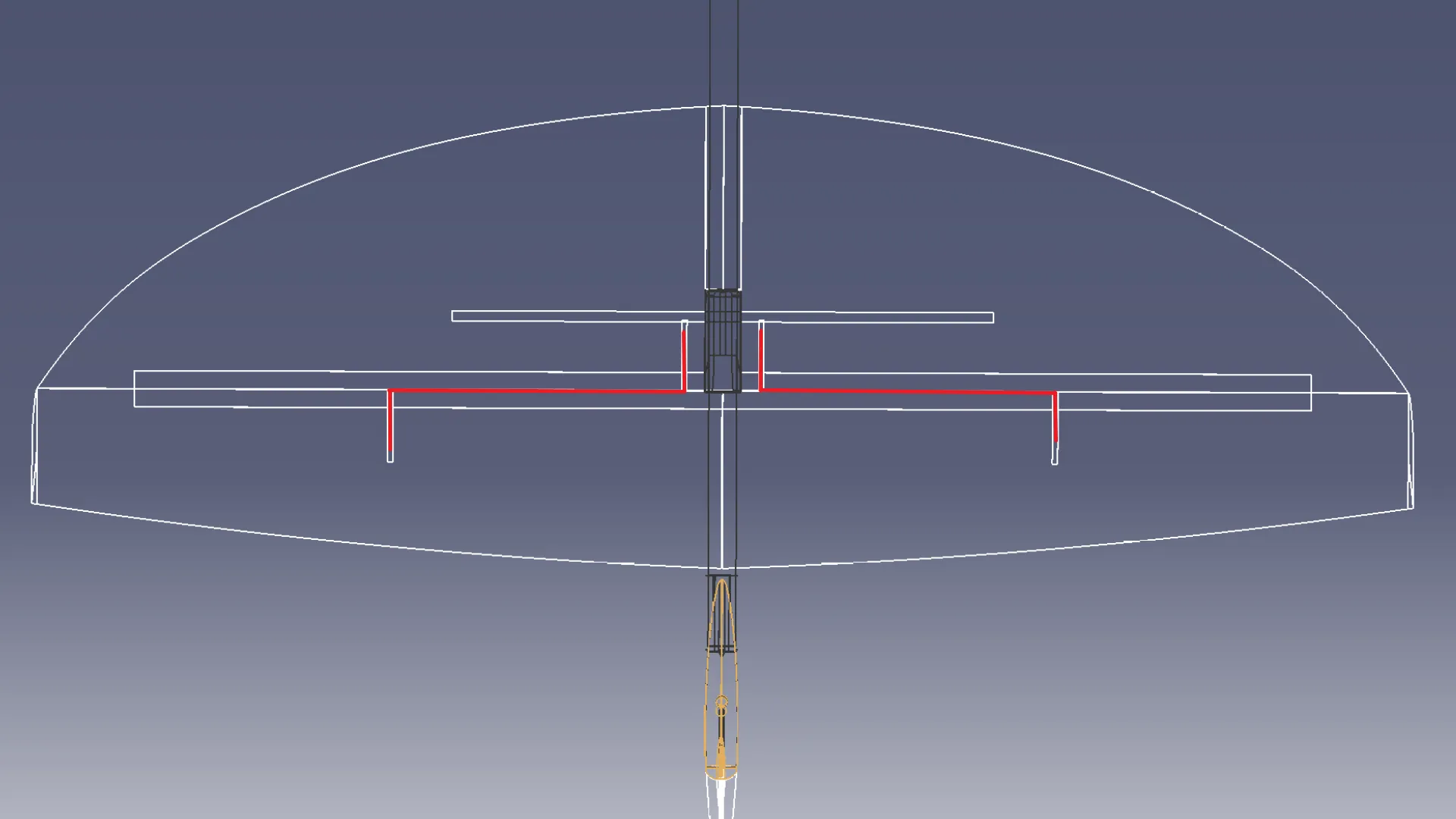
The picture below shows the position of the elevator torque spring in red color. There are two springs for the elevator. Each spring has a length of 8 cm.
 

Hopefully this helps!


-------------------------------


GLIDER DESCRIPTIONS


This glider targets RC pilots with experience with RC gliders, especially DLG gliders. Some building techniques you will see throughout this project can be commonly found in DLG designs. This glider is not easy to build, therefore please follow the reference document to guide yourself throughout the building process.


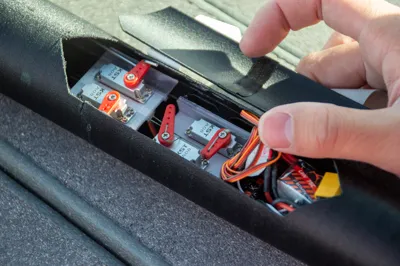
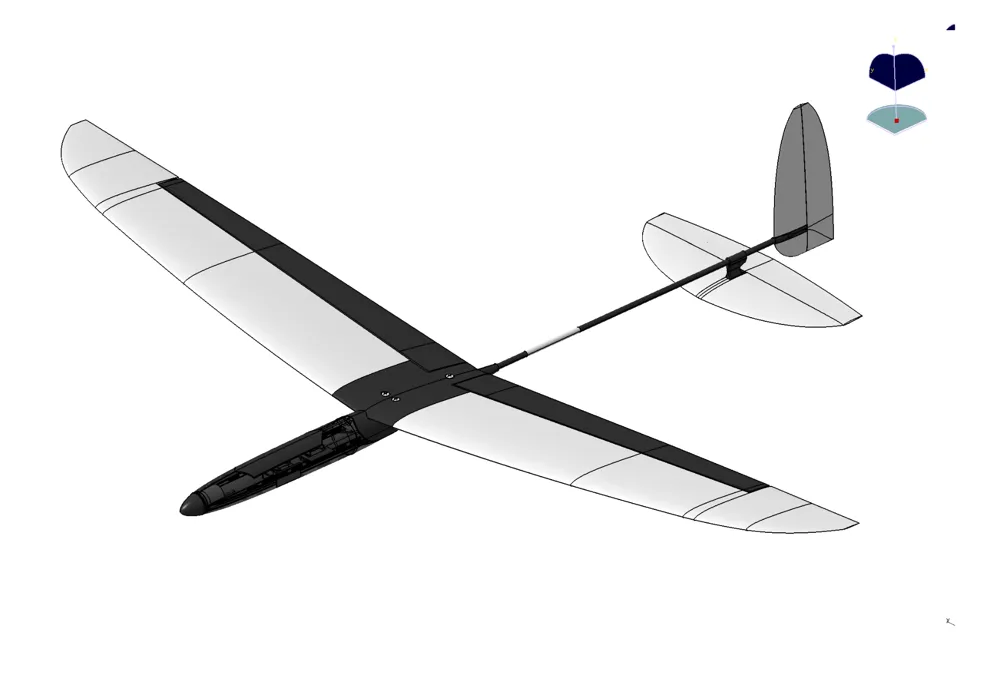
The Jet Research Glider is mostly printed of Bambulab ASA Aero (printed as light as possible). Some of the key components are printed out of Bambulab PAHT-CF or PA-GF. All moving hinges are printed with TPU 95A (2 layers of 0.1mm thick). Some carbon tubes are required to enhance the structural integrity of the glider. The tail boom is simply a store-bought standard .244 in arrow shaft. These manufacturing methods allowed us to build the glider as light as possible.


Jet Research Glider Specifications
Wing Span1.5 m59 in
Wing Area23.24 dm2360 in2
Wing Loading22.81 g/dm20.47 lb/ft2
Wing Cube Loading4.73 
Elevator Area3.04 dm247 in2
Rudder Area1.09 dm217 in2
Length1.1 m43 in
Flying Weight530 g18.7 oz
Aspect Ratio9.68 
Wing AirfoilModified Synergy II 
Rudder AirfoilNACA 65-009 
Elevator Airfoil

NACA 63-009

NACA 63-007

 
Dihedral Angle5.5 degrees 
CG Location5.5 cm from LE at wing root 
Control SurfacesElevator, Rudder, Flaperon 


Jet Research Glider Typical Weights
Wing220 g7.76 oz
Fuselage120 g4.23 oz
Elevator15 g0.53 oz
Rudder10 g0.35 oz
Receiver7 g0.25 oz
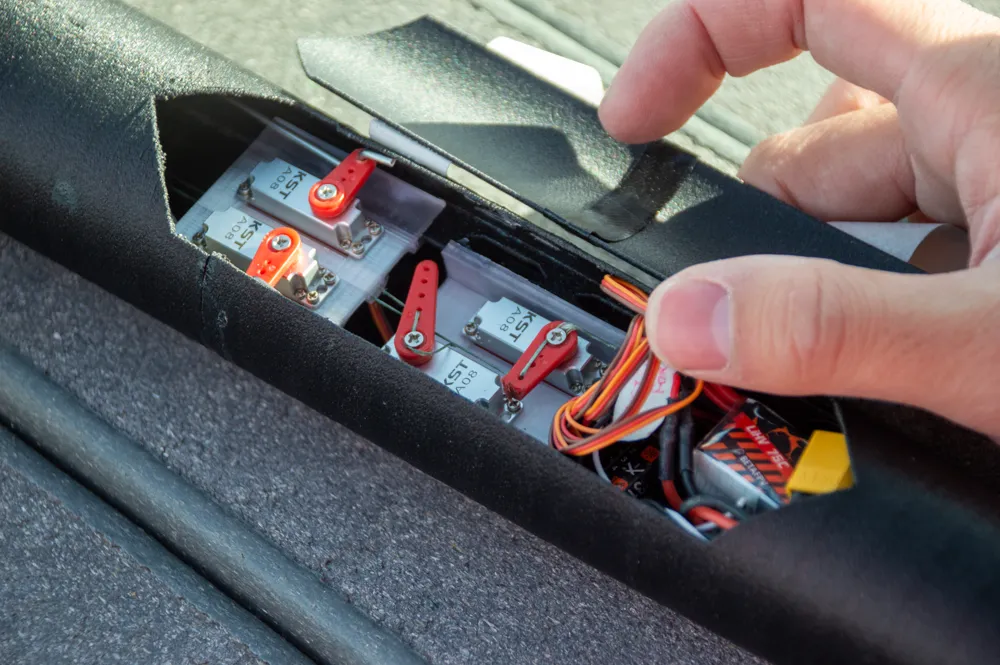
Servos4*7 = 28 g25.68 oz
Motor35 g1.23 oz
Propeller & Spinner20 g0.71 oz
ESC7 g0.25 oz
Battery30 g1.06 oz
Pushrod15 g0.53 oz
Pull Strings5 g0.18 oz
Springs5 g0.18 oz
Other13 g0.46 oz
Total530 g18.70 oz


Recommended Electronics and Hardwares
MotorT-Motor V2207 1950kv, or any motor around 30 g, 1500 - 2000 kv
Propeller8x4.5 folding for 3s battery, 9x6 for 2s battery
ESC45 amp, very light weight drone racing esc
Battery2s 550 mah Lipo, LiHV or 3S 380 mah Lipo, LiHV
ServosKST A08, or anything similar in size or torque. (2 kg*cm torque)
ReceiverSpektrum AR631 with AS3X, or anything 5 channel or above
Aileron Pushrods1mm steel wire or carbon rod (each end insert steel wire)
Pull Strings50lb braided fishing line (MUST BE BRAIDED)
Springs0.5 mm steel wire, music wire
Control HornsAnything nylon, that gives you 1 cm from the surface of control surfaces
Wing Mounting5 mm diameter nylon bolts and nuts
Carbon Tubes

5mm x 3mm x 210mm (2 required)

5mm x 3mm x 650mm (2 required)

.244 in dia 350 spine arrow shaft (680 mm long)

2.5mm solid rods (cut to the required length)


Comment & Rating (118)

(0/1000)

3S 340mAh battery Total weight with battery: 488g Center of gravity is located one-third of the way back from the leading edge of the wing, not 5.5mm from the leading edge Printed using Bing ABS/ASA and Bambu ASA Aero
The designer has replied
Show original
designer
6
Reply
My apologies, the CG should be 5.5 cm. Correction forthcoming
Show original
1
Reply
Replying to @Jeb2374 :
Thank you for your reply, I wonder if your wings are glued, could they be modified to be detachable? Then the default motor mounting screw hole is 2MM, which is too small, adjust it to 3.2MM to fit the M3 motor screw, and open a motor wire hole
Show original
0
Reply
Replying to @Jeb2374 :
Also, I'd like to ask, are the parts in the red and blue circles fixed with glue after inserting two 5mm carbon tubes? Could this be designed as a detachable component instead?
Show original
0
Reply
Why does the nose plane appear slightly canted to the right
The designer has replied
Show original
3
Reply
to compensate the effect of propeller rotation
2
Reply
For counteracting motor back torque
Show original
2
Reply
It's the same for me, I put a washer under it and that was it, since you also have the aircraft, could you perhaps kindly send me photos, I'm having trouble assembling it, thank you Jerome
Show original
0
Reply
Flies well, very good, really like it The final takeoff weight is around 570g, possibly due to using higher infill wing boxes, thicker carbon tubes, and a 3s600mah battery Four 5g servos pulling 0.3mm steel wires provide completely sufficient performance, the motor used is a 2306 1950kv, paired with a blheli45A ESC, a PETCF 3D printed propeller clamp, and a Gemfan 9x5 propeller The tail fin file was modified during printing, adding a 35-degree bevel angle at the model level The center of gravity can be slightly aft, between the two main carbon tubes, and when the flaps are deployed 3-5mm, it is very sensitive to airflow and can climb quickly In actual tests, it can perform rolls and loops freely, the wings flex but the structure remains intact (perhaps due to the use of wound carbon tubes) Nylon material may not be the best choice; I ultimately used PETG-GF and PET-CF, especially for the tail rudder mounting parts, as nylon deforms and softens after absorbing moisture I am also trying a method that sacrifices crash resistance for ultimate performance, using a 0.2 nozzle to forcibly reduce the wall thickness by half
The designer has replied
Show original
3
Reply
Very beautiful👍
Show original
0
Reply
Hello, friend, could you please specify the center of gravity's location? I've balanced mine at the 1/3 point of the wing, but the creator suggests it should be 5.5mm from the leading edge, which I suspect might be a typo
Show original
0
Reply
May I see your servo mount, please? I would appreciate the opportunity to learn from it
Show original
0
Reply
Print Profile
0.2mm layer, 2 walls, 15% infill
it is mega good but I am missing instructions I don't get any further could someone help me there
(Edited)
Show original
1
Reply
I might make a revised version of this RC plane in the future, and hopefully include a build guide. I will see when I have time, busy with work currently.
(Edited)
3
Reply
Replying to @Jeb2374 :
all right Then good luck
Show original
0
Reply
I have basically completed the printing and the general dry assembly, and I have found some strange things. When printing with foaming material, using a 3D honeycomb structure might lead to a large amount of filament leakage remaining inside the wing, and the actual weight is greater than the estimated value. I ultimately chose a 3D grid infill. The second point concerns the flaps and control surfaces. When installing the hinges, is it necessary to trim a portion of the control surface connection, for example, a 30-degree bevel, or is the design meant for the control surface to extend directly backward without trimming? Extending it directly backward might make the precision uncontrollable
Show original
2
Reply
Replying to @Jeb2374 :
Awaiting your official documentation
Show original
0
Reply
Print Profile
0.2mm layer, 2 walls, 15% infill
I dont know which parts I need to print
1
Reply
Hi, you will need to print everything to build my model. Also make sure you are using my print profile.
(Edited)
1
Reply
Replying to @Jeb2374 :
how much does it weigh?
0
Reply
Replying to @ralphtenhoope :
There's a table in the introduction for how much each part should weigh. Please read the instructions
0
Reply
Print Profile
0.2mm layer, 2 walls, 15% infill
Other Issues:I found the construction generally good, however, the way the rudder and especially the elevator are attached is very fragile, the fixing part could be more robust and it should be entirely fixed to the tail, which even forced me to add a reinforcement, increasing the weight and changing the CG
Show original
0
Reply
Very good designs, i was wondering could this be printer in Bamboolab ASA Aero filament?
The designer has replied
0
Reply
It is designed to be printed mostly out of ASA Aero.
0
Reply
Replying to @Jeb2374 :
@Jeb2374 perfect thank you, can you perhaps tell me what the infill density should be? I am using honeycomb infill but on standard infill density it seems quite “thinck” heavy
0
Reply
Replying to @jagged_juelz :
You can download and use my print profile, it has all the settings I used. The parts should come out around 330 grams in total.
0
Reply
is it possible to add a glider only front pod.
The designer has replied
2
Reply
There are no plans to make modifications currently.
0
Reply
If I were to print this in ASA Aero would it be too light and affect the plane? It would probably be 60% the weight of standard PLA
The designer has replied
0
Reply
The lighter this glider is, the better it will fly. The goal of printing ASA Aero is to make it as light as possible
0
Reply
Replying to @Jeb2374 :
Ok got it! Just more familiar with rocket science at the moment where going lighter isn’t always better. Very much appreciate the quick response and will get to printing soon!
0
Reply

License

This user content is licensed under a Standard Digital File License.

You shall not share, sub-license, sell, rent, host, transfer, or distribute in any way the digital or 3D printed versions of this object, nor any other derivative work of this object in its digital or physical format (including - but not limited to - remixes of this object, and hosting on other digital platforms). The objects may not be used without permission in any way whatsoever in which you charge money, or collect fees.