
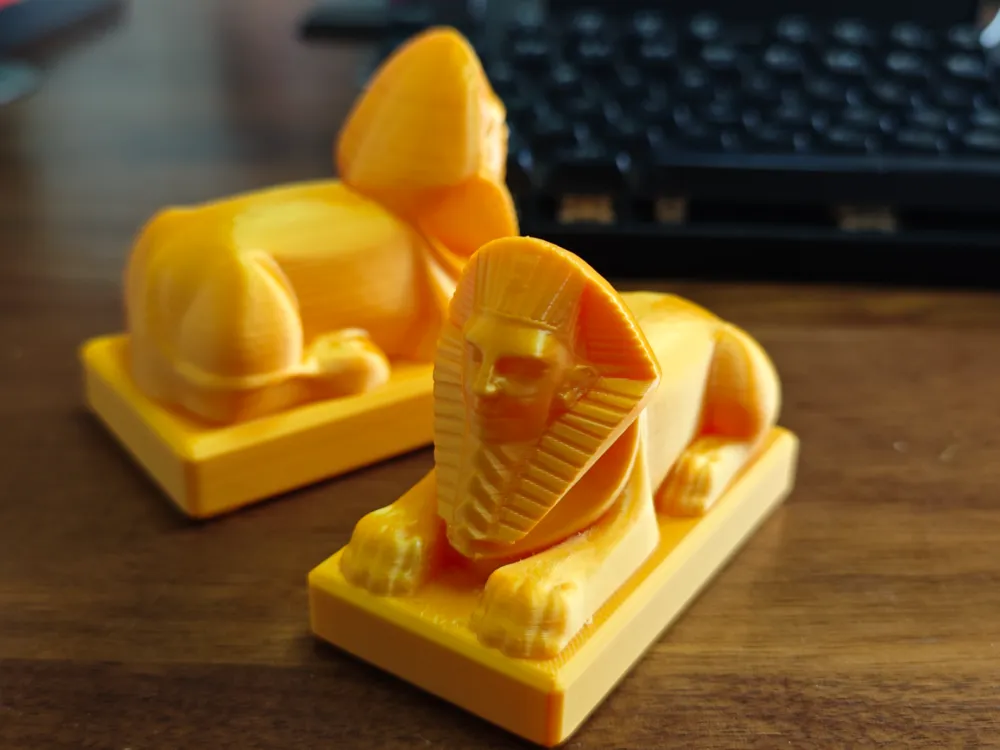
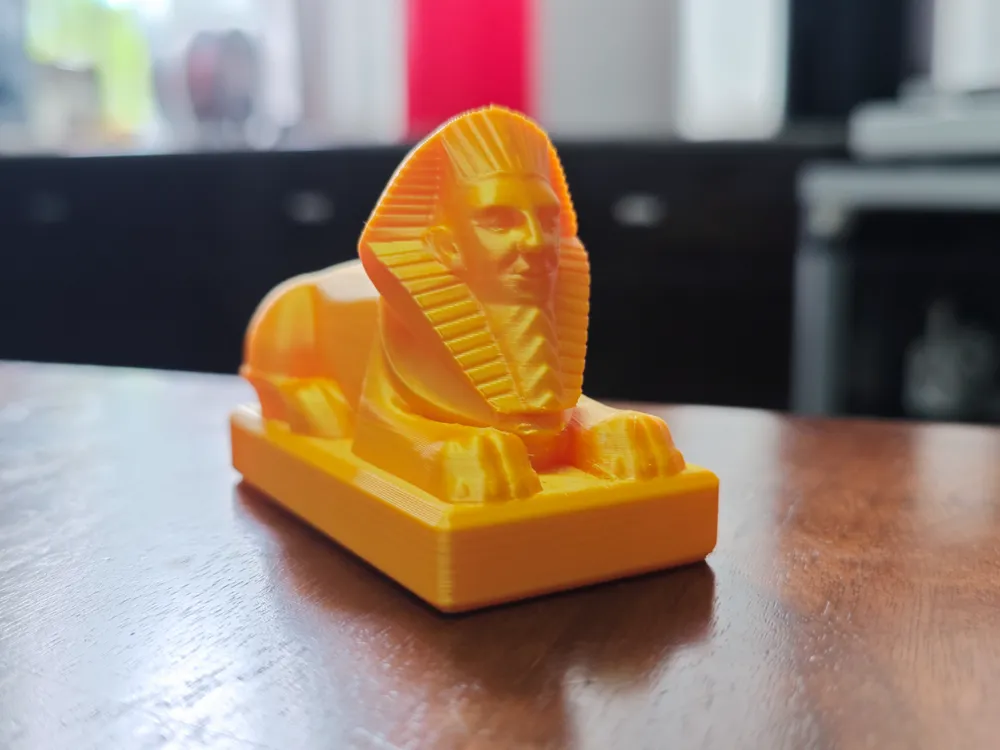
Egypt Sphinx - Scanned Restoration Version
Print Profile(1)

Description
The Great Sphinx, also known as the Sphinx, is a colossal stone statue located near the Giza pyramid complex in Egypt. This statue combines the body of a lion with a human head and is one of the world's most famous and iconic ancient monuments. Here are some key points about the Sphinx:
Basic Information
Dimensions: The Sphinx is approximately 73 meters long, 20 meters high, and 19 meters wide.
Material: The statue is primarily carved from a single massive block of limestone.
Location: It is situated in the Giza pyramid necropolis, near the west bank of the Nile River.
Historical Background
Construction Time: The Sphinx is believed to have been built around 2500 BCE during the Old Kingdom's Fourth Dynasty.
Builder: It is generally attributed to Pharaoh Khafre (also known as Chephren), though some theories suggest it was built by Djedefre in honor of his father, Khufu (Cheops).
Symbolic Significance
Lion: Symbolizes strength and power.
Human Head: Typically believed to be a portrait of the pharaoh, symbolizing wisdom and divine authority.
Overall: The Sphinx may have served as a guardian for the Giza pyramids, protecting the pharaoh's tomb from intruders.
Special Features
Crown and Decorations: The Sphinx wears the "Nemes" headdress, with side flaps of the "Nemset" headcloth, a cobra (Wadjet) on the forehead, a false beard, a broad collar around the neck, and eagle feathers on the body.
Nose: The nose of the Sphinx has been damaged over time, and the exact cause is debated, but it is generally believed to be a result of both natural erosion and human vandalism.
Historical and Archaeological Discoveries
Burial in Sand: The Sphinx has been buried in sand multiple times throughout history. It was finally fully excavated in the late 1930s by Egyptian archaeologist Salim Hassan.
Internal Structure: The Sphinx is not solid; it contains several cavities and passages, many of which remain unexplored.
Restoration Work: Over the years, the Sphinx has undergone multiple restoration efforts to preserve this valuable cultural heritage.
Unsolved Mysteries
Purpose of Construction: The exact purpose of the Sphinx remains a subject of debate, but it is generally associated with the pharaoh's authority and protection.
Age Controversy: Some geologists believe the Sphinx may be much older than traditionally thought, possibly dating back to 5000-7000 BCE.
Internal Structure: The interior and below the Sphinx may hold more secrets, but research has been limited.
The Great Sphinx is not only a monumental architectural wonder but also a remarkable representation of ancient Egyptian culture and engineering, attracting countless scholars and tourists to explore its mysterious allure.
License

You shall not share, sub-license, sell, rent, host, transfer, or distribute in any way the digital or 3D printed versions of this object, nor any other derivative work of this object in its digital or physical format (including - but not limited to - remixes of this object, and hosting on other digital platforms). The objects may not be used without permission in any way whatsoever in which you charge money, or collect fees.


Comment & Rating (21)