
Magnetic Repulsion Mechanical Tactile Power Button

Print Profile(2)
Description

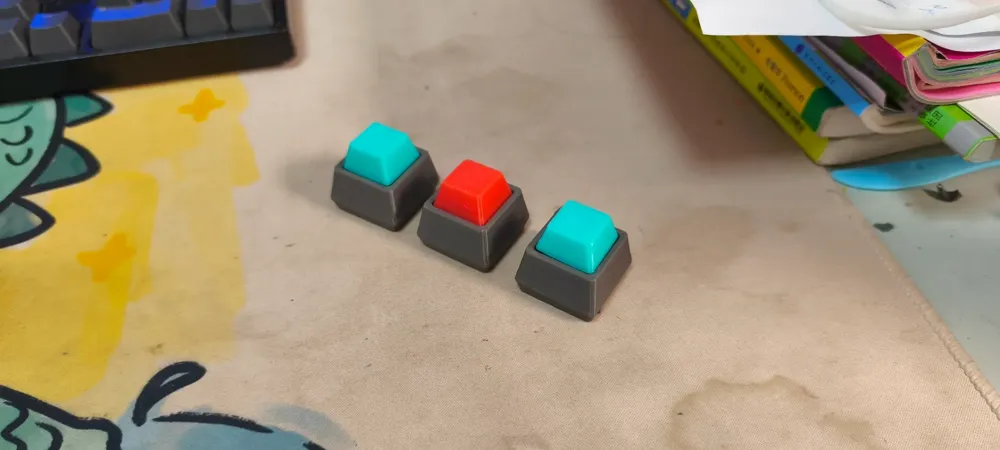
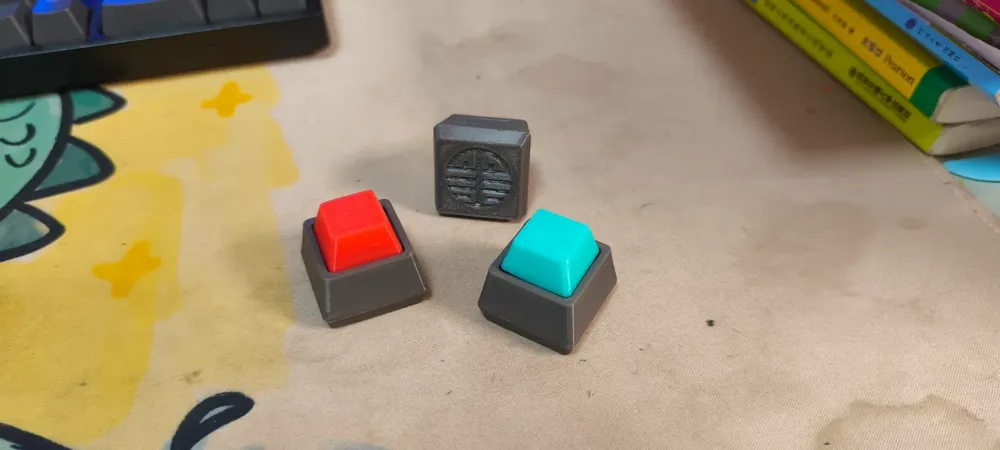
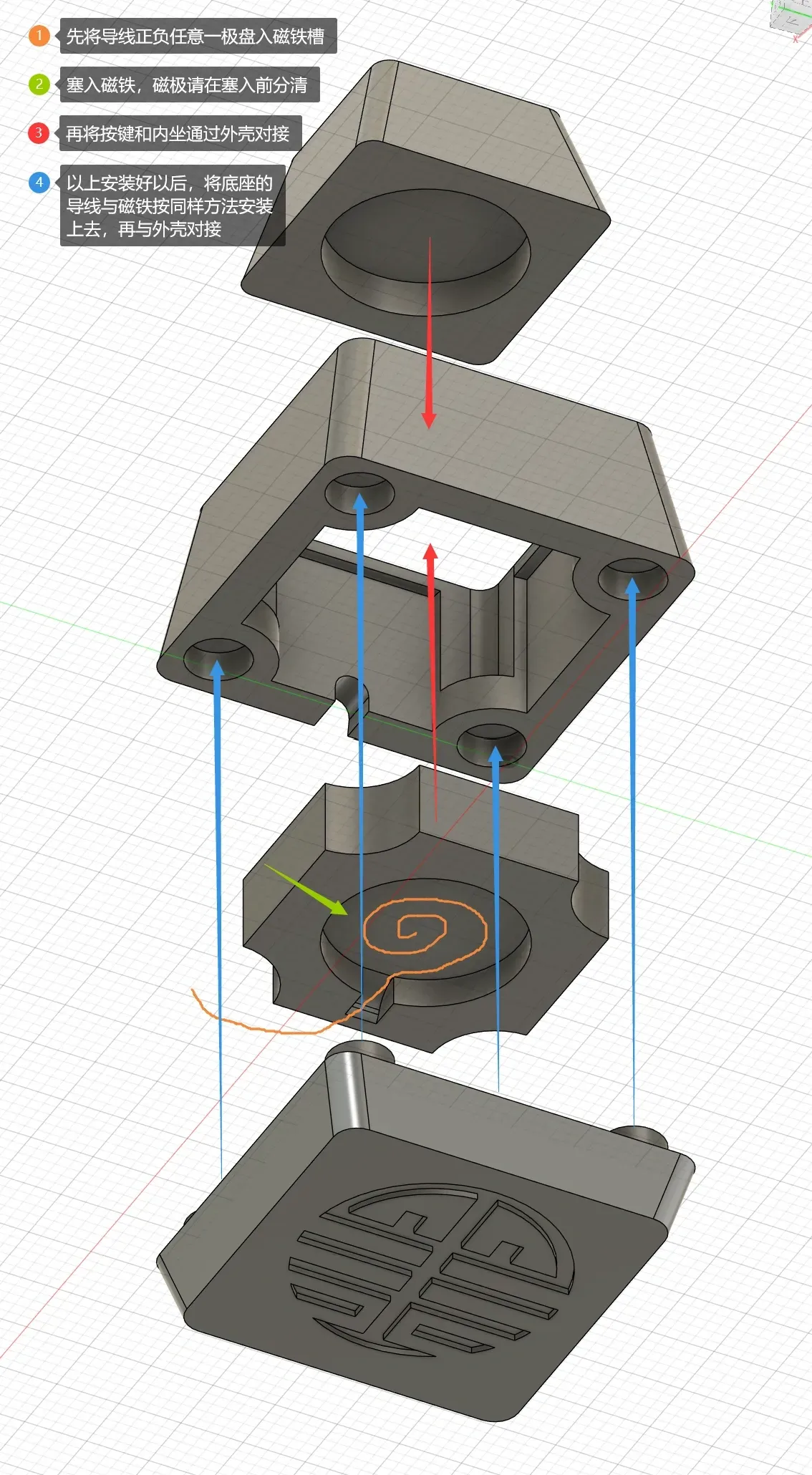
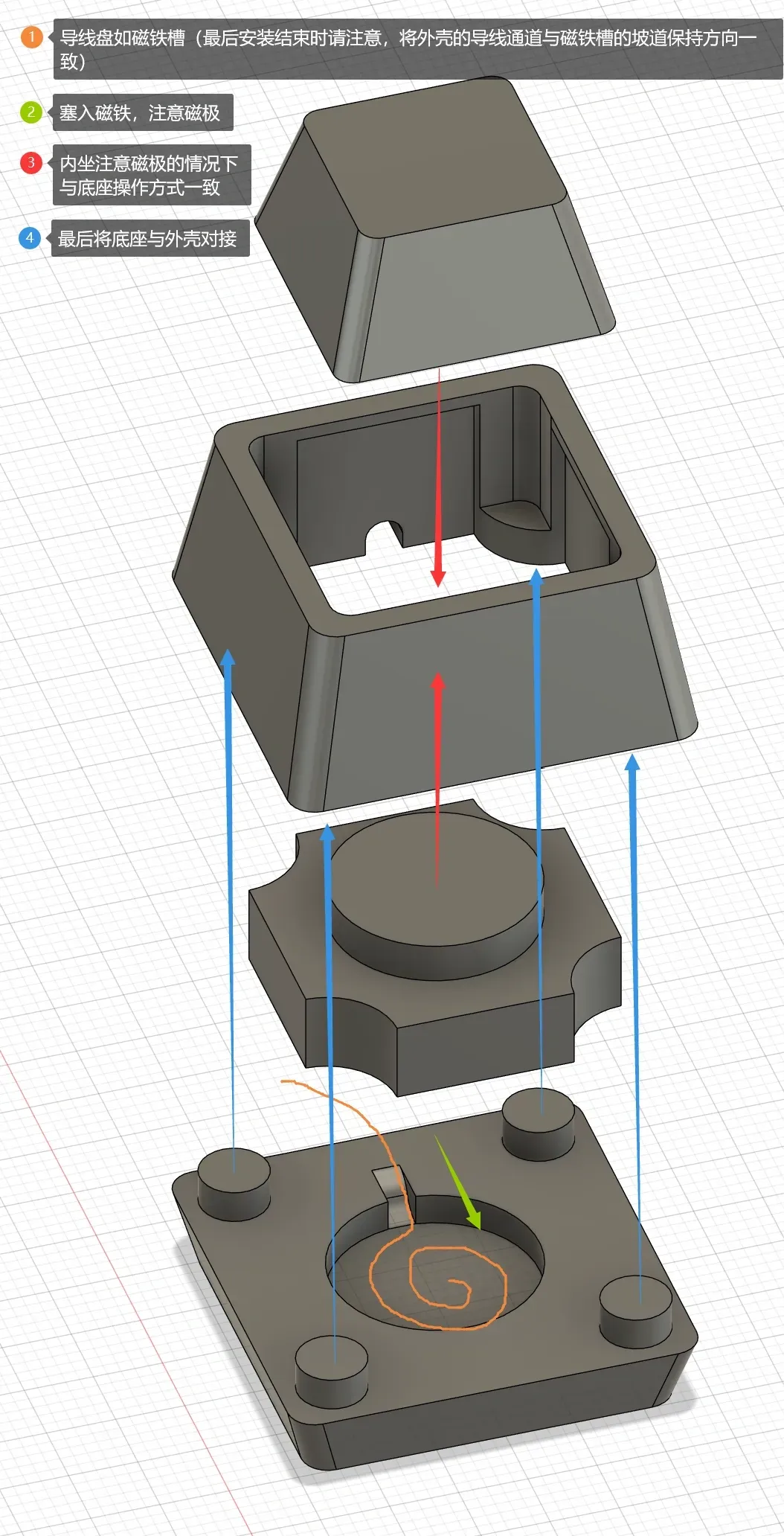
Functioning as a power button, its mechanism involves incorporating a conductor, with the positive and negative poles each connected to a magnet, directly pressed beneath the magnets. Upon installation, pressing the button causes the two magnets to make contact and short-circuit. Alternatively, a USB cable can be severed, with two wires connected to the power's positive and negative poles, leading to the magnets, and two wires connecting to the HDD's positive and negative poles. An LED bulb is embedded beneath the button, and the button itself is printed using a transparent material, illuminating upon power-on, enabling the frequency of computer data retrieval to be ascertained via flashing.
Strong magnets should be purchased separately; dimensions: 15mm diameter, 2.5mm thickness.
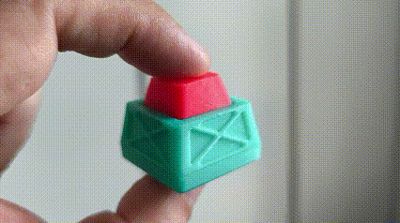
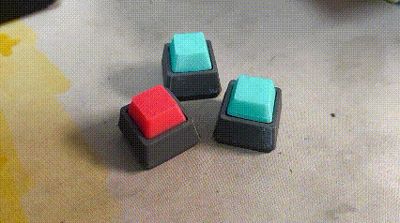
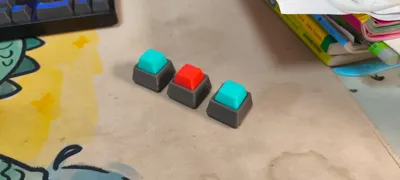
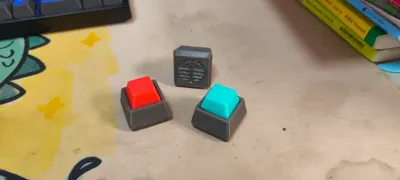
Numerous revisions were undertaken; the two blue iterations were ultimately unsuccessful, exhibiting either operational sluggishness or impractical design.
Minor components could be added to this button in the future; however, given its diminutive size, printing precision remains somewhat limited.
Due to a recent temperature drop, printed items are now exhibiting a pronounced tendency towards warping; therefore, ambient temperature should be elevated during printing to mitigate this.
Supports and a brim are included; parameters are fully optimized for immediate printing. If environmental conditions are optimal, and warping is not a concern, the brim can be omitted; however, at present, substantial warping of the base is observed under typical ambient temperatures.
License



Comment & Rating (0)