
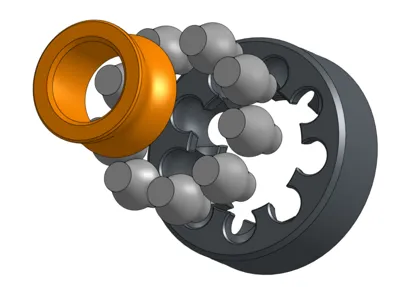
608 Bearing (Roller Bearing)

Print Profile(5)


Description
Attention!!!
The print profiles have been tested in Bambu Studio. With other slicers, a different calculation in gap filling might lead to the rollers fusing with the central sleeve, which naturally prevents functionality
Hello makers,
here is my attempt to make a 608 ball bearing printable
Now I want to share the result with you
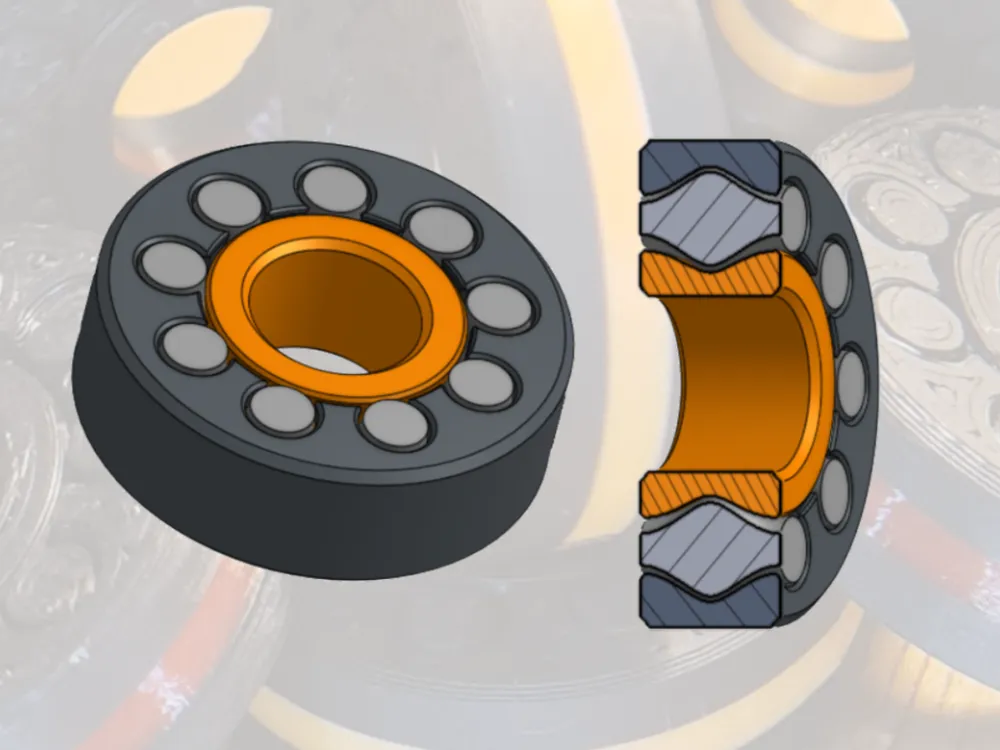
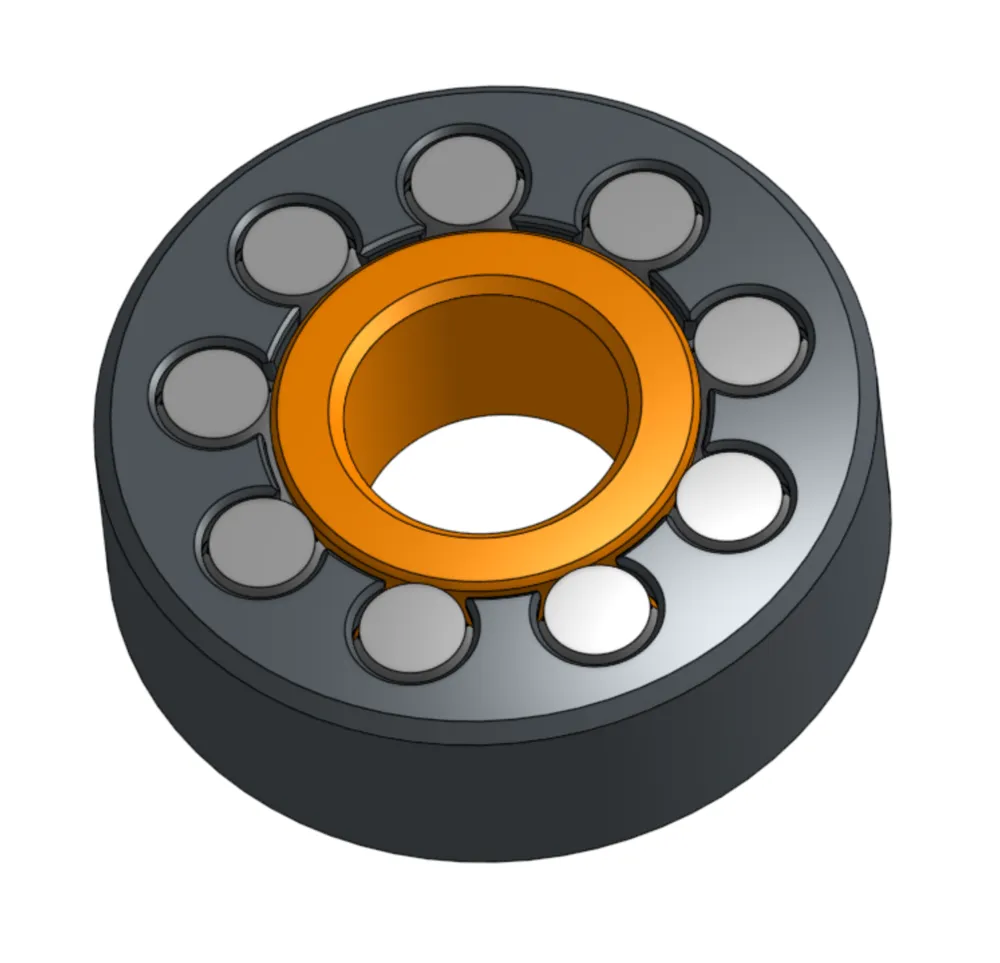
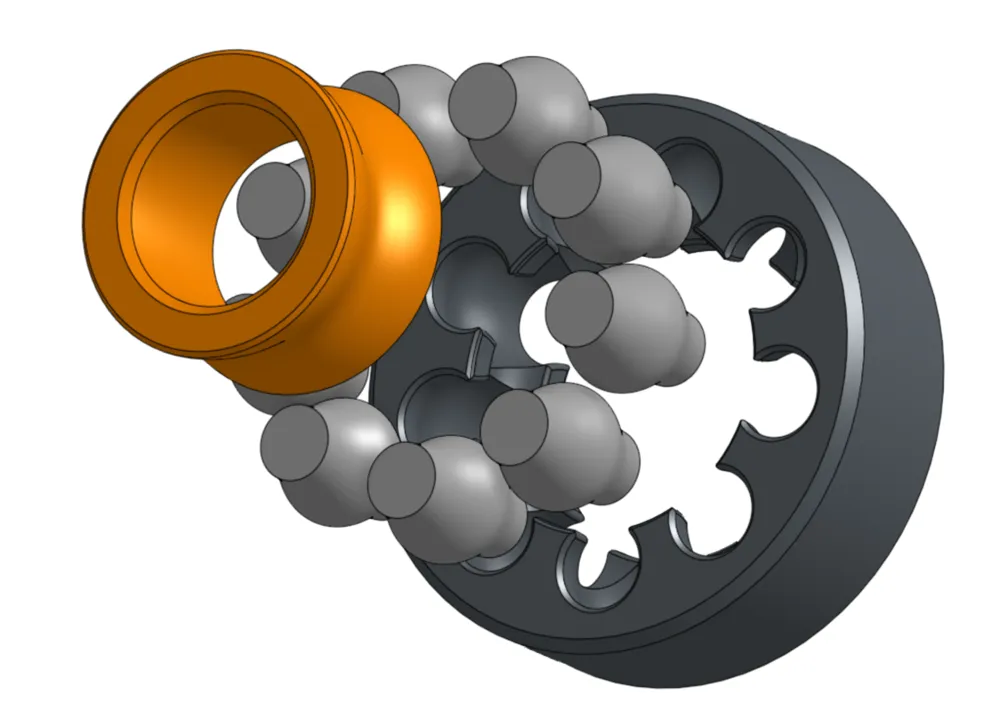
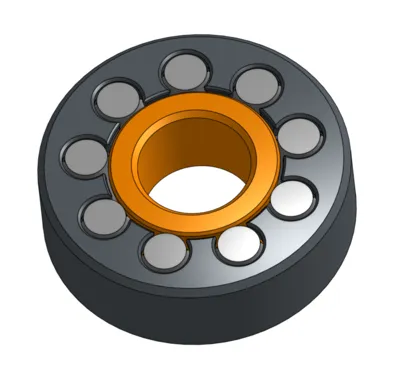
The 608 is designed as a roller bearing. Instead of balls, it has rollers inside for low rolling resistance. The bearing rotates very smoothly, is robust, and ideally suited for "lighter" tasks. ;-) For heavier tasks, I have a plain bearing in my assortment. You can find it here
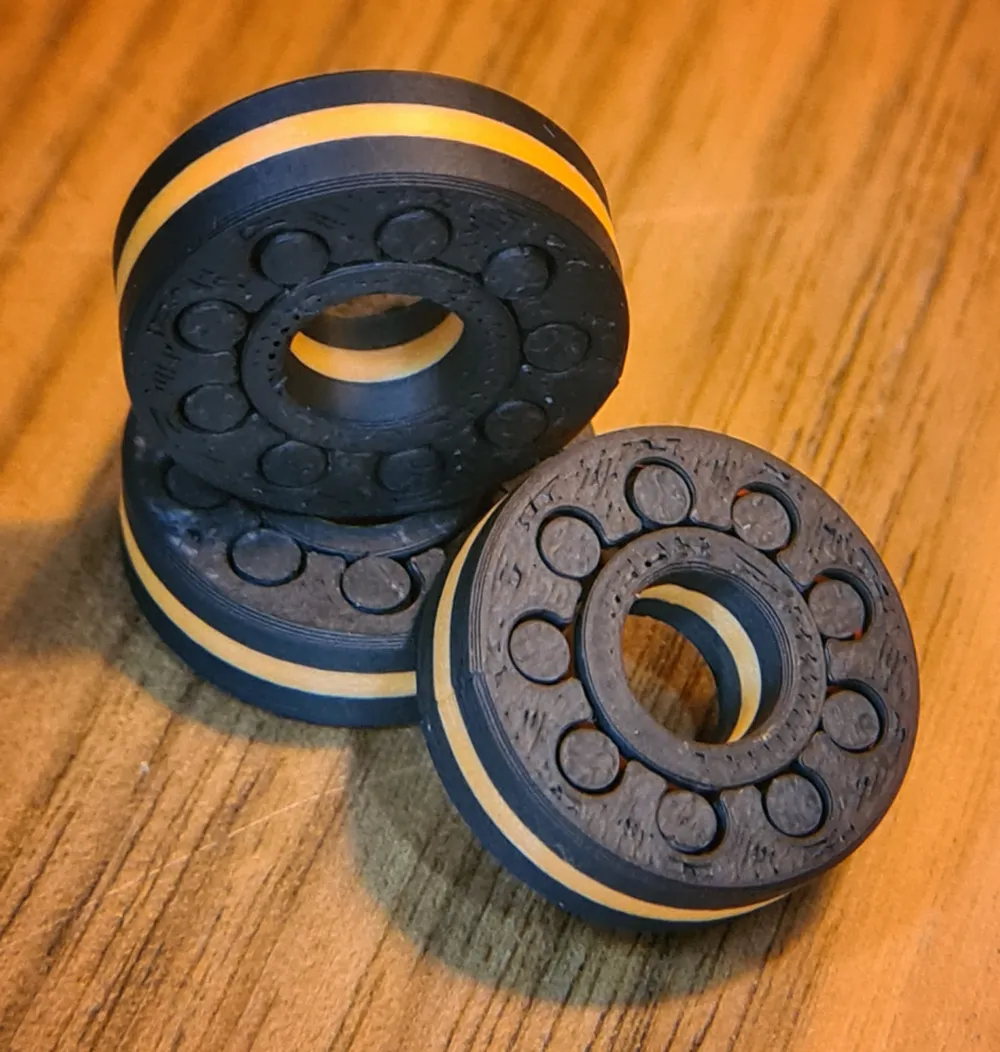
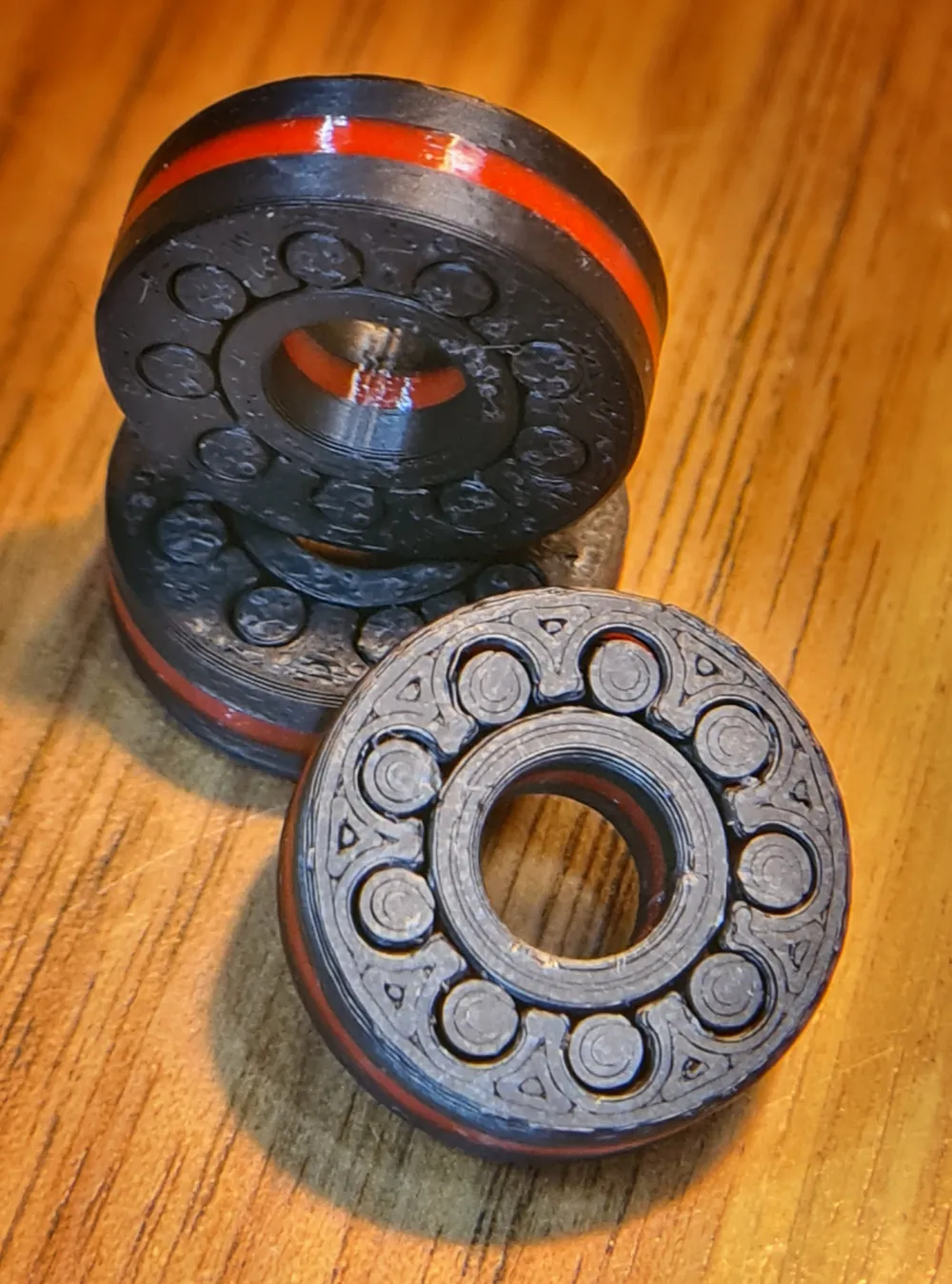
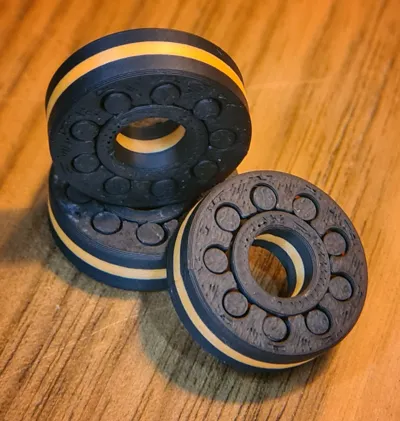
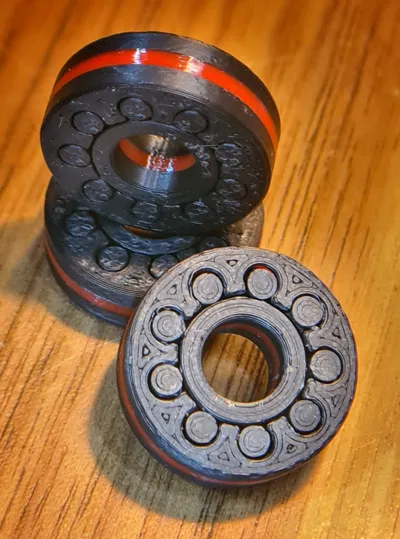
In this project, there are two print plates. The first plate is suitable for AMS and performs a color change on different layers. It looks cool and not everyone has it. The second plate is designed for a single-color print. For all those who only care about the bearing's functionality
I recommend PETG for printing. All other filaments (except TPU and similar) should also work without issues. After printing, the bearing might stick a bit. Here, you should simply help it along with your fingers and push the inner race back and forth. The rollers usually free themselves during operation. ;-) It helps if your printer is well-tuned and your filament is sufficiently calibrated. To check this, I also have a tolerance meter for printing
Feel free to post pictures in the comments
Happy printing
Notes on the print profiles:
General:
- use a smooth print plate
- when printing with PETG (ABS), pay attention to bed adhesion (spray adhesive)
- the quality of the first layer is important
- print slowly
- keep your nozzle clean and optimize your printer and filament settings
Profile 1:
- the bearing has a clearance of 0.2mm between the rollers
- in my tests, I found the fewest printing problems with this
- I recommend PETG for the best performance
- it might be necessary to break some rollers free after printing
Profile 2:
- the bearing has a clearance of 0.25mm between the rollers
- the bearing has the smoothest operation of all versions, but is also accordingly rattly ;-)
- I recommend PETG for the best performance
Profile 3:
- the bearing has a clearance of 0.15mm between the rollers, making it the most stable
- in my tests, I could only print a functional bearing with PLA
- if your printer cannot manage it, I recommend using a 0.2mm nozzle
- after printing, the rollers and inner race must be broken free
Profile 4&5:
- these are the old profiles with 11 instead of 9 rollers
- the bearings also work and therefore were not deleted
- the decision is yours
Boost Me (for free)
*** Thank you for the support, Makerworld rocks! ***
License

You shall not share, sub-license, sell, rent, host, transfer, or distribute in any way the digital or 3D printed versions of this object, nor any other derivative work of this object in its digital or physical format (including - but not limited to - remixes of this object, and hosting on other digital platforms). The objects may not be used without permission in any way whatsoever in which you charge money, or collect fees.


Comment & Rating (233)