
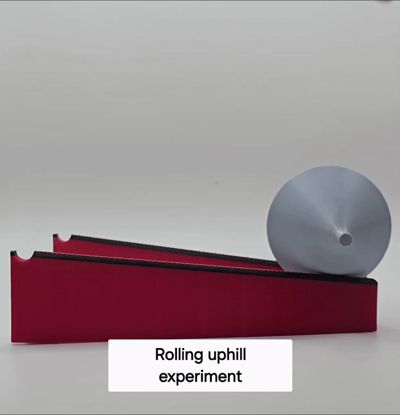
The Rolling Uphill Experiment (With calculations)
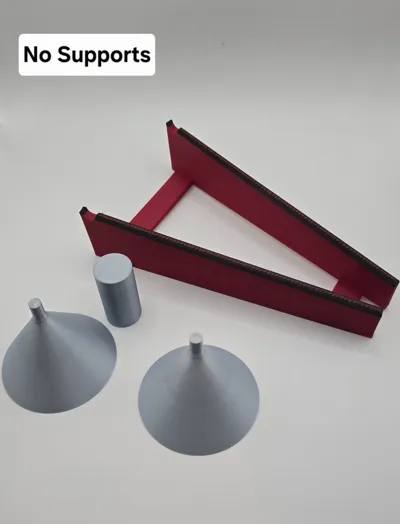
Print Profile(2)


Bill of Materials

Description
The Rolling Uphill Experiment: A Fascinating Physics Phenomenon
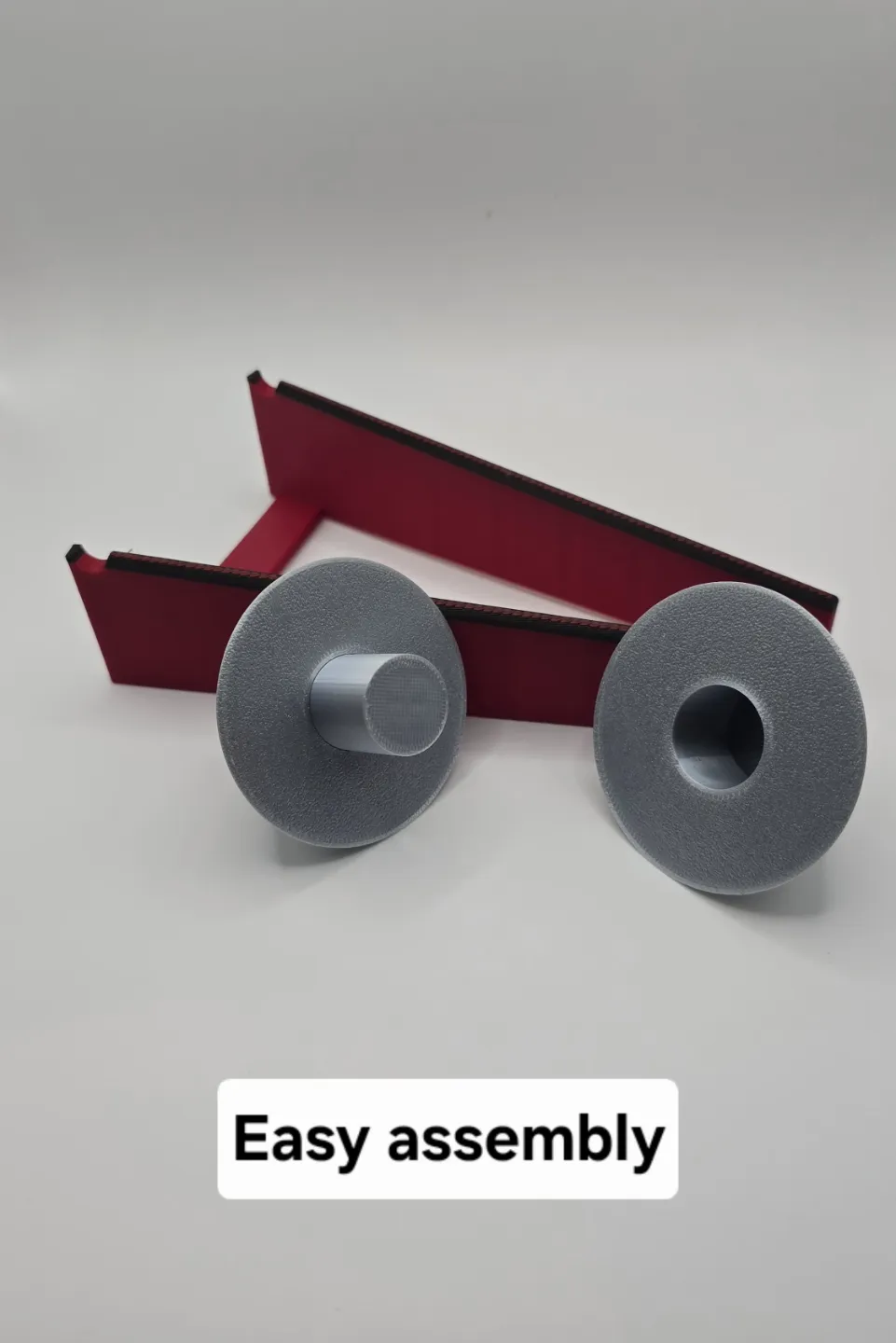
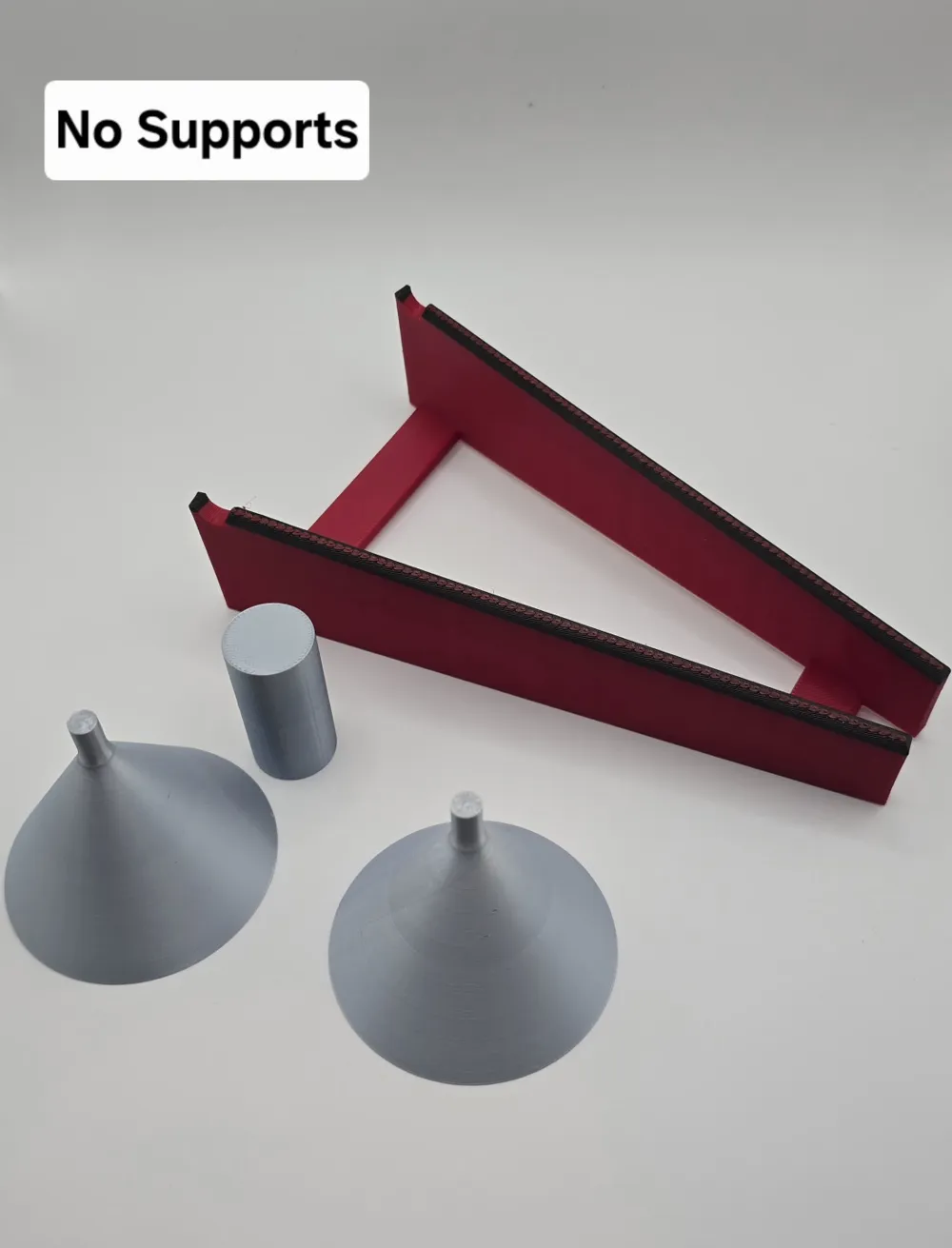
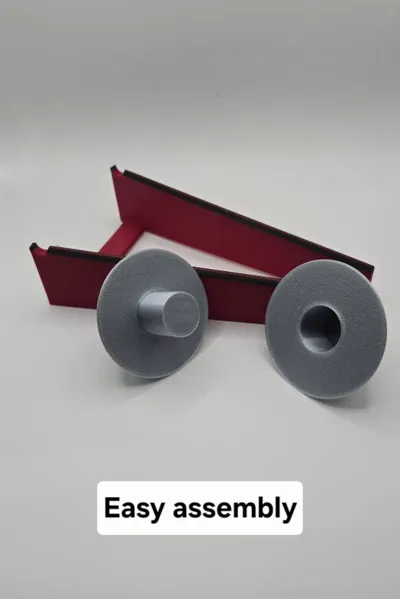
Easy to print ! With calculation example at the bottom to make your own !
The rolling uphill experiment is a captivating demonstration that challenges our everyday understanding of physics. At first glance, it seems
to defy logic, objects are supposed to roll downhill, not uphill, right? Yet, under the right conditions, a specially designed object can indeed roll "uphill."
Let’s dive into how this seemingly paradoxical phenomenon works.
What Happens?
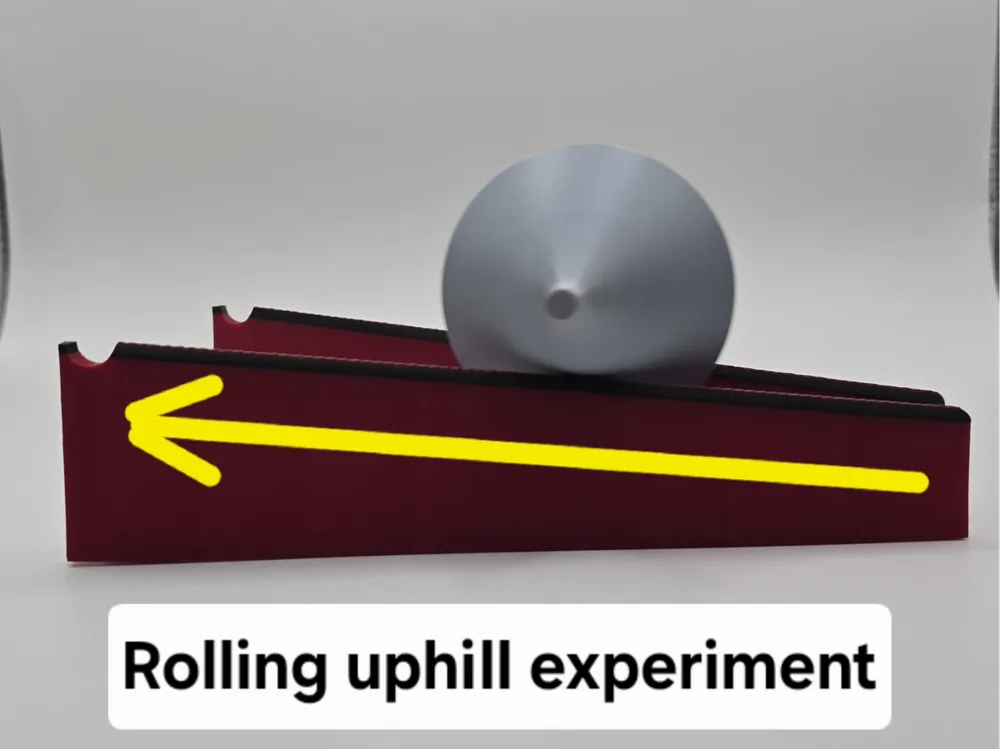

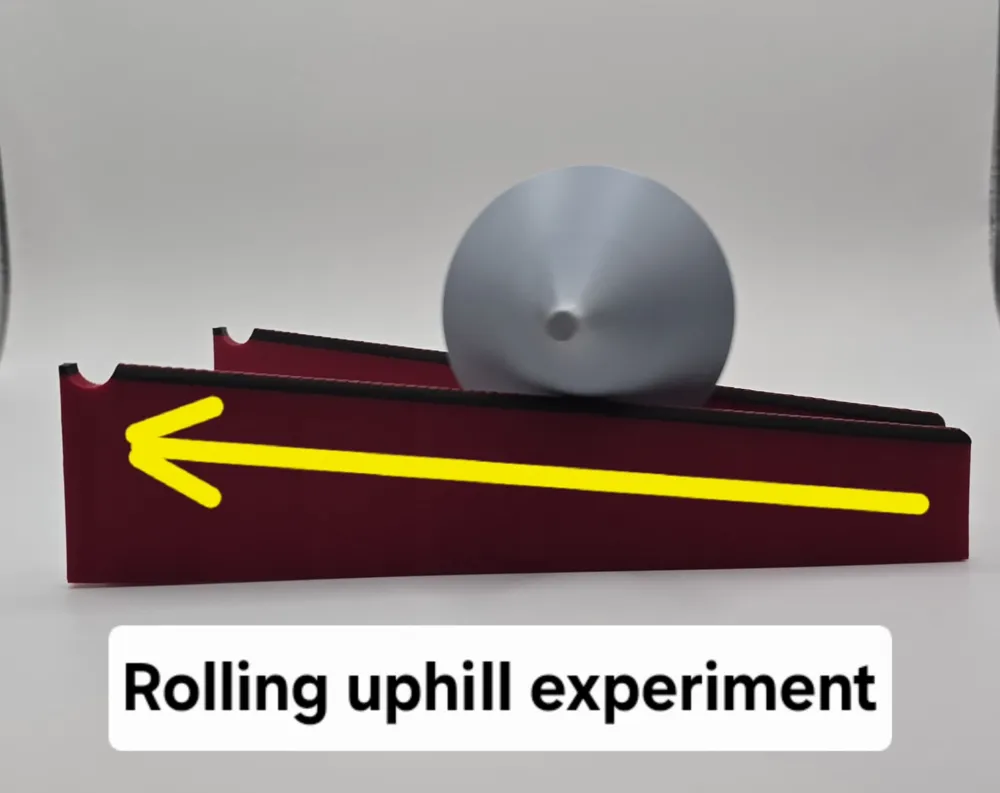
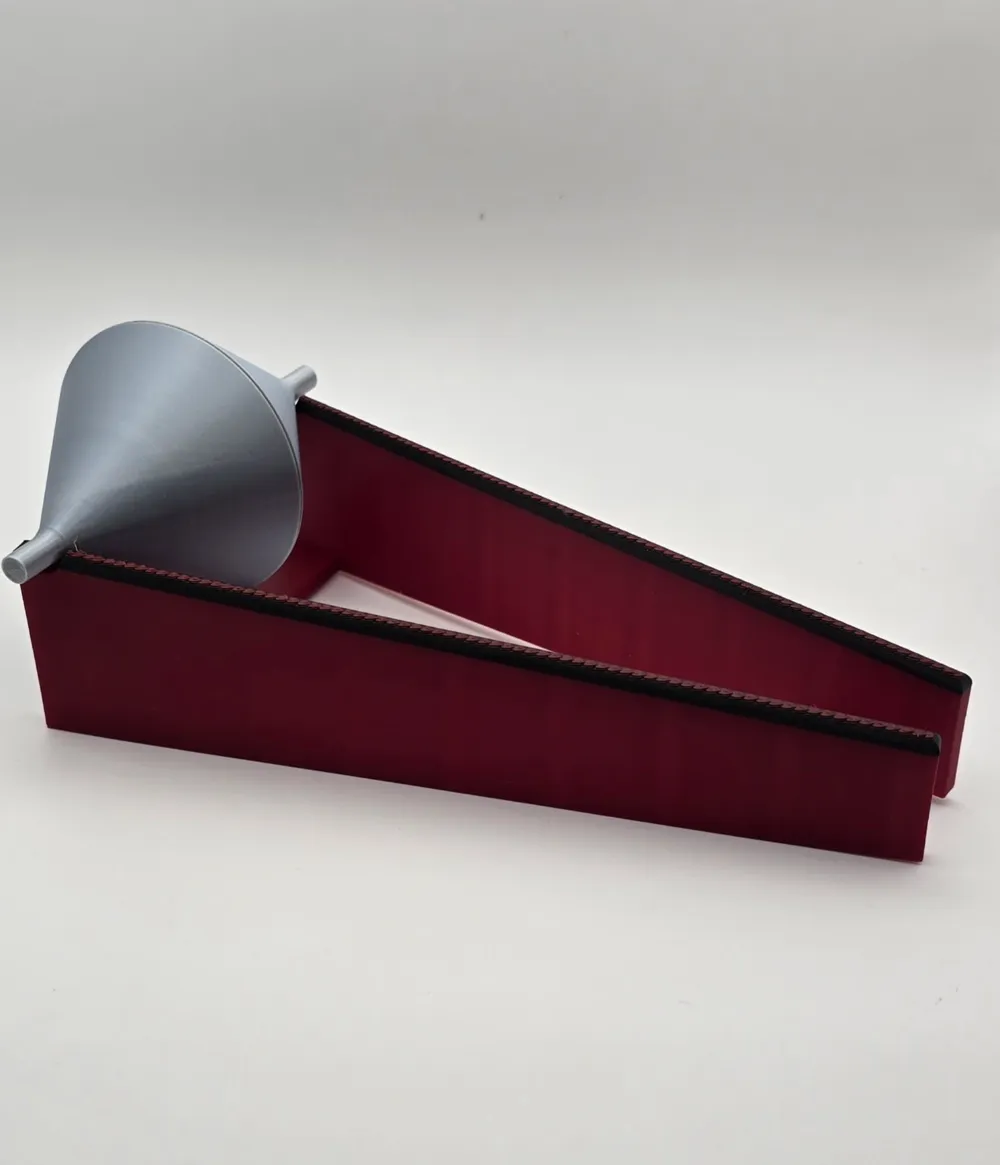
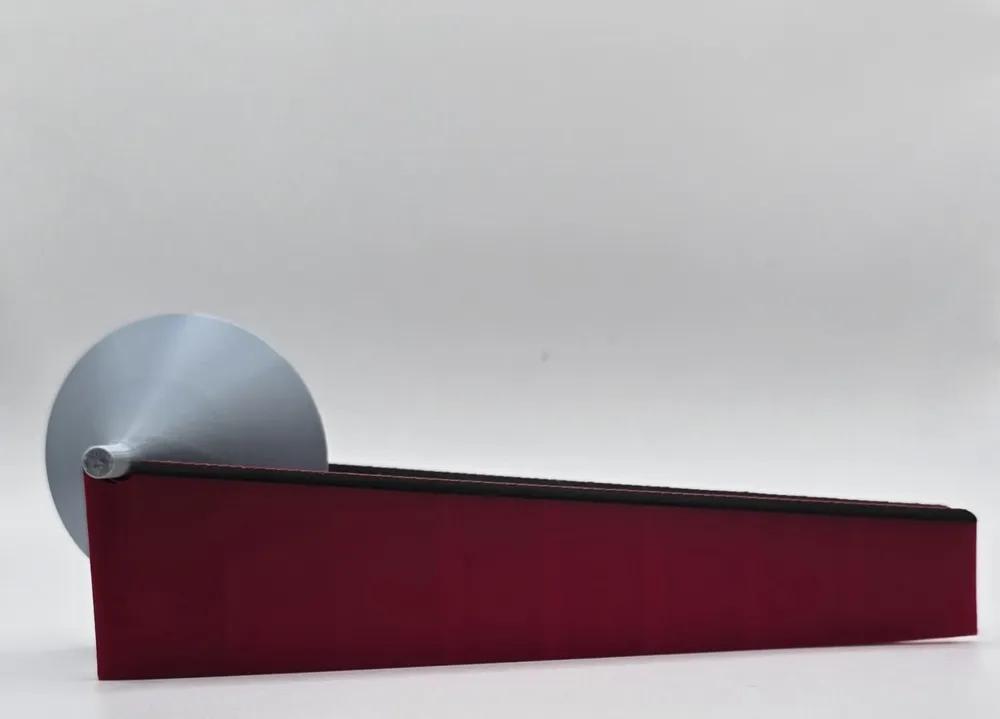
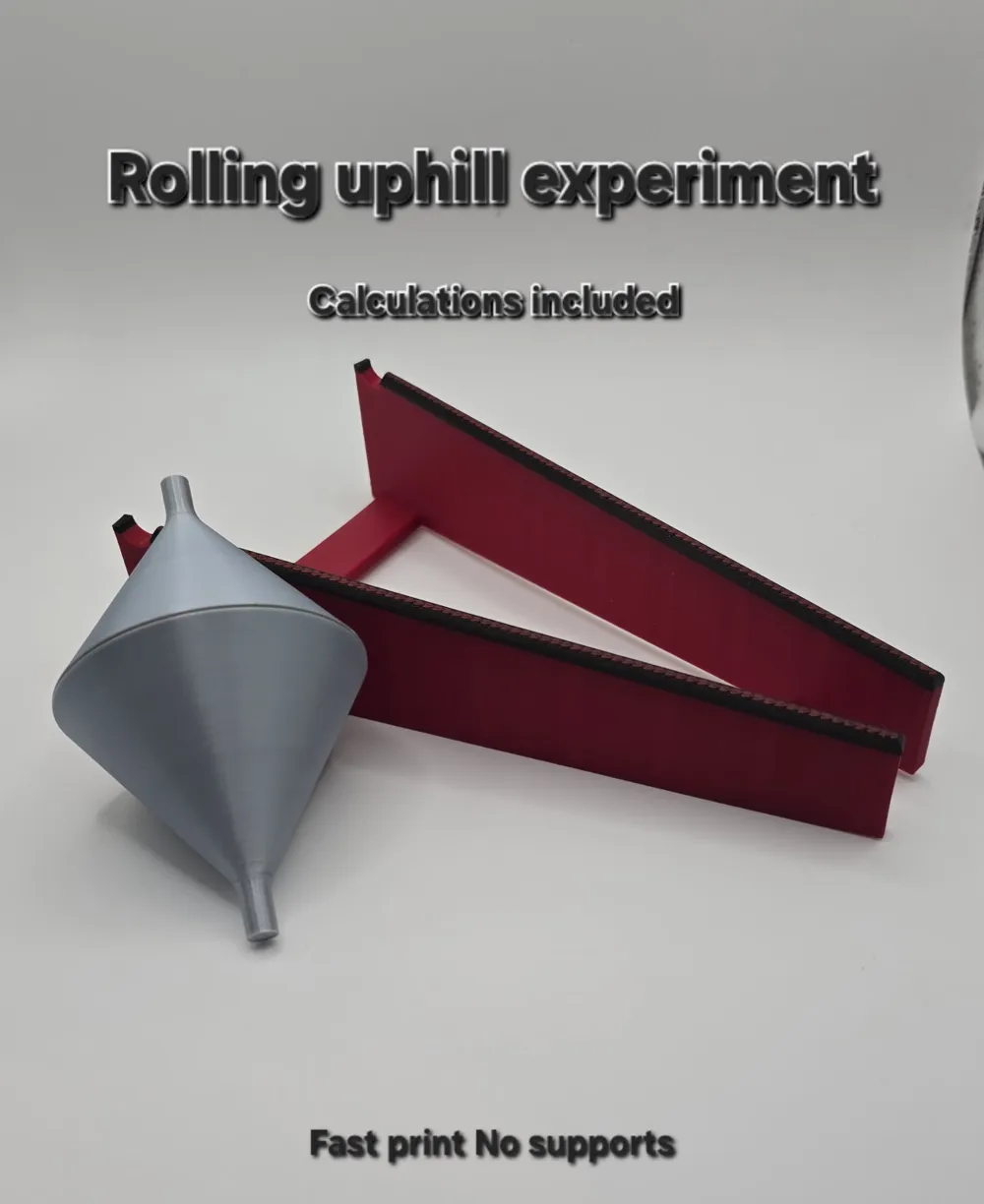
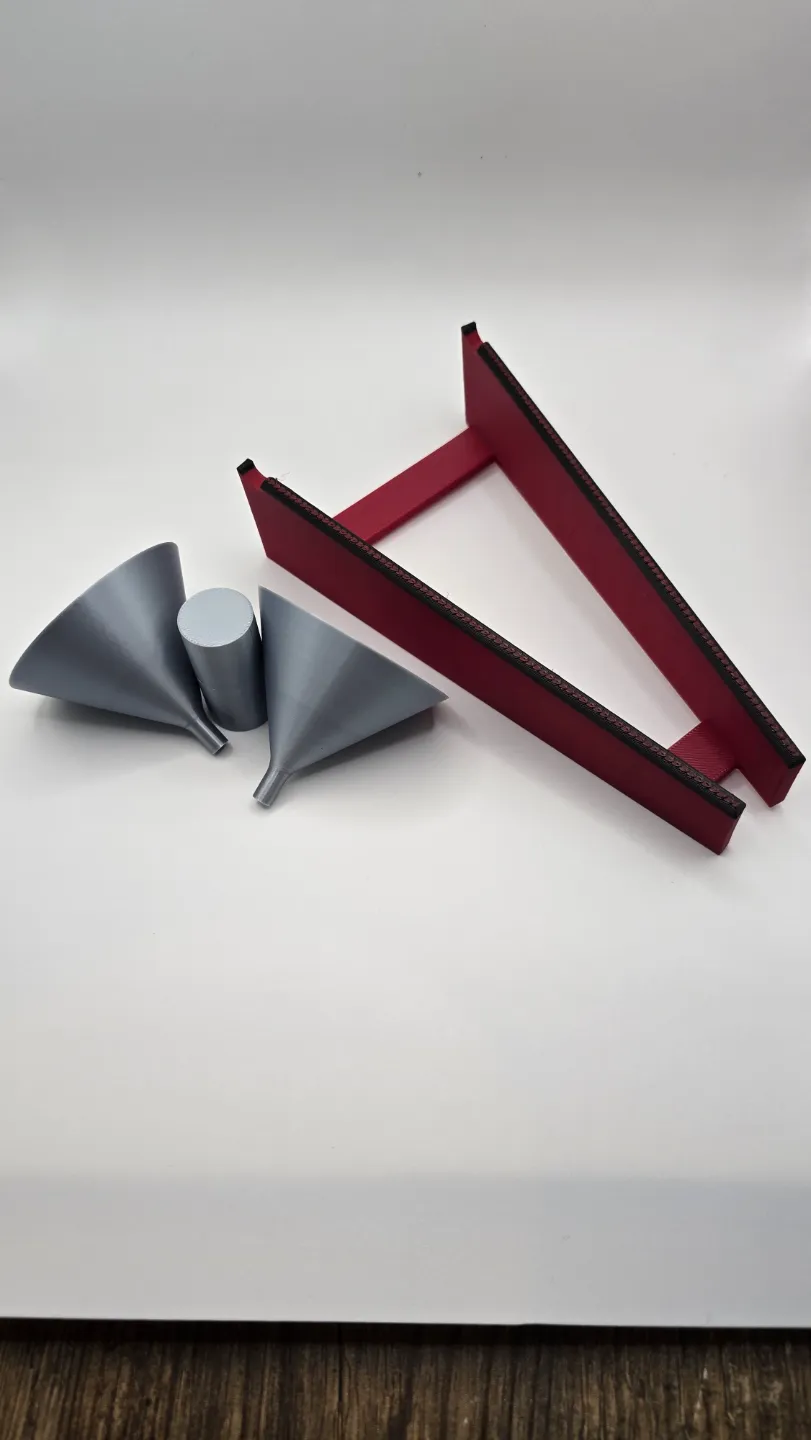

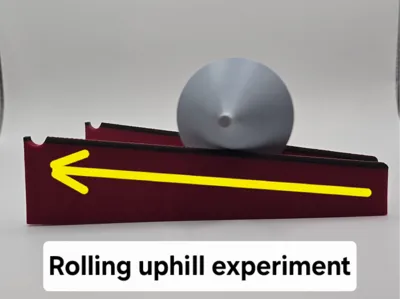
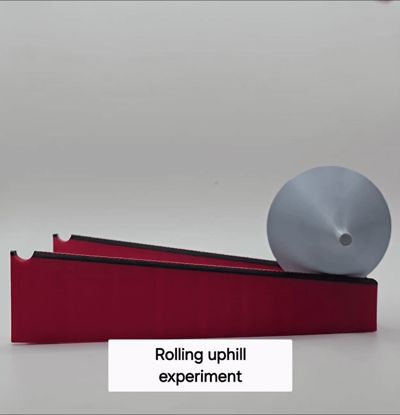
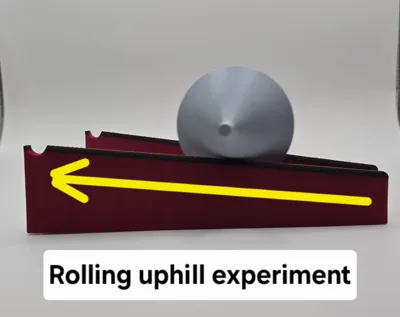
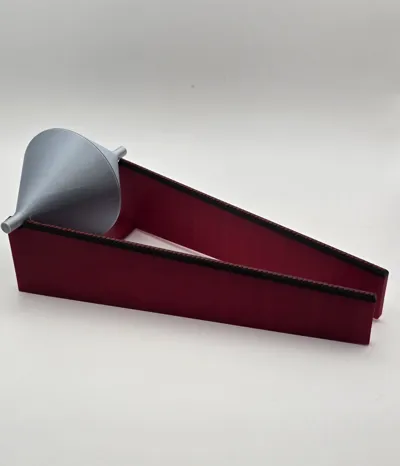
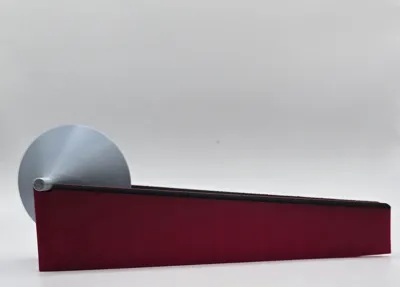
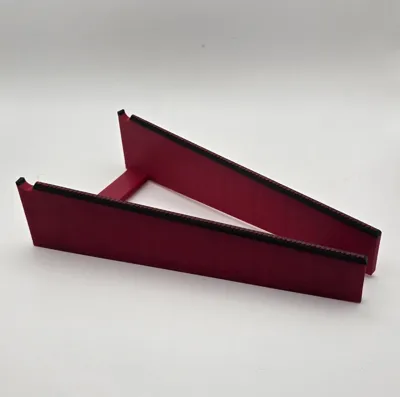
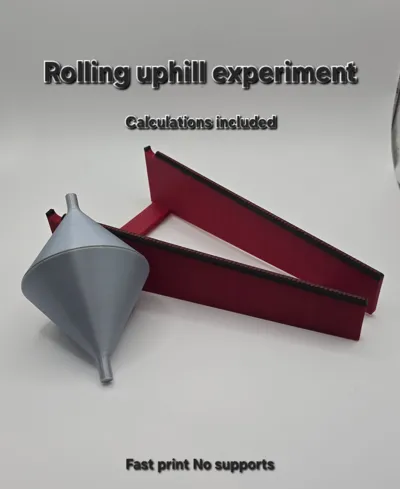
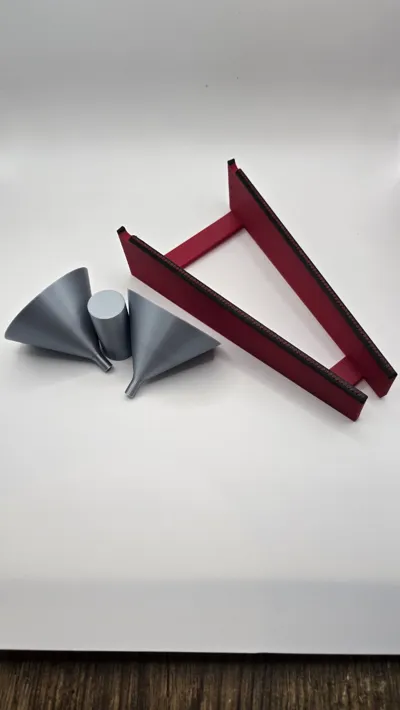
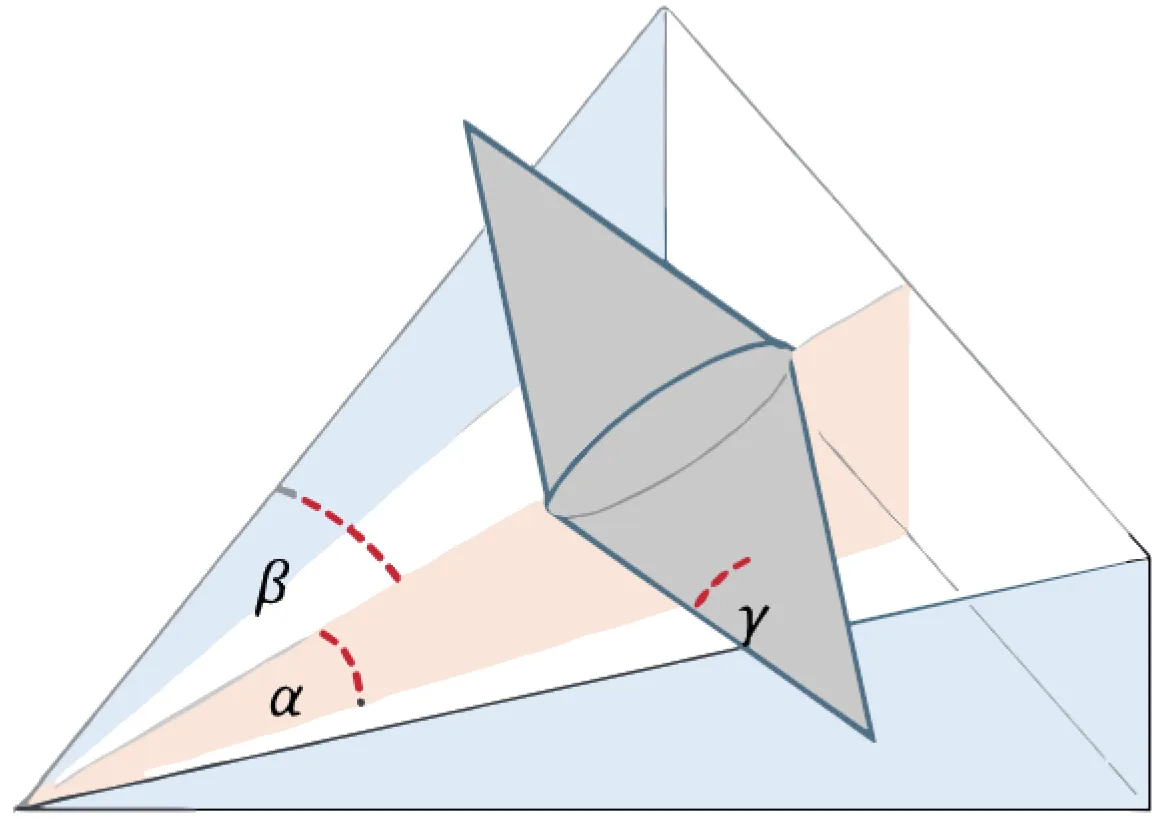
The experiment uses a double-cone object and a track arranged in a unique way. While the track appears to slope upward, the object rolls up the incline as if pulled by an invisible force.
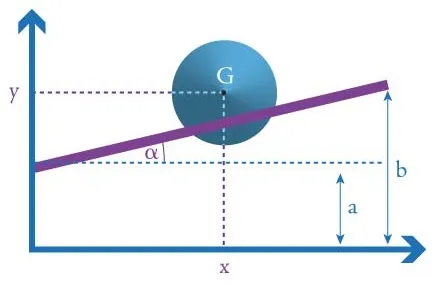
The key to understanding this lies in the center of mass. Every object naturally moves in a way that minimizes its potential energy. In this experiment, although the track is inclined upward, the double cone’s center of mass actually moves downward. This clever design makes it seem like the object is defying gravity when it’s actually just following the laws of physics.
The Setup
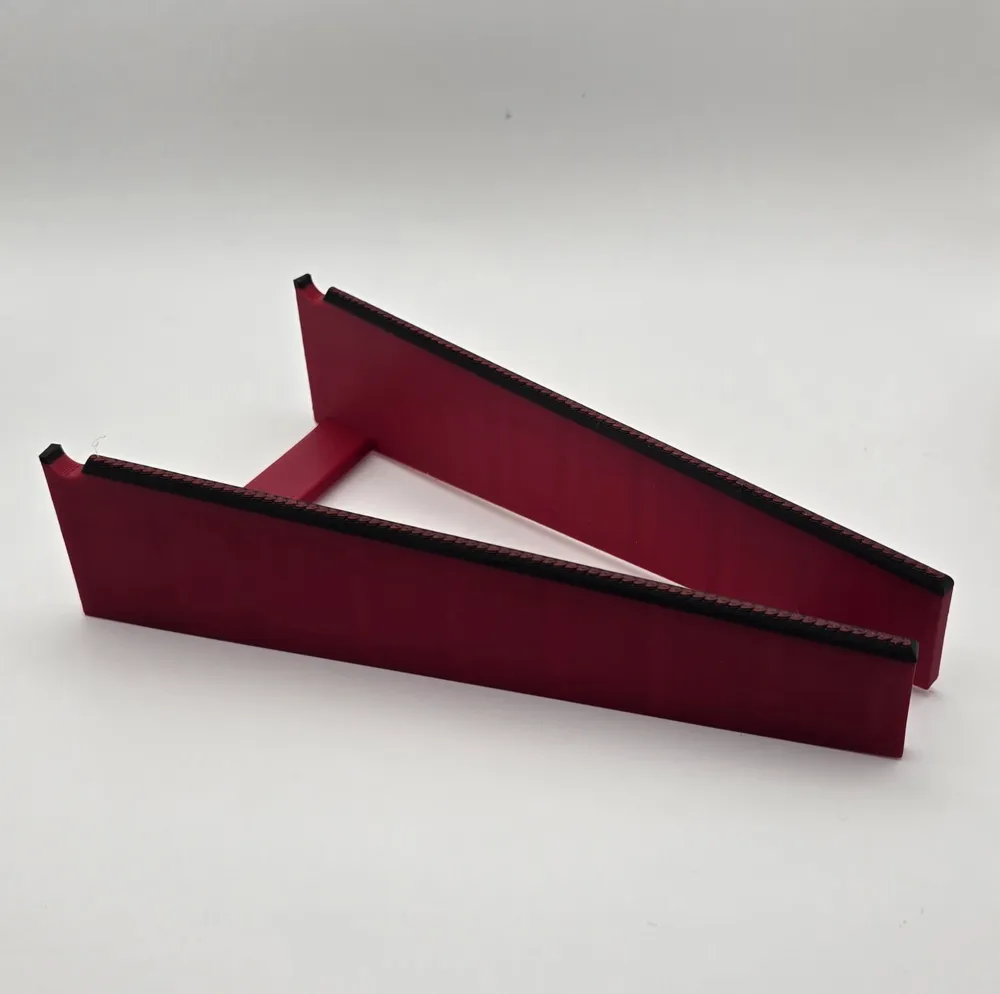
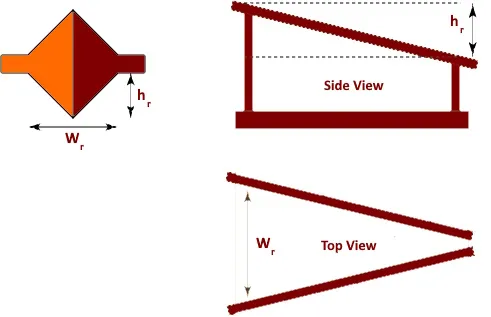
The track forms a V-shape that splits outward, and the object is a symmetrical double cone. Three critical angles determine the success of the experiment
The inclination angle of the track (α)
- The opening angle of the V-shaped track (β)
- The cone's angle (γ)
As the double cone rolls along the track, its center of mass lowers because the track’s widening accommodates the cone’s shape, creating the "rolling uphill" illusion.
The Science Behind It
Mathematically, the experiment depends on the relationship between these angles. For the rolling uphill phenomenon to occur, the tangent of the track’s inclination angle (tan α) must be smaller than the product of the tangents of the cone's angle (tan γ) and the V-shaped track’s opening angle (tan β).
This can be expressed as:
tan α < tan β × tan γ
This equation explains why the phenomenon occurs: the downward movement of the center of mass outweighs the upward slope of the track.
Real Observations
When tested with various double cones and track designs, this formula consistently predicts whether the object will roll uphill. The experiment provides a visual and quantitative way to explore fundamental principles in mechanics, making it a favorite for engaging physics students and sparking curiosity.
Conclusion
The rolling uphill experiment isn’t magic it’s physics! By cleverly designing the track and object, the experiment demonstrates how the center of mass and geometry interact to create surprising outcomes. It’s a powerful way to illustrate that even the most counterintuitive phenomena can be explained with simple physical principles.
Calculation example
tan α < tan β × tan γ
Let's assign values to the angles for the calculation:
- Inclination angle of the track α (alpha) : 10 degrees
- Half subtended angle of the tracks β (beta): 45 degrees
- Half subtended angle of the cone γ (gamma): 30 degrees
We use the tangent function (tan) to calculate each term:
tanα=tan(10∘) = 0.1763
tanβ=tan(45∘) = 1
tanγ=tan(30∘) = 0.5774
Now, multiply tanβ and tanγ
tanβ⋅tanγ=1⋅0.5774=0.5774
The condition for the cone to roll uphill is:
tanα<tanβ⋅tanγ
Substitute the values:
0.1763<0.5774
Conclusion
Since 0.1763<0.5774,
The condition is satisfied. This means the cone will roll "uphill" on the track because the center of mass is lowering overall, fulfilling the physics requirement.
Documentation (1)
License

You shall not share, sub-license, sell, rent, host, transfer, or distribute in any way the digital or 3D printed versions of this object, nor any other derivative work of this object in its digital or physical format (including - but not limited to - remixes of this object, and hosting on other digital platforms). The objects may not be used without permission in any way whatsoever in which you charge money, or collect fees.


Comment & Rating (35)