
Astronomical Seasons
Print Profile(1)
Description
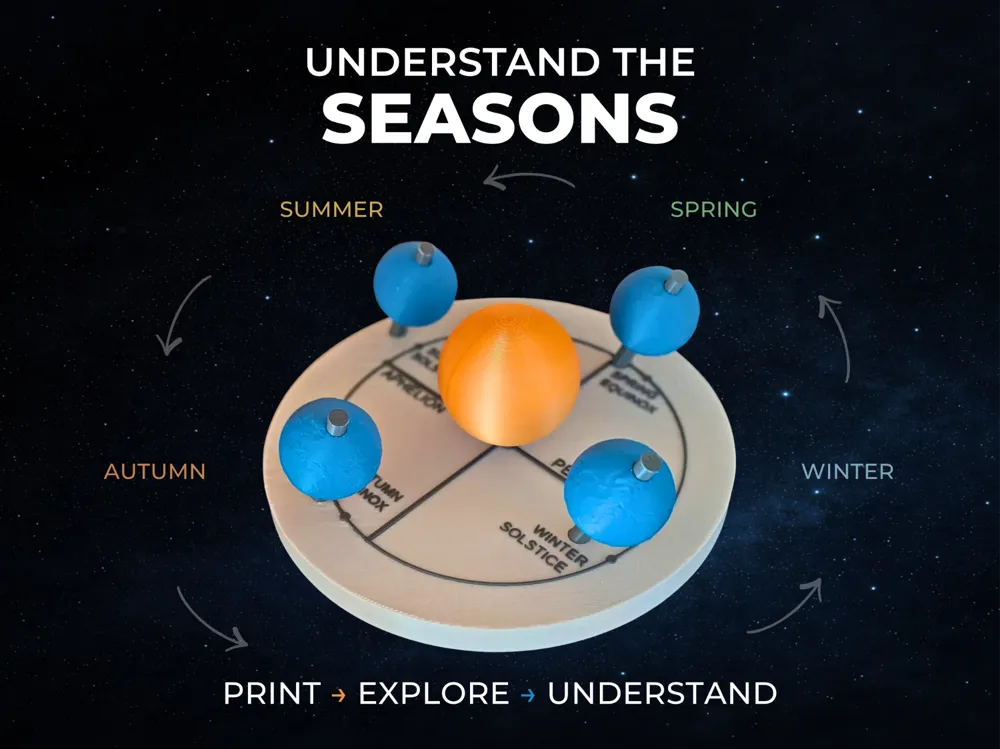
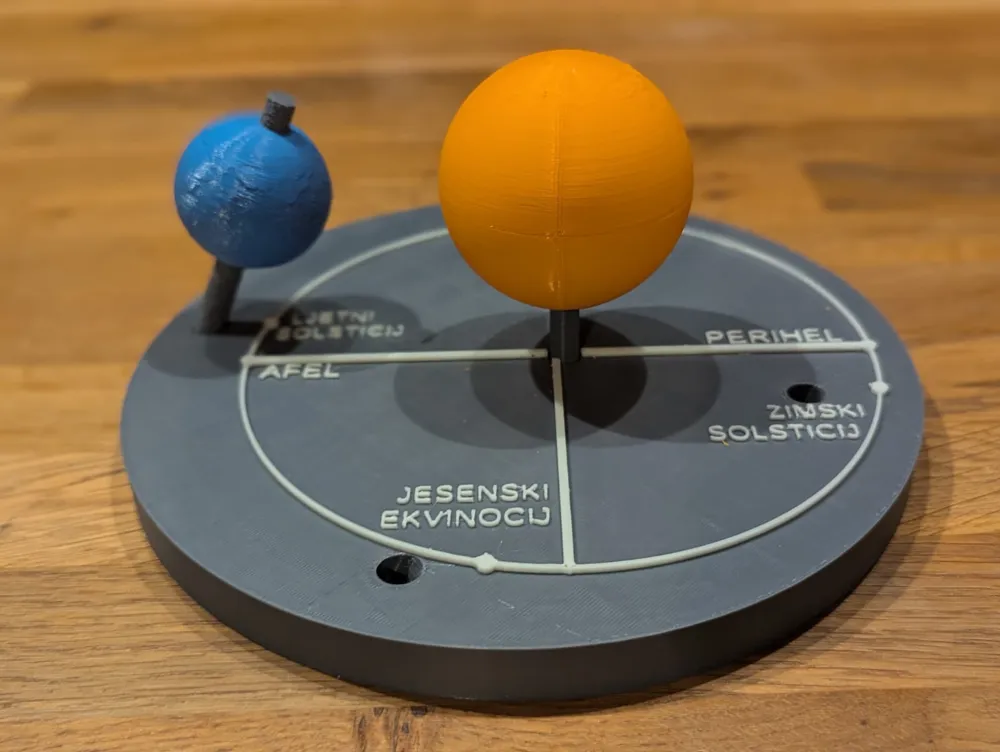
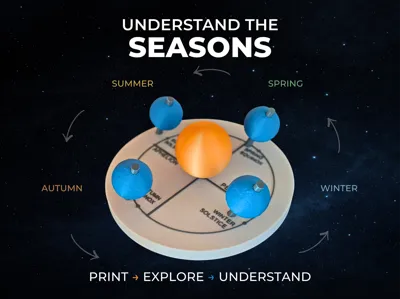
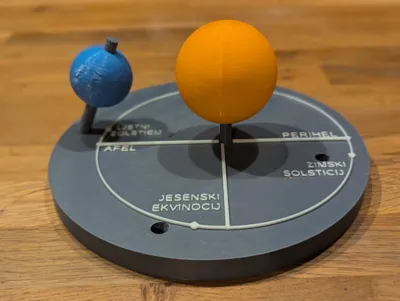
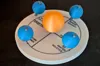
This is an educational model of the Sun, Earth, and Earth's orbit to illustrate and clarify why and when seasons change.
Astronomical seasons
The reason seasons exist is Earth's orbital tilt, i.e. its axis tilt of about 23,5 degrees to the plane in which it orbits the Sun (ecliptic plane). [The reason for the seasons is not Earth's distance to the Sun, which is a fairly common misconception.] Because of the tilt Earth's northern (or southern) hemisphere is sometimes inclined towards (Summer) or away from the Sun (Winter). The seasons start at the solstices or equinoxes (more about it can be found here), and interestingly enough the Earth is closer to the Sun during Winter than during Summer (at the northern hemisphere). Its closest point to the Sun is around January 5th (perihelion), and the furthest around July 5th (aphelion).
The model in a few words
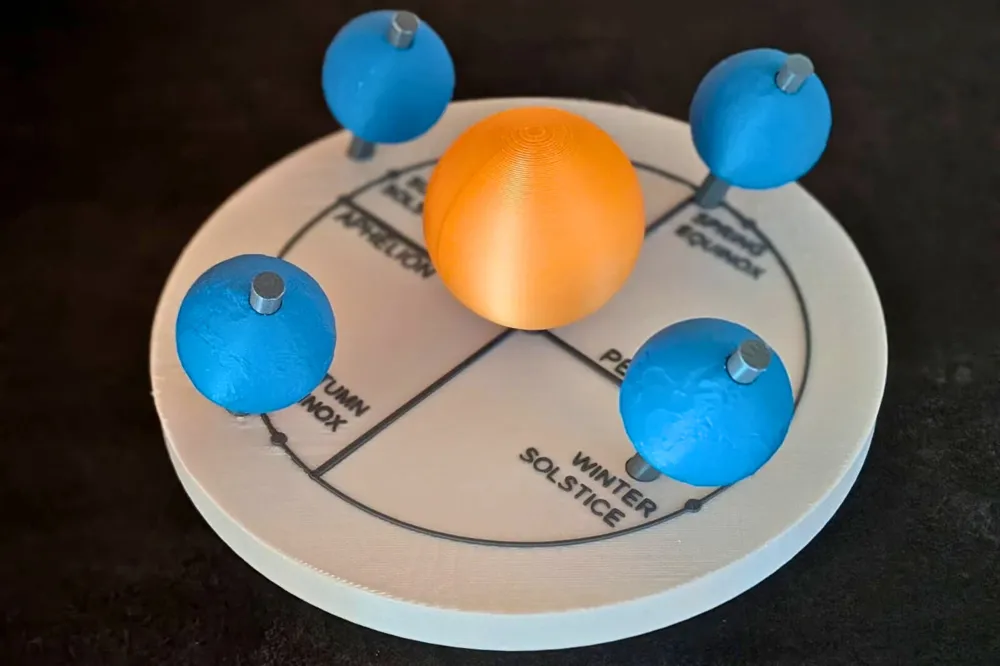
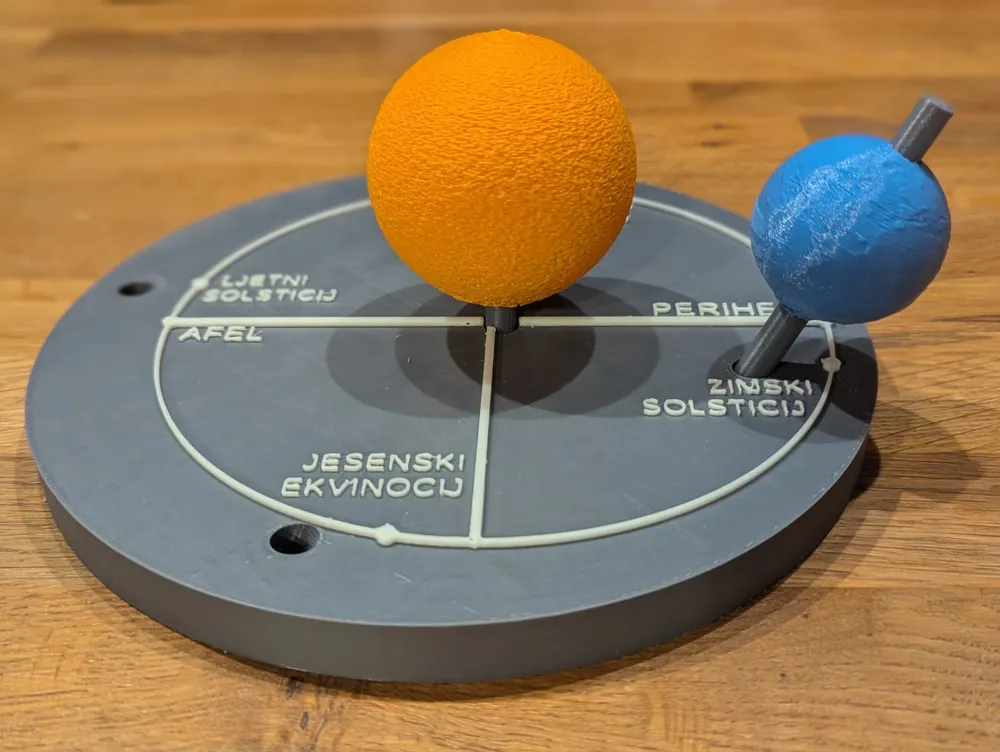
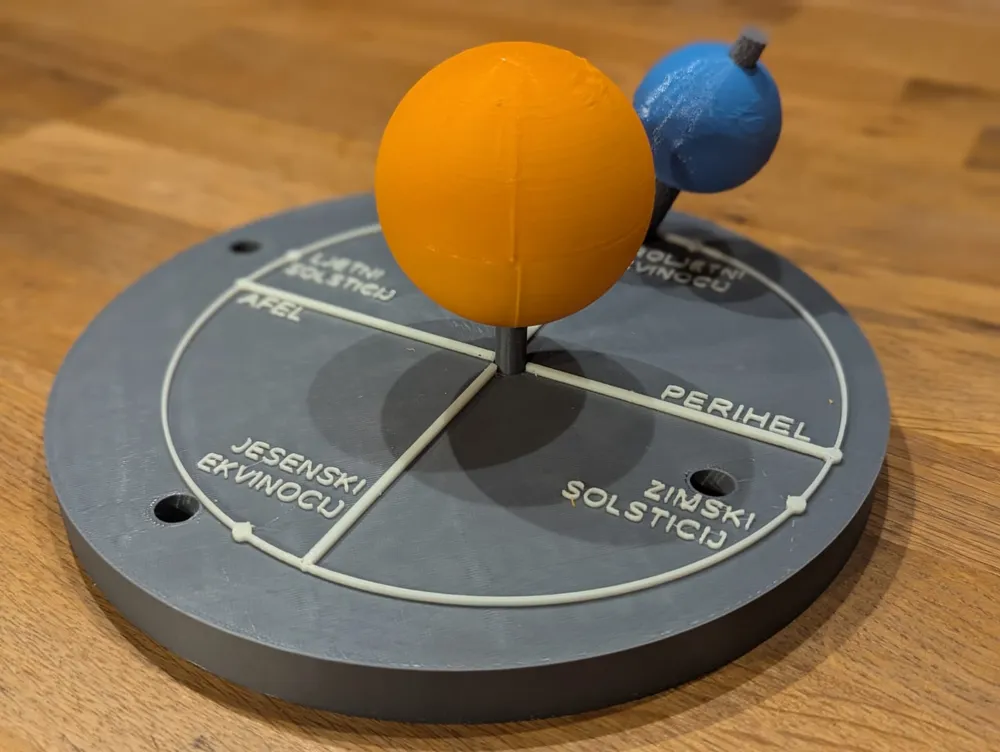
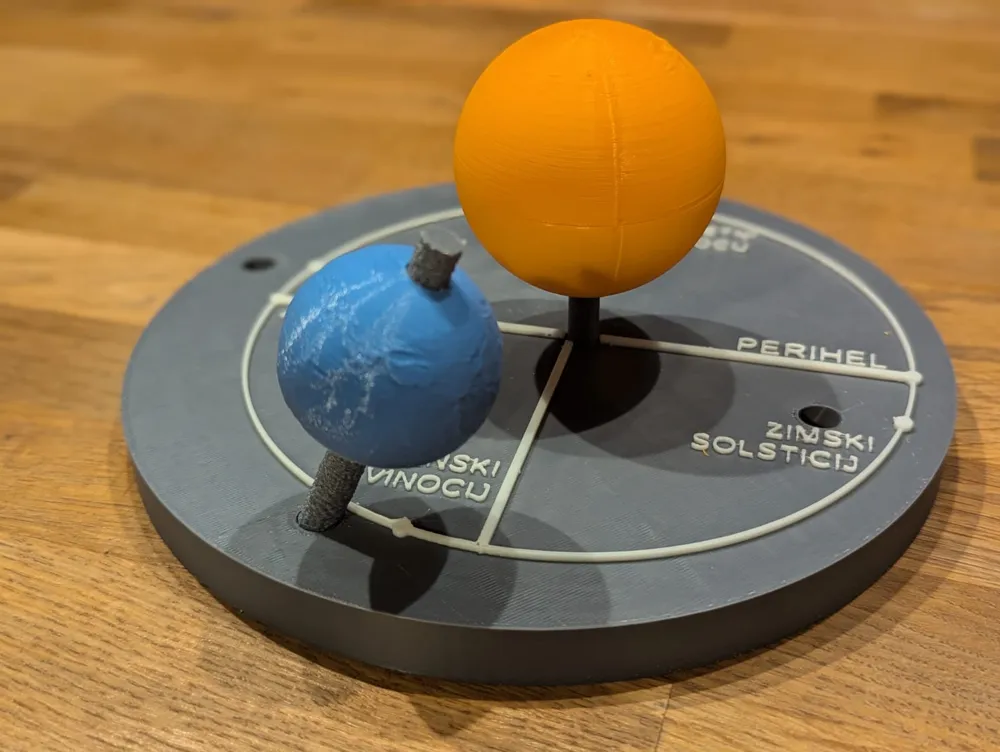
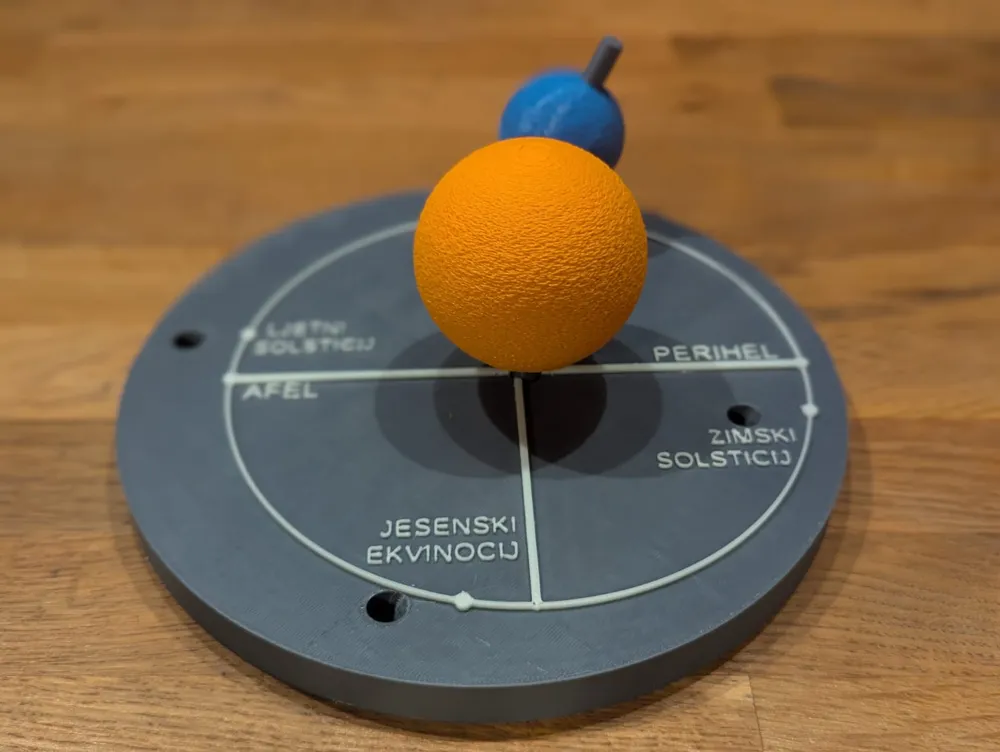
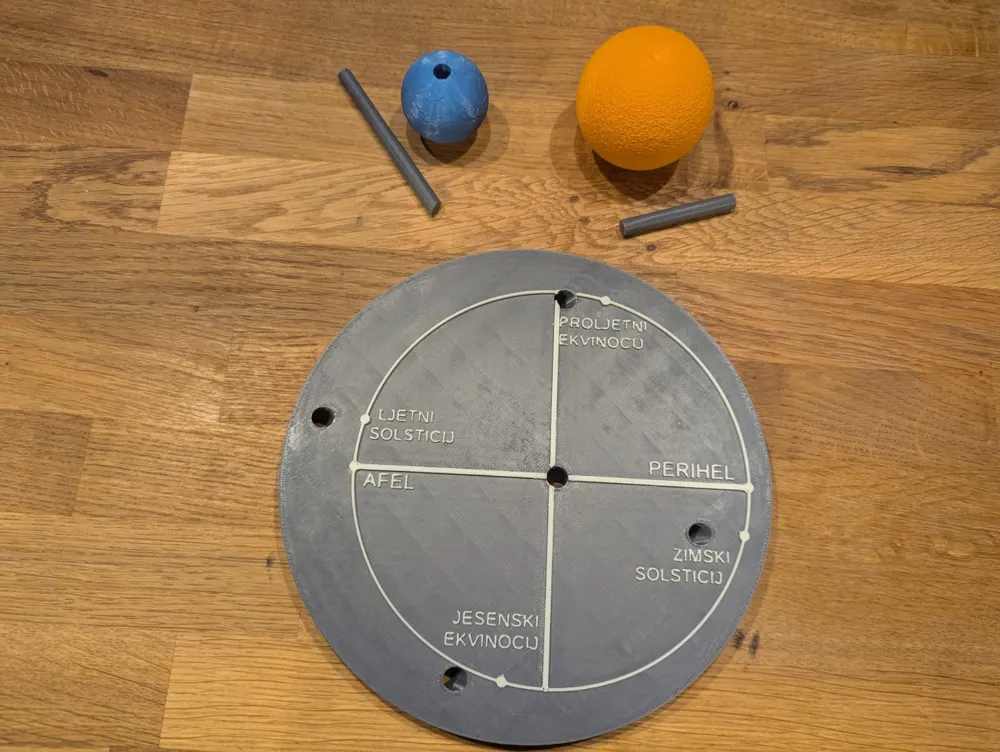
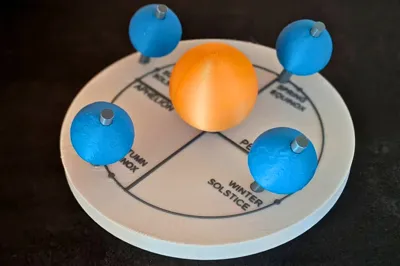
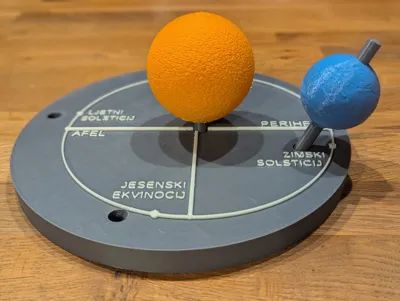
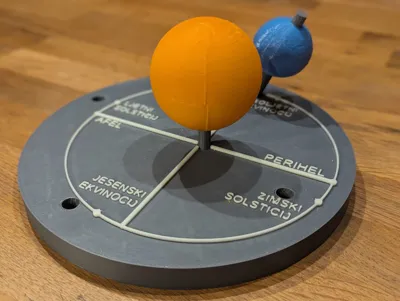
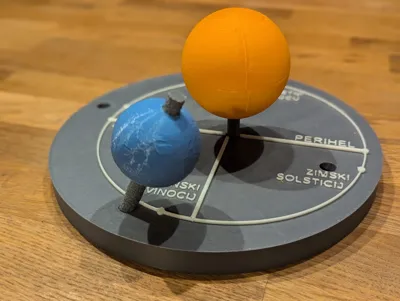
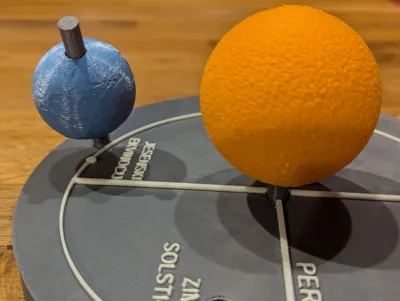
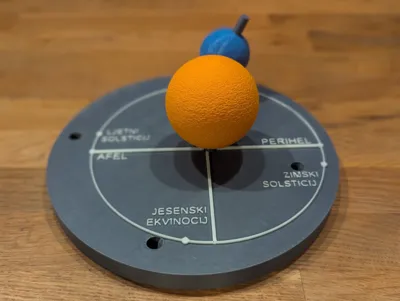
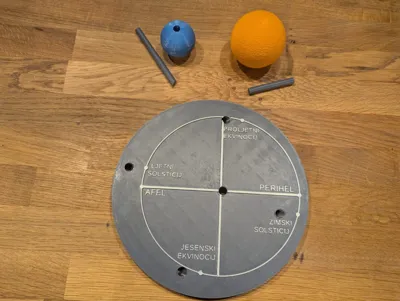
Earth's elliptical orbit and characteristic points in the orbit (aphelion, perihelion, solstices and equinoxes) are indicated. The holes in the cylindrical base are for the Sun (in one of the foci of the elliptical orbit), and the equinoxes and solstices. The equinox and solstice holes are inclined by Earth's tilt (23.5 degrees) so that Earth is properly inclined towards or away from the Sun at a given solstice/equinox. The holes are set away from the orbit by such an amount that for any given point the center of Earth is above the orbit indicated at the base.
Any feedback to improve the model is highly appreciated.
Files and how to 3d print
- Base: Cylinder of 20 cm in diameter and 1.5 cm height. I printed it with standard 0.2 layer height settings and changed filaments so that the ellipse, points and letters are in a different color than the base itself. Two files are available with labels in English and Croatian. Let me know if you's like a version in your own language.
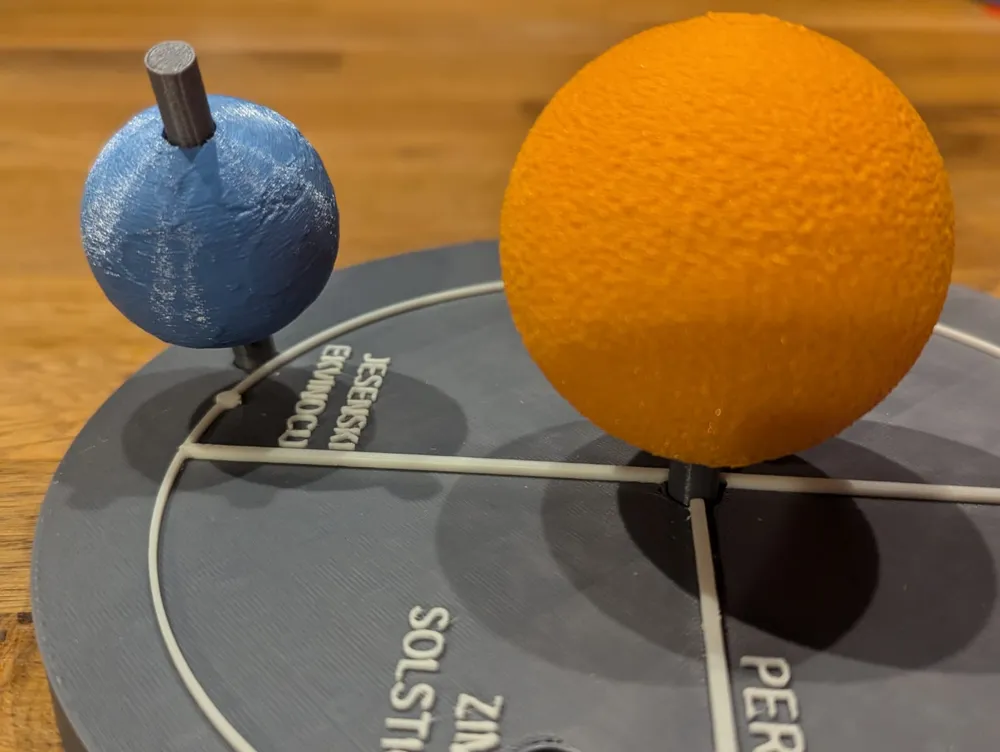
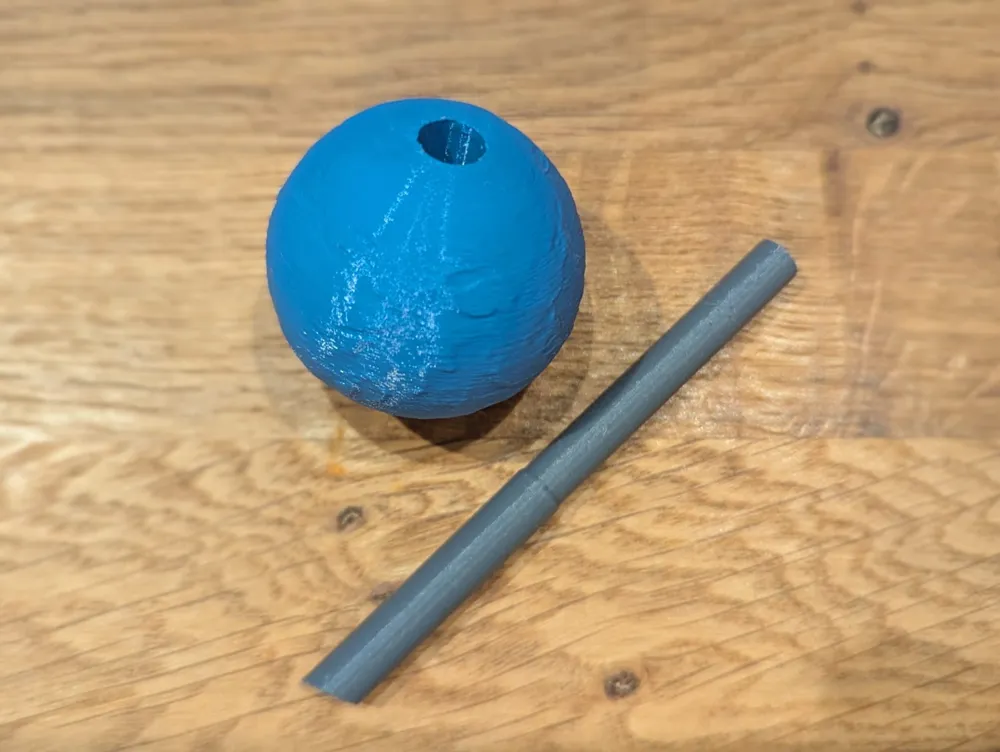
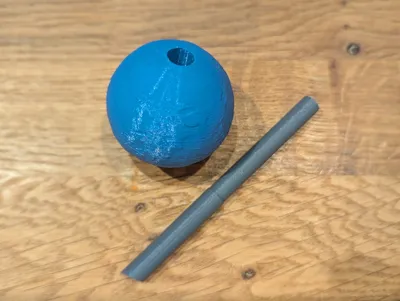
- Earth: The Earth model was taken from @tato_713 as I really like this Earth model with exagerated topography. It was scaled to a diameter of 4 cm, and a hole was drilled to fit the Earth's axis. Two files are given: 1) full globe, and 2) split into the northern and southern hemispheres. I printed the Earth as a single peace with a brim, and adaptive layer height.
- Earth's axis: Axis to slide through Earth. Note that the thicker part with the angled cut is the bottom part of the axis.
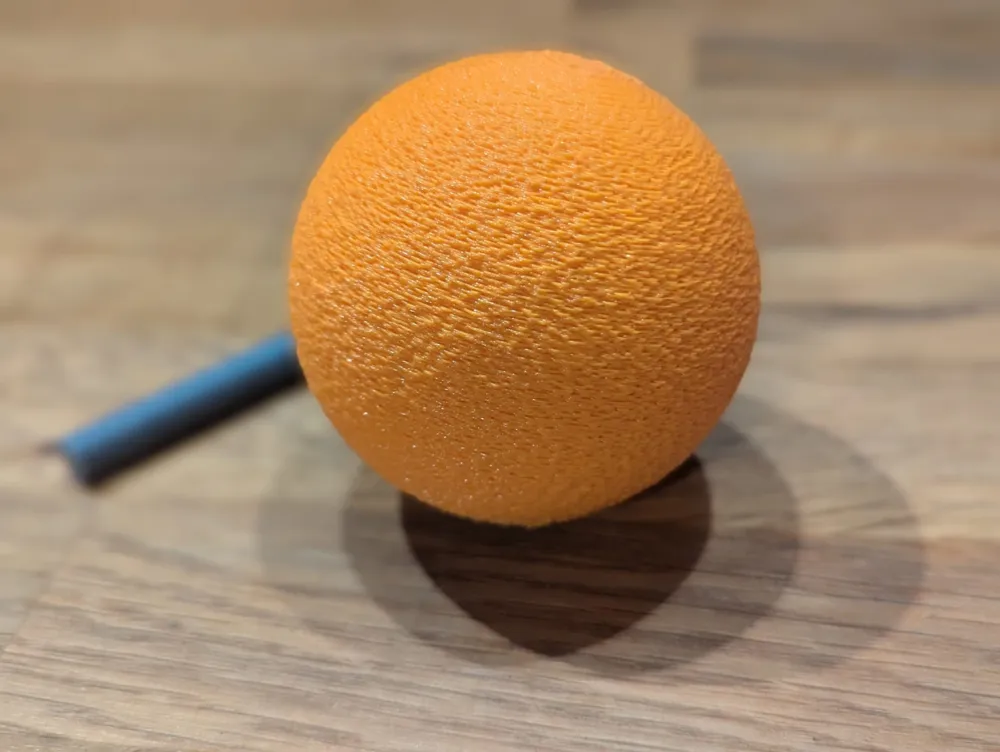
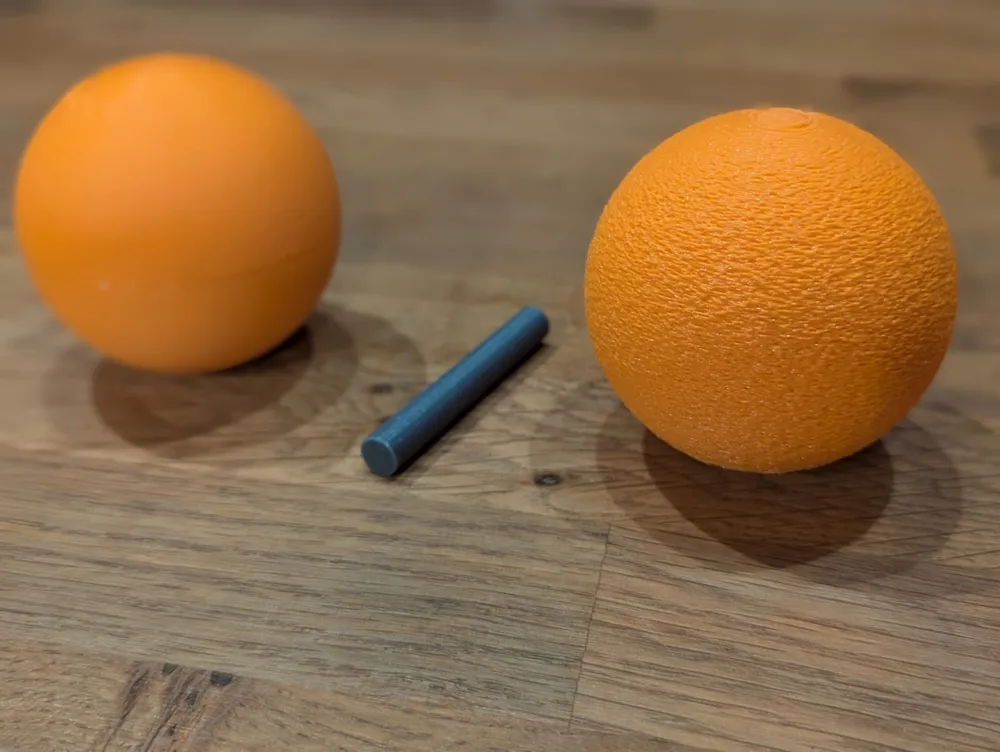
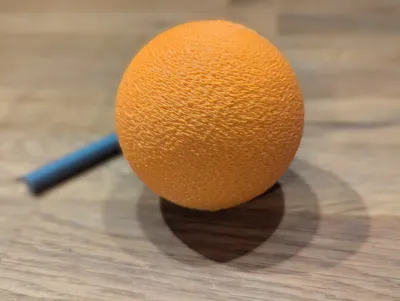
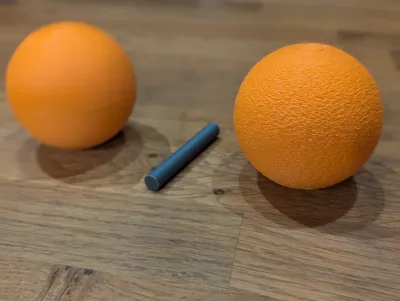
- Sun: A sphere of 6 cm in diameter. Two files are given: 1) full globe, and 2) split into the northern and southern hemispheres. I printed the Sun as a single piece with fuzzy skin (resembling its granules) and tree supports. The two, north and south parts of the Sun, were printed using adaptive layer height and then glued together.
- Sun's axis: Axis to put the Sun onto, and position it in the central hole (coincident with one of the elliptical orbit's foci).
Model details
The model was generated using OpenScad. The base is a cylinder of 20 cm in diameter and 1.5 cm height. Earth's orbit and some of its characteristic points are indicated on the base:
- Earth's orbit is an ellipse with eccentricity of 0.02 and major axis of 8 cm.
- The points in the orbit when Earth is closest to the Sun (perihelion), and when it is the most distant from the Sun (aphelion) are indicated. Note that the Earth is the most distant from the Sun when it is Summer at the northern hemisphere (and closest when it is Winter).
- Summer and Winter solstices, and Spring and Autumn equinoxes, marking the beginnings of the astronomical seasons, are indicated. Their distances from perihelion were computed using an average orbit speed (given the size and precision of the toy model, I think this assumption should be fine).
- The holes for the Earth on its axis are set away from the orbit by such an amount that for any given point the center of Earth is exactly above the orbit indicated at the base.
The Earth model was taken from @tato_713 as I really like this Earth model with exagerated topography. I scaled it to a diameter of 4 cm, and drilled a hole to fit the Earth's axis. The axis is modeled in such a way that Earth's center is always at a height of 4 cm from the bottom (aligned with the height of the Sun's center.)
The Sun is a sphere of 6 cm in diameter, and its axis is 5.5 cm heigh so that, when put into the base (at one of the foci of Earth's elliptical orbit), its center is at 4 cm height from the bottom (aligned with the height of the Earth's center - so this plane, through the centers of the Sun and Earth - would actually make the ecliptic plane, and the indicated orbit at the base is its projection).
Updates
Mar/12/2026: New 3mf file added with English Base, Sun is set to be printed without fuzzy skin
Nov/04/2024: New stl and mf files for an Earth axis were uploaded. The bottom part is broader than in the first version, and should hold the Earth better.
If you like modular functional and STEM projects, follow for upcoming models.
📂 This model is part of my 3D model collections.
Explore more functional & educational models on my profile.
Boost Me (for free)
If you like this model and want to support my work, consider giving it a boost 🚀
License



Comment & Rating (2)