
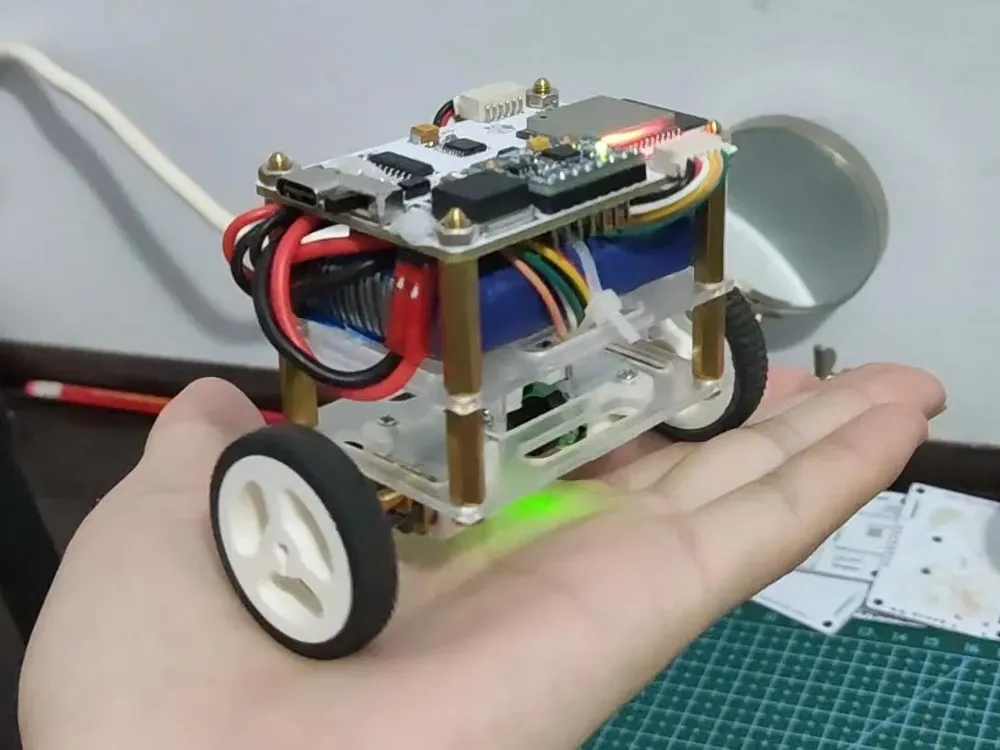
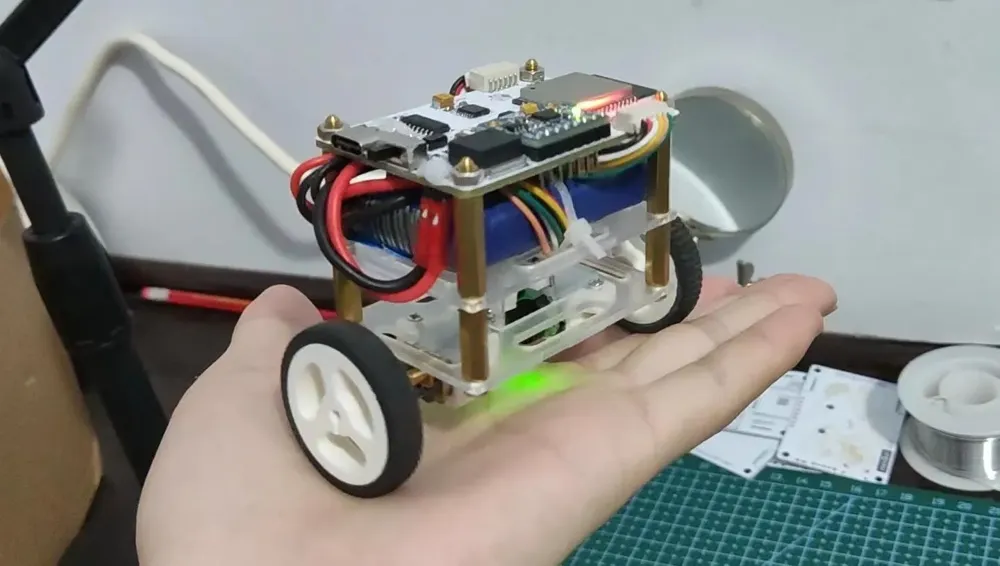
Structural components for the miniBot mini handheld balancing vehicle
Print Profile(1)
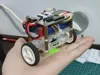
Description
Mini Handheld Balancing Vehicle
The blogger has modified the acrylic cutting files provided by the original author for 3D printing and adapted them for the Bambu Lab A1 printer, making it easy for the public to replicate.
Boost Me (for free)
---
Below is the introduction of the original project
1. Project Introduction
1.0 Preface
Balancing vehicles are almost a must-do project for everyone entering the field of electronic DIY. They involve many areas, including sensor data acquisition and processing, motor motion control, and PID algorithm adjustment, while also combining professionalism and fun, making them ideal as introductory practice projects. This project, after several iterations (see the following introduction), has finally settled into its current form, achieving a good balance in terms of appearance and software control. It has a compact appearance and excellent motion performance.
Special Note:
The circuit soldering part of this project has a certain threshold. If you are not confident in soldering small surface-mount components, it is not recommended to try, or you can choose the JLCPCB SMT outsourcing when making the PCB, which saves the trouble of soldering yourself (please settle the advertising fee).
The principles of this type of balancing vehicle are similar. It can also serve as a reference for you to make your own balancing vehicle, and I am very happy to exchange and learn with you~
This remix is based on

License



Comment & Rating (0)