
Atomic Internal Structure Models

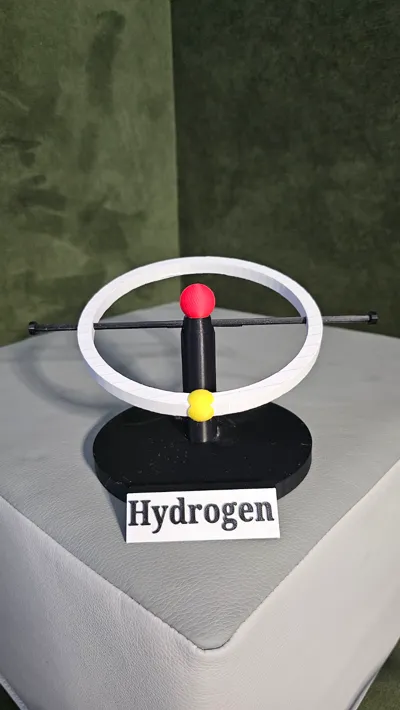
Print Profile(11)

Description
Boost Me (for free)
Edit 01-05-2025: Included additional print profiles for less common isotopes per request of user Mira. This includes Deuterium, Tritium
Edit 02-02-2025: New model uploaded - the Atomic Internal Structure Model of Love!
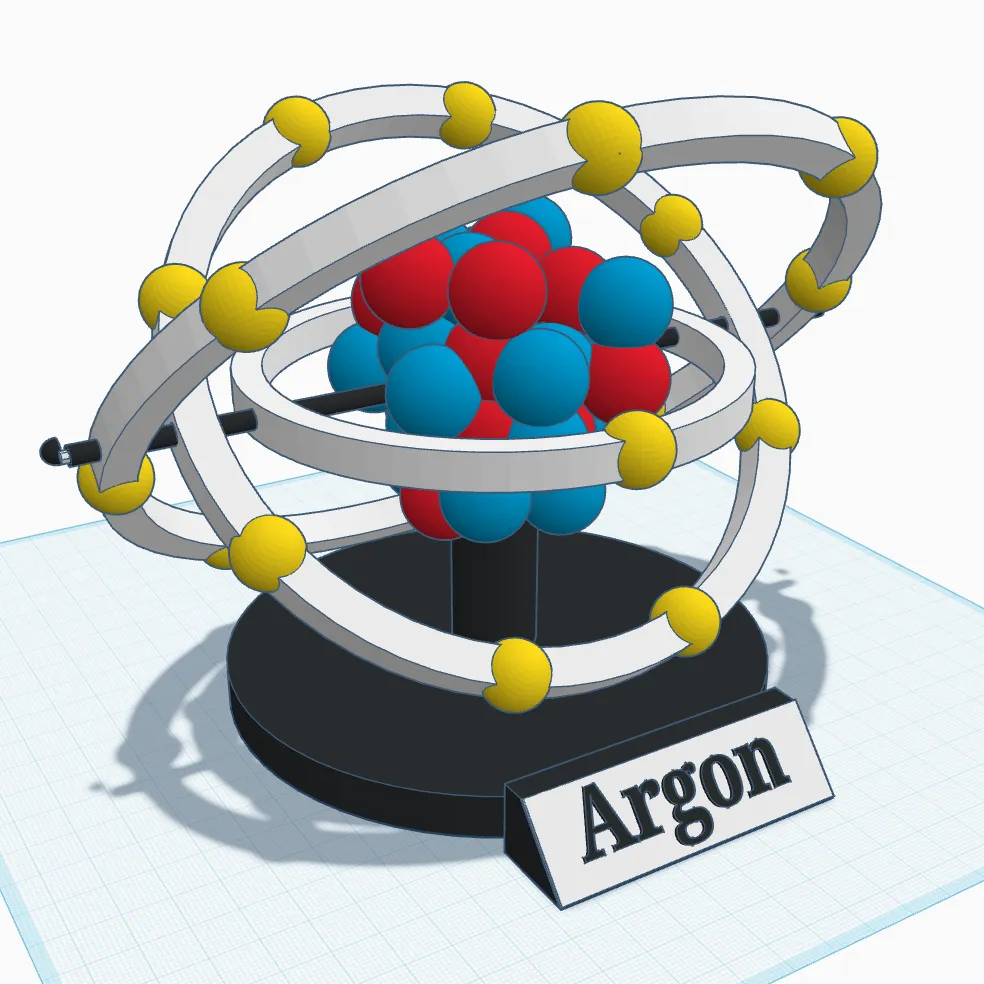
Edit 02-11-2025: New print profile for the element Argon (Ar) uploaded per request of @user_2494281777. It scales slightly different for the rings in order to fit 3 total rings. All other standard components remain the same.
------------------------------------------------------------------------------------------------
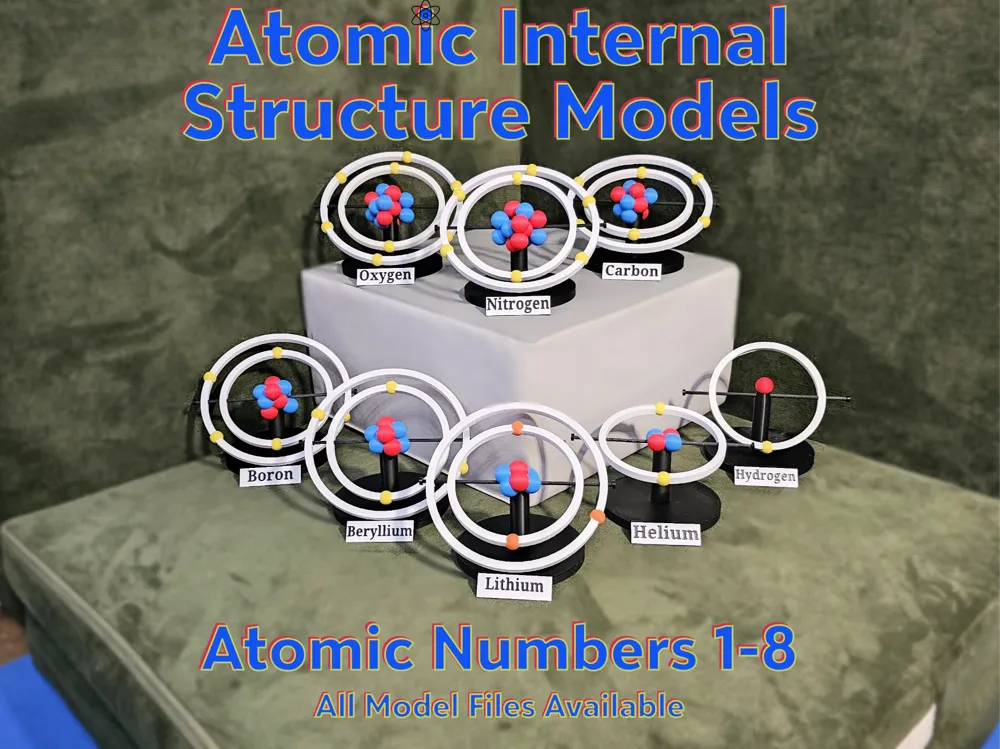
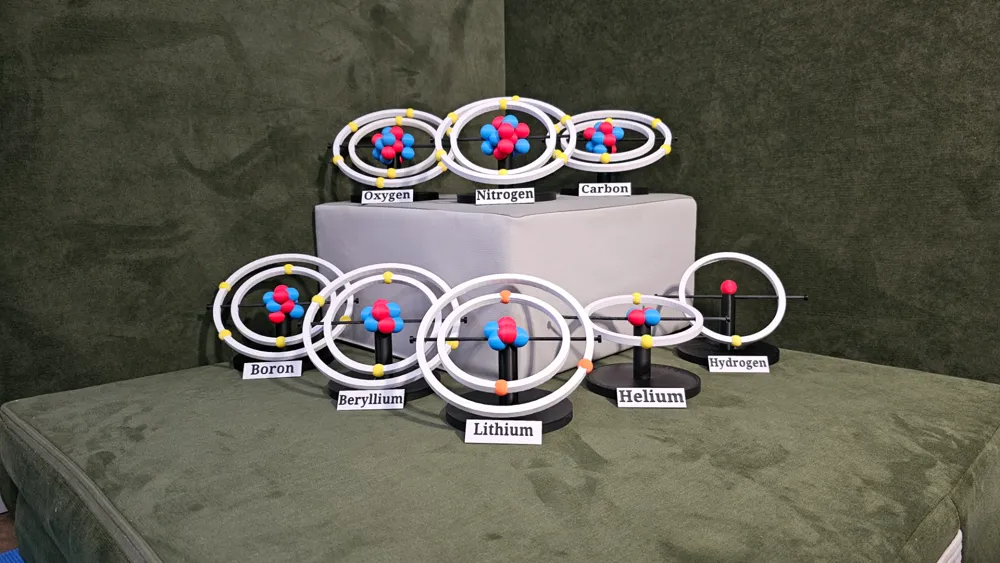
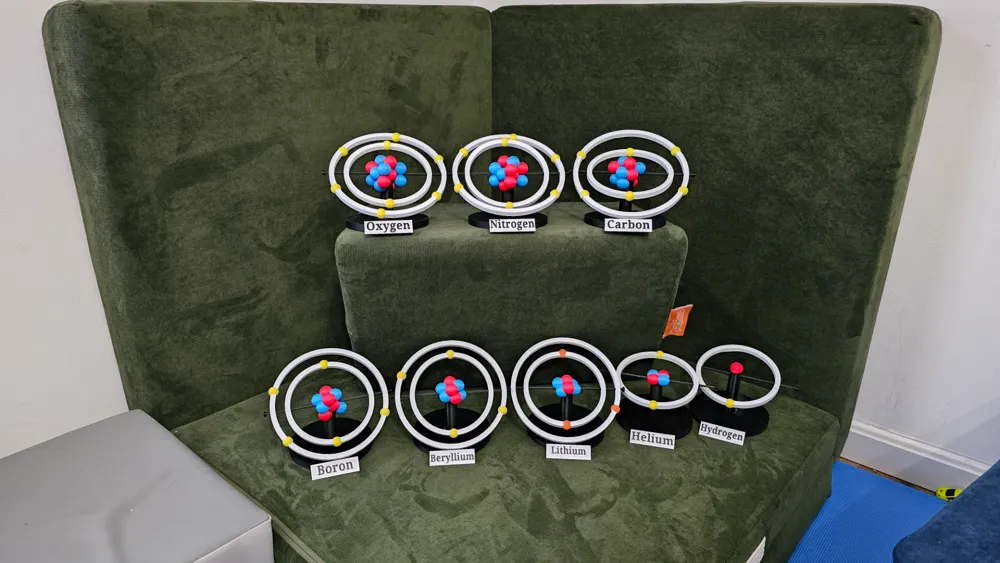
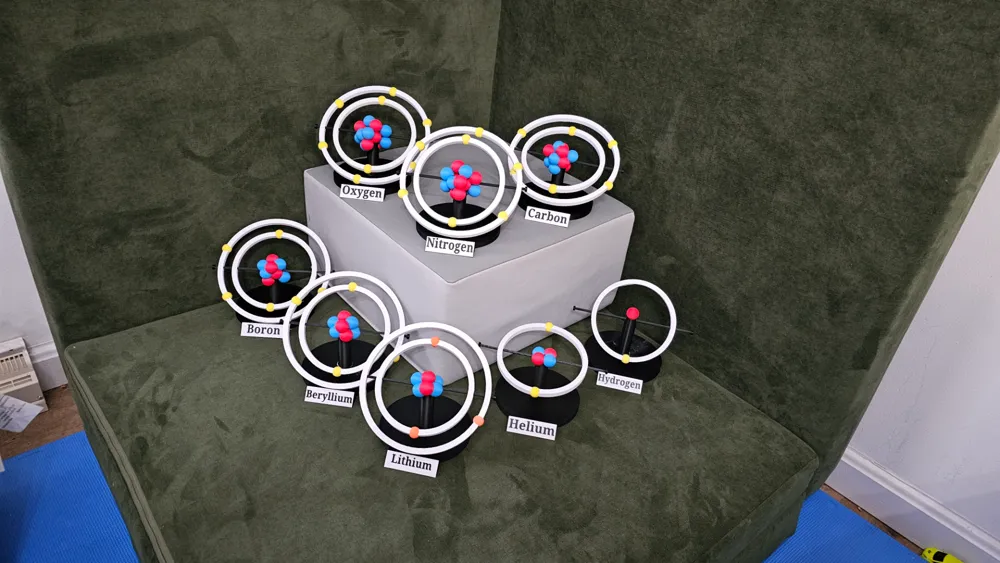
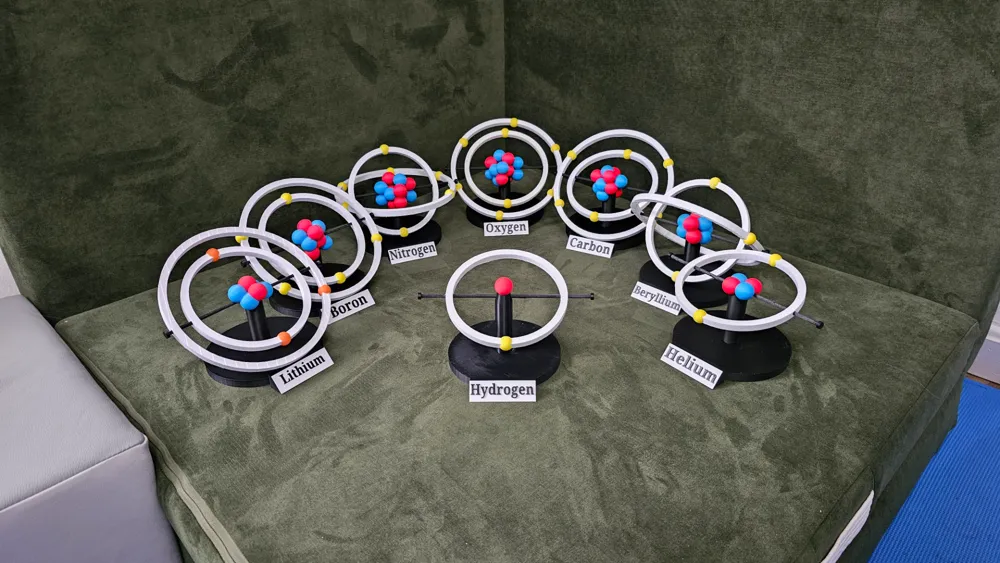
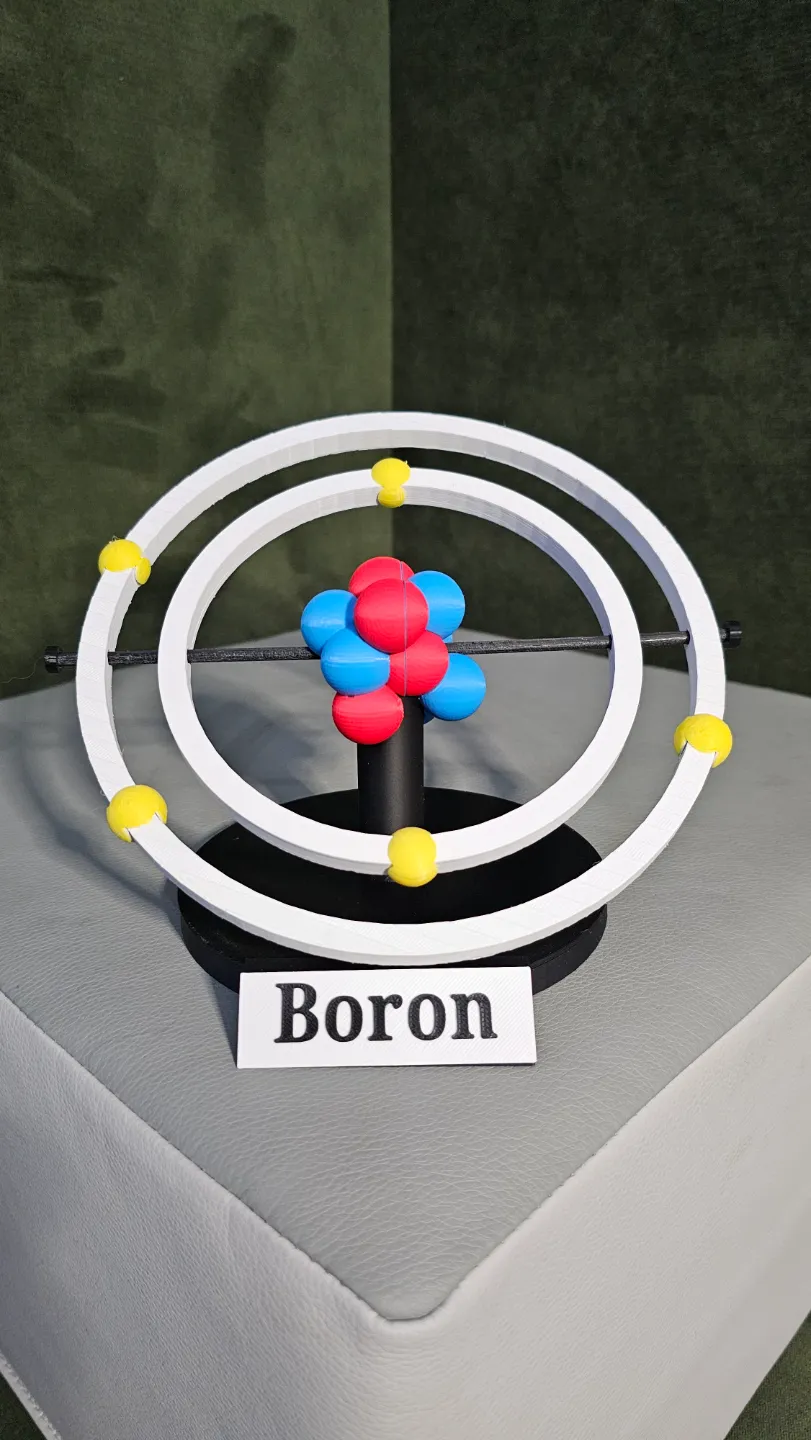
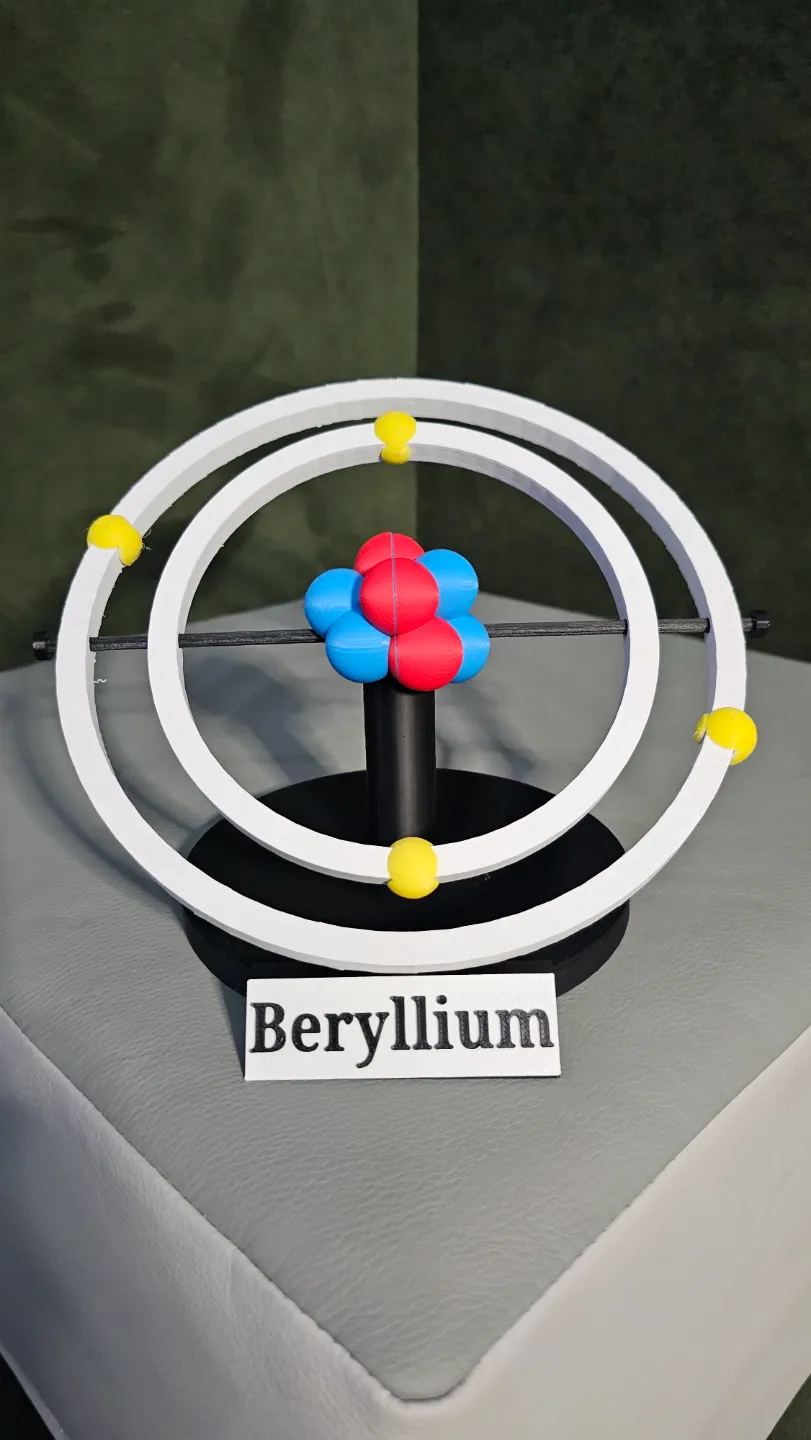
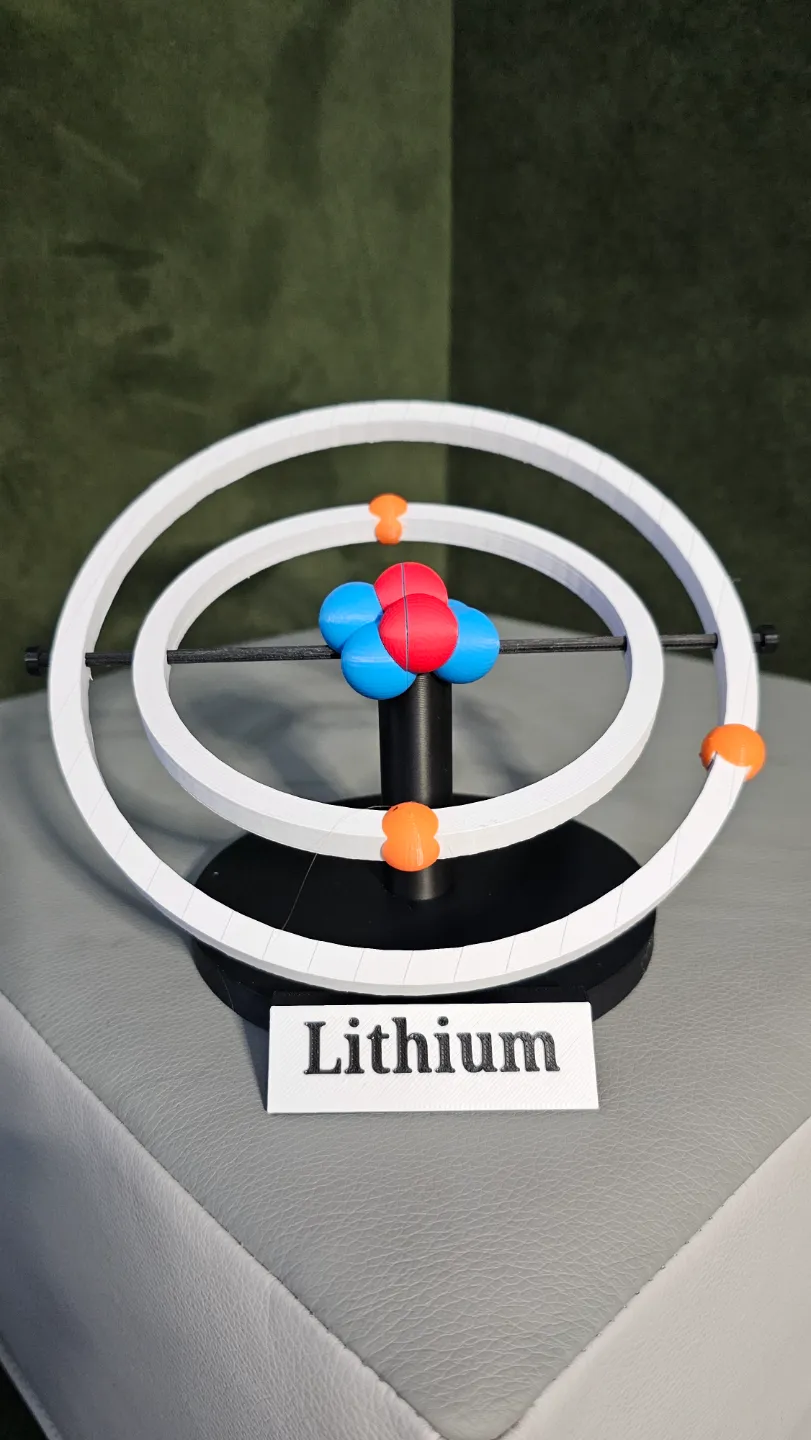
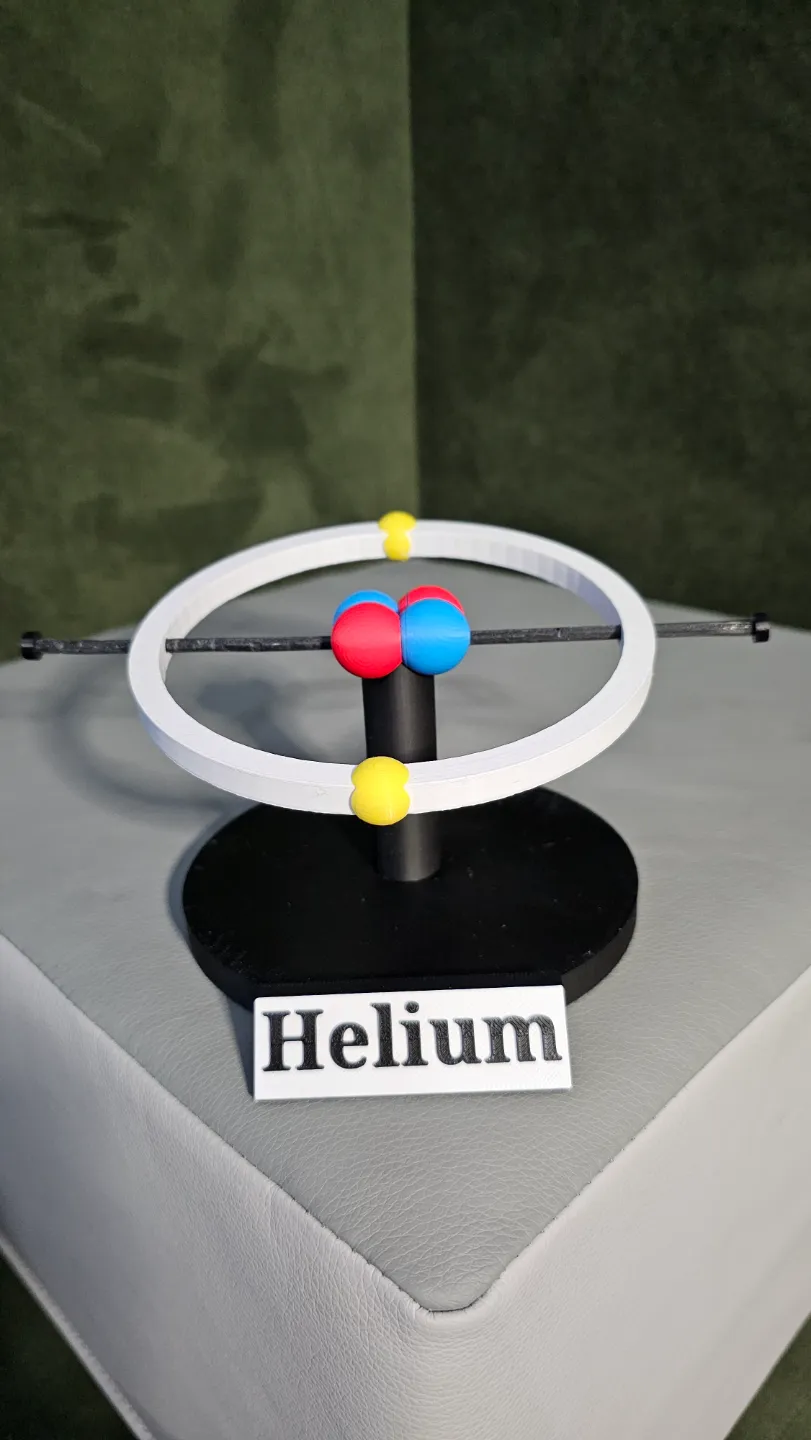
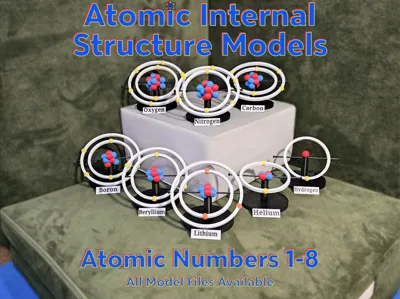
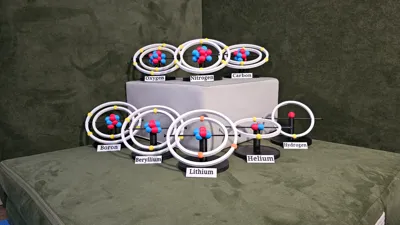
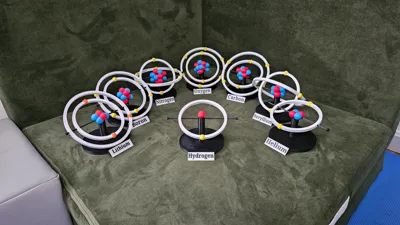
Atomic Internal Structure Models for Elements # 1-8
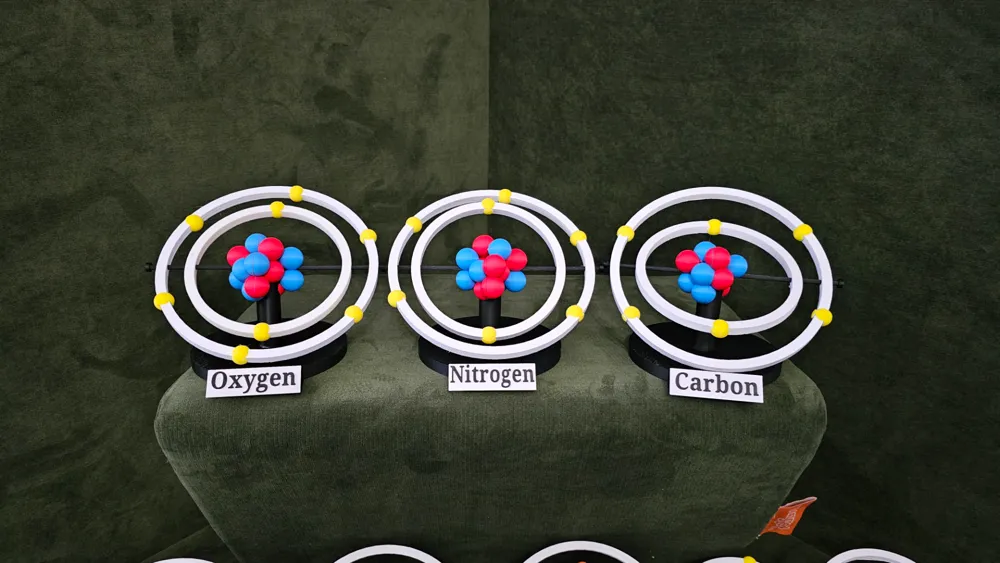
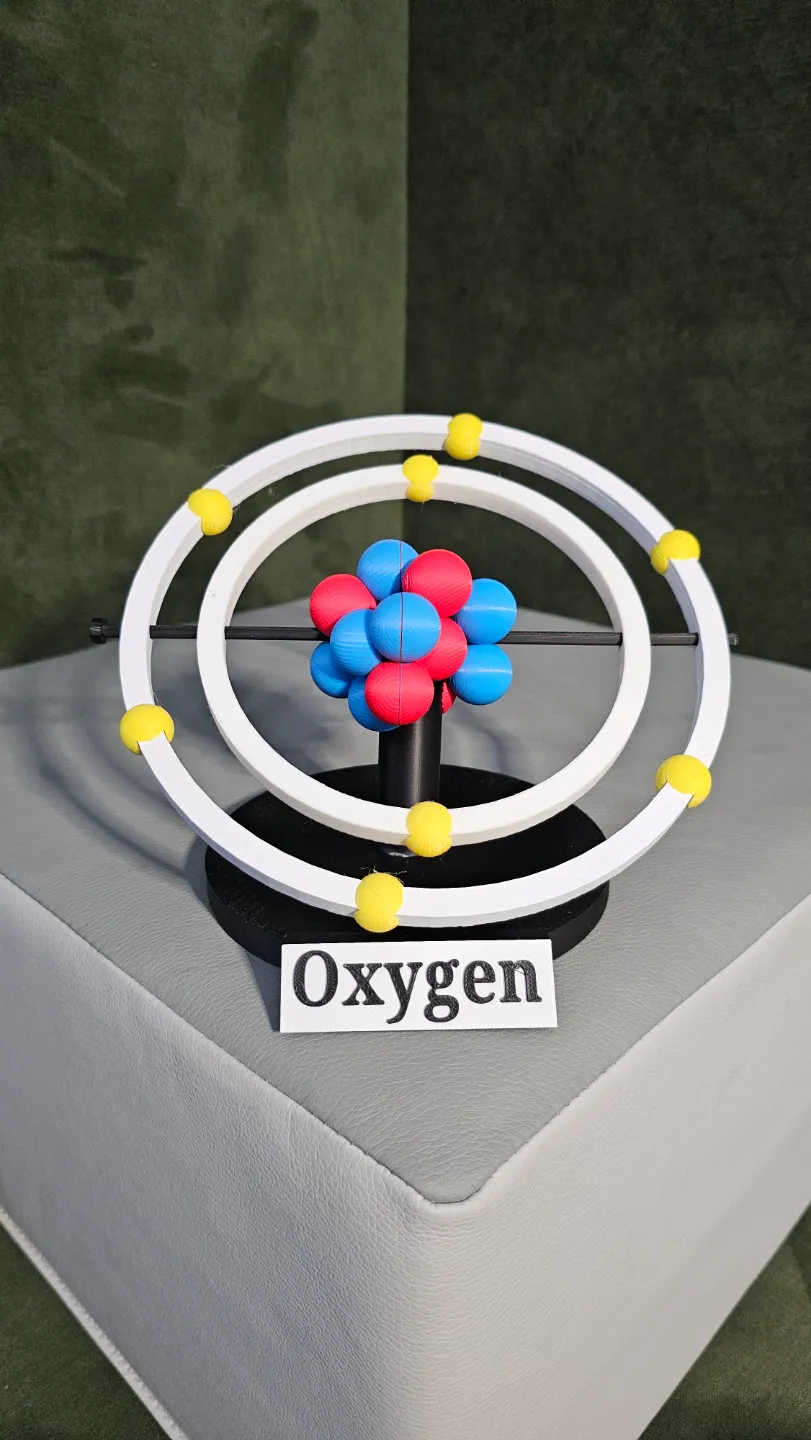
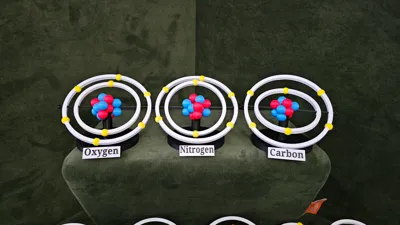
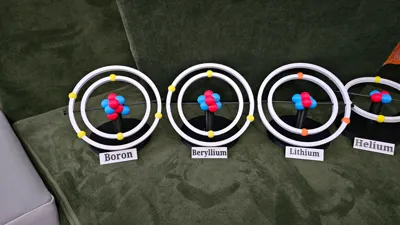
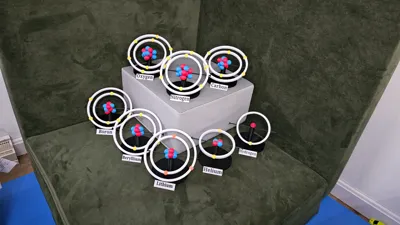
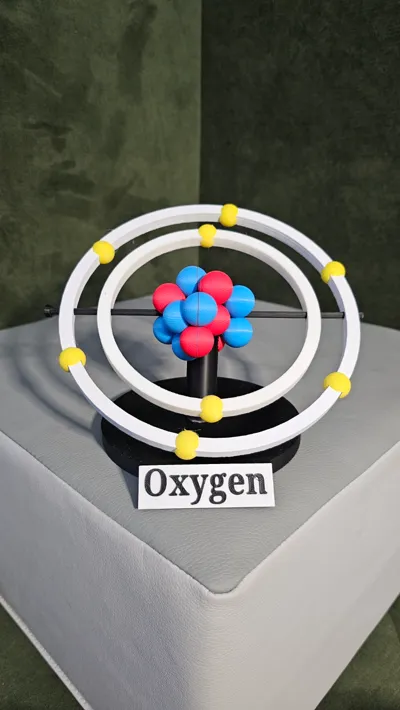
This project began by modeling the internal structure of Oxygen - including the nucleus and proper number of protons and neutrons, to include the surrounding electrons and both shells, utilizing the Bohr model. From there, the subsequent elements were modeled per declining atomic number, down to Hydrogen (atomic #1).
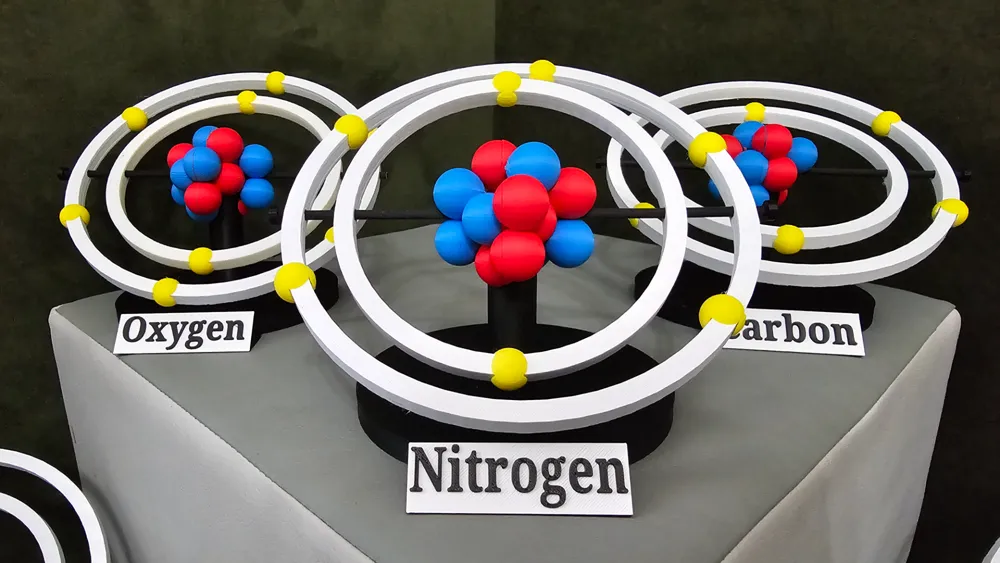
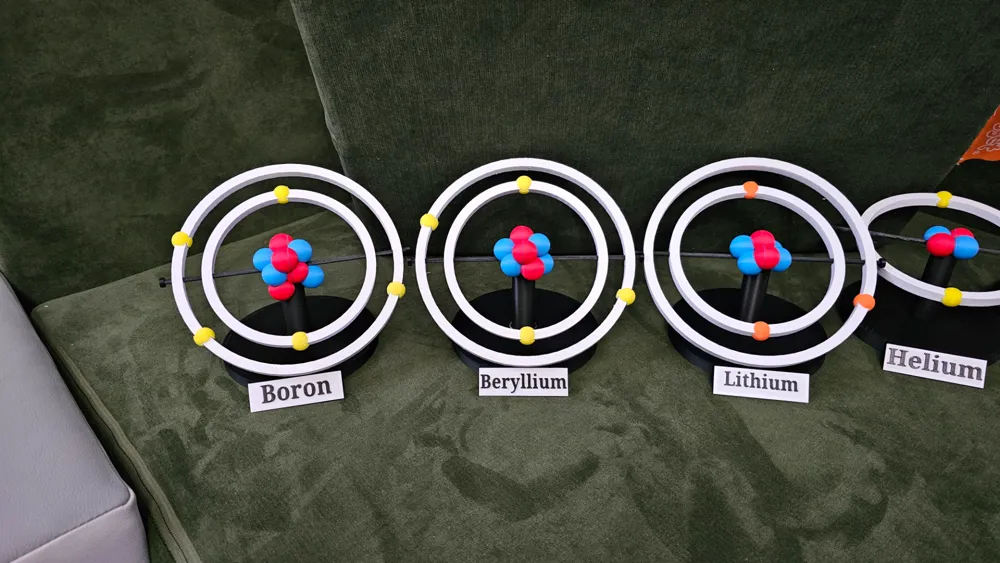
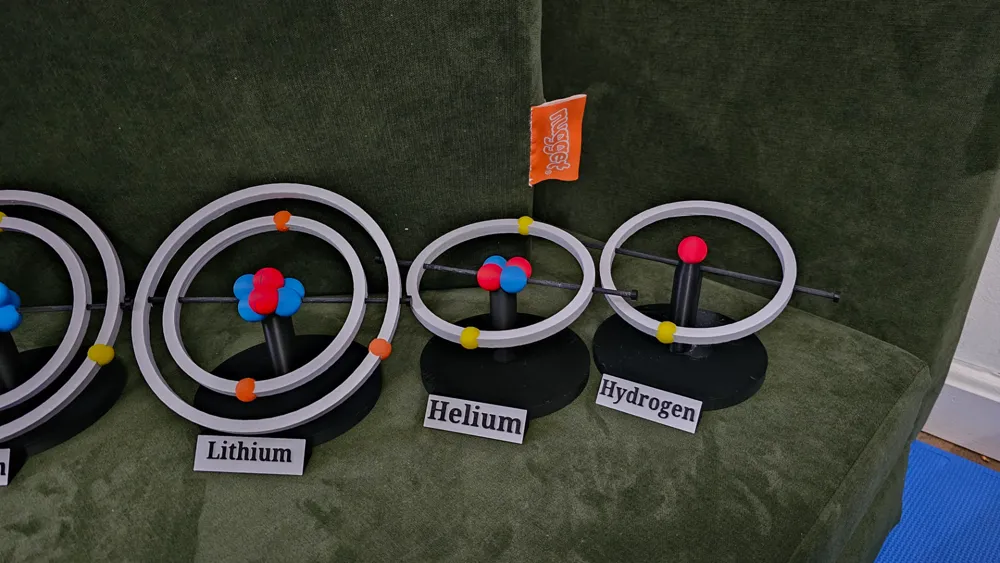
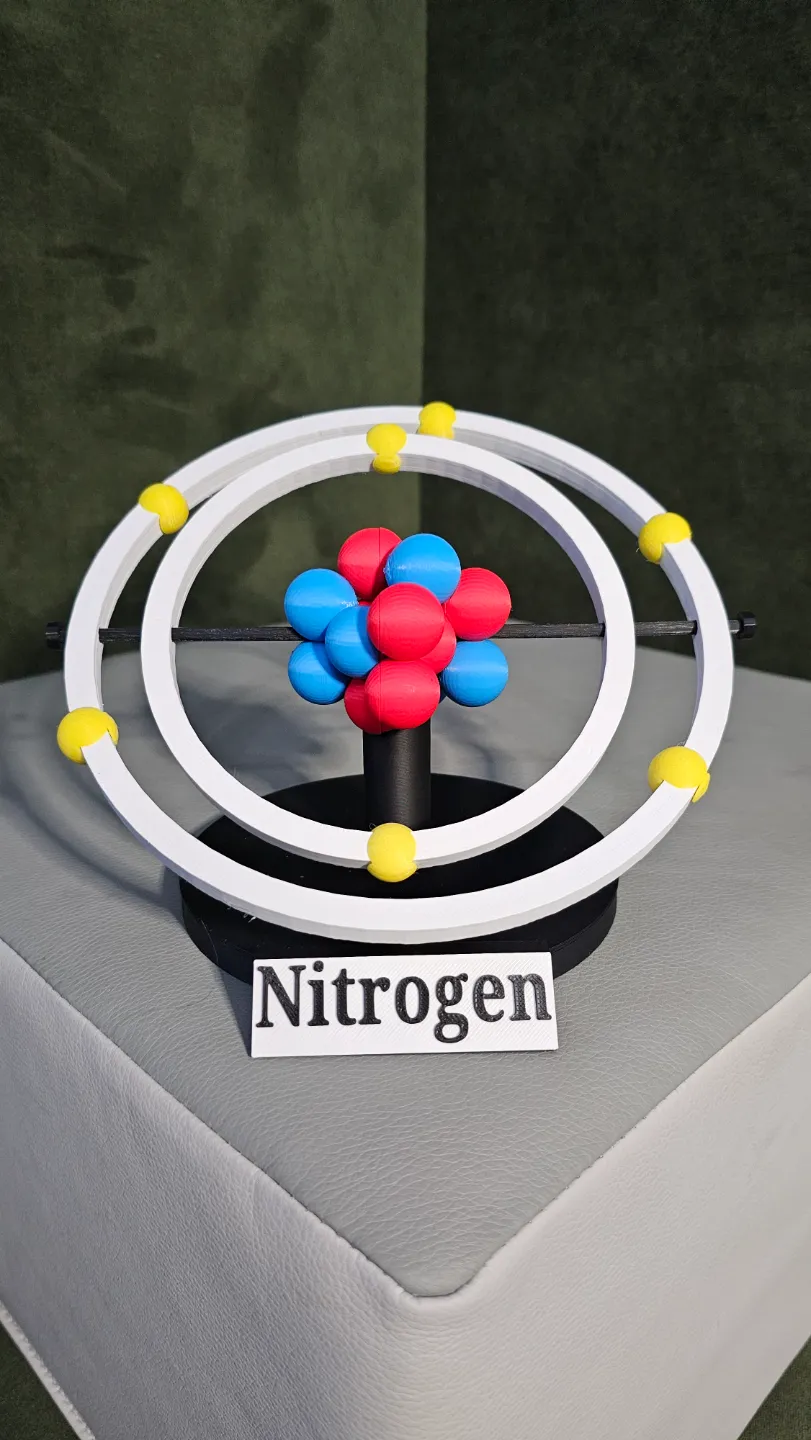
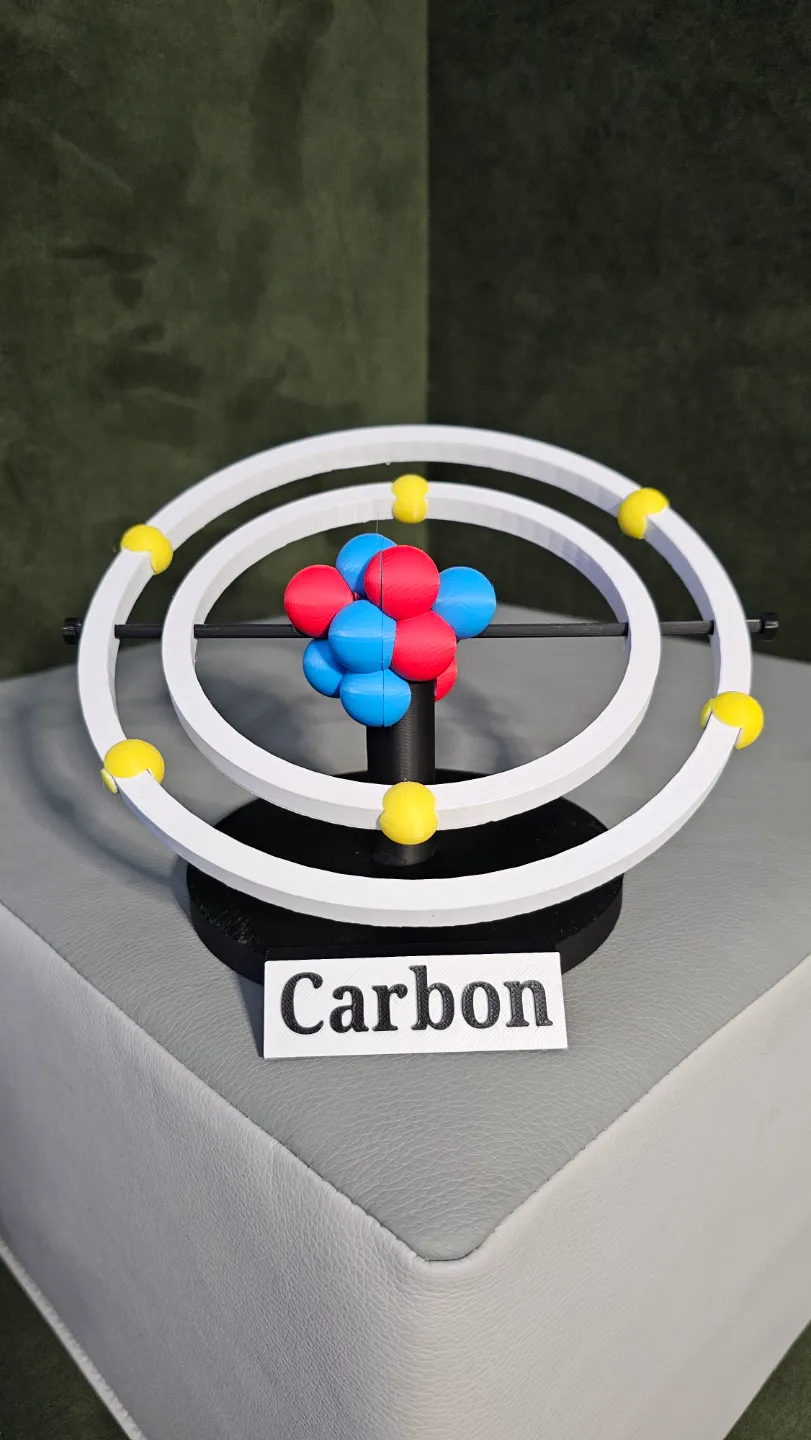
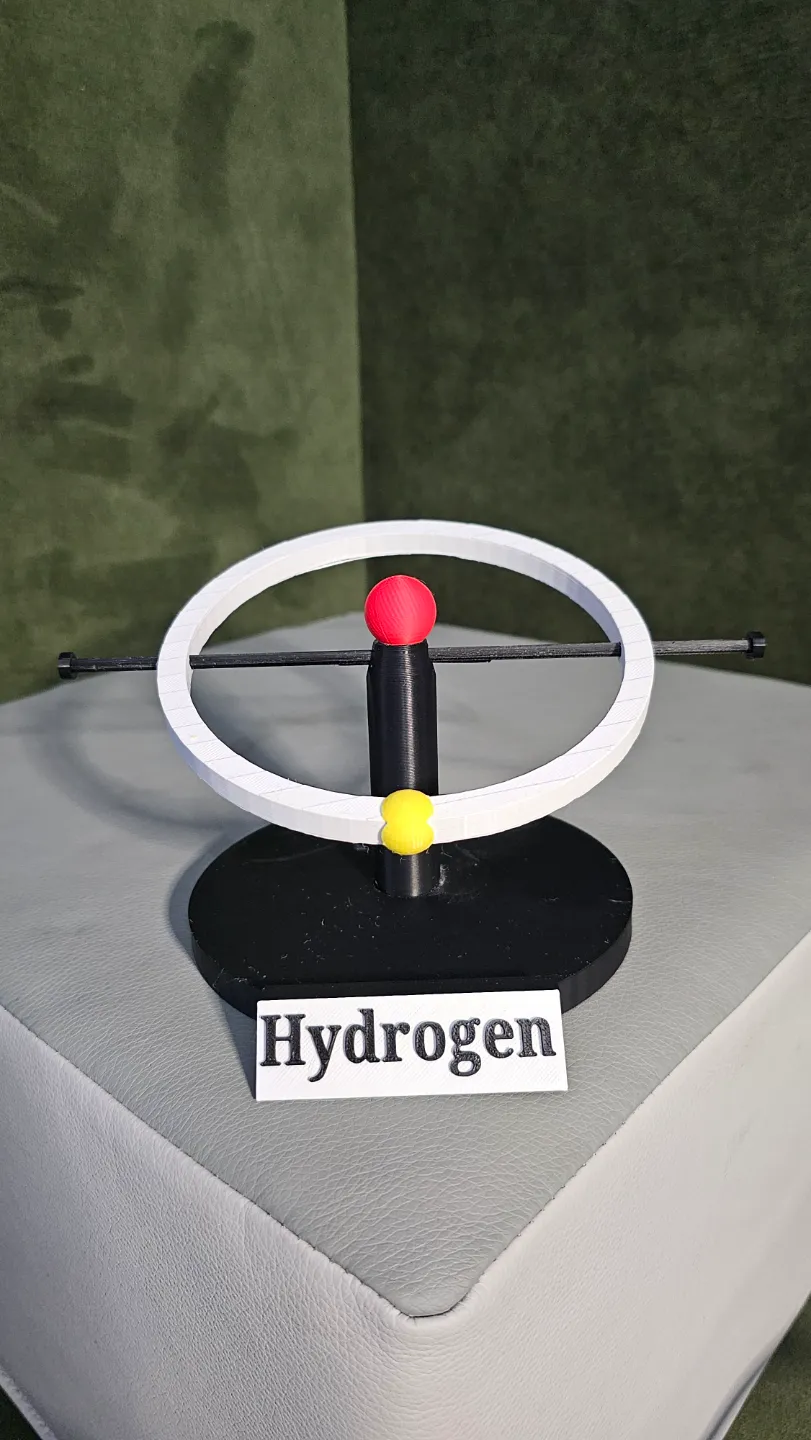
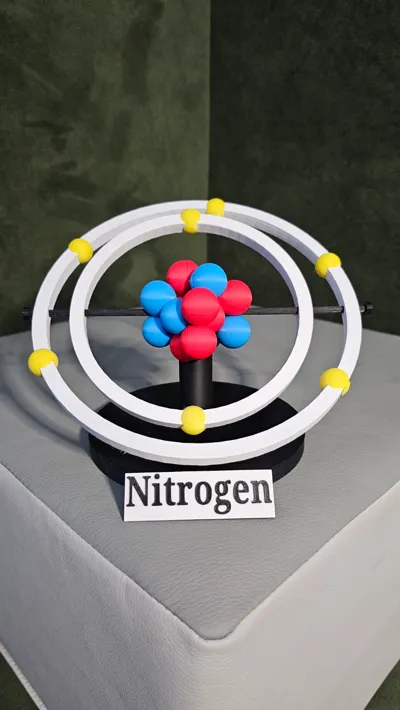
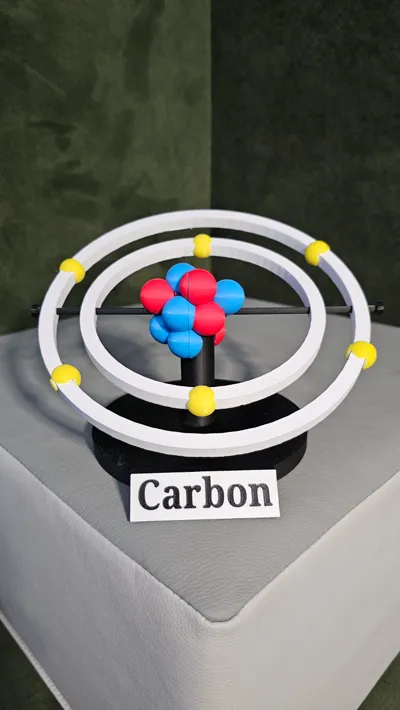
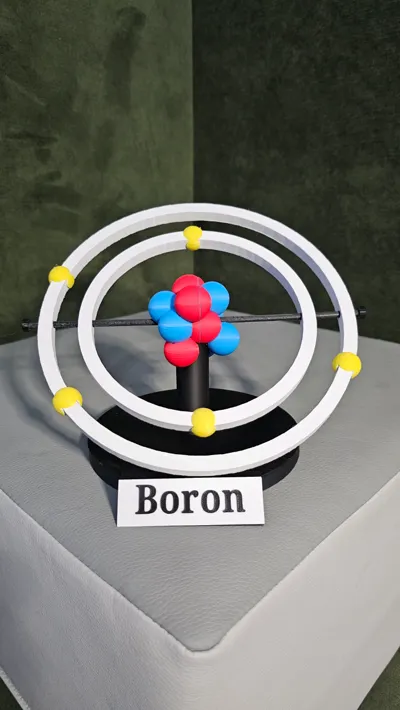
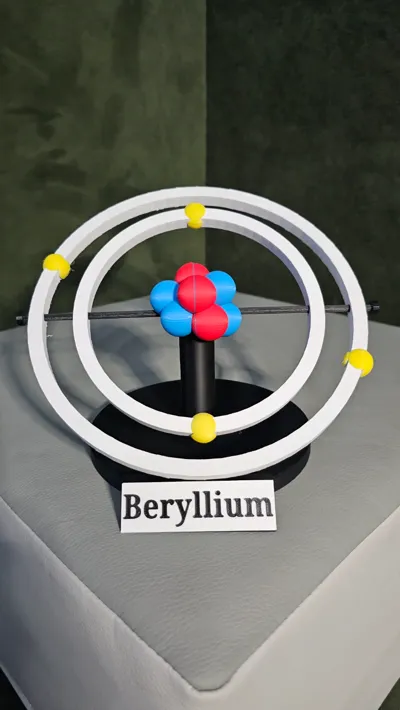
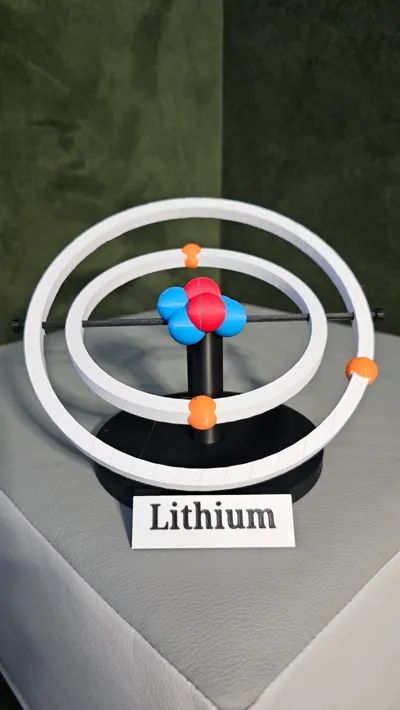
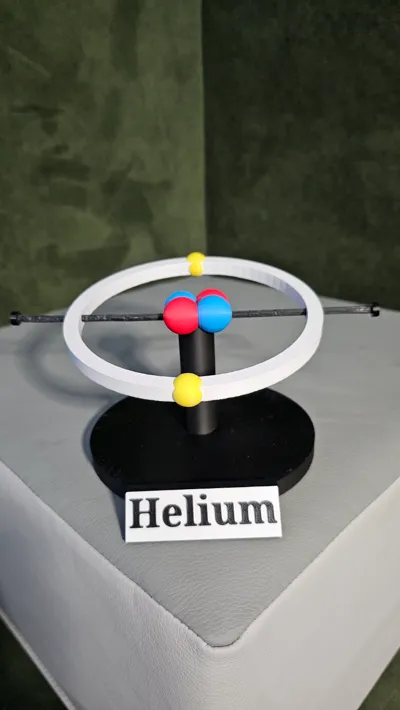
The model includes a base with an insertable name plate that identifies the atom on display. A Central stand inserts into the base to allow the nucleus to sit on top. The nucleus prints in two halves that must be glued together. I opted to color each proton and neutron separately in Bambu Studio and utilize the AMS to complete the print - however, if an AMS isn't an option, or you wish to prevent waste, you can print individually paint the protons/neutrons after printing them in a uniform color. In my model, electrons (negatively charged) are yellow, protons (positively charged) are red), and neutrons (neutral/no charge) are blue.
The middle rod inserts through the outer ring, the inner ring, the nucleus, and the central stand (which should be “inside” the nucleus by that point). As with the nucleus, the rings were printed with AMS but can be printed in a single color and simply painted by hand following a successful print. Once all elements are secured on the rod, the rod end caps can be attached either snuggly or with a small amount of glue.
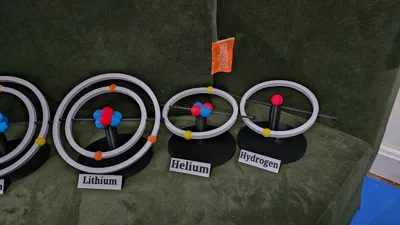
Once fully assembled, the shells (or, orbits) that the electrons sit on are able to be rotated along the axis of the middle rod. This rotation can facilitate explaining the various locations electrons could be found while orbiting the nucleus, or it can be beneficial simply to get better photographs of the model itself.
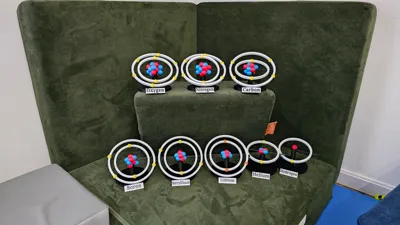

A print file has also been added which includes ALL files to print multiple per plate. This can be utilized to reduce AMS waste by printing all nucleus models on a single plate. Visual representation:
------------------------------------------------------------------------------------------------
This project was modeled via TInkercad. This was done to allow for easy access to the Tinkercad files in the interest of further STEM education. While these models can be printed and utilized in any classroom setting, I am also publicly sharing the Tinkercad files in the hopes that students interested in learning more can utilize them as a basis of learning CAD and even take it further by developing the remaining elements! Hyperlinks for each element are here:
Oxygen, Nitrogen, Carbon, Boron, Beryllium, Lithium, Helium, Hydrogen.
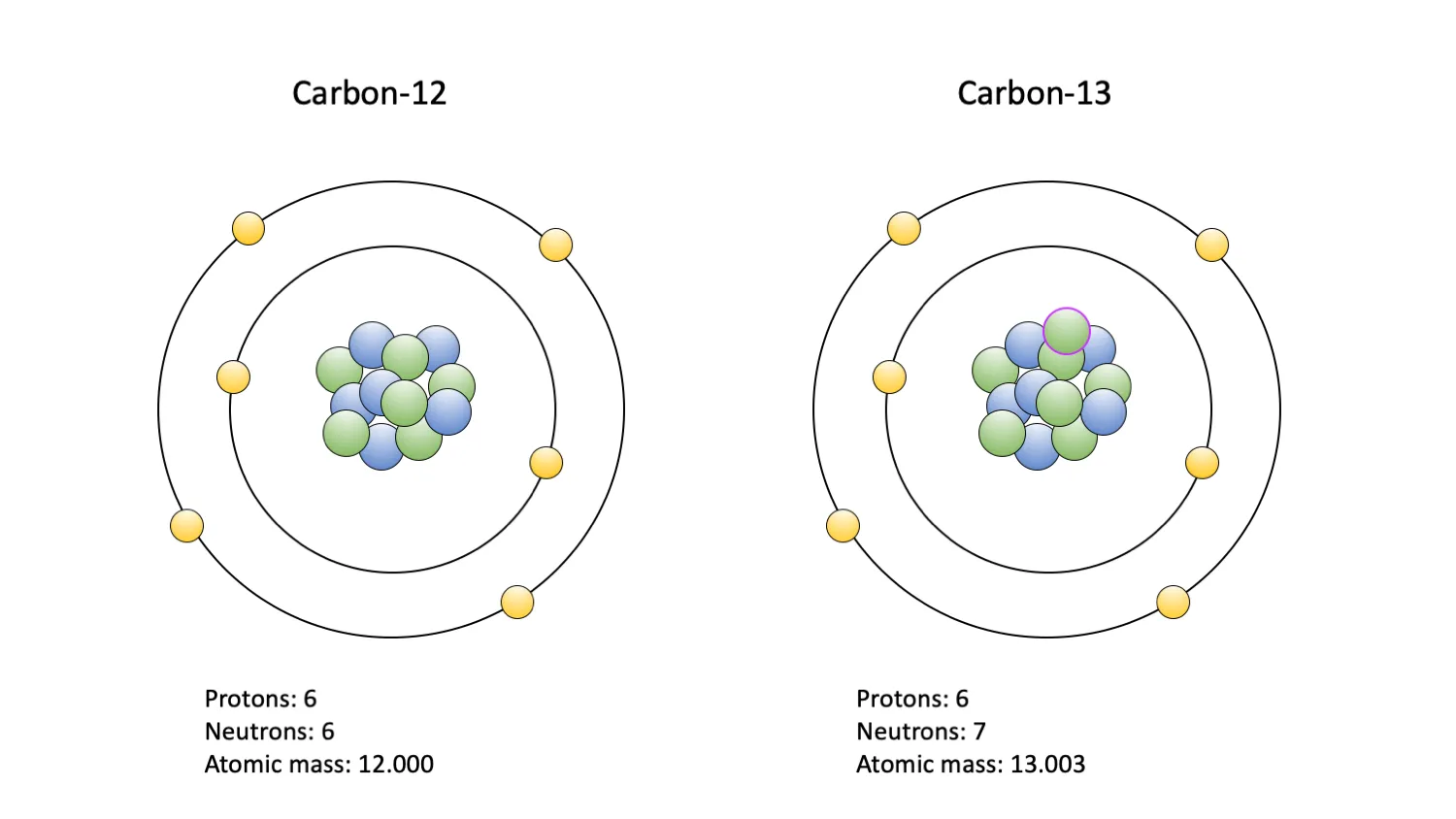
Edited to include links to created Isotopes! Carbon-13, Deuterium, and Tritium.
If you would prefer not to access Tinkercad itself, all the .stl files have been uploaded for the project here as well.
------------------------------------------------------------------------------------------------
Some educational information
Bohr’s Model – Bohr’s Theory of the Hydrogen Atom
In atomic physics, the Bohr model (otherwise known as the Rutherford-Bohr model) was the first successful model of the atom. The model has a small but dense nucleus being surrounded by orbiting electrons – analogous to the structure of the Solar System. However, unlike the solar system, which provides the attraction required for orbits by gravity, the electrons are attracted to the nucleus by electrostatic force. This electrostatic force is the centripetal force, a force which points toward the center of a circle and keeps objects moving in a circular path around the center – in this case, the centripetal force keeps the electrons moving in a circular path around the nucleus.
Put simpler: The negatively charged electron of the hydrogen atom is forced to a circular motion by the attractive electrostatic force of the positively charged atomic nucleus. Thus, the electrostatic force is the centripetal force.
While the Bohr model is relatively old or primitive as a model for atomic structures as compared to others (e.g., the valence shell model or quantum atomic model), the theory is still considered a first-order approximation of the atom. In fact, the Bohr model is still commonly taught to introduce students to quantum mechanics or energy level diagrams before moving on to the more accurate, but more complex, valence shell atom.
Click the links in each name for additional information and resources:
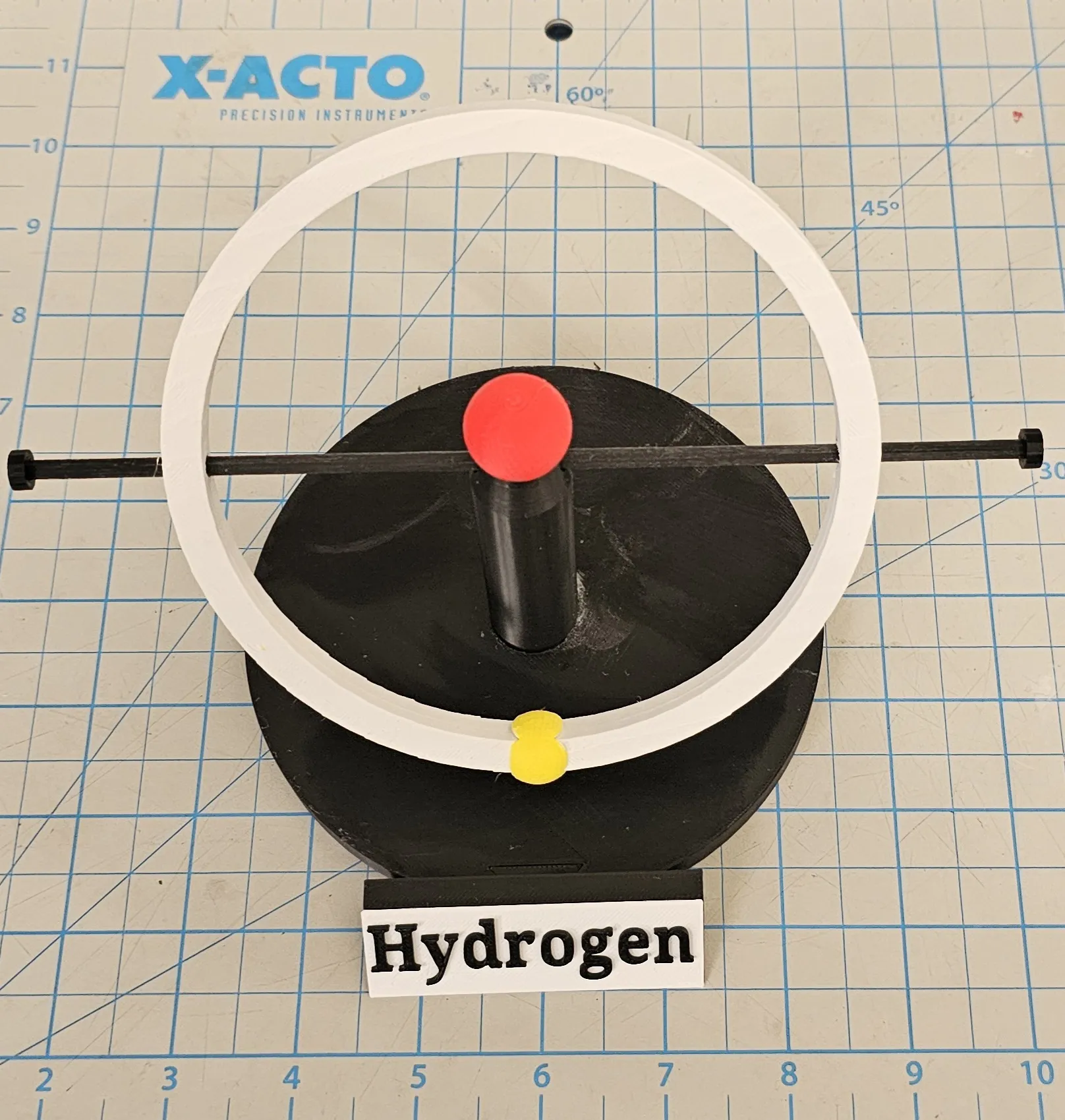
Hydrogen is atomic number 1. It is a colorless gas with 1 proton, 0 neutrons, and 1 electron. It's 1 electron is on the first shell. The periodic symbol is H.
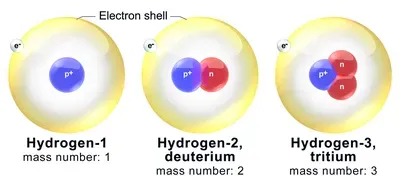
Adding Neutrons creates Isotopes includes Deuterium and Tritium (models now available to print):
Helium is atomic number 2. It is a colorless gas with 2 protons, 2 neutrons, and 2 electrons. It's 2 electrons are on the first shell. The periodic symbol is He.

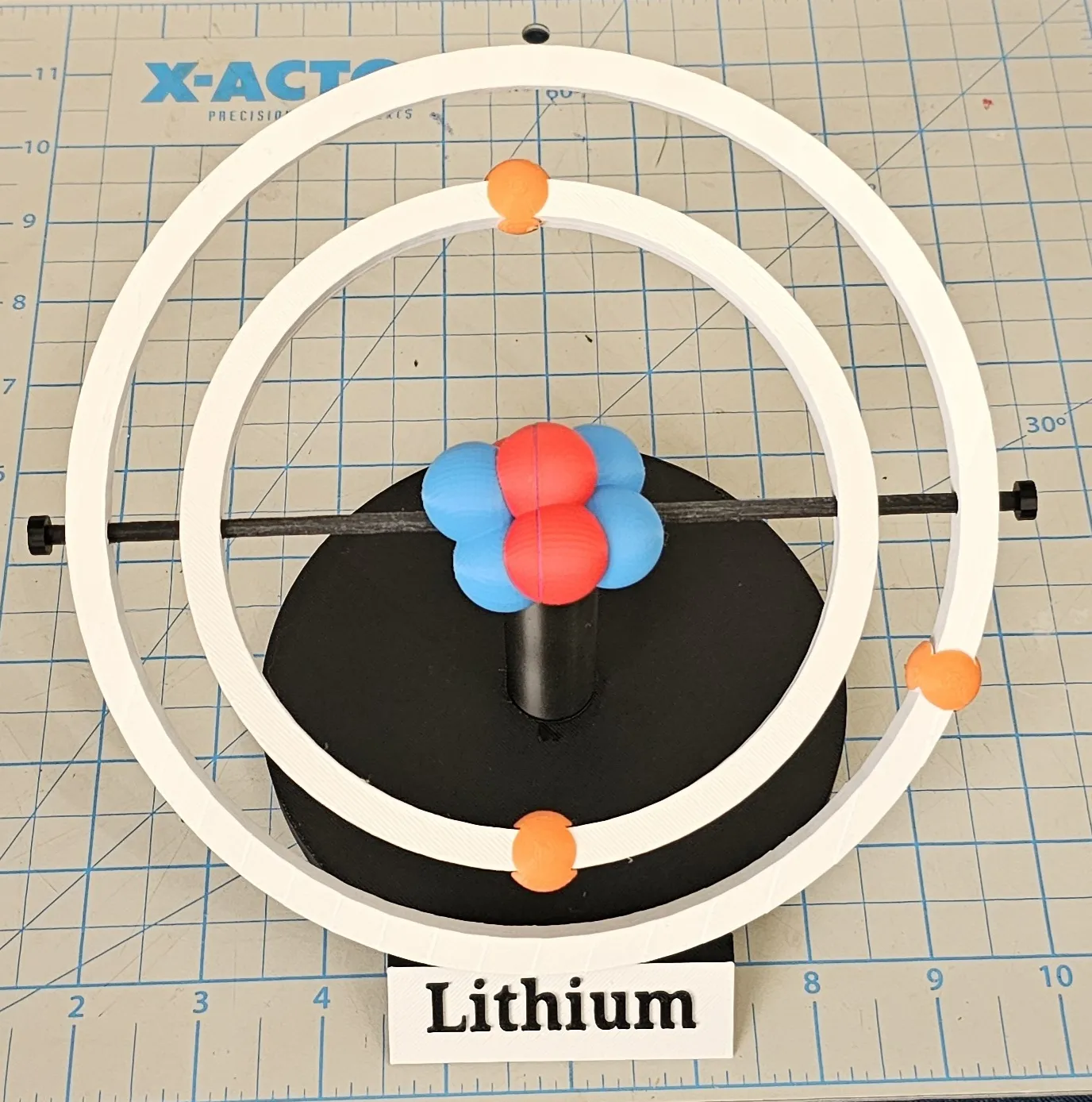
Lithium is atomic number 3. It is a solid that appears silvery white. It has 3 protons, 4 neutrons, and 3 electrons. The first shell has 2 electrons while the second shell has 1 electron. The periodic symbol is Li.
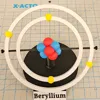
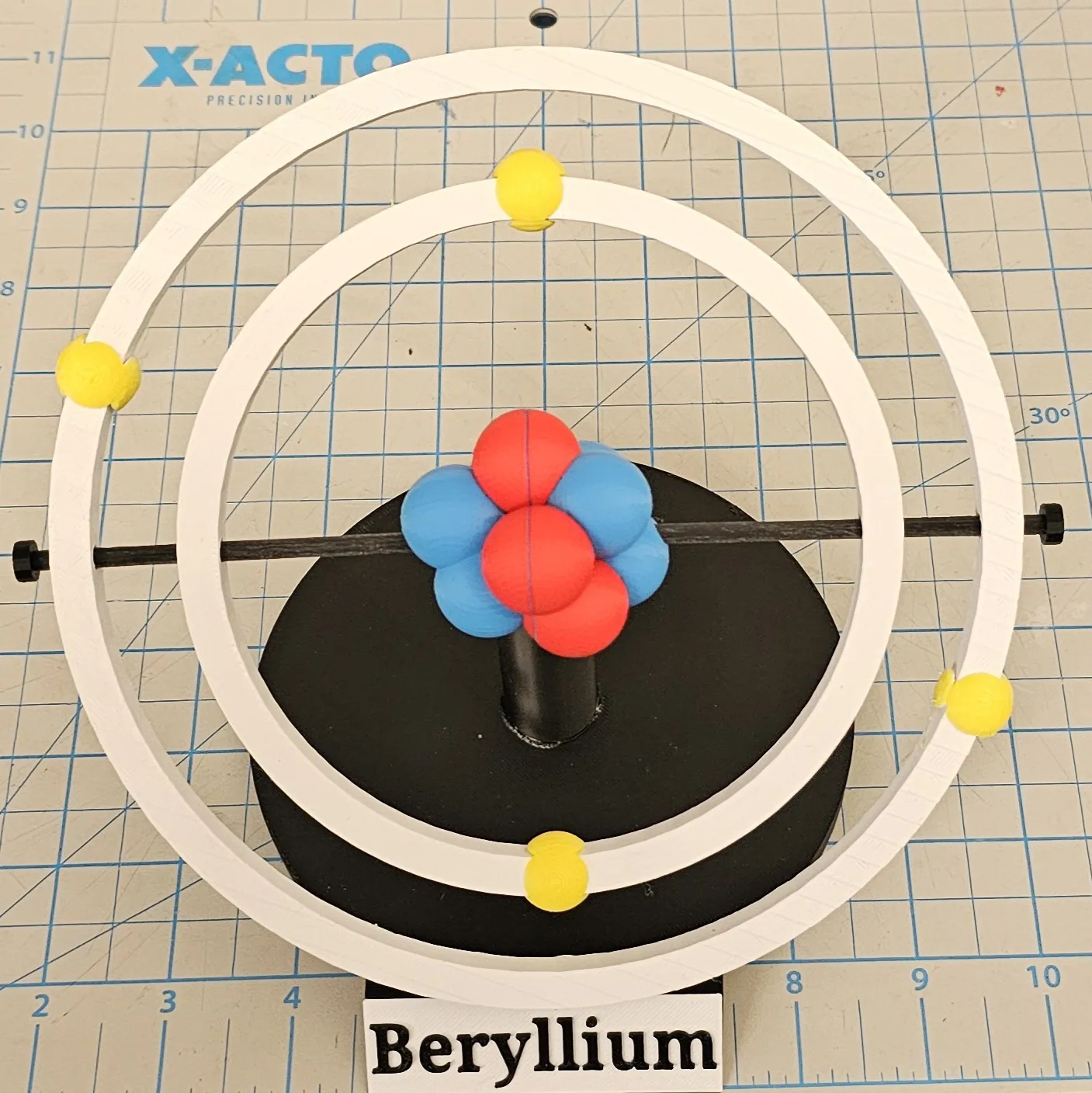
Beryllium is atomic number 4. It is a solid that appears metallic white-grey. It has 4 protons, 5 neutrons, and 4 electrons. The first shell has 2 electrons while the second shell has 2 electrons. The periodic symbol is Be.
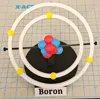
Boron is atomic number 5. It is a solid that appears black and brown. It has 5 protons, 6 neutrons, and 5 electrons. The first shell has 2 electrons while the second shell has 3 electrons. The periodic symbol is B.

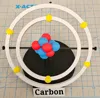
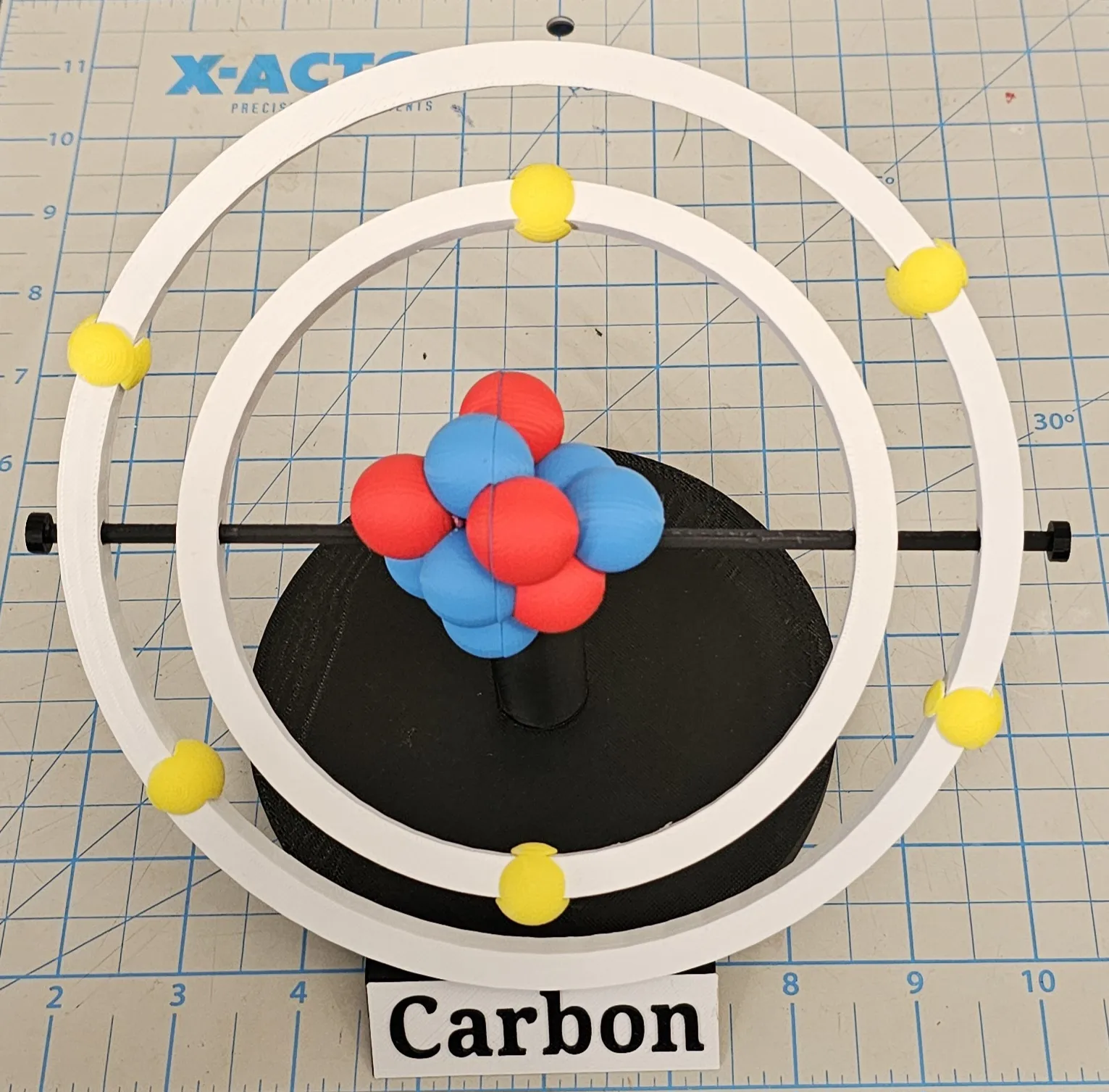
Carbon is atomic number 6. It is a solid that appears shiny black (as graphite) or clear (as diamond). It has 6 protons, 6 neutrons, and 6 electrons. The first shell has 2 electrons while the second shell has 4 electrons. The periodic symbol is C.
Adding a Neutron creates the Isotope Carbon-13 (model now available to print):
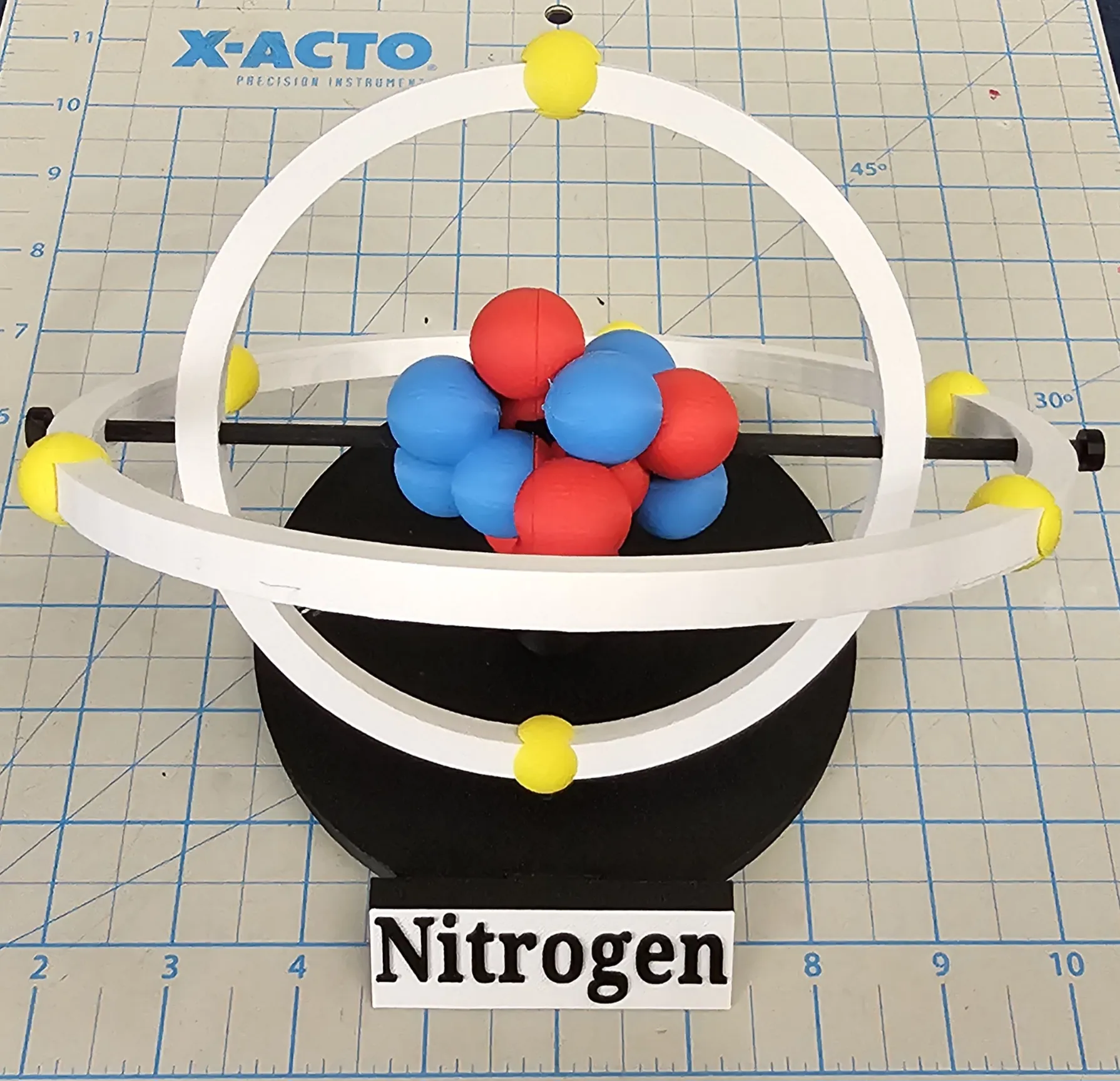
Nitrogen is atomic number 7. It is a colorless gas with 7 protons, 7 neutrons, and 7 electrons. The first shell has 2 electrons while the second shell has 5 electrons. The periodic symbol is N.
Oxygen is atomic number 8. It is a colorless gas with 8 protons, 8 neutrons, and 8 electrons. The first shell has 2 electrons while the second shell has 6 electrons. The periodic symbol is O.

Argon is atomic number 18. It is a colorless, odorless, and tasteless noble gas. Argon has 18 protons, 22 neutrons, and 18 electrons. The first shell has 2 electrons while the second and third shells each have 8 electrons. The periodic symbol is Ar.
Boost Me (for free)

Consider giving the model a boost if you like it, it's free to do!
I 3D model and design every single one of the models I upload to my account (unless specified otherwise). Boosts and positive support help me continue to design and share my original creations! Thank you!
Boost Me (for free)
If you have any ideas for a print you'd like to see, let me know and I can try to make it too!
Like these and the other models I've made? Consider joining my commercial membership!
Membership
Gain access to the license to sell these prints in your own store! Or simply subscribe as a supporter!
License

You shall not share, sub-license, sell, rent, host, transfer, or distribute in any way the digital or 3D printed versions of this object, nor any other derivative work of this object in its digital or physical format (including - but not limited to - remixes of this object, and hosting on other digital platforms). The objects may not be used without permission in any way whatsoever in which you charge money, or collect fees.


Comment & Rating (68)