
Leonardo Da Vinci's Vision: The Paddle Boat

Print Profile(1)



Description
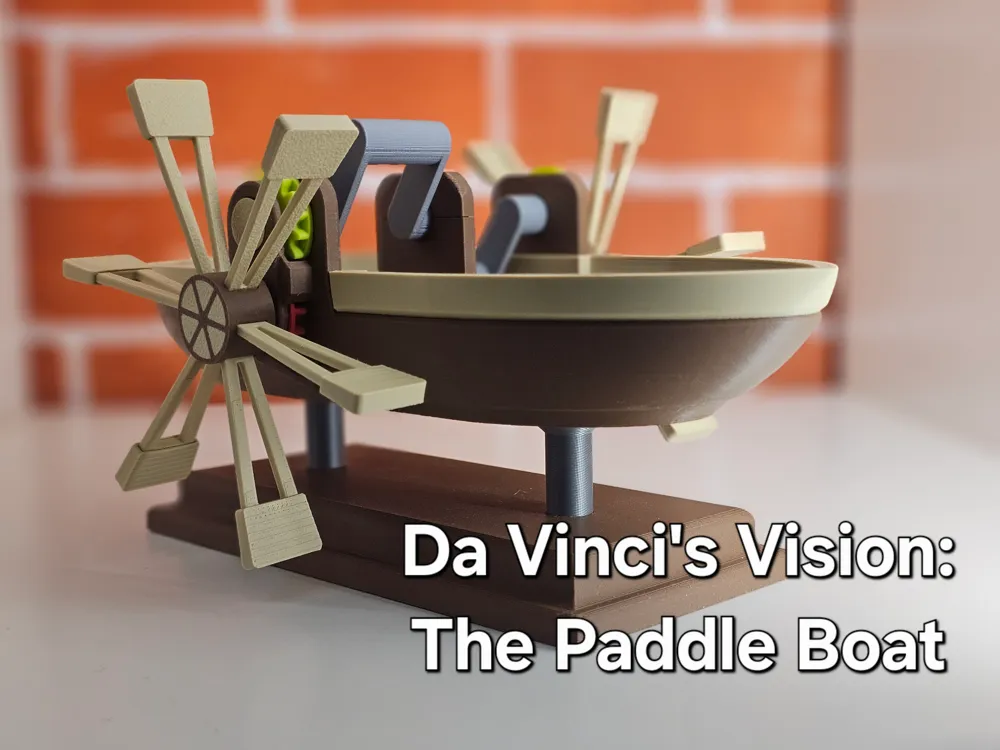
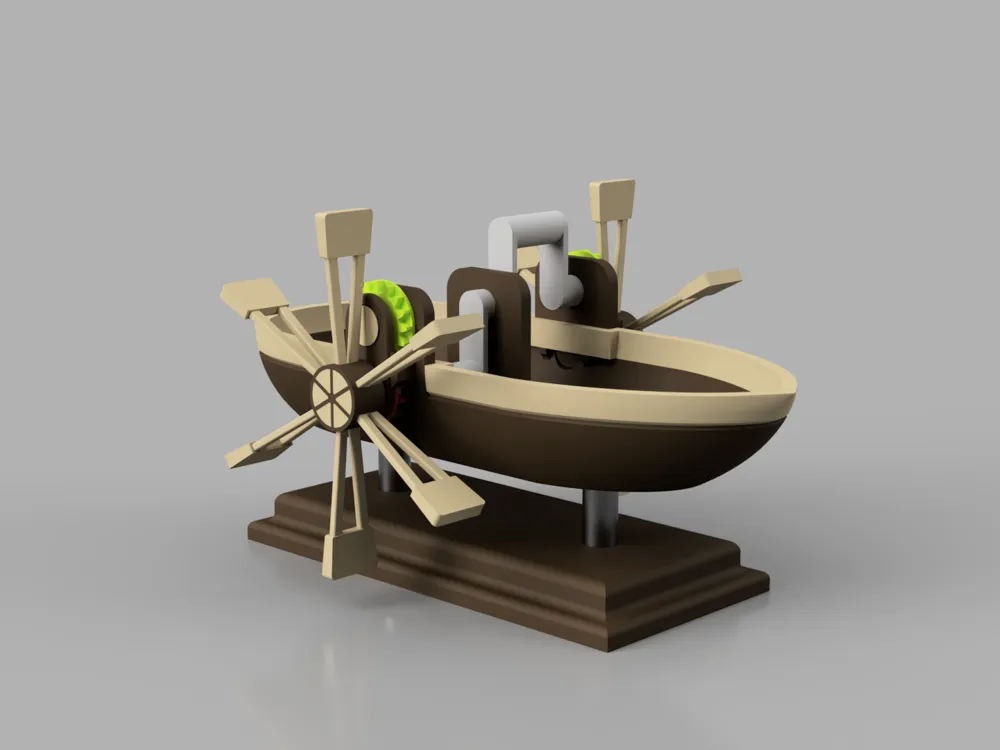
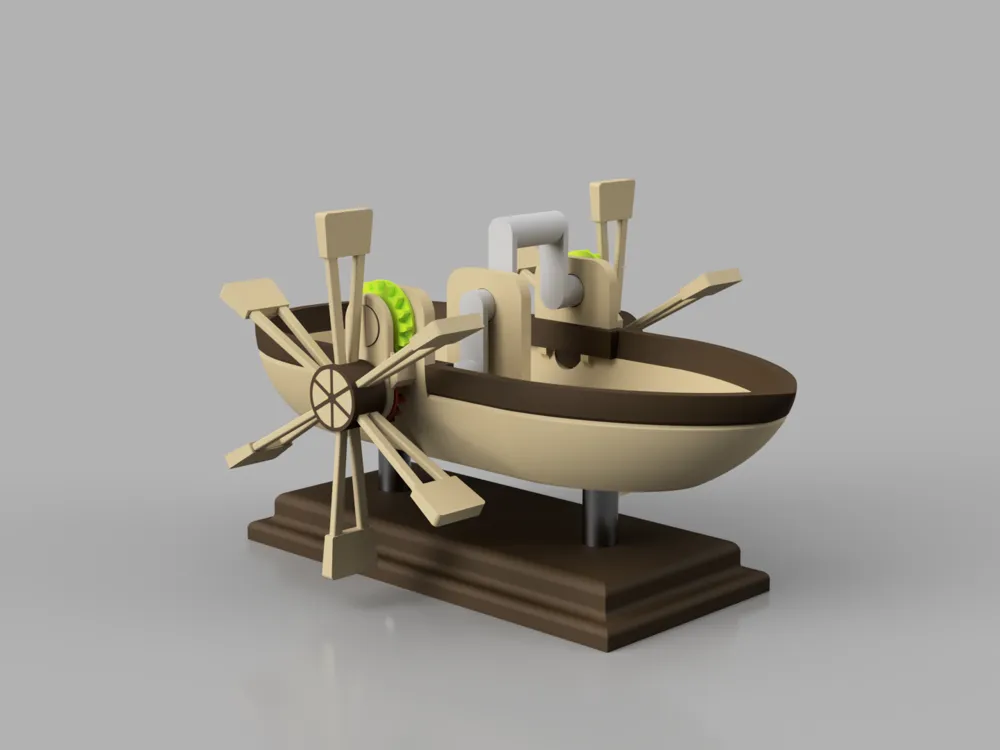
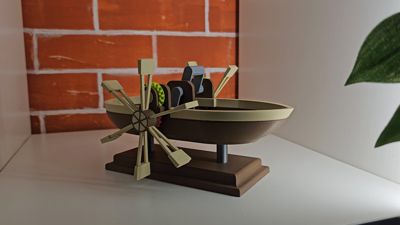
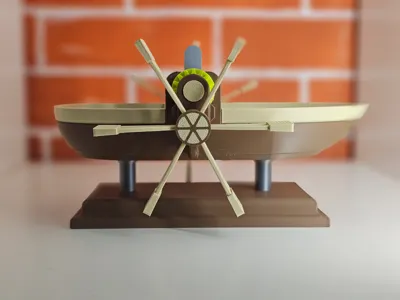
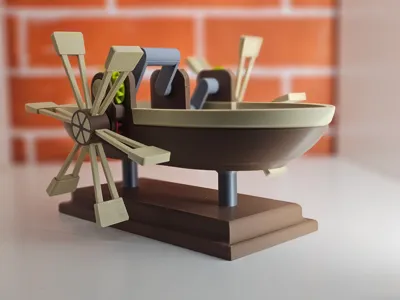
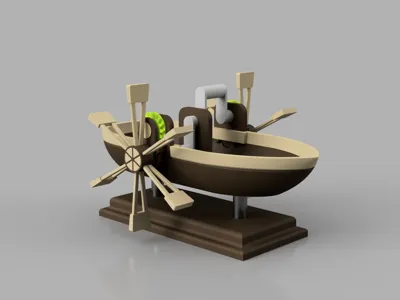
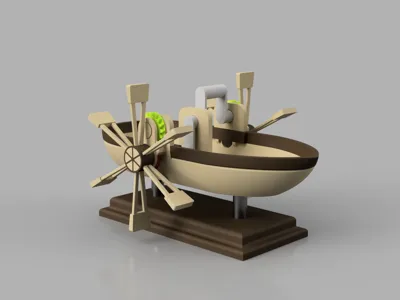
Leonardo Da Vinci's Vision: The Paddle Boat
This model is inspired by the designs of Leonardo Da Vinci, who, with his extraordinary ingenuity, designed numerous devices and machines that exploited similar principles. His drawings of machines for navigation and hydraulic engineering have inspired many of the technologies we use today.
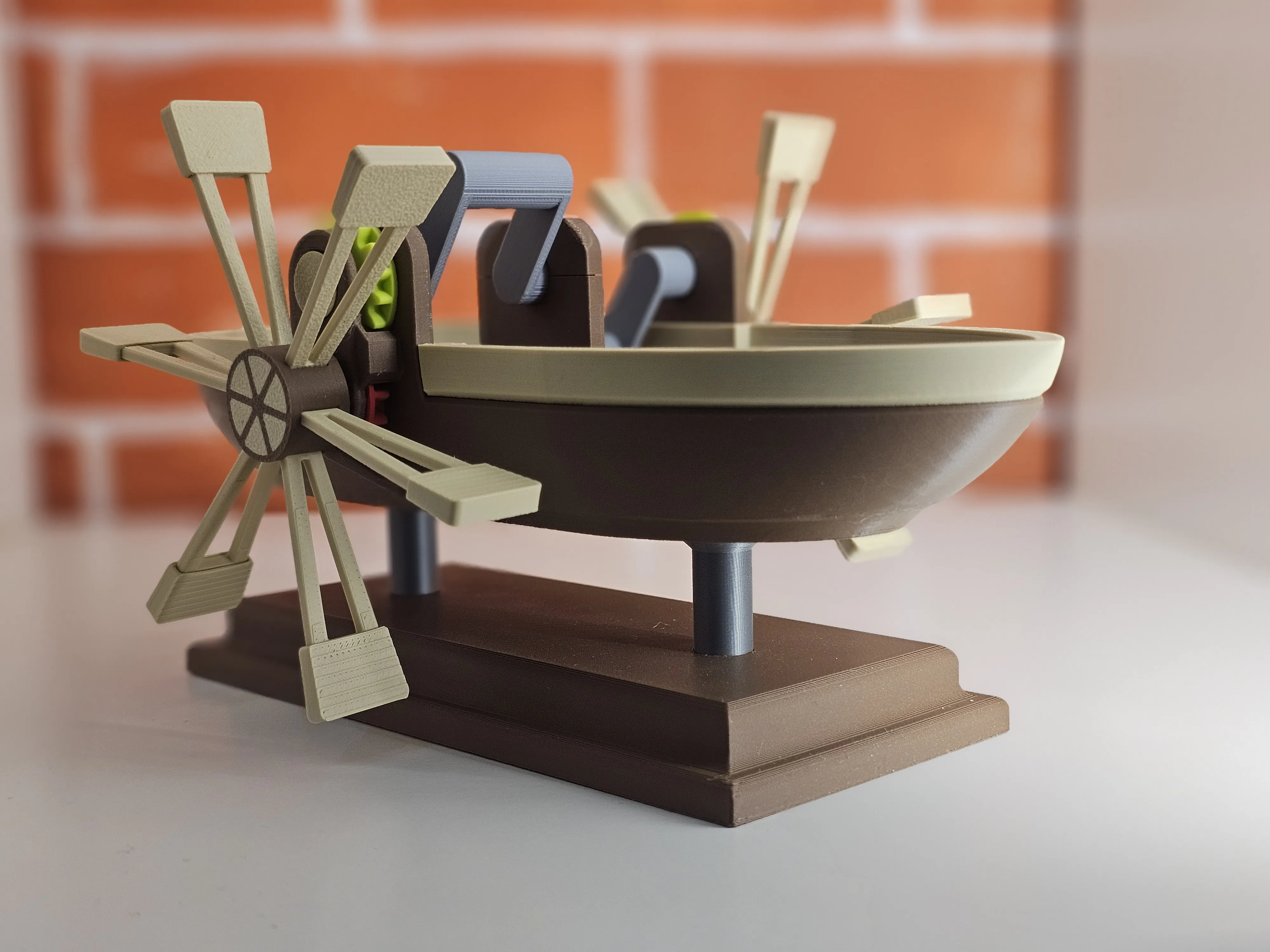
I created this model for educational purposes, to be able to show some basic principles and physical movements in a simple and clear way to people of all ages.

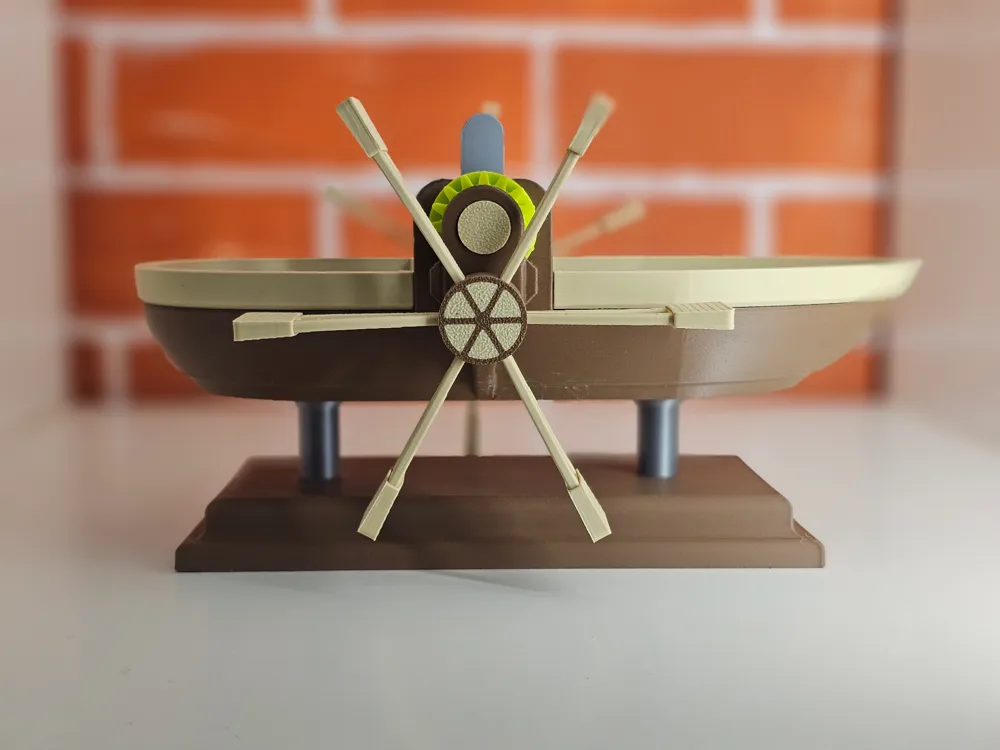
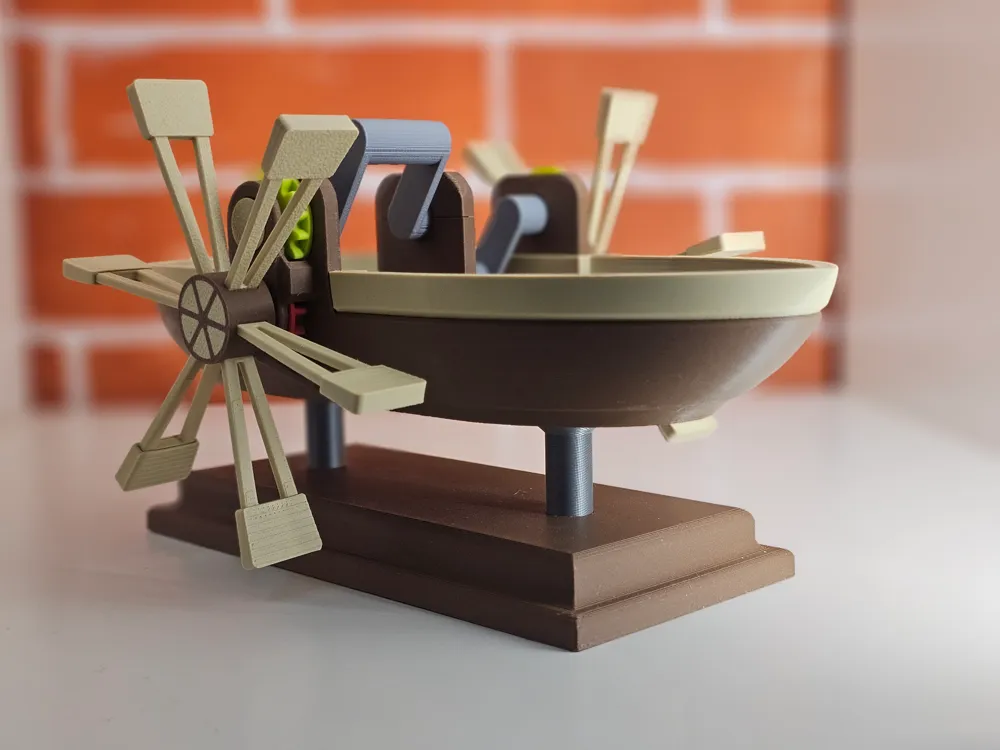
The paddle boat is a type of vessel that uses large paddle wheels for propulsion. These wheels are positioned on the sides of the boat and are connected to a mechanism of gears and levers that make them turn. When the paddle wheels turn, the paddles push against the water, creating a force that propels the boat forward.
Basic Principles and Physical Motions
Thrust Force: The paddles of the wheels push against the water, generating a reaction force that propels the boat forward. This principle is based on Newton's third law: “For every action, there is an equal and opposite reaction.”
Rotation and Motion Transmission: The paddle wheels are connected to a system of gears and levers that transmit the rotational motion. When the mechanism is activated, the wheels start to turn, converting mechanical energy into movement.
Water Resistance: As the paddles move through the water, they encounter resistance. This resistance allows the paddles to push against the water and generate the force needed to move the boat.
Mechanism Efficiency: The arrangement of gears and levers is designed to maximize movement efficiency, minimizing energy losses and ensuring that most of the energy is used for propulsion.
Practical Applications This paddle boat model aims to demonstrate how the principles of physics can be applied to create an effective propulsion system. This type of vessel was widely used in the 19th century for river and maritime transport, significantly contributing to the development of trade and travel.
Note: The model consists of several parts, you can have fun assembling it yourself or with the help of the image I have attached. I only recommend gluing the paddles to the wheel using liquid glue. Now, all that's left is for you to enjoy!
Youtube - https://www.youtube.com/@HexaTrick98
Instagram - https://www.instagram.com/hexatrick98
Boost Me (for free)
A stroke of genius?💡
Documentation (1)
License

You shall not share, sub-license, sell, rent, host, transfer, or distribute in any way the digital or 3D printed versions of this object, nor any other derivative work of this object in its digital or physical format (including - but not limited to - remixes of this object, and hosting on other digital platforms). The objects may not be used without permission in any way whatsoever in which you charge money, or collect fees.


Comment & Rating (2)