
Filament Box Swatch - Bambu PLA Basic Part 1

Print Profile(1)

Description
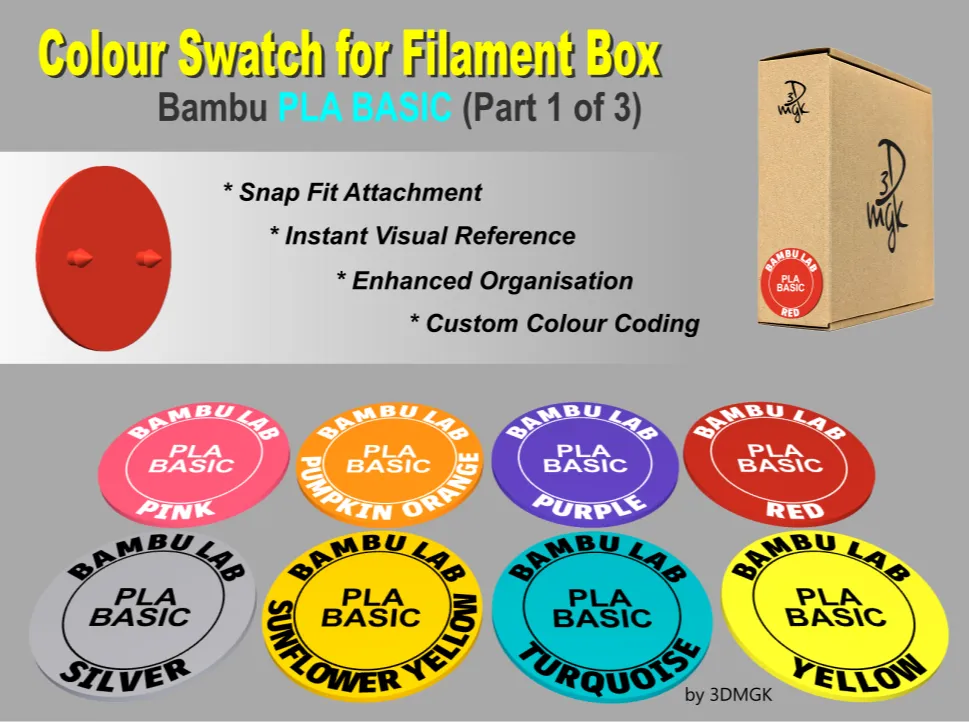
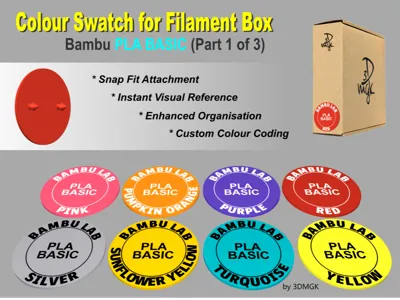
Simplify Your Filament Box Storage with Snap-On Colour Swatches!
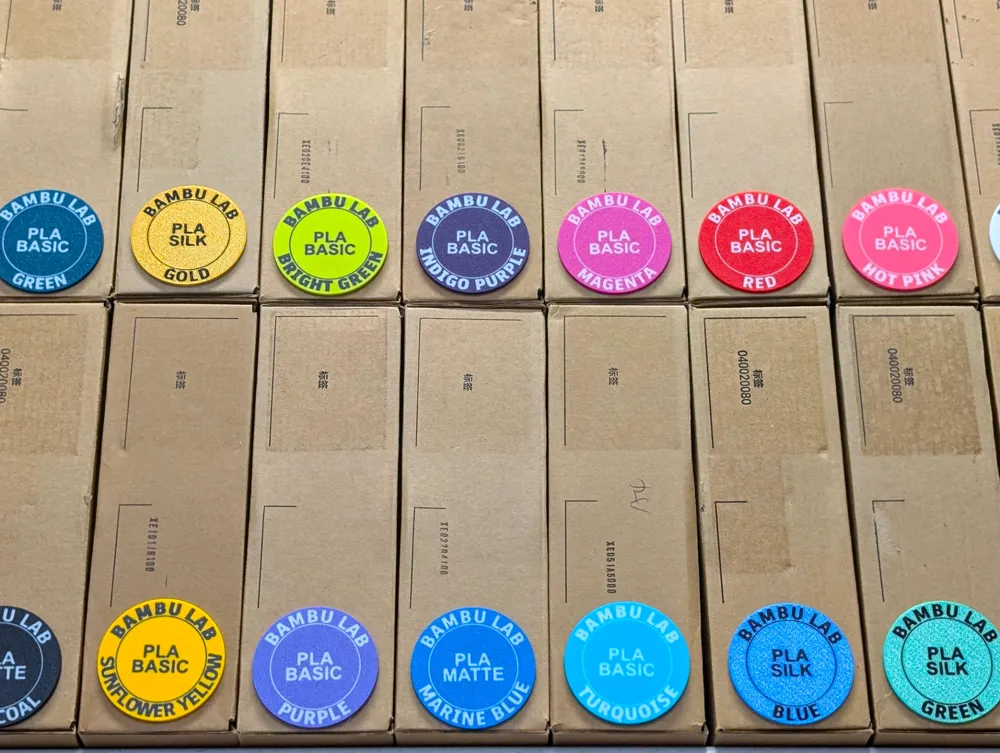
Tired of squinting at tiny labels on your filament boxes or guessing which filament is in which box? Meet the perfect solution for those who prefer to keep their filaments stored in their original cardboard boxes.
Here’s why you’ll love them:
- Easy to Print: No supports required.
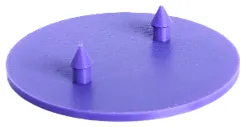
- Snap Fit Attachment: Designed with two small anchor pins, these swatches snap snugly onto most cardboard filament boxes. Easily removable and reusable!
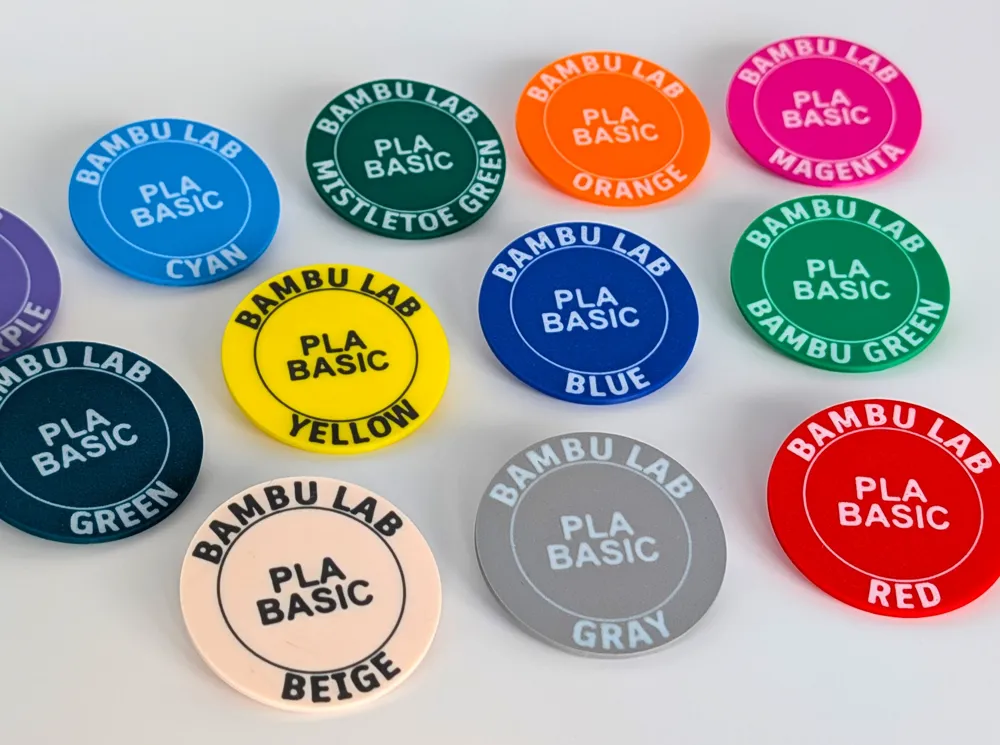
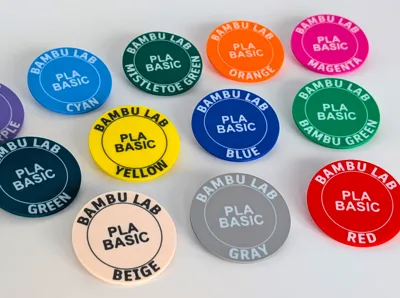
- Custom Colour Coding: Print each swatch in the exact colour of the filament on the spool or simply print in black and white for a more generic labelling aesthetic. Either way, say goodbye to rummaging and hello to quick identification.
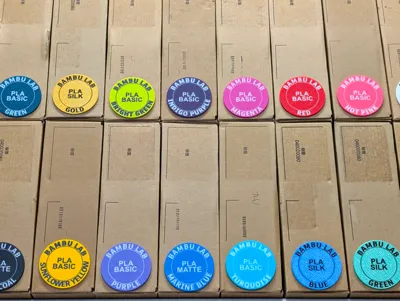
- Enhanced Organization: Know at a glance not only the colour but also the brand and type of filament inside each box.
- Tidy and Professional: Perfect for keeping your workspace orderly and efficient.
- Both 3mf and stl Versions Included: The STL version of the Box Swatch is a single-body design. The 3MF version consists of multiple parts, with each letter as a separate, movable piece for greater text definition.

(see my Box Swatch Collections folder for the complete range of Bambu Swatches)
COLOURING & PRINTING INSTRUCTIONS
The following instructions are written with the novice user in mind so much of it may seem obvious to intermediate and advanced users. The information provided below is taken from settings and experience using the Bambu Studio slicer and Bambu X1 Carbon printer. Your experience may vary depending on the slicer and printer you are using.
SETTING COLOURS FOR THE 3MF VERSION OF SWATCHES.
The 3MF version of the swatch contains multiple swatches per file. Each individual swatch on the build plate is a multi-part model with each letter as a separate, movable piece. For Bambu Studio users, colours and recommended settings are already applied. Simply clone an individual swatch, move it to a blank plate, and print FACE DOWN.
If you need to, the fastest way to adjust the colours of your multi-part swatch is as follows…
Click on the Objects button in the Process pane. This will give you a list of all the individual swatch and text bodies.
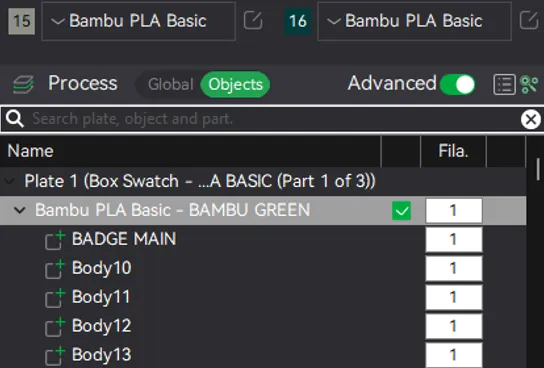
Click a swatch on the build plate. The corresponding swatch will be instantly highlighted in the objects list.
Right-click the Swatch heading (the line with the green tick) to select all swatch components.
Choose Change Filament from the dropdown menu.
Select a colour for the text. At this stage, the chosen colour will be applied to all of that swatch’s components.
- Now right-click “BADGE MAIN” in the objects list and select Change Filament again but this time choose the desired colour for the main body of the swatch. The swatch body will change colour while the text remains the colour you selected in Step 5.
IMPORTANT: Do not move a swatch on the plate unless all its components are selected. You can do this by clicking on the physical swatch on the build plate or selecting its heading (the line with the green tick) in the objects list.
For example, if only “BADGE MAIN” is selected, the swatch will move, but the text will stay behind, causing misalignment. (Remember, Undo is your friend)!
SETTING COLOURS FOR THE STL VERSION OF SWATCHES
Each STL file contains a single swatch which loads as a single body model in a single colour. The swatch may initially appear to have no text. Follow the steps below to reveal text and apply colours.
[Bambu Studio example]
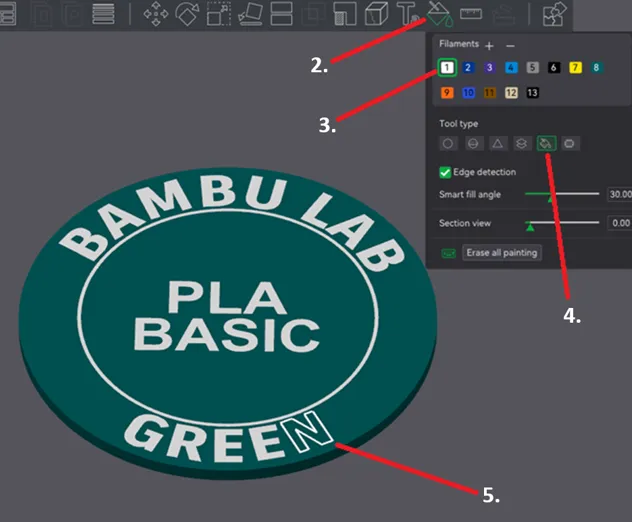
Right click the body of the swatch and choose Change Filament from the dropdown to select the colour you want the body of the swatch to be.
Use your slicers Paint Tool to bring up the model painting app. See pictured below.
Choose a contrasting colour for your text.
Click on the Fill Tool.
Mouse over the top of the swatch to pick out the text and ring. Click each item of text to apply the colour. Again, your experience may vary depending on the slicer and printer you are using
You are ready to print your Swatch.
RECOMMENDED PRINTER SETTINGS
Layer Height 0.08mm
Initial Layer Height 0.20mm
Wall Generator Arachne
Wall Loops 1
Bottom Shell Layers 3
Bottom Surface Pattern Hilbert Curve (best for clean and uniform text definition)
Sparse Infill Pattern Rectilinear
Sparse Infill Density 100%
Print Face Down:
Swatches must be printed FACE DOWN, with the anchor heads pointing up. No supports are required. Providing you have a clean build plate a brim should not be required. Turning off the Aux Fan can help if you experience the swatch lifting.
Build Plate:
To minimise visible layer lines on the surface of your swatch we recommend using a textured PEI plate, preferably one with a more dense/matte texture to prevent an overly reflective finish.
First Layer:
To further minimise visible layer lines, we found that using Hilbert Curve for the first layer produced the best results for text and overall appearance, minimising visible layer lines across the surface of the swatch, particularly around the text.
Text:
If you are getting visible gaps inside your text, you can try increasing the Flow Ratio for the text colour. We found that increasing the Flow Ratio from 0.98 to 1.0 produced consistent results in Bambu slicer.
Strength:
To ensure the strength and integrity of the anchor pins, we recommend printing at 100% infill density. This also allows printing with only one wall loop, which significantly reduces artifacts around the text.
No Supports Required:
Your slicer may report that you need to place supports under the anchor heads; ignore this as they are designed to print without support. The first layer of the anchor heads may create a tiny spur of filament. You can remove this with tweezers after printing, or leave it in place, it affects neither the function nor look of the Swatch.
By the way… did we mention to print FACE DOWN? 😊
USING YOUR PRINTED BOX SWATCH
Place your Box Swatch along the top or bottom edge of the filament box where there are open corner spaces around the spool. See pictured below.
To secure the swatch, align the swatch with the anchor pins resting on the cardboard, then press firmly until the pins penetrate and snap into place. The pins are designed to be long enough to secure the swatch without puncturing the filament vacuum bag. See pictured.
Additionally, attach only to a single-layer cardboard side, as the pins won’t penetrate double-layered sections. (See tick and cross for reference)
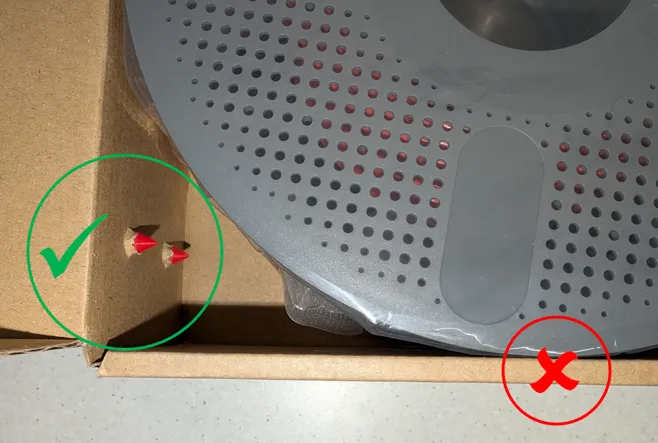
The holes created by the anchor pins experience minimal wear when the swatch is removed, allowing the same cardboard box to be reused multiple times for swapping or replacing swatches as needed.
FINALLY, A WORD ON SAFETY:
Filament Box Swatches use two stubby anchor pins to penetrate the cardboard box. Please handle and store with care and always ensure that unused Box Swatches are not left anywhere they can be stepped on, especially by children.
Documentation (1)
License

You shall not share, sub-license, sell, rent, host, transfer, or distribute in any way the digital or 3D printed versions of this object, nor any other derivative work of this object in its digital or physical format (including - but not limited to - remixes of this object, and hosting on other digital platforms). The objects may not be used without permission in any way whatsoever in which you charge money, or collect fees.


Comment & Rating (1)